Given the most recent post about Ottawa, this seems as good a time as any to share a cool video tribute to that fair city that I came across several months ago while searching on Vimeo. This is by Will Cyr, a former resident of Ottawa, and it’s amazing the way Cyr has captured the essence of the place so creatively and diligently — frame by painstaking frame. Hope you enjoy . . .
Author Archives: Brett
Ottawa’s Guarded Location

Rideau Canal near Parliament Hill, Ottawa
I’m pretty good staying abreast of notable political developments, but in many conversations it’s usually a good idea to avoid discussions of politics and religion, and I try to adhere to that conventional wisdom. However, given that politics is such a big part of the American and Canadian cultures and the fact that a federal election has been called by Canada’s current government, I thought during Canada’s version of what we in the States call the “silly season” I’d find a few political-related things about which to comment.
So, installment 1 is about a piece of historical / political trivia about Ottawa of which I was unaware. Given the prominence of Toronto, Montreal, Vancouver and Calgary, among other major cities in Canada, I’ve wondered why it is that Ottawa is Canada’s capital city. That question was partially answered for me during a conversation earlier this week from a couple of visitors from Toronto. Continue reading
JUNO Awards 2011

Last night the 41st annual JUNO Awards — Canada’s equivalent of the Grammy Awards — were announced at an awards gala and presentation ceremony in Toronto. Winners included The Arcade Fire’s The Suburbs for Album of the Year, The Arcade Fire for Group of the Year, Neil Young for Artist of the Year, and Meaghan Smith for New Artist of the Year.
The official JUNO Awards site (http://junoawards.ca/) has details on winners, sound clips from nominees, photos of event and much more.
WireTap’s Wry Perspective on Life

Into the third month now of my trial subscription of Sirius XM radio and I’m gaining a greater appreciation for the varied programming offered on CBC Radio One. The closest thing we have in the States is National Public Radio. However, my sense is that a richer variety of offerings is to be found on CBC Radio. Not sure if that’s because of the limited funding that NPR receives here or the different traditions out of which these two public radio services developed, but there’s certainly a notable difference. Continue reading
The Glories of Hockey
While I’ve previously written about the significance of hockey to Canada, the abundance of hockey stories of late seems greater than usual and so caught my attention. Maybe it’s because as regular season NHL play winds down, sports writers and others with commentary to share on some slice of the hockey world feel pressed to get their pieces wrapped up before the post-season dictates a more focused narrative. Among the more interesting stories I’ve seen in the past couple of weeks is one from the March 1 edition of the NY Times on the rough-and-tumble Ligue Nord-Americaine de Hockey. That Quebec-based league, which is not well known below the border, averages about 3.2 fights per game as compared to about 0.6 fights per comparatively tame NHL game. Continue reading
Donald Sutherland on Tommy Douglas

The March 2011 issue of Esquire magazine just arrived and its “What I’ve Learned” interview column features the wry observations of the actor Donald Sutherland, including this one:
“There was this politician in Canada, his name was Tommy Douglas. While he was campaigning, someone yelled at him, “Tell us all you know, Tommy. It won’t take very long.” And Tommy yelled back, “I’ll tell you what we both know, it won’t take any longer.”
The cleverness of the comment struck me as a witticism worthy of Mark Twain. My ignorance about Douglas sent me in search of a little more information about him. After a quick search of the Internet, I learned that this fellow, as many Canadians likely already know, achieved quite a bit during his time in the public arena, so much so that he was voted the greatest Canadian of all time in a 2004 BBC television contest. Turns out as well that he is Sutherland’s former father-in-law and the grandfather of Kiefer Sutherland, the elder Sutherland’s son. Donald Sutherland is Canadian to boot! Who knew? (I didn’t.)
(Photo credit: National Archives of Canada)
Awesomeness! Album of the Year Grammy Goes to Arcade Fire
“City With No Children” from The Suburbs
No big surprise to fans of Quebec-based Arcade Fire that this past weekend their superb album The Suburbs received the Grammy Award for 2010’s best album. (See 8/15/10 O’Canada Blog posting here.) What is particularly interesting to me are many of the comments I’ve seen posted on various blogs and popular music-related sites where so many people have expressed bewilderment about who is this group called Arcade Fire and how could they possibly have won this award. Never a better moment for the good old “LOL”. Fans of Lady Gaga and Justin Bieber (another Canadian, of course), both of whom had albums nominated, seemed especially perplexed about the indie rock band’s win.
Situations like this make me realize that with the extreme fragmentation nowadays of genres within the music world just how truly difficult it is for talented musicians of any sort to break through to the mainstream. Anyway, I’m glad there are enough critics and fans with discriminating ears who are able to help elevate to wider prominence underappreciated groups like Arcade Fire.
Richard Ford’s Amusing Description of Canada

This past weekend I caught part of an interview by Eleanor Wachtel of the Pulitzer Prize-winning American writer Richard Ford on Wachtel’s CBC Radio One program “Writers & Company.” Among the subjects touched upon is a novel that Ford has in progress, which has the working title of Canada. The novel tells the story of a young boy from Montana going to live with a family friend in Saskatchewan. In an excerpt from his manuscript that Ford read on the program (and as transcribed by me below as accurately as my ears would allow), Mildred, a friend of the boy’s mother drives him up to the fictional town of Fort Royal and shares with the boy some of her quirky and unintentionally humorous perspectives on Canada as follows:
In the car, Mildred recited what she knew about Canada that might be useful to me. That Canada contained provinces not states of the union, though there was really no difference. She said they spoke English there but in a different way she couldn’t describe though I’d be aware of it. She said they had Thanksgiving but theirs was on a Sunday and wasn’t in November. She said Canada had fought beside America in the war my father had fought in and Canada had gotten involved in it even before we did and had an air force as good as ours.
She said Canada wasn’t an old country like ours and still had a pioneer feel to it, and nobody there thought of it as a country anyway, and in fact in some parts people spoke French. And the capital of which she couldn’t remember the name of, was back in the east some place and nobody respected it the way we did Washington, D.C. She said Canada also had dollar bills for their money, but theirs were different colored and weren’t worth even half of what ours were. [Ford interjects at this point that this was a long time ago.] She said Canada had their own Indians but treated them much better than we treated ours, and Canada was much bigger than America, except it was mostly useless and inhospitable, since it was covered in ice all year long.
The full interview can be accessed here on the CBC Radio One site, with Ford’s reading from his book starting at around 23:36.
(Photo credit: Robert Yager)
2011 Canada Winter Games Opens This Weekend

This Friday marks the opening of the 2011 Canada Winter Games, which are being hosted in Halifax, N.S. The Canada Games occur every two years and alternate between summer and winter games. Halifax last hosted the Canada games in 1969 when the first Summer Games (and the second Canada Games) were held there. The idea of all the provinces coming together in a single national event to foster competition among over 2,700 of the country’s talented young athletes in at least 20 sports is remarkable. Having seen some of the promo videos and other materials for this year’s Games, the schedule, which extends through February 27, looks to be as exciting as ever.
More info is available on the official website for the 2011 Canada Games at www.canadagames2011.ca .
Getting Sirius About Canada

A little more than a month ago, I got a trial subscription to Sirius satellite radio for my car but until the past two weeks I had not paid much attention to it. Then I downloaded a channel guide and skimmed through the varied options and was intrigued that in addition to channels devoted to music and musicians I like, there are several channels devoted to Canadian music, news and sports. It seems fitting that my attention would be drawn to these channels given that the first occasion I had to listen to satellite radio was in a rental car on a trip to Nova Scotia a couple of years ago. During that initial experience with Sirius’s offerings I hopped around from channel to channel appreciating what was for me a sense of novelty, but because I did not have a list of channels I was unaware of satellite radio’s breadth.
So, here are some of the Canada-related channels I’ve been sampling of late (descriptions and Sirius channel number in parentheses):
- Iceberg Radio (Canadian Alternative Music, Ch. 85)
- CBC Radio 3 (Canadian Indie Music, Ch. 86)
- Bandeapart (Radio-Canada New French Music, Ch. 87)
- L’Oasis Francophone (French Contemporary Music from Canada, Ch. 88)
- The Score (Uncensored Canadian Sports Talk, Ch. 98)
- CBC Radio One (Canada News, Ch. 137)
- Canadian Weather Network (Canada Weather, Ch. 138)
Although I need to explore each of these more, I’m already impressed at the way these channels add another dimension to my understanding and learning about Canada’s diverse culture. I’m not certain whether I’ll keep the Sirius subscription after the trial period but if I do I’m sure that being able to tune into Canadian radio will be the balance tipper.
Inuksuit

Perhaps because we in the South have been having one of the more intensely cold and icy winters in recent memory, my thoughts have turned of late to the Canadian Arctic. Of course, my fascination with that region pre-dates the latest cold spell but the current chilliness causes me to contemplate in a more direct way the far north regions and what difficult living that must be. So, about a month ago I read through Inuksuit: Silent Messengers of the North by Norman Hallendy, which clued me into the mysterious man-made rock structures called inuksuk (the plural being inuksuit) and the special role they play in keeping people connected with one another and spiritual forces across the vast and barren — and hauntingly beautiful — landscape. Hallendy came to understand the intricate language and significations of inuksuit among the Inuit people over the course of his more than 40 years visiting the Canadian Arctic. His book does a wonderful job allowing us to peek into the lives of the Inuit and their reverence for the natural world.

(Bottom photo credit: arctic-wl’s photostream on flickr: http://www.flickr.com/photos/wolfwl/collections/)
Newfoundland’s Avalon Peninsula, Other Canada Coastlines Top Rated by National Geographic
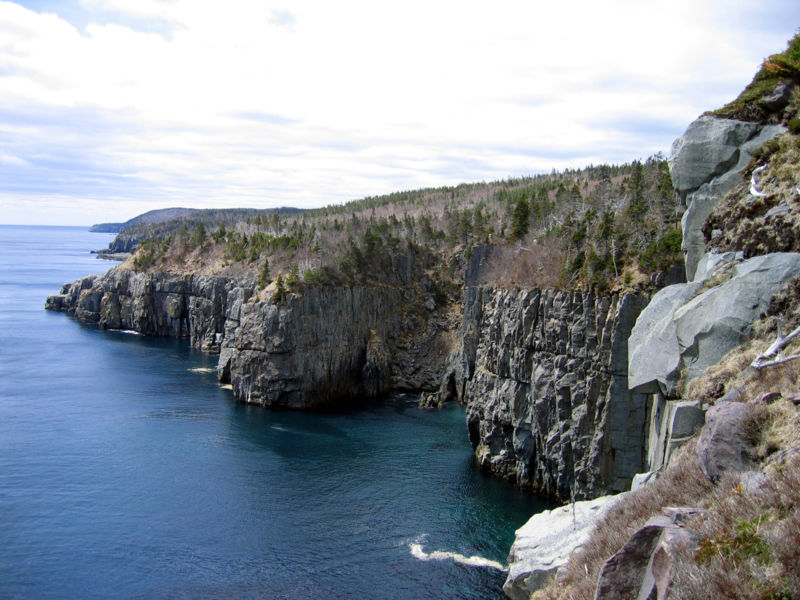
Thanks to a justifiably proud friend from Newfoundland for calling my attention to the latest issue (Nov.-Dec. 2010) of National Geographic Traveler magazine, which features a cover story rating 99 of the world’s best coastlines. Coming in with the highest rating was that province’s magnificent Avalon Peninsula. Having spent part of a wonderful family vacation there several years ago (about which I’ll write more in a later post), I can attest to that place’s beauty. The article quotes Ross Klein, a professor at Memorial University in St. John’s, who sums up the Peninsula’s charms thus: “Visiting the Avalon Peninsula, with its close-knit communities and strong local culture reflected in the music and arts, is like going back in time. The unspoiled scenery ranges from stark moonscapes to crystal-clear lakes to open land where caribou roam.”
Of the 99 places rated, 18 made it into the highest category of “Top Rated,” and of those Canada claimed an impressive 4 spots, more than any other country. Making that short list were the Gulf Islands of British Columbia, the south shore of Nova Scotia, and the coastal areas of Prince Edward Island.
(Not surprisingly, Canadian locations also received at least a few other mentions in the magazine’s most recent issue, including an interview about a trek down the monumental Mackenzie River and the Yukon River (p.24), a note on skating on Ottawa’s Rideau Canal (p.36), and an overview of new hotels in Toronto (p. 46).)
Link to feature and complete list on National Geographic Traveler: http://travel.nationalgeographic.com/travel/coastal-destinations-rated
Cirque’s “Ovo” Opens
Last night my wife and I attended, along with a group of ten or so with connections to Canada, the preview / dress rehearsal of Cirque du Soleil’s “Ovo,” which opens its regular shows in Atlanta today. As with so many Cirque shows, the insect-themed “Ovo” features incredible acrobatics that are amazing to watch both for the highly practiced skill of the performers and the colorful creativity of the costumes and dance routines. The accompanying music was high energy and Brazilian in flavor. There were so many terrific performances that it’s difficult to choose highlights, but the standouts for me were the “loose string” balancing performance, the rock wall climbing- jumping-dancing number and, for its wonderful freakiness factor, the “slinky” creature. While the trailer above doesn’t do the show full justice, it provides a good sneak peek.
For those that don’t already know, Cirque du Soleil, like many other mainstays of American entertainment (William Shatner, Celine Dion, Barenaked Ladies, Shania Twain, Alex Trebek, etc.), is a Canadian import. Formed in the early 1980s in Montreal and still based there, the troupe struggled financially for more than a decade before it found stable footing. As a testament to the perseverance of its founders and creative visionaries, Cirque du Soleil is so popular now that multiple shows can now be seen in numerous cities throughout the world at any given time. C’est fantastique!
Spooky Canada

Because today is Halloween, I thought I’d share some comments on a book I picked up a few weeks ago that seems fitting for the occasion. Spooky Canada: Tales of Hauntings, Strange Happenings and Other Local Lore (Insiders’ Guide 2007), is a diverse collection of Canadian folklore as retold by S.E. Schlosser. There are 30 stories in all and each of the country’s provinces is represented, with tales from Quebec and the Maritimes predominating in number. The illustrations by Paul Hoffman nicely complement the tales and among the graphics is a map pinpointing the local area associated with each story.
Many of these are traditional tales that harken back to much earlier days when the vastness of Canada was first being explored and settled. So, the book echoes the history of some of the regions. Pioneers and native people experienced a life of relative isolation that, while full of virtues, can also prey on the sensibilities, especially during the harsh winters featured prominently in many of the stories. It’s clear that Schlosser has kept her ear to the ground in collecting and recounting these tales of ghosts, spirits and general spookiness, which come across as though the narrator is speaking around a cozy fire with the reader among the listeners huddled closely.
If you can’t locate the book, parts of many of these stories can be found on the American Folklore website, which Schlosser maintains and which contains a wide compendium of folklore, including an extensive section on Canadian folklore.
Matthew Barber’s “Easily Bruised”
I’ve been listening to the soothing indie folk melodies of Toronto-based singer/songwriter Matthew Barber for the past year now and I think he’s a musical artist who’s likely to garner much-deserved greater attention in the near future. The video below is for “Easily Bruised,” which is from his 2008/09 Ghost Notes album. I couldn’t locate a high quality video for another standout song of his, “True Believer,” from the 2010 album of the same name, but you can listen to that on Barber’s MySpace page (link below) — and get a copy from iTunes or elsewhere and make him (and yourself) happy. : )
Regional Reads: Up Here & Yukon, North of Ordinary

I’m a glutton for magazines and, undoubtedly, have way more subscriptions than warranted for any normal person. Although online media continue to nip at the heels of print media, magazines continue to hold their own, especially where the publication is able to use online multi-media features to enhance its offline offerings. Just as with the U.S., Canada has a wealth of solid mainstream publications, but the ones that most attract my attention are the regional and niche publications. With that in mind, I thought it might be interesting to take a look periodically at some of the country’s noteworthy smaller magazines, and to do that by starting way up north.
Amazingly, the far north is graced with at least two truly terrific general circulation regional magazines, Up Here and Yukon, North of of Ordinary. The more broad ranging in scope and literary of the two appears to be the monthly Up Here, which principally focuses on life in the Yukon, the Northwest Territories and Nunavut, although it occasionally touches upon the far northern regions of Canada’s other mainland provinces. The magazine’s layout conveys a playful, slightly hip aesthetic and its editorial content provides enough variety to satisfy even picky readers. The latest issue I have (September 2010) features stories on Inuit who have moved south to Ottawa and Toronto, the failed effort in the 1960s and 1970s to develop a modern-day Shangri-La in the far north, a desperate Nunavut survival tale from almost a century ago, and, on a lighter note, the winners of the annual “Write Like Robert Service Poetry Contest.” From an online perspective, Up Here‘s website makes available selected content from past issues, including entertaining multi-media features. Not surprisingly, others have also taken note of this nifty little publication with lots of personality — so much so that Up Here received the prestigious 2010 Magazine of the Year Award from the National Magazine Awards Foundation.
Link to website of Up Here: http://www.uphere.ca/
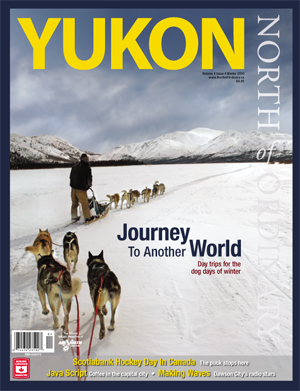
Yukon, North of Ordinary stakes out a narrower geographic niche, emphasizing happenings in the Yukon. The magazine devotes more attention to business matters in its editorial voice. However, the quality of its feature writing is quite good. The Fall 2010 issue profiles spooky haunts in Dawson City, reports on a cultural festival of the local Tr’ondek Hwech’in people, and explores how far flung Yukon families use technology to stay connected across wide distances. The publication also serves as the official inflight magazine of Whitehorse-based Air North, so several pages cover matters of interest with that airline. While Yukon‘s website is not as robust as that of Up Here, Yukon‘s site archive provides better overall access to past issues. Both these magazines have a great deal that is useful and entertaining to offer their respective readerships and they each demonstrate why print media continues to retain our interest notwithstanding the pull of the web.
Link to Yukon, North of Ordinary: http://www.northofordinary.ca/
Quebec’s Distinguished Office In Atlanta

While I’ve long been aware of Quebec’s many cultural treasures and business opportunities, it’s only recently that I’ve become better acquainted with the sophisticated approach taken by the province of Quebec in cultivating economic development and other ties with the United States. The province has long maintained six regional offices in the U.S. — in Atlanta, Boston, Chicago, Los Angeles, New York and Washington, D.C. — each of which (other than the D.C. office) is responsible for coordinating relations with a large group of surrounding states.
The leadership of the Quebec Office in Atlanta includes: Ginette Chenard, Delegate of the Quebec Government, who is also the Head of Mission; Andrée Tremblay, Govermental and Public Affairs Attaché; Louise Fortin, Head of Economic Affairs Services; and Liliane Laverdière, Business Development Manager for Investissiment Quebec, which combines the strengths of both a financial institution and an economic development agency.

Over the past year, I’ve encountered the staff of this Office on several occasions. In one of these meetings, I attended a masterful presentation on investing in Quebec, which the Quebec Office organized in conjunction with the always superb Canadian Consulate in Atlanta, that opened my eyes to aspects of the province about which I was unaware. More recently, I visited with some of the Office’s representatives at a multi-national trade showcase held at a nearby convention center. In each of these and other instances I’ve been impressed with how engaging and talented the staff is in presenting a positive impression for the province.
If each of the other five Quebec offices in the U.S. do anywhere near as professional a job as does the Atlanta Office then many useful benefits should continue to accrue between Quebec and the U.S. Mai beaucoup de bonnes choses continuent de se développer entre nous!
Link to Quebec Office in Atlanta: http://www.gouv.qc.ca/portail/quebec/international/usa/accueil/atlanta/
David Silcox’s Exquisite Book on The Group of Seven and Tom Thomson
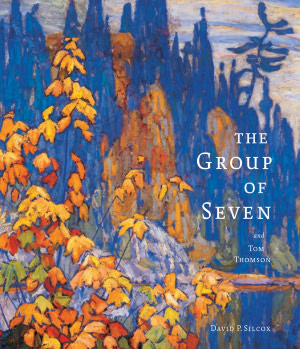
While in Toronto recently I stayed at a hotel across from the Royal Ontario Museum. Although I did not have sufficient time to tour the Museum, I briefly stopped by its gift shop. Browsing through the art books on display I came across an amazing book on the Group of Seven that I had not previously seen and which I had to have.
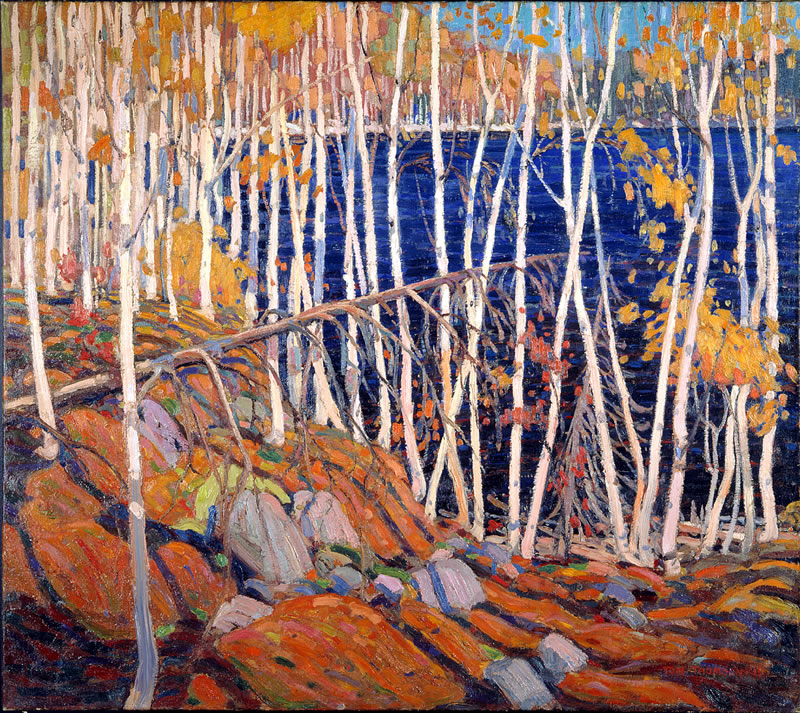
Once back in Atlanta as I leisurely browsed through the simply named volume, The Group of Seven and Tom Thomson, by David Silcox (Firefly Books 2001), I was impressed anew at this amazing collaboration of early twentieth-century artists who helped define a distinctively Canadian style of painting. (See previous post on OCanadaBlog here.) It also gave me a greater appreciation in particular for Tom Thomson, but for whose untimely death in 1917, the collective might well have been called the Group of Eight. As one of the other members, Lawren Harris, noted in a narrative of the Group, “although the name of the group did not originate until after his death, Tom Thomson was, nevertheless, as vital to the movement, as much a part of its formation and development, as any other member.”

Tom Thomson, Autumn Foliage
Silcox’s beautifully compiled book is organized into thematic sections, initially around some broad categories, such as “Icons: Images of Canada,” “The First World War,” and “Cities, Towns and Villages,” and then by geographic regions, including “The East Coast,” “The St. Lawrence River and Quebec,” “Algonquin Park and Georgian Bay,” and “The Prairies, Rockies and West Coast,” among others. This approach enables a wonderful comparison of each artist’s perspective on the same subjects and geography. Preceding each section is a brief narrative by the author that provides historical and cultural context that enriches the understanding of the individual Group members and their works.
Snowbirds to Perform in Atlanta

When most Americans think of snowbirds, what springs to mind are Canadian travelers heading south to Florida for the winter. Today, Atlantans will have an opportunity to see a different type of Canadian snowbird as the 431st Squadron of the Canadian Air Force, known as the Canadian Snowbirds, participates in the annual air show at nearby Dobbins Air Force Base.
For a time when I was a kid, my family lived in a small city with several military bases. Occasionally, we attended air shows at which the Navy’s precision flying squadron, the Blue Angels, would perform (they will also be at the show this weekend). Definitely awe-inspiring stuff — watching huge flying machines maneuvered in formation at incredible speeds.
The 431st Squadron of the Snowbirds dates back to World War II and they have been performing flight exhibitions since at least the 1960s as goodwill ambassadors for both Canada and the Canadian Air Force. If you can’t attend the show, the Squadron maintains several videos of their aerobatic displays, which can be accessed here: http://www.snowbirds.dnd.ca/v2/index-eng.asp
Breast Cancer Awareness Month
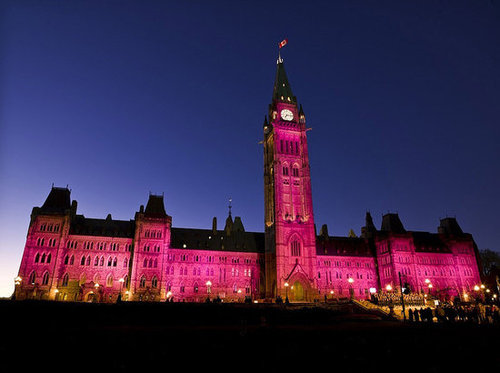
Parliament in Pink (Sort of) for Breast Cancer Awareness
On a flight back from Toronto earlier this month, the unmistakable pink outfits worn by the flight attendants immediately reminded me that October in many places marks a month of awareness for the cause of addressing breast cancer issues. To participate in that awareness campaign, I thought I’d share information on a handful of events in Canada to promote breast cancer awareness. These include:
- Parliament being bathed in pink lights in an October 7 awareness promotion sponsored by Estee Lauder.
- The Run for the Cure in over 60 communities across Canada took place on October 3.
- Niagara Falls illuminated in pink lights on October 1.
- The Weekend to End Women’s Cancers (actually occurs in various places throughout the summer).
More information on breast cancer issues can be obtained by visiting the Canadian Breast Cancer Foundation at www.cbcf.org.
Toronto’s Nuit Blanche

So-called Nuit Blanche arts festivals are held in many cities throughout the world, including in Montreal and Toronto. Nuit Blanche, translates to “white night” and, more loosely, as “sleepless night” and has been typically associated with winter festivals taking place at night. This year, Montreal held its Nuit Blanche in February, while Toronto held off until just a few days ago, with its own nighttime arts festival kicking off for twelve hours starting around twilight on October 2. While I arrived in Toronto for a business trip a day too late to enjoy this first hand, the 2010 event marked the fifth anniversary for this all-nighter out on the town in Toronto. An unsuspecting visitor to the city that evening might very well have observed the wondrous and grand spectacle of this arts fete and concluded that Torontonians had gone blissfully mad.
Labatt Blue vs. Imperial

Okay, so, this sounds a bit goofy: in a contest between Canada and Costa Rica, who wins? Of course, it depends on what the competition is, but when it comes to each of those country’s best-selling beers, it seems the match is a toss up.

Earlier this week, Hop City Craft Beer & Wine, an excellent local beer and wine shop with a very knowledgable and helpful staff, devoted their weekly Wednesday night beer tasting to what they dubbed a good-natured “north vs. south” contest of beers, pitting Labatt Blue against Imperial. I’ve had both beers before but had never considered how they stacked up against the other. Turns out both are very similar. Because I prefer somewhat heavier-bodied lagers, I had to give the edge to Imperial as it is slightly closer to a full-bodied lager. However, the consensus of the other attendees at the Westside location of the trendy Octane coffee bar and lounge, site of this beer throwdown, happeared to be split, with as many people preferring the Canadian brew as those that favored the Costa Rican champ. Well, glad that’s settled.
Walt Whitman’s Visits Up North

A couple of weeks ago, I had occasion to discuss Walt Whitman’s wonderfully contemplative poem “Song of Myself” with my youngest son. Prompted by our talk, I started skimming my compact volume of Whitman’s collected poetry and prose works, which I had not paid any attention to in quite a while, and stumbled upon his Specimen Days, a collection of his reflections on his life and travels. Besides being an innovative writer, Whitman was something of an adventurer in his day, so it was not surprising to learn that some of these reminisces included observations on Canada, which his biography indicates he traveled to in the summer and early fall of 1880, just about a dozen years after the formation of the Canadian Confederation. I’ve recounted below some of Whitman’s comments from Specimen Days, in each of which he marvels at the amazing beauty and warm people encountered on his journey.
From “The St. Lawrence Line”:
“. . . [H]ere I am writing this nearly a thousand miles north of my Philadelphia starting-point (by way of Montreal and Quebec) in the midst of regions that go to a further extreme of grimness, wildness of beauty, and a sort of still and pagan sacredness, while yet Christian, inhabitable, and partially fertile, than perhaps any other on earth.”
From “The Inhabitants — Good Living”:
“Grim and rocky and black-water’d as the demesne hereabout, however; you must not think genial humanity, and comfort, and good-living are not to be met. Before I began this memorandum I made a first-rate breakfast of sea-trout, finishing off with wild raspberries. I find smiles and courtesy everywhere . . . . In general the inhabitants of this rugged country (Charlevoix, Chicoutimi and Tadousac counties, and lake St. John region) a simple, hardy population, lumbering, trapping furs, boating, fishing, berry-picking and a little farming. I was watching a group of young boatmen eating their early dinner — nothing but an immense loaf of bread, had apparently been the size of a bushel measure, from which they cut chunks with a jackknife. Must be a tremendous winter country this, when the solid frost and ice fully set in.”
From “Capes Eternity and Trinity”:
“But the great, haughty capes, silent capes themselves: I doubt if any crack points, or hills, or historic places of note, or anything of the kind elsewhere in the world, outvies these objects . . . . Then they are as distinct in form as a perfect physical man or a perfect physical woman. Cape Eternity is bare rising, as just said, sheer out of the water, rugged and grim (yet with an indescribable beauty) nearly two thousand feet high. Trinity rock, even a little higher, also rising flush top-rounded like a great head with close-cut verdure of hair. . . . They have stirr’d me more profoundly than anything of the kind I have yet seen. If Europe or Asia had them, we should certainly hear of them in all sorts of sent-back poems, rhapsodies, &c., a dozen times a year through our papers and magazines.”
(From Walt Whitman: Complete Poetry and Collected Prose (Library of America 1982))
TIFF 2010 Wraps

The Toronto International Film Festival concluded its 35th annual convocation of film industry movers and shakers and film aficionados from across Canada and the world this past weekend. This year’s TIFF received glowing reviews across a wide swath of the media that covers arts, film, media and business. Not only has TIFF thrived over its history but it has arguably become the most influential festival as far as North American film dealmaking goes, even if the perception of the general public has not yet caught on to this reality.
A particularly cool aspect about the TIFF organization is that its programming extends beyond its annual Fall exposition and encompasses programming throughout the year. Notable in this regard are the Essential Cinema and Canada’s Top Ten showings. Essential Cinema is a compilation of the top 100 films as selected by TIFF programmes and festival-goers, all of which TIFF is screening at its new five-story Bell Lightbox venue in downtown Toronto. Canada’s Top Ten showcases the top ten feature and short films produced in Canada in the prior year. Between the robust programming of TIFF and the equally stellar and extensive array of film offerings supported by the Film Board of Canada, one can only marvel at the depth and vibrancy of the film arts and industry scene in Canada.
Link to TIFF website: http://tiff.net/
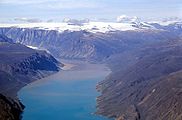
Nunavut: Doorway to the Arctic
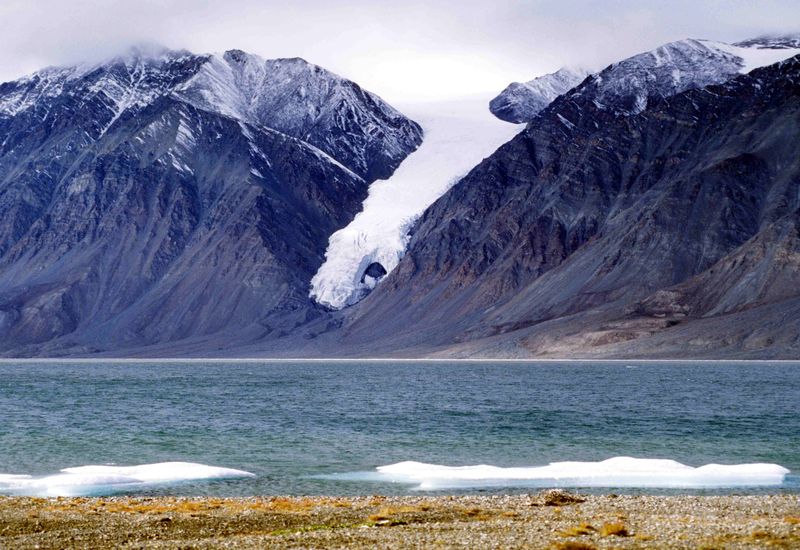
Gull Glacier at Tanquary Fiord in Ukkusiksalik National Park
A few weeks ago Adventure Canada, the operators of an adventure tour in Nunavut, was forced to evacuate, with the assistance of the Canadian Coast Guard, over 100 passengers and dozens of crew members from its Clipper Adventurer because the ship struck a then-uncharted rock in Coronation Bay off the Arctic Ocean. My heart went out to those whose amazing adventure into this vast wonderland had to be cut short.
The news reports of the incident focused my attention on Nunavut, which I have not visited (yet!). From what I can tell, Nunavut is among the least visited Canadian provinces because of its remoteness.
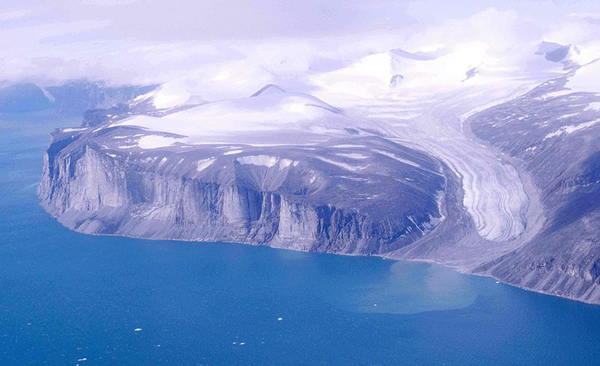
Northeast Coast of Baffin Island
Although most of Nunavut is situated north of the Arctic Circle, because the province is so vast within its borders lies the geographic center of Canada. The province is comprised of a massive expanse of mainland Canada and a sprawling archipelago, each with terrain as rugged as any to be found within the country. Originally part of the Northwest Territories, Nunavut became a separate province in 1999 as part of a federal commitment to establish a territory for the indigenous Inuit people.
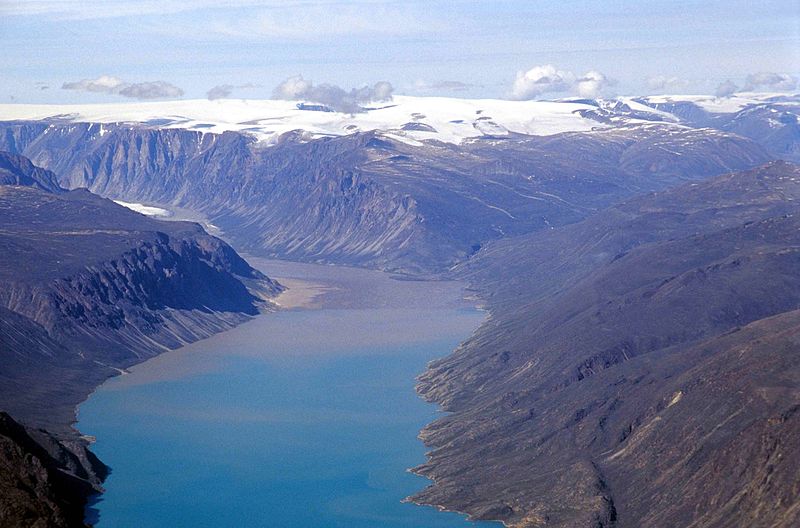
Pangnirtung Fiord at Auyuittiuq National Park
Link to Map of Nunavut: Map%20of%20Nunavut
(Photo credits: Ansgar Walk, under Creative Commons License)
Canada’s “Boring” Banks Have Last Laugh

Because I’ve attended a fair number of presentations over the years by Canadian economic development representatives and other boosters of the great northland, I’ve got many of the salient talking points down pat. Canada’s got a good thing going in terms of a vibrant economy, well-educated people and a top quality of life. But you know the message must be getting out when such things are espoused in the unlikeliest of places. Such is the case in the September issue of Esquire magazine, which has long been regarded as the more literary of the mainstream men’s magazine, its typical fare running towards good fiction, an occasional profile of a public figure, recreation and fashion, but not much regarding business. Yet, an article by Ken Kurson in this latest issue makes the case that Canada’s steady-as-you-go “boring” banks have managed to outperform most financial institutions in other countries during the industry meltdown of the past couple of years. The following quote provides the gist:
“When the worldwide system collapsed, boring Canada didn’t have a single bank poisoned by toxic assets and not a penny of public money was used to bail out its financial institutions.
“More than simply avoiding crisis, the fact that the banks didn’t collapse allowed them to do what they’re supposed to do (and what ours are still largely failing to do) — lend money. See, in America, more than half the mortgages originated were intended for sale. In Canada, nearly all mortgages are held by the banks that issued them. That means it was harder for a piker to get a loan in Canada five years ago — and easier for the guy with good credit to do so today. The result? Canada’s economy is expected to grow by more than 3 percent this year and next. The combination of a robust commodities supply and the tech and banking strengths that are enhanced by stable business practices is formidable.”
Read more: http://www.esquire.com/features/portfolio/canada-economic-development-0910?click=main_sr
Link to article:
Ahoy, Mates!: Canada’s Navy Centennial

HMCS Ville de Quebec
As many Canadians know (but not so many Americans), this year marks the centennial of the establishment of Canada’s Navy, a naval force that is among the world’s largest. Getting to the grand old age of 100 is a major achievement regardless of what is being counted. I first learned about the centennial when I spotted an ad by the Royal Canadian Mint for commemorative coins honoring the Navy. I wrote about the special coinage of Canada in an earlier post on this blog (see “Canada’s Colorful Coinage” on 4/18/10) and made a note to later look into the Navy centennial, which I’ve since done.
For a country with as strong a seafaring tradition as Canada, it’s interesting how there was such a struggle in the early days to establish the Navy. This was because, in large measure, in the early twentieth century Canada was much more in the orbit of Britain and the then dominance of the British Navy prompted many to question the necessity of maintaining a separate Canadian naval operation. Shortly after its formation in 1910, the Royal Canadian Navy assisted Britain in World War I but thereafter had difficulty finding its place within the armed services of Canada. The all-encompassing nature of World War II transformed the shaky standing of the Navy. Since then, the Navy, now part of the unified Canadian Forces, has evolved into one of the world’s best equipped fleets, which is only fitting given that Canada’s coastline is the longest of any country.

HMCS Corner Brook
Useful resources abound to learn more about Canada’s Navy. Among those that I’d recommend are the home page of the Canadian Navy, the interactive features on the website of Canadian Geographic magazine, and the very good overview available at Wikipedia. Links are below.
Link to Home Page of Canadian Navy: http://www.navy.forces.gc.ca/cms/0/0_eng.asp
Link to Canadian Geographic Features on Canadian Navy: http://www.canadiangeographic.ca/navy/
Link to Wikipedia Overview on Canadian Navy: http://en.wikipedia.org/wiki/Royal_Canadian_Navy
Captivate’s Toronto Sweepstakes

Captivate is the clever company that operates those small display screens in office building elevators. The screens provide info-bytes that help to pass the time as the compartments ascend and descend throughout the day. Last week while in the elevators I noticed the tell-tale maple leaf adorning various screen shots and that piqued my interest. Captivate, in partnership with several Ontario tourism agencies, is running a sweepstakes for which the prize is a trip for two to Toronto. Cool! I had not made the effort before to visit the Captivate website but this caused me to track it down. Here’s the link to the sweepstakes: http://www.captivate.com/explorecanada/
Whether or not you enter this sweepstakes, you should check out Toronto, which is indeed a great place to visit and explore.
Arcade Fire’s Take on The Suburbs

During a visit to a local hardware store earlier this week, the announcer on the radio playing on the store’s sound system commented that when she was a teen learning to drive in south Florida she always resented French Canadians because the cars with Quebec license plates always seemed to occupy all the available public parking. That observation alone made me chuckle and got my attention. She continued by noting that she has since changed her views and now she loves French Canadians, and one of the reasons is because of the Montreal-based band Arcade Fire. She brought this up because of the band’s release a couple of weeks ago of its superb new album “The Suburbs”.
Even though it’s generally regarded as an indie rock band, Arcade Fire and its label, North Carolina’s Merge Records, have done such a good job of promoting this latest album that there is a thread of discussion in the press and blogosphere about whether the band has sold out from its indie roots. Wow! What a spurious view that seems to suggest that an artist (musical or otherwise) whose craft is critically acclaimed can only be taken seriously so long as the artist is willing to live in poverty and not “play” any part of the commercial game. I don’t get that as the two are not mutually exclusive except, if at all, from the narrowest viewpoint, and say more power to creative types who are able to enjoy commercial success for their efforts. And, of course, it’s a big plus if, like the music on “The Suburbs”, the result of that effort is something that brings great pleasure for so many to enjoy. So, thumbs up to this latest release by Arcade Fire — on which the music is really good, by the way! All the tracks on this album are consistently good, with my favorites being “Modern Man,” “Rococo,” “City With No Children”, “Half Light II (No Celebration)” and “Sprawl II (Mountains Beyond Mountains).”
Link to Arcade Fire’s web page: http://www.arcadefire.com/
Atlanta Canadians: The ATL’s Online Home for Canadian Expats (and Friends!)

Many Canadians “enjoying” the sweltering heat that Atlanta has to offer this time of year can take some comfort that inasmuch as misery loves company there is available at their fingertips a robust online community of local fellow expatriates and their friends. I’m referring to the group Atlanta Canadians. I first learned of the group through a Canadian friend locally and shortly thereafter attended a cocktail social at a nearby pub that was hosted by the group. It was good fun and good cheer all around.
Atlanta Canadians, which boasts over 600 members, was organized by the very amiable Marty Seed, who originally hails from Halifax and who has been in Atlanta for the past 8 years or so. Marty serves as the lead instigator and orchestrator of social merriment for the group and, as the creator of the group’s website, is the driving force behind keeping the community organized.
Many interesting features can be found on the group’s website, including discussions forums, shared photos, and a regularly updated list of local events that usually have some Canadian connection. Indeed, because of the offline gatherings of members facilitated by the site, it’s fair to say that the Atlanta Canadians is more than just a strictly online community.
Link to Atlanta Canadians: http://www.atlcanadians.com/
(For ready availability, this link is also posted on the right sidebar of the O’Canada Blog under “General”.)
Barenaked Ladies Postcard Prank
Last night the Barenaked Ladies performed at Chastain Park Amphitheatre, an outdoor venue here in Atlanta at which it is difficult not to enjoy oneself, especially with a band as infectious as these lads from Canada. While I wasn’t able to attend the concert, knowing that the group was here reminded me of a prank I played on my youngest son that centered on one of the band’s hits, “Another Postcard.”
A few summers ago, my two sons, then 13 and 16, and I took a week-long road trip through the Southeastern U.S. to camp and tackle about a half-dozen whitewater rivers in this part of the country that we had not yet rafted or kayaked. Along the way, we listened to mixtapes, mostly rock, that each of us had made for the trip. On one of my sons’ CDs was the Barenaked Ladies song “Another Postcard”. Although I had heard it before, it is a piece to which I had never really given a good listen. When I focused on the lyrics, I enjoyed the good-natured humor expressed in the song about the band receiving anonymous chimp-themed postcards. So much did I enjoy it, that the song was played over and over to the point that my kids may actually have regretted bringing it along. Along the way, we also predictably shared a fair number of chimp-related jokes.
Shortly after we arrived home from our outdoors adventure, I proceeded to locate postcards or greetings cards that I could convert to a post card and that featured images of chimps, usually in some silly pose. I jotted short nonsensical notes, ostensibly from “Chimpie”, on each card and over a week and a half sent one card a day to my youngest son. Fortunately, my sons are possessed with a natural good sense of humor (like their dad!), and throughout the week my youngest seemed to take note of the cards without much remark. Then one Saturday as his brother and I were chatting in one of their bedrooms, my youngest son walks in from getting the mail and says with slight annoyance and in an almost perfectly scripted moment, ” I don’t get it. I just got another stupid postcard of a chimpanzee!” Up to that point, I had not let either of my sons in on my sophomoric joke but at that moment each of them, hearing me chuckle and seeing the smile on my face, knew that it was a prank from their dad and they too could not help but join in the laughter (although my youngest vowed to pay me back!).
Thus, in the way that music has a way of conjuring up memories, whenever I hear “Another Postcard” it brings me back to that enjoyable summer road trip and its mirthful endnote.
Ahhh . . . It’s First Monday in August!

No doubt things north of the border have been a bit quieter today, seeing as how today, being the first Monday of August, is treated as an official or semi-official holiday in nine of the twelve Canadian provinces. Only Newfoundland and Labrador, Nunavut and Quebec –what’s up with you guys!? — don’t recognize this August holiday that goes by various names in the provinces that do celebrate it.
From an American point of view, the idea of a holiday, official or not, that is as much about taking a break during the depths of summer seems both pleasingly quaint and consistent with the idea that many of us have of Canada as a laid back place. Sure, we have things like Arbor Day, a holiday for which as a child we would occasionally take note of in school if a teacher was alert enough to make us aware of it. But, as far as I know, we don’t have any holidays devoted simply to taking a break just because we feel like it.
So, here’s to our Canadian friends kicking back today to enjoy this day, whether for a specific reason or, even better, for no good reason at all!
(Photo Credit: Nils Steindorf-Sabath)
An Appreciation for Leonard Cohen
Although I love both all sorts of music and all manner of documentaries, when several years ago my wife proposed that we see the documentary Leonard Cohen: I’m Your Man, which was then playing in theaters, I was initially reluctant. My problem was that I suffered from a woeful ignorance and underappreciation of this musical maven of Montreal and the impact of his gifted songwriting. Funny thing is that I had previously heard numerous covers by others of his songs — including “Suzanne,” “Hallelujah” and “Chelsea Hotel” — I just did not realize that he was the songwriter.
Well, not long into the screening it struck me how truly good this music was. The movie is really a wonderful tribute to Cohen, bringing together numerous noteworthy singers to perform their own interpretations of Cohen’s songs. There are several standout performances and I’d recommend most. Rufus Wainwright does an emotional version of “Hallelujah” in the movie, even though I best enjoy Jeff Buckley’s rendition of that song among the many exceptional covers that have been done of it.
So, I’ve since mended my ways with respect to Cohen. In addition to his lyrical talents, there are many things to appreciate about Cohen, not least of which is his very laid back, wise and humane perspective on the human condition. Cohen seems to be enjoying a renaissance these days, no doubt propelled in part by his being rediscovered by many through the recent documentary. While I fall into the camp that believes Cohen to be a better songwriter than a singer in his early music career, I believe his now gravelly voice adds a welcome soulful texture that prompts a further listen to his own singing. In this respect, the poignant singing and narrative of Cohen’s own version of “Tower of Song” is riveting.
 O' Canada