“Stories We Tell” and How We See Things

Earlier today I saw — and highly recommend — “Stories We Tell”, a riveting and thought-provoking 2012 documentary directed by Sarah Polley of Ontario with major support by the National Film Board of  Canada.   While the surface-level story is about the members of a family recounting their personal perspectives on the once carefree and now-deceased family matriarch and a secret that she kept from them, this wonderful, award-winning film goes further by gently prompting its viewers to reflect on the nature of truth, memory, relationships and certain aspects of the human condition.  The way in which this loving family and friends deal with these perplexing issues is a beautiful example of a kind of grace to be treasured.

“Stories We Tell” also very much brings to mind Jeff Lemire’s Essex Countywhich eloquently uses the graphic novel  genre to ponder tricky issues of truth and memory and which, coincidentally, also involves the search for meaning after the revelation of long-held family secrets.

Official website for the film and more info is here.

Laurence Hyde’s Southern Cross

Southern Cross -- Block 29

Southern Cross — Block 29

___

In 2007 Ontario’s Firefly Books published Graphic Witness: Four Wordless Graphic Novels, which features four  exceptional examples of the early graphic novel form and the beautiful artistry of its practitioners.   Among these is Canadian Laurence Hyde’s masterful Southern Cross from 1951.  Through a series of 120 striking wood engravings Hyde shares a story that reflects on the impact of nuclear testing on the simple way of life that then existed on Bikini Atoll in 1946.

Southern Cross -- Block 23

Southern Cross — Block 23

___

Southern Cross -- Block 27

Southern Cross — Block 27

___

Southern Cross -- Block 107

Southern Cross — Block 107

___

Graphic Witness Cover

Todd McLellan: Taking Things Apart

Todd McLellan -- Push Mower Apart

Todd McLellan — Push Mower Apart

Toronto-based photographer Todd McLellan loves to take apart machines — especially more solidly built older ones — and capture all the related parts in  striking photographic compositions.  I really like these — they appeal to both an aesthetic and design sensibility as well as my penchant for building things.   See more of his photos and other work on his website here.

Todd McLellan -- Bike Apart

Todd McLellan — Bike Apart

Todd McLellan -- Typewriter Apart

Todd McLellan — Typewriter Apart

Todd McLellan -- Chainsaw Apart

Todd McLellan — Chainsaw Apart

Sean Yelland’s “Distant” and “Stop Everything”

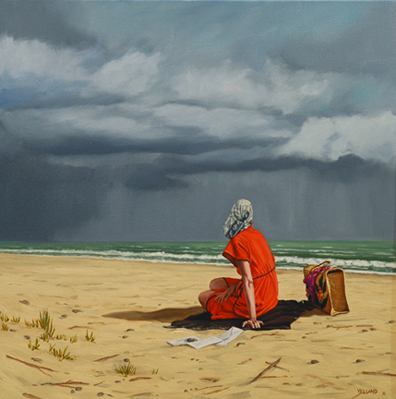
Sean Yelland, Distant (2012)

Sean Yelland, Distant (2012)

_   _   _

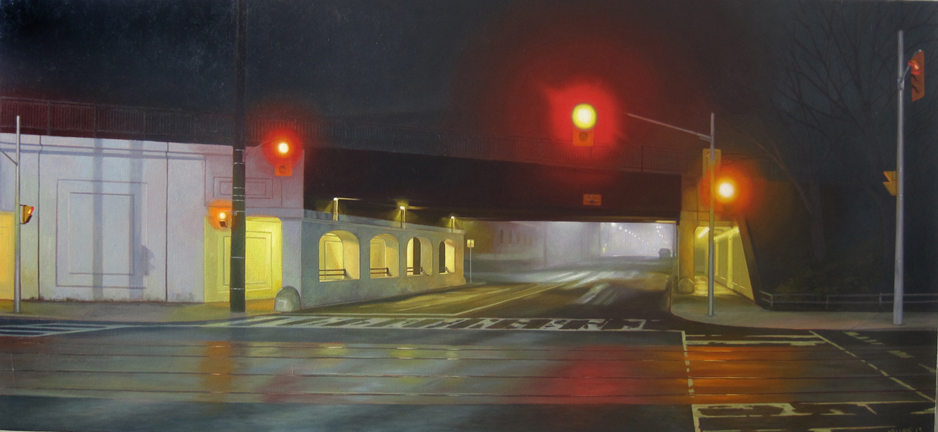
Both of these paintings by Toronto’s urbanist master Sean Yelland convey intrigue and a haunting sense of loneliness for different reasons.   “Distant” is reminiscent of Andrew Wyeth’s “Christina’s World”, while “Stop Everything” brings to mind the late night / early morning solitude evoked by Edward Hopper’s “Nighthawks” and “Early Sunday Morning”.   These pieces by Yelland also hint at his exceptional skill with the techniques of photorealism in his art — his depictions of  muted light, bokeh and blurring particularly stand out.

See more of Yelland’s outstanding work at the amazingly vibrant Ingram Gallery and on Yelland’s own site.

_   _   _

Sean Yelland, Stop Everything (2013)

Sean Yelland, Stop Everything (2013)

The Very Vital Canadian Group of Painters

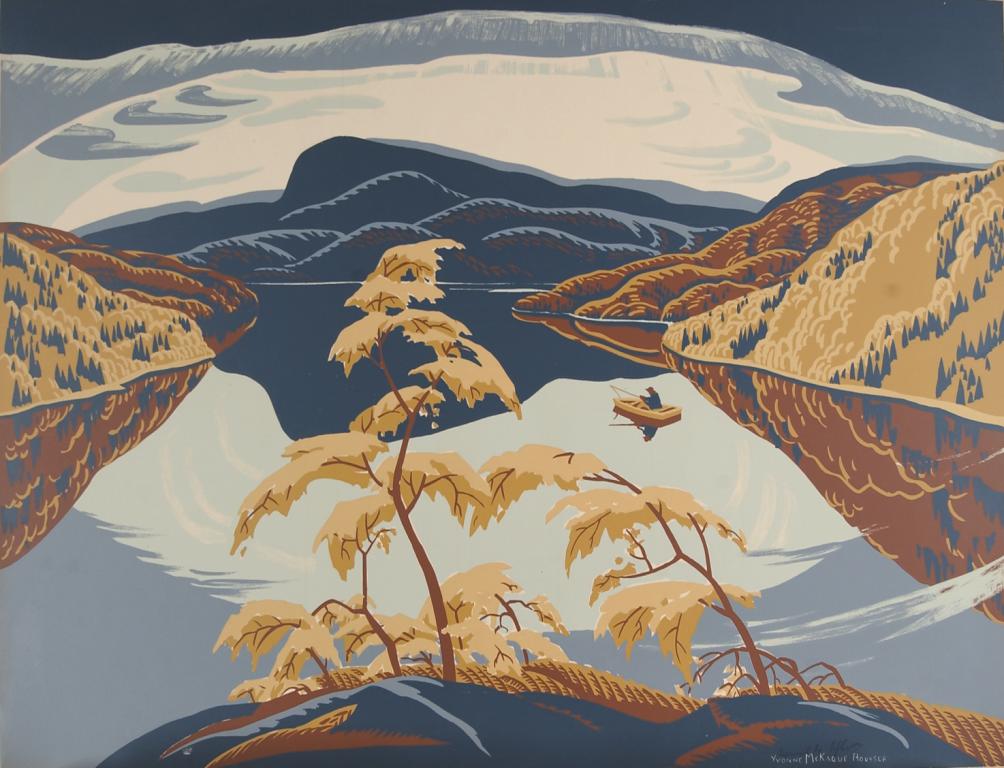
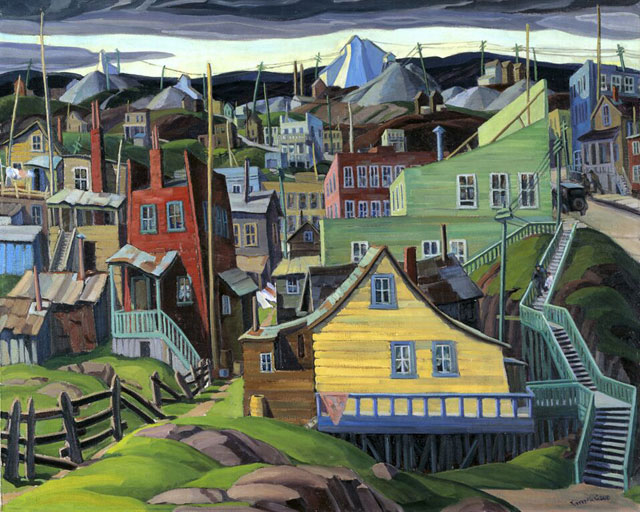
Yvonne M. Housser, Evening, Nipigon River (1942)

Yvonne M. Housser, Evening, Nipigon River (1942)

_   _   _

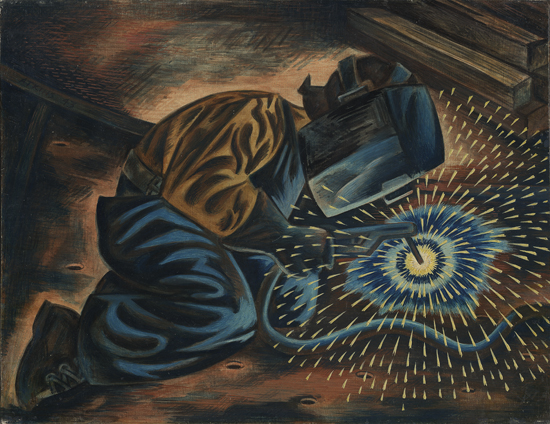
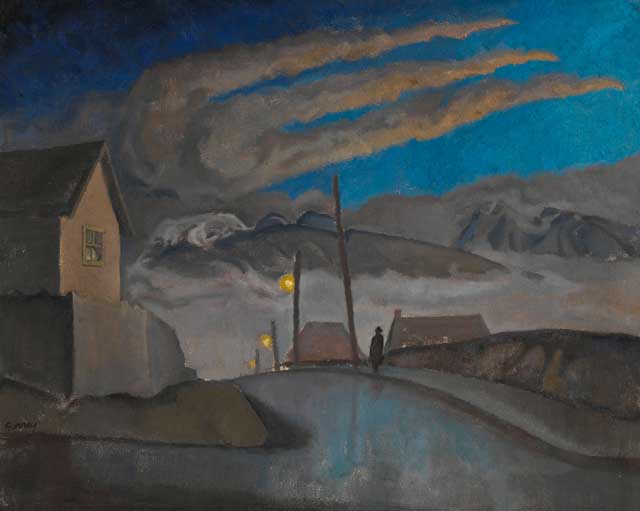
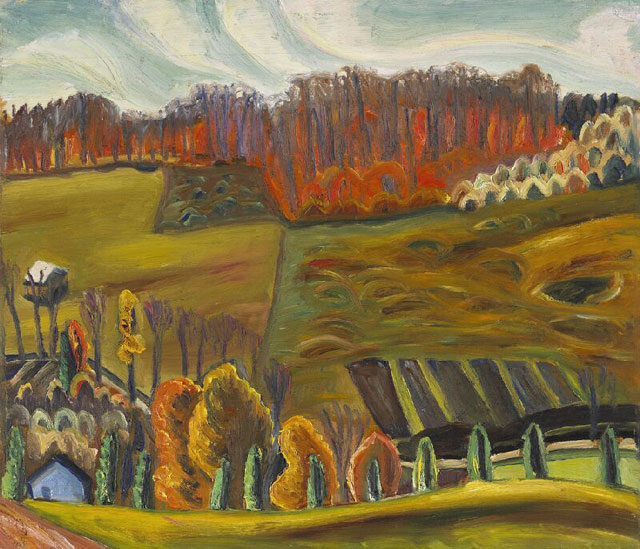
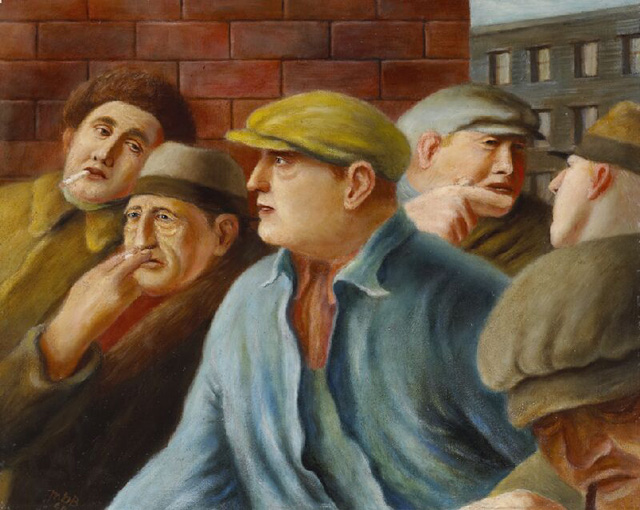
When the Group of Seven disbanded in the early 1930s, the Canadian Group of Painters arose as the creative successor to the Group of Seven’s “nationalist” art and even included several former Group of Seven members, such as Arthur Lismer and Emily Carr.    Yet, although Canadian Group artists produced significant art that was integral to defining a Canadian style of painting, the Canadian Group is not widely known.  This relative lack of attention may be due to the wider time period spanned by the work of the Canadian Group (around 1933-1953), its encompassing over forty artists, and the notably varied styles of its members who focused less on landscapes and more on modern life.   Bringing some long overdue attention to this diverse group of artists, “A Vital Force”, a traveling exhibition devoted to the Canadian Group, recently opened at the Queen’s University Agnes Etherington Art Centre in Kingston, Ontario and runs through mid-July .

Caven Atkins, Arc Welder Working on Bulkhead (1943)

Caven Atkins, Arc Welder Working on Bulkhead (1943)

+++

Yvonne M. Housser, Cobalt (1931)

Yvonne M. Housser, Cobalt (1931)

+++

Edwin Holgate, Early Autumn (1938)

Edwin Holgate, Early Autumn (1938)

+++

Philip Surrey, Going to Work (1935)

Philip Surrey, Going to Work (1935)

+++

Jock Macdonald, Thunder Clouds Over Okanagan Lake (1944-45)

Jock Macdonald, Thunder Clouds Over Okanagan Lake (1944-45)

+++

Prudence Heward, Autumn Fields (1941)

Prudence Heward, Autumn Fields (1941)

+++

Miller Brittain, Longshoremen (1940)

Miller Brittain, Longshoremen (1940)

+++

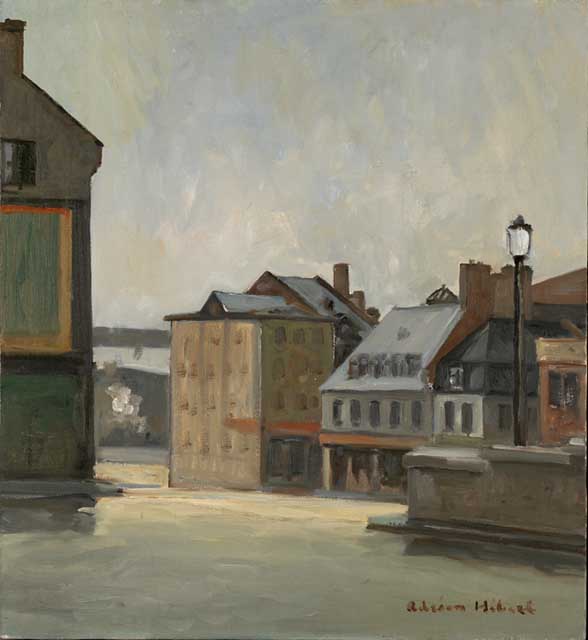
Adrien Hebert, Place Jacques Cartier (1939)

Adrien Hebert, Place Jacques Cartier (1939)

“Shapeshifter” Ben Marr Shreds the Mistassibi River

Like all the exceptional videos in the “Of Souls + Water” series, this eye-opener showing Ontario-based pro-kayaker Ben Marr’s playful mastery of Quebec’s Mistassibi River features dramatic narration, artistic filming and lighting (directed by Skip Armstrong), and an excellent soundtrack (this one: “With You” by Crystal Fighters).  On a side note, with all its hydro power, I knew Quebec has its share of massive rivers but until this video I was unaware just how big.  These waves rival some of the major whitewater swells that I’ve seen on West Virginia’s New River and stretches of the Colorado River coursing through the Grand Canyon.

Essex County and the Lens of Memory

Essex County by Jeff Lemire

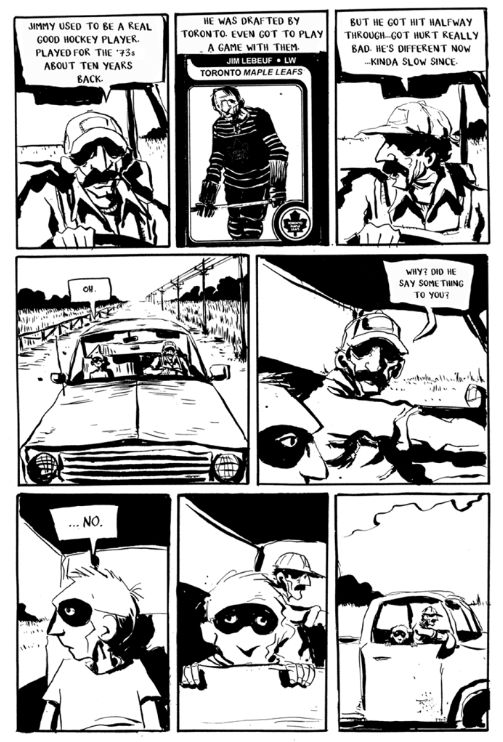
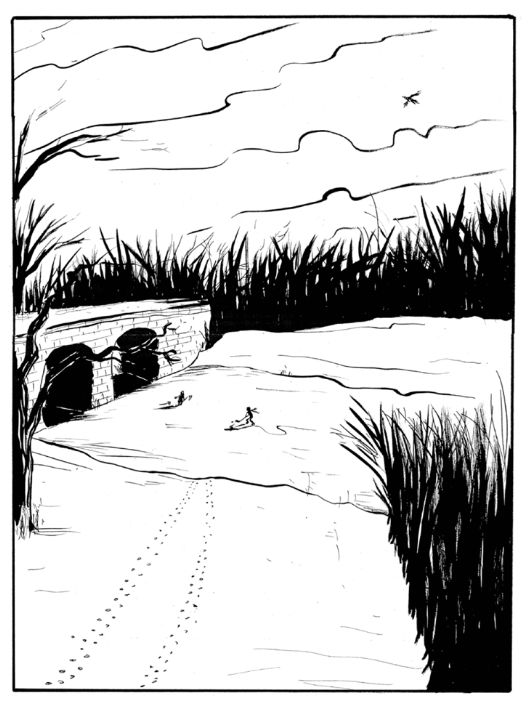
After stumbling upon Jeff Lemire’s “The Underwater Welder”, I then sought out Essex County”, his widely praised 2009 graphic novel about life across several generations in a small county in rural Ontario.  Wow!  What a masterfully written (and drawn) elegy about the power and frailties of memory and personal connections.  Highly recommended.

Essex County -- Jimmy Used To Be A Good Hockey Player

* * *

Essex County -- I've Been Here Before

* * *

Essex County -- Playing Hockey

“Wolf Pavilion” by Michael Adamson

Michael Adamson, "Wolf Pavilion" (2012) Oil on Canvas

Michael Adamson, “Wolf Pavilion” (2012) Oil on Canvas

While the shock of vibrant orange draws me in, what I like most about this vivid painting by Michael Adamson is that there is so much going on in it.   An exhibition of some recent works by this Toronto-born artist opens in May in that city’s Moore Gallery.

Retro Winter Recreation and Travel Ads

Temperatures this far south, as well as the extreme cold gripping much of eastern Canada this week, leave no doubt that we’re deep in the heart of winter.  Because of this, my thoughts turn toward skiing, ice skating, hockey and other winter recreations and the many places above the 49th parallel — among them Banff, Quebec, Whistler, the Laurentians and Jasper — that are popular destinations for cold weather and snowy pastimes.  So, I thought I’d share some retro travel ads and posters touting these places and this season’s activities.  Many of these are from the Canadian Pacific Railway, which engaged in  a wide range of travel promotions for locations throughout Canada (and beyond).  The vivid graphics work their magic by conveying visions of boundless wintry pleasures.  Among the more distinctive of these works are those by Peter Ewart and Roger Couillard, two of the more notable artists commissioned for their attractive illustrations.  More Canadian Pacific travel posters may be seen here on an earlier O’Canada Blog post.

Image Credits:  Library and Archives Canada; Canadian Pacific Railway Archives

Alomar Becomes First Blue Jay in Baseball Hall of Fame

“And especially, to all the Toronto Blue Jay fans [and] the entire organization, thank you for your loyalty and support.  My time in Toronto was the best of my career.  It was with Toronto that we won two World Series together.  You guys embraced me from Day one. You were with me through ups and downs and I am so proud to represent you here in Cooperstown as the first Toronto Blue Jay elected to the Baseball Hall of Fame.”

— Roberto Alomar, commenting on his July 24, 2011 induction into the Baseball Hall of Fame, the first Toronto Blue Jay player to be inducted

CN Tower EdgeWalk — Not for the Faint of Heart!

I’ll readily admit to a fear of extreme heights.  So contemplating the planned EdgeWalk attraction at Toronto’s CN Tower leaves me dumbfounded.   As the rendering posted above shows, this new addition to the CN Tower’s offerings will allow adventurous thrill seekers the opportunity to walk along the outer perimeter of the Tower 1,168 feet (365 meters) — that’s about as high as a 116-story building — above the ground with no handrail and secured only by a harness attached to an overhead guide rail.

Playing to people’s fascination (or maybe a kind of love-hate relationship) with pushing the edge when it comes to heights apparently makes good business sense.  Similar attractions that come to mind include the elevated perimeter walk at the Macau Tower Skywalk in Macau, China, the Las Vegas SkyJump, and the astounding 4,000-feet (1,200 meters) high Grand Canyon Skywalk, to name just a few.  Even now the existing features of the CN Tower include a glass-floor observation area and a glass elevator ascending the Tower.

The EdgeWalk is scheduled to open August 1, with tickets going on sale June 1.  For my part, I’ll look forward to any videos or photos from actual EdgeWalkers but I don’t expect to be in any of them.  More information is available from the CN Tower site.

Ottawa in 30,000 Frames!

Given the most recent post about Ottawa, this seems as good a time as any to share a cool video tribute to that fair city that I came across several months ago while searching on Vimeo.  This is by Will Cyr, a former resident of Ottawa, and it’s amazing the way Cyr has captured the essence of the place so creatively and diligently — frame by painstaking frame.  Hope you enjoy . . .

Ottawa’s Guarded Location

Rideau Canal near Parliament Hill, Ottawa

I’m pretty good staying abreast of notable political developments, but in many conversations it’s usually a good idea to avoid discussions of politics and religion, and I try to adhere to that conventional wisdom.    However, given that politics is such a big part of the American and Canadian cultures and the fact that a federal election has been called by Canada’s current government, I thought during Canada’s version of what we in the States call the “silly season” I’d find a few political-related things about which to comment.

So, installment 1 is  about a piece of historical / political trivia about Ottawa of which I was unaware.  Given the prominence of Toronto, Montreal, Vancouver and Calgary, among other major cities in Canada, I’ve wondered why it is that Ottawa is Canada’s capital city.  That question was partially answered for me during a conversation earlier this week from a couple of visitors from Toronto.  Continue reading

Matthew Barber’s “Easily Bruised”

I’ve been listening to the soothing indie folk melodies of Toronto-based singer/songwriter Matthew Barber for the past year now and I think he’s a musical artist who’s likely to garner much-deserved greater attention in the near future.  The video below is for “Easily Bruised,” which is from his 2008/09 Ghost Notes album.  I couldn’t locate a high quality video for another standout song of his, “True Believer,” from the 2010 album of the same name, but you can listen to that on Barber’s MySpace page (link below) — and get a copy from iTunes or elsewhere and make him (and yourself) happy.   : )

Official website for Matthew Barber

Myspace link for Matthew Barber 

Toronto’s Nuit Blanche

So-called Nuit Blanche arts festivals are held in many cities throughout the world, including in Montreal and Toronto.  Nuit Blanche, translates to “white night” and, more loosely, as “sleepless night” and has been typically associated with winter festivals taking place at night.  This year, Montreal held its Nuit Blanche in February, while Toronto held off until just a few days ago, with its own nighttime arts festival kicking off for twelve hours starting around twilight on October 2.   While I arrived in Toronto for a business trip a day too late to enjoy this first hand, the 2010 event marked the fifth anniversary for this all-nighter out on the town in Toronto.  An unsuspecting visitor to the city that evening might very well have observed the wondrous and grand spectacle of this arts fete and concluded that Torontonians had gone blissfully mad.

TIFF 2010 Wraps

The Toronto International Film Festival concluded its 35th annual convocation of film industry movers and shakers and film aficionados from across Canada  and the world this past weekend.  This year’s TIFF received glowing reviews across a wide swath of the media that covers arts, film, media and business.   Not only has TIFF thrived over its history but it has arguably become the most influential festival as far as North American film dealmaking goes, even if the perception of the general public has not yet caught on to this reality.

A particularly cool aspect about the TIFF organization is that its programming extends beyond its annual Fall exposition and encompasses programming throughout the year.  Notable in this regard are the Essential Cinema and Canada’s Top Ten showings.  Essential Cinema is a compilation of the top 100 films as selected by TIFF programmes and festival-goers, all of which TIFF is screening at its new five-story Bell Lightbox venue in downtown Toronto.  Canada’s Top Ten showcases the top ten feature and short films produced in Canada in the prior year.  Between the robust programming of TIFF and the equally stellar and extensive array of film offerings supported by the Film Board of Canada, one can only marvel at the depth and vibrancy of the film arts and industry scene in Canada.

Link to TIFF website:  http://tiff.net/

Captivate’s Toronto Sweepstakes

Captivate is the clever company that operates those small display screens in office building elevators.  The screens provide info-bytes that help to pass the time as the compartments ascend and descend throughout the day.  Last week while in the elevators I noticed the tell-tale maple leaf adorning various screen shots and that piqued my interest.   Captivate, in partnership with several Ontario tourism agencies, is running a sweepstakes for which the prize is a trip for two to Toronto.  Cool!  I had not made the effort before to visit the Captivate website but this caused me to track it down.  Here’s the link to the sweepstakes:  http://www.captivate.com/explorecanada/

Whether or not you enter this sweepstakes, you should check out Toronto, which is indeed a great place to visit and explore.

Jim Shaughnessy and Canadian Railroad Photography


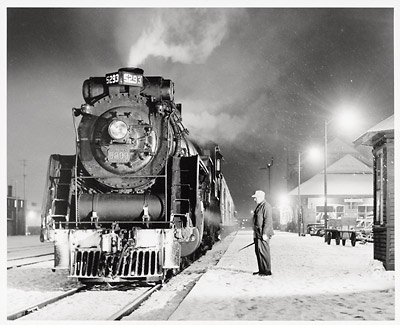
 (Canadian National, Sherbrooke, Quebec –1957)

Although during most of my childhood my family lived closed to various railway lines, I was born too late to regularly experience the thrill of hulking steam-powered trains pull into nearby stations.  On those rare occasions as a child that I encountered one of these mechanical monsters chugging through a rail crossing the feeling that gripped me was one of utter awe.  While the era of steam locomotives is now a fading memory, my wife recently surprised me with a gift of The Call of Trains:  Railroad Photography of Jim Shaughnessy (edited and with text by Jeff Brouws).

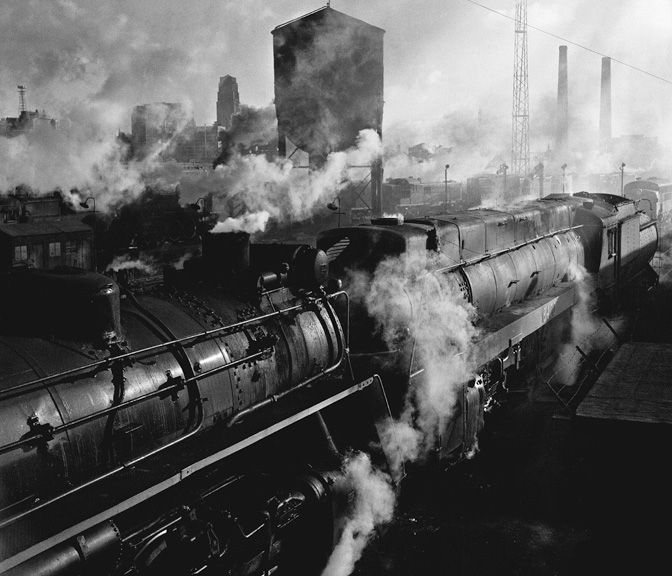
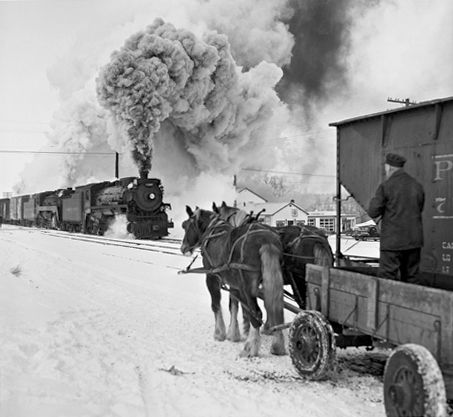
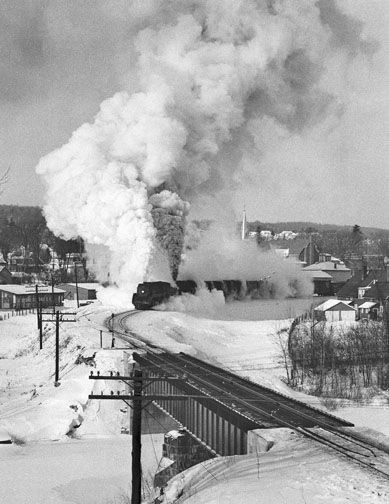
As a serious amateur photographer, I appreciate the artful composition of Shaughnessy’s exquisite black-and-white images.  He was a pioneer of railroad photography and his career extended over half a century, with many of the strongest images from his extensive work being from the 1950s and 1960s.  Because he lived most of his life in upstate New York, Shaughnessy was able easily to make periodic sojourns through Quebec, Ontario and other parts of Canada to capture amazing images of both the Canadian Pacific and Canadian National rail lines.   Underscoring this is that over a fifth of the images in the The Call of Trains are of Canadian railway scenes.   Below is a sampling of some of the wonderful images that may be found in the book.

      (Canadian Pacific, Spadina Avenue Facility, Toronto –1957)

 (Canadian Pacific, Cookshire, Quebec –1956)

(Canadian Pacific, Double-Headed Steam Locomotives and Freight Train, Lennoxville, Quebec –1954)

Link to The Call of Trains:  Railroad Photographs by Jim Shaughnessy on Publisher’s Website:   http://books.wwnorton.com/books/978-0-393-06592-3/

The Ambassador Bridge and Control of the Canadian-American Border


The Ambassador Bridge

Although it seems like an absurd question at some level, the question of whether a private individual or business should be allowed to own a major access point — perhaps even the single most critical access point — along the U.S.-Canada border came to mind as I read an article from The Globe and Mail sent to me last week by a Canadian friend.  The Ambassador Bridge, which spans the Detroit River, is the principal transportation link between Detroit, Michigan and Windsor, Ontario, and across this route passes an astounding 40% or so of all goods that trade between Canada and the United States. 

According to the G&M article, the federal government in Ottawa has offered to loan nearly US $600 million to cash-strapped Michigan to help finance the construction of a new more modern bridge in an effort to relieve the massive congestion that currently exists on the Canadian side of this border crossing.  Standing in the way of this much-needed improvement is the Detroit International Bridge Company, which  actually owns the bridge and, unsurprisingly, wants to prevent any new bridge that it does not control. 

Even less than a century ago it was common for ferry crossings across many rivers in each country to be operated by private citizens who were enterprising enough to organize a ferry service.   In the present situation of what to do about the need for a better river span, I’ll concede that there are many nuances and competing interests involved that are easily glossed over.  Yet, it is amazing that at this late date, such a major artery of commerce and one that is so vital to both countries could be solely in the hands of a private entity and without any substantial public oversight.   

Link to article:    http://www.theglobeandmail.com/report-on-business/ottawas-550-million-loan-offer-for-new-bridge-launches-war-of-words-in-michigan/article1551117/


The Hidden Cameras: “In the Na”

Among the songs that I’m wearing out in my iPod this week is the retro sound of “In the Na” by The Hidden Cameras, an indie folk rock band based in Toronto.  (This video is an extended version of the song, with the music actually starting at 1:43 for those that want to skip to that point.)  Other notable songs of theirs include “I Believe in the Good of Life,” “Doot Doot Ploot,” and “We Oh We”.

Who’s This Tim Horton Fellow, Anyway?

In recent months, an icon of Canadian food fare has started to raise its profile here in ths U.S.  I’m speaking of Tim Hortons, whose chain of about 3,500 shops, mostly throughout Canada, offers donuts, coffee and sandwiches.  The closest comparison I can think of for those in the U.S. is a cross between Dunkin Donuts and Starbucks  —  Tim Horton’ offerings of baked goods are very similar to Dunkin Donuts but the Canadian chain’s menu includes a heavier dose of traditional lunch sandwiches and soups and Tim Hortons is Canada’s largest seller of coffee drinks, although without the complicated varieties requiring the attention of a barista.  As most Canadians of coffee-drinking age also know, the namesake of the company is Tim Horton, one of the country’s most celebrated hockey players, who played for the Toronto Maple Leafs in the 1950s and 1960s and who, in 1964, opened what was then a modest coffee and donut shop in the suburbs of Ontario.

Last summer, Tim Hortons announced the opening of about a dozen locations in New York City and a few months later cut the ribbon on a location at the U.S. Army’s facility at Fort Knox, Kentucky.  While their stores are dotted all across Canada, in the U.S. they are principally only found in the northeast and not really seen below West Virginia.  But, that may be changing.  Exhibit No 1. is this:  a couple of weeks ago a local branch of RBC (Royal Bank of Canada) in Atlanta held a “Coffee with Tim” promotion in the morning, in which RBC brought in plentiful quantities of Tim Hortons coffee to warm up patrons who may have been wondering exactly who is this Tim fellow and why does he want to have coffee with us anyway.  Clever promotion for both the bank and Tim Horton’s and a nice touch for Canadians far from home.

On my visits to many Canadian cities and towns I’ve frequently stopped in for a cup of coffee at a Tim Hortons because they are so convenient.  I suppose because of their presence just about everywhere there, these shops provide a sort of common comfort food to Canadians across their country, much like McDonald’s (at least more than any other quick service or fast food outlet) does here below the border.   Tim Hortons is so popular in Canada, I once had a Canadian friend tell me that anyone who owns one of these franchises essentially had a license to print money because, in his words, “these places are like gold mines.”

Perhaps, then, the Fort Knox location makes a symbolic statement.  Given the vast size of the U.S. market, I am sure Tim Hortons sees plenty of opportunities here, so I am sure that their stores will be popping up on more radar screens — and other bank branches — in the U.S. before too long.

Ice Wine Taste Test

An article in last Friday’s NY Times (http://travel.nytimes.com/2010/02/26/travel/escapes/26icewine.html?scp=1&sq=icewine&st=cse) on Canadian icewines caught my attention both because of the connection to Canada and because I had previously not heard of icewines.  I’ve sampled many wines over the years but am by no means an oenophile, so my being unaware of a notable wine variety is not that unusual.  It turns out that icewine has quite a following and the wineries of the Niagara Peninsula of Ontario, and to a lesser extent those in southern Quebec and the Okanagan Valley of British Columbia, have played a major part in elevating the popularity of icewine on this continent and beyond.

The key factor that distinguishes icewine is that the grapes are left on the vine past normal harvest season and when the temperature is below -8 Celsius (about 17 Farenheit), usually in December or January, the grapes are carefully picked by hand.  At such low temperatures the water content in the grape stays frozen resulting in a significantly higher concentration of juice when the grapes are crushed compared with the process for making other wines.  The yield from each harvest is also correspondingly lower, which translates into the wine being more expensive to purchase.

With this background in mine, a few days later I ventured out to a local wine shop to purchase a bottle to sample.  Although judging by the websites for several leading icewine wineries, there is an extensive range produced, this far south in the U.S. the selection is quite limited and I was only able to track down a bottle after visits to three shops that normally have extensive wine offerings.  At the place I located this elusive wine, Ansley Wine Merchants, they actually stocked two types of Canadian ice wine, Inniskillin’s 2006 Vidal and Jackson-Triggs 2007 Proprietor’s Reserve Vidal.   I got both thinking I would compare the two.  (They also had an Austrian icewine on hand, but the priciness — US $55 for the 375 ml bottle of Inniskillin and US $21 for a 187 ml bottle of the Jackson-Triggs — restrained me.)

A few days later, after letting the wine chill, my wife and I tried each of these two curiosities.   Icewines are generally referred to as dessert wines and I was expecting them to be sweet in the manner of many flavored liqueurs.   Sampling the Inniskillin first, this partly turned out to be the case, but the sweetness was balanced by a brisk acidity, which apparently is characteristic of icewines, so the level of sweetness is not intense to the point of tartness.   The same was true of the Jackson-Triggs, although this particular vintage seemed even sweeter.  I’ve never been good at describing the flavors present in wines, but the makers of both attribute flavors of tangerine, papaya and apricot, which even I can discern.   My wife immediately pronounced the taste pleasantly complex.  Being more of a vodka drinker myself, I was glad to see that an icewine martini was among the serving recommendations and this suited my own tastes better than the straight icewine.

Sweet drinks are not normally to my liking, so I am unlikely to become an icewine connoisseur.  Yet, all in all my introduction to icewine proved to be an interesting diversion and another useful learning experience about an aspect of Canada previously unknown to me.

In Memory of John Babcock

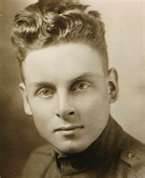
(John Babcock at age 20)

Several years ago, an office colleague shared with me his fascination with routinely reading the obituaries.  Not long afterwards, I found myself scanning that section of the papers more often.  While it seems a morbid diversion, since the time I was a kid I’ve always appreciated biographies and obituaries are a wonderful opportunity to reflect upon lives well lived.

In that vein, comes news in many of the papers (even this far south) that last week John Babcock, the last Canadian veteran of World War I, passed away at age 109.  While his age alone is amazing, his connection with the so-called Great War prompts searching thoughts about how very terrible for its time that event was.  I am sure World War I monuments exist in many places,  but I distinctly recall these most in Canada and here in the American South.  These monuments have a special majesty and on each that I’ve seen there are too many names inscribed for one not to feel moved by the human toll exacted by that sad conflict.

Concealing his actual age of 15, Babcock, originally an Ontario farm boy, enlisted and was sent overseas.  Before he could be deployed in combat,  it was discovered that he was still a minor.  Interesting to contemplate whatever sense of derring-do, adventure, patriotism, economic need or the like would prompt a young man of 15 — a boy, really! — to do such a thing.   But that, of course, was a different time when calls to duty perhaps weighed more on the collective mind, particularly of budding young men.

His passing was sufficiently noteworthy to Canada that Prime Minister Harper acknowledged the occasion and referred to Babcock as the last living link to World War I, “which in so many ways marked [Canada’s] coming of age as a nation.”  So much so that, reflecting on this, it is understandable and puts into context why Canada celebrates a specific holiday, Armistice Day, commemorating its involvement in World War I.

May John Babcock, and all the souls who valiantly sacrificed so dearly, be remembered well.