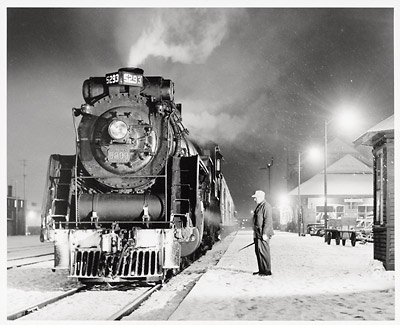
Jim Shaughnessy and Canadian Railroad Photography


 (Canadian National, Sherbrooke, Quebec –1957)

Although during most of my childhood my family lived closed to various railway lines, I was born too late to regularly experience the thrill of hulking steam-powered trains pull into nearby stations.  On those rare occasions as a child that I encountered one of these mechanical monsters chugging through a rail crossing the feeling that gripped me was one of utter awe.  While the era of steam locomotives is now a fading memory, my wife recently surprised me with a gift of The Call of Trains:  Railroad Photography of Jim Shaughnessy (edited and with text by Jeff Brouws).

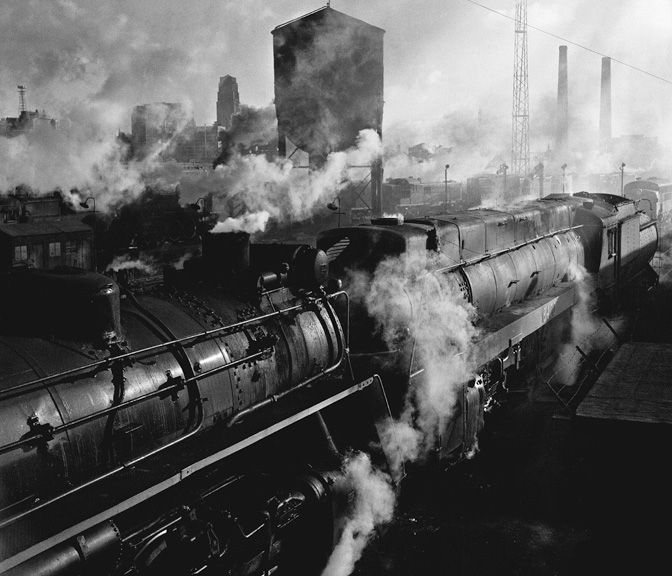
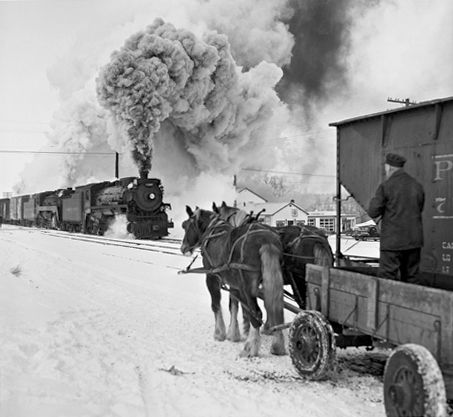
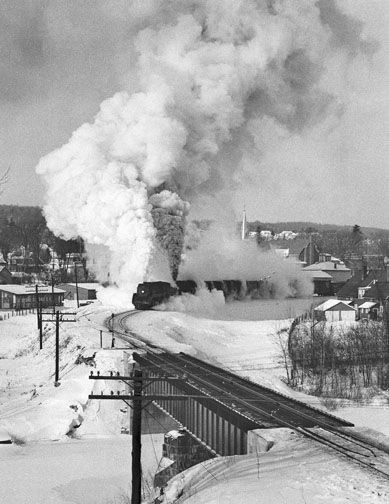
As a serious amateur photographer, I appreciate the artful composition of Shaughnessy’s exquisite black-and-white images.  He was a pioneer of railroad photography and his career extended over half a century, with many of the strongest images from his extensive work being from the 1950s and 1960s.  Because he lived most of his life in upstate New York, Shaughnessy was able easily to make periodic sojourns through Quebec, Ontario and other parts of Canada to capture amazing images of both the Canadian Pacific and Canadian National rail lines.   Underscoring this is that over a fifth of the images in the The Call of Trains are of Canadian railway scenes.   Below is a sampling of some of the wonderful images that may be found in the book.

      (Canadian Pacific, Spadina Avenue Facility, Toronto –1957)

 (Canadian Pacific, Cookshire, Quebec –1956)

(Canadian Pacific, Double-Headed Steam Locomotives and Freight Train, Lennoxville, Quebec –1954)

Link to The Call of Trains:  Railroad Photographs by Jim Shaughnessy on Publisher’s Website:   http://books.wwnorton.com/books/978-0-393-06592-3/

Yann Martel’s Beatrice and Virgil

I finished Yann Martel’s latest novel, Beatrice and Virgil, about two months ago and set it aside unsure what to make of it.  I figured I’d give this work by the Saskatchewan-based Martel some time to percolate a little in my mind before venturing comment.  I truly enjoyed his Life of Pi, as clever a tale written in parable form as one might find.  I later learned that Martel was the 1991 recipient of Canada’s Journey Prize (related O’Canada Blog entry on 3/21/10), which enhanced my appreciation for his writing abilities.  As icing, because the author is Canadian, at some level I expected (hoped) that to weigh in the book’s favor.  So, given all this, I looked forward to this latest offering by one of Canada’s contemporary literary lights.

Alas . . . .  My predisposition and my prolonged rumination could not salvage my conclusion that this book comes up short on several measures.  While it may be that the shadow of success cast by Life of Pi would make just about any author’s subsequent efforts fall short by comparison, I felt in many ways that a kind of writer’s block may have gotten the best of Martel with this work.  There are too many elements that bear at least a passing resemblance  to the earlier novel or the actual life of its author:  like Martel, the protagonist in Beatrice and Virgil, is an author who found  initial success with a work that was a parable and who then had a hiatus of some time before completing another novel; also like Martel, after encountering resistance to an innovative manner of telling a combined fictional story and a non-fiction narrative about the Holocaust, he retreats from writing; the main character then chances to meet a taxidermist-cum-writer in need of editorial guidance with a play whose main characters are animals — a donkey (Beatrice) and a howler monkey (Virgil); Beatrice and Virgil struggle to recount the horrors of a series of events perpetrated among animal-kind that, in the manner of a parable, is supposed to be akin to the Holocaust.

There are certainly a number of imaginative flourishes in the novel.  The various ways in which the horrors are referred and recounted is interesting as is the idea that all the action in the play is supposed to take place (literally) on a great big shirt.  The connection between the lengthy recounting of a story of cold-blooded animal hunting written by the 19th-Century French writer Gustave Flaubert and the mysterious life of the taxidermist-playwright is also intriguing.  However, Martel’s story itself plods along and it is unclear whether Martel’s point about the Holocaust is that we should appreciate how vastly horrible it was — notwithstanding that, with the exception of true historical Luddities or denialists, the understanding is widely shared that, indeed, the Holocaust was immensely terrible.  So, this is not much of a revelation by Martel.  Maybe, like Martel’s fictional novelist in Beatrice and Virgil, Martel wanted to conjure up a more creative way to approach the Holocaust, or the subjugation of animals by people,  than one can find in traditional literature on those subjects.  Yet, at the end of all this, this novel feels like a work that is more of a palette cleanser than the satisfying main course we expected.

Canada’s Regional Sounds on Smithsonian Folkways

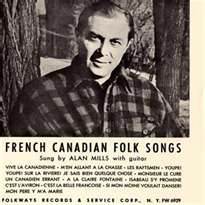
French Canadian Folk Songs Track Listing  (Song suggestion:  “A la Claire Fontaine”)

Pretty much for as long as I can remember I’ve always liked folk music.  Among the earliest folk songs I can recall is the French-Canadian song “Alouette,” which every now and then would be played in one of my grade school classes as I was growing up in New York.  I enjoyed the fast, playful pacing of this simple children’s tune and, not knowing any French at the time, was more than amused years later to learn that it dealt with the plucking of a chicken.

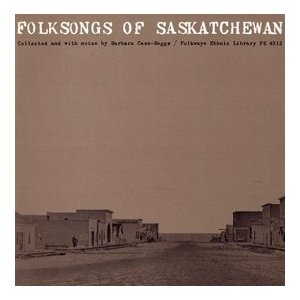
Folksongs of Saskatchewan Track Listing:  http://www.folkways.si.edu/albumdetails.aspx?itemid=761

(Song suggestion: “Saskatchewan”)

That song, along with hundreds of other Canadian regional tunes, can be readily found through the website for Smithsonian Folkways.  Over almost  40 years, Folkways Records devoted itself to recording songs and sounds from America, Canada and other parts of the world, producing a prodigious 2,168 albums.  Several years ago, the Smithsonian acquired the archives of Folkways Records and part of the Smithsonian’s mission was to make the collection widely available, which it accomplishes, in part, through the website.

A search of “Canada” on the Smithsonian Folkways site reveals a total of 118 Canada-related records.  Because most of these recordings are from the 1950s and 60s, they are very difficult to find elsewhere, so it is amazing that so many are collected in one location.  (Link to Canadian-Related Records on Smithsonian Folkways:  http://www.folkways.si.edu/searchresults.aspx?sPhrase=canada&sType=’phrase’).

While the Smithsonian Folkways collection is broader than just Canadian music, there is a further strong Canadian connection of this music by virtue of the University of Alberta’s folkwaysAlive! project that is part of the Canadian Centre for Ethnomusicology.  The University of Alberta has also made a significant grant in support of the mission of Smithsonian Folkways.  (Link to University of Alberta’s folkwaysAlive!:  http://www.fwalive.ualberta.ca/home/about-us/)

There are many albums worth noting on the Folkways site.   A few examples, with links to album track listings and a suggested song to which you might listen for a flavor of the album, are noted above and below.

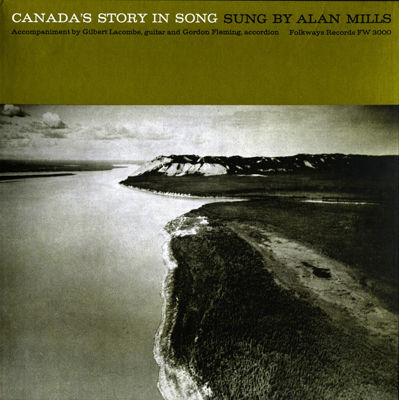
Canada’s Story in Song Track Listing: http://www.folkways.si.edu/albumdetails.aspx?itemid=2116

(Song suggestion:  “Poor Little Girls of Ontario”)

We’ll Rant and We’ll Rave Track Listing:    http://www.folkways.si.edu/albumdetails.aspx?itemid=1523

(Song suggestion:  “Harbour Place”)

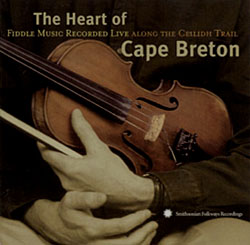
Heart of Cape Breton Track Listing:  http://www.folkways.si.edu/albumdetails.aspx?itemid=2973

(Song suggestion:  My Great Friend John Morris Rankin, etc.” — Medley)

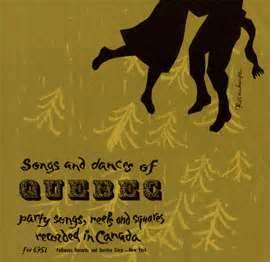
Songs and Dances of Quebec Track Listing:  http://www.folkways.si.edu/albumdetails.aspx?itemid=1241

(Song suggestion:  “Danse Carre”)

Canada Takes Over The New Yorker


At the beginning of June, I noticed two full back-to-back pages of travel-related ads in The New York Times.  It stood out both because of the dense ad compilation and the fact that each of the ads was laid out as a sort of website screenshot including various social media links and references to comments, uploads, albums and the like.   I thought how cool that these Canadian organizations, including Tourism Toronto, Rail Canada, Canada.travel and Air Canada, among others, obviously banded together to make a more impactful impression.   I intended to comment on that before now but this past month has been unusually busy personally and professionally so I clipped the ads and set them aside for later comment (which is now!).

So, how much cooler is it that something similar but even more ambitious has been done with the June 28, 2010 issue of The New Yorker.  When I saw the ad on the inside cover (above) I was happy to see such a nicely laid out and to the point ad on Canada.  As I thumbed through the issue one after another distinctive maple leafs made it unmistakable that something was up with this issue.  Other than customary adverts for The New Yorker itself, every single ad was from a Canadian agency, province, business or institution.   In the online interactive edition there are also embedded videos that add to the message.

I’ve been a subscriber to this publication for over 20 years and the only other time I recall a similar campaign was when Target, the department store, took over every ad page and scattered its target logo throughout the magazine.  I’m sure the reason it’s not done more often is that it takes a good deal of expense and coordination, but that also makes it stand out all the more.  Bravo, Canada!

My fave is the fun “Bring Your Boots” ad by Alberta.

Link:  http://archives.newyorker.com/?i=2010-06-28#folio=CV1 (may require a subscription to access)

Yukon Art in Asheville


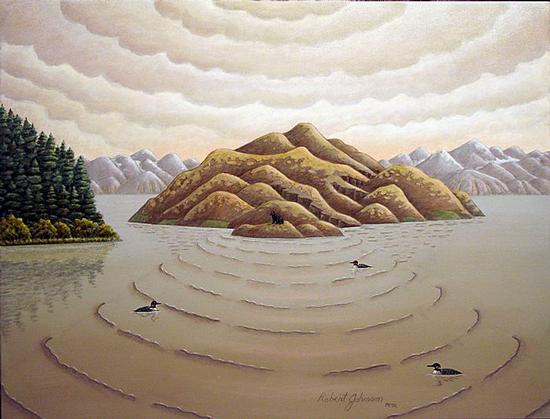
“Lake Tarfu, Yukon”

Several weeks ago my wife and I took a weekend trip to Asheville, NC, a small mountain city full of delightful shops, galleries and eateries.  Whenever I travel somewhere I am usually alert for a handful of things that are almost always on my personal radar, among them things with a connection to Canada.  So, as I was out on an early morning jog (great time for thinking, by the way) through the compact downtown area, I wondered what bits of Canadiana might surface on this trip.  Lo and behold, within the next few minutes a large painting of an exotic mountain scene caught my eye in the large display window of the Blue Spiral 1 Gallery.   I paused for a minute to consider further the bright image and at that point realized the painting was part of gallery’s then featured exhibition, called “The Golden Circle”, of works by North Carolina artist Robert Johnson documenting his travels through Southeast Alaska and the Yukon Territory.

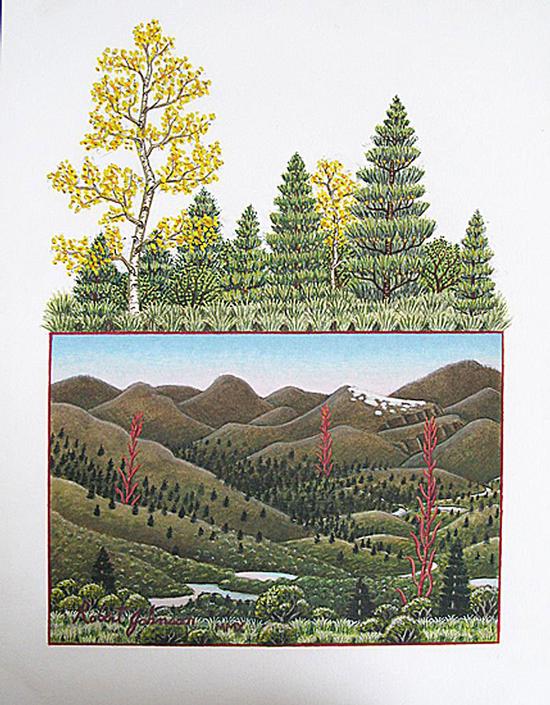
Johnson compiled notes and sketches in his travel journals — pages from which were on display in the gallery — of the local fauna and flora in much the manner that a 19th-century amateur naturalist would have done.  From these he then prepared vivid acrylic and oil paintings of many of the notable sites he encountered on his journey through this remote territory in Canada’s far northwest.  His style immediately brought to mind the somewhat whimsical and primitive style of French Post-Impressionist artist Henri Rousseau.

“Bear Island, Lake Atlin, Yukon”

“North of Chilkat Pass, Yukon”

Link to Robert Johnson’s artwork at Blue Spiral 1:  http://www.bluespiral1.com/Master-HTML/artist/johnso_robert_10062/home.htm

The Ambassador Bridge and Control of the Canadian-American Border


The Ambassador Bridge

Although it seems like an absurd question at some level, the question of whether a private individual or business should be allowed to own a major access point — perhaps even the single most critical access point — along the U.S.-Canada border came to mind as I read an article from The Globe and Mail sent to me last week by a Canadian friend.  The Ambassador Bridge, which spans the Detroit River, is the principal transportation link between Detroit, Michigan and Windsor, Ontario, and across this route passes an astounding 40% or so of all goods that trade between Canada and the United States. 

According to the G&M article, the federal government in Ottawa has offered to loan nearly US $600 million to cash-strapped Michigan to help finance the construction of a new more modern bridge in an effort to relieve the massive congestion that currently exists on the Canadian side of this border crossing.  Standing in the way of this much-needed improvement is the Detroit International Bridge Company, which  actually owns the bridge and, unsurprisingly, wants to prevent any new bridge that it does not control. 

Even less than a century ago it was common for ferry crossings across many rivers in each country to be operated by private citizens who were enterprising enough to organize a ferry service.   In the present situation of what to do about the need for a better river span, I’ll concede that there are many nuances and competing interests involved that are easily glossed over.  Yet, it is amazing that at this late date, such a major artery of commerce and one that is so vital to both countries could be solely in the hands of a private entity and without any substantial public oversight.   

Link to article:    http://www.theglobeandmail.com/report-on-business/ottawas-550-million-loan-offer-for-new-bridge-launches-war-of-words-in-michigan/article1551117/


Magnificent Travel Art of the Canadian Pacific Railway

Chartered in 1881 as a means of fulfilling the federal government’s commitment to British Columbia when it joined into the Canadian Confederation with the condition that a transport link from the east be established all the way to B.C., the Canadian Pacific Railway became a crucial link in forging a national identity that literally and figuratively united the east and west coasts of Canada.  As it grew, the CPR, as it was sometimes called, acquired additional rail corridors, steam ship lines, hotels and telegraph facilities.

Because of its many transport holdings, the Railway became associated more generally with travel of all sorts within the Canadian border, and, for many, even travel far beyond the country.  To promote its extensive travel offerings, the CPR commissioned a diverse array of what is now regarded as classic travel art, in the form of exquisitely illustrated posters, brochures and other advertising pieces.  A few examples are shown below (click on image for larger view).

Graphics courtesy of the Canadian Pacific Railway Archives.  Link:   http://www8.cpr.ca/cms/English/General+Public/Heritage/Graphic+Arts+Gallery/default.htm

The Rakish Angles: “Dan and Misha’s Wedding”

A couple of months ago I stumbled onto the web site for Bearwood Music, a small music label in British Columbia.  While there are several artists recording with Bearwood that interest me, one of the standouts is the band The Rakish Angles, who are from Gibsons, British Columbia.  The amazing quartet performs a wonderful mixture of instrumental bluegrass and jazz, that has both traditional elements and some experimental aspects (for instance, a couple of their pieces meld bluegrass with flamenco — a combination I’ve not heard before).  Although they were justly among the nominees for “Instrumental Group of the Year” in 2009 at the Canadian Folk Music Awards, I sense that these solid musicians don’t yet get the exposure their considerable talents deserve.

The song “Dan and Misha’s Wedding”, from their debut CD “The Rakish Angles”, is particularly beautiful as both a hopeful piece and as a contemplative elegy containing musical threads that, at least to me, are readily connected to  Scottish and Irish traditional pieces.  Because of this, I’m sure that the graceful notes of the violin in this song would have been familiar to many early pioneers in Canada from the British Isles.  It’s also reminiscent of any number of instrumental folk tunes still common today in the mountain regions of the southern U.S., which was also populated early on by immigrants from the same region and which has its own rich bluegrass heritage.   The song, which I’ve had on one of my recent iTunes playlist and which I’ve listened to repeatedly this past week, can be listened to in full on the band’s MySpace page (link below) or sampled and purchased on iTunes.  Give them a fair listen and I’m sure you’ll find some other truly good things  by these worthy performers.

Link to The Rakish Angles on MySpace:  http://www.myspace.com/therakishangles

Link to The Rakish Angles on Bearwood Music site (and from which other Bearwood recoding artists can be accessed):  http://www.bearwoodmusic.com/artists/the-rakish-angles/the-rakish-angles/

Worth a Thousand Words: Graphic and Scary Cigarette Warning Labels

As I was heading back to Dulles Airport outside D.C. earlier today to catch a flight home, the cab driver had his radio tuned to a segment on NPR in which there were a couple of speakers from the U.S.  discussing the recent controversy over the relatively new product called Camel Orbs, which are small tablets that release a dose of tobacco nicotine.   One of the concerns is that young children and teens may be more susceptible to such a product because they appear to be like candy or mints.  A piece of flotsam that surfaced from this conversation was the observation that tobacco warning labels here are not very effective and that perhaps we should borrow from the Canadian example of requiring tobacco products to be labeled with very graphic images accompanied by direct and candid warnings of the related dangers.   This is in the spirit of a picture being worth a thousand words.  If you’ve been to Canada for even a short time these warning labels are hard to miss.  The above label is one of the more tame.  I’ve not tracked down the data, but I wonder if the percentage of Canadians smoking or consuming tobacco products is lower than that of the U.S. and, if so, whether the labels are part of the reason.

In case you haven’t seen any of these labels, here’s a link to many of these labels from the Health Canada web site:   http://www.hc-sc.gc.ca/ahc-asc/media/photogal/label-etiquette-eng.php

Canada’s Colorful Coinage

As a teenager I avidly collected coins, and even today, although I’ve not been collecting for years, I still scan my change for the occasional odd coin that might have some collectible interest.  Some of the more prized items among the U.S. coins in my collection were my Peace dollars from the 1920s-30s, the Walking Liberty half dollars from about the same period and an early $5 Indian head “sunken design” gold piece.  All this coinage was notable for exquisite and unmistakable design artistry.  Yet, it is fair to say that U.S. coin designs of the past few decades are by and large staid and fairly boring.  The few exceptions to this are the commemorative state quarters, some of the recent design variations on the reverse of the Lincoln penny and the Jefferson nickel, and possibly the Sacagawea dollar.

So, while recently thumbing through a subscription to one of my Canadian magazines, my attention was drawn to an ad by the Royal Canadian Mint for a special issue silver dollar marking the centennial of the Canadian Navy, which in turn caused me to visit the Mint’s website (www.mint.ca).  I was aware of Canada’s 2004 issuance of the “red poppy” quarter, which was the world’s first general circulation coin using added color.  Those coins stand out and you can’t help but wonder when you examine one closely why the colorful flower doesn’t rub off.

Quarter Coin, with Red Poppy (2004)

Besides having some quirky nicknames for its coins (such as the “loonie” for its $1 coin and the “toonie” for its $2 coin), it turns out that Canada has pioneered color coin technology in a number of its general circulation coins, as well as with quite a few mintages of other coins that are specially issued for collectors.  In addition, there are coins with mixed metals, with embedded crystals and featuring holograms.  This is pretty amazing stuff!  (Canadians, do you know your Mint is doing this?)

Simply browsing the Mint’s website reveals numerous outstanding designs with themes touching upon all aspects of Canadian society.  Coins routinely serve as constant reminders of significant cultural touchstones and the numerous offerings of the Mint attest to this function.  There are too many coins on the Mint’s site that elicit my appreciation.  What follows are just a few of  these:

$20 Silver Coin, with  Blue Snowflake Crystals (2009) 

$20 Silver Coin, with Colored Maple Leaf and Crystal Raindrop (2009)

$20 Silver Coin, with Colored Lily and Crystals (2010)

$3 Silver Coin, Return of the Tyee Theme, with Pink and Yellow Gold Highlights (2010)

$1 Silver Proof Coin, The Sun Theme (2010)

Silver Kilo Coin, Antique Finish, The Eagle Theme (2010)

Snopes.com: Canada’s Connection to Debunking Internet Nonsense


Snopes.com

As we all know, for all the wonders that the Internet has to offer, it also makes available its fair share of misinformation.  This is most often seen in the ridiculous stories and urban legends that periodically make their way across the Web and into our e-mail inboxes.  As a measure of the craftiness with which many such tales are constructed, occasionally even major media outlets are fooled by false stories circulating across the Internet.   I expect that many readers when confronted with a dubious story that just doesn’t quite make sense do what I do, which is to go to Snopes.com (www.snopes.com) and see if the matter has been debunked or validated,

The Snopes site, which has been doing its thing for about the past 15 or so years, is entertaining to peruse even if you are not then trying to sort fact from fiction.  So, it’s fitting, that Snopes — like much of  the entertainment industry below the 49th parallel, which, unbeknownst to many Americans, is actually stealthily populated by an inordinate number of Canadians — is run by a husband and wife team, one of whom, Barbara Mikkelson, is a Canadian citizen.  I like the idea that one of the best Web sites devoted to setting the record straight on Internet nonsense is animated, at least in good measure, by the down to earth Canadian sensibility.

The Mighty Nahanni River


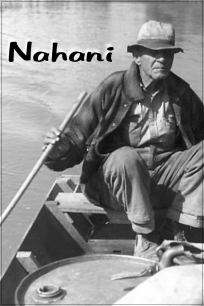
Albert Faille in his Longboat on the Nahanni River

I spent several days last week with my youngest son hiking and camping along a 30-mile stretch of the Appalachian Trail, or the AT, as it is commonly called, in Georgia.  Most of the AT in Georgia is full of steep ascents and descents, so each mile takes its toll and leaves a big impression.  Hiking also lends itself to quiet reflection, which alone is sufficient reason to endure the inevitable aches and pains.

So it was that during one extended ascent along our route that I found myself thinking back to a video I had seen some months ago about the arduous life of an itinerant gold prospector named Albert Faille, who lived along the Nahanni River in the Northwest Territories.  The video documented Faille’s eighth unsuccessful attempt in as many years to navigate 400 miles up the magnificent Nahanni River to access a legendary gold mine.   What stood out for me was the tenacity of this fellow.  Among other things, he had to portage around the torrential Virginia Falls — falls that are twice as high as Niagara.  You could feel his effort as he carried the considerable contents of his longboat up a steep hillside and around the falls, which required trip after trip until it was all safely stowed.  He even brought with him extra lumber to build by hand another boat at the top of the falls, which took him about a week to do.  Unfortunately, between the delays in getting up river and the challenges posed by the river itself, Faille was forced to retreat 40 or so miles short of his goal.  Nevertheless, his dauntlessness served as a source of inspiration to me on my own arduous, albeit much milder, trek up a ridge or two of the Appalachians.

A link to the fairly short video (approx. 18 minutes) on the website of the National Film Board of Canada is here:  http://www.nfb.ca/film/Nahanni/.  The video, which is characterized by overly wrought  music and a melodramatic narrator, both typical of the 1960s documentary style, does a nice job highlighting the unmistakable beauty of the region.  I suspect this is an area that not only is not well-traveled due to its remoteness, but is likely also not even very well-known.  Yet, as a testament to its magnificence, Nahanni National Park was the first place designated as a World Heritage Site by the U.N.  I have not had the privilege yet of actually visiting Nahanni National Park but I hope to at some point.

The Hidden Cameras: “In the Na”

Among the songs that I’m wearing out in my iPod this week is the retro sound of “In the Na” by The Hidden Cameras, an indie folk rock band based in Toronto.  (This video is an extended version of the song, with the music actually starting at 1:43 for those that want to skip to that point.)  Other notable songs of theirs include “I Believe in the Good of Life,” “Doot Doot Ploot,” and “We Oh We”.

The Journey Prize Stories (21)

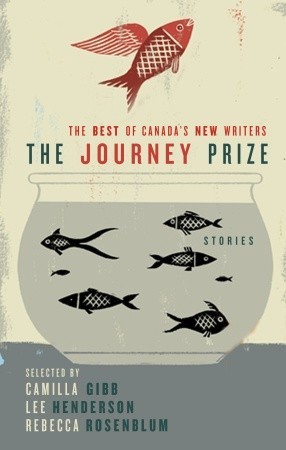
Over the years, I’ve enjoyed the pleasures of annual short story anthologies, particularly New Stories From the South, The O. Henry Award Stories and The Best American Short Stories, each of which showcases some of the best American short fiction printed during the previous year.   To that list, I’m happy to add The Journey Prize Stories, of which I only recently became aware.  The Journey Prize is awarded annually to the best short story published by a Canadian writer and is sponsored jointly by the Writers’ Trust of Canada and the publisher McClelland & Stewart.  While the $10,000 cash prize that accompanies the Prize is not insignificant, more important is the critical recognition bestowed on the winning writer.

Prior to the announcement of the winning story, the finalists are collected into an annual volume entitled The Journey Prize Stories, with the 21st volume having been released this past October.   The twelve stories that make up the most recent collection are truly quite good.  While several of the stories share the element of a central character being afflicted with illness, overall, these tales are a diverse lot and most readers will surely find something of interest among this dozen.  Below are brief summaries of each (with the respective author’s name noted in parentheses).

“Lure” (Adrian Michael Kelly):  Explores the intricate relationship between a young boy and his father against the backdrop of their first fishing trip together.

“Away” (Lynn Kutsukake):  Poignant tale of a young girl who went missing and the impact of the revelation many years later that the girl had not run away as had originally been thought but was abducted.

“Easy Living” (Jesus Hardwell):  Reflection on life’s daily struggles as told through the mundane conversations among the denizens of a local bar.

“Highlife” (Paul Headrick):  A wife deals with the distance that develops between her and her music critic husband following his diagnosis of a terminal illness as she struggles to emotionally support him as he pursues his musical passions and ignores her.

“The Wisdom of Solomon” (Dave Margoshes):  Amusing reflections of a fictional newspaper advice columnist who spins one tangled web too many to his later chagrin.

“Miracle Mile” (Alexander MacLeod):  Insight into the mutual respect displayed by two friends, both dedicated track competitors, and the resulting emotional tension between them when one finally decides to hang up his running shoes.

“Floating Like the Dead” (Yasuko Thanh):  Insight into the daily fight for survival by a small group of inhabitants on a leper colony for Chinese-Canadians off the coast of British Columbia.  This story was announced as the winner of the 2009 Journey Prize winner

“Deaf” (Sarah L. Taggart):    A young couple deal with the realities of their daughter’s diagnosis of being deaf.

“Pyro” (Sarah Keevil):  A woman wrestles with the consequences of her interest in pyromania and her conflicted feelings for two men.

“On the Line” (Shawn Syms):  Amidst the daily tedium of working in a meatpacking plant and just trying to get by, the story’s heroine has an epiphany that finally prompts her to radically change the direction of her life.

“Picturing God’s Ocean” (Fran Kimmel):  A couple take their seriously ill daughter to see the ocean as the husband wrestles with his disgust at the capriciousness of life while his wife clings to her religious faith.

“The Last Great Works of Alvin Cale” (Daniel Griffin):  Another father-son tale, this one about their estrangement in the face of the adult son’s affliction with cancer and the father’s candid recognition of his feelings of jealousy toward the son’s artistic talent and their complicated relationship with one another precipitated by a woman who served as an artistic muse for them both.
The Group of Seven’s Landscape Explosion

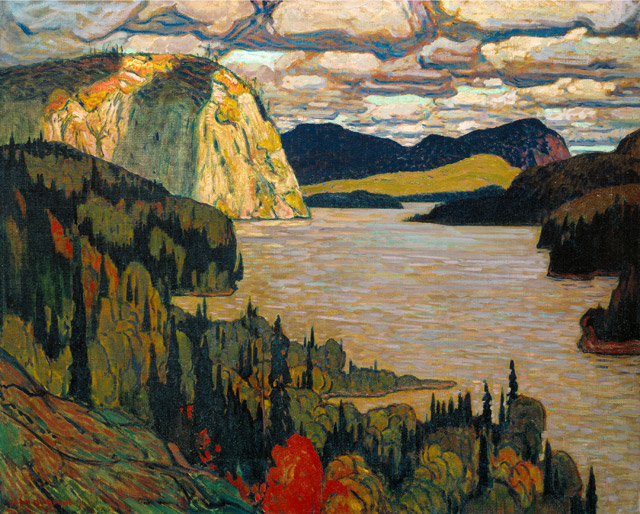
J.E.H. MacDonald, The Solemn Land

While reading a story in the latest volume of The Journey Prize Stories (more on that collection in a later post) I came across this passing reference to the Group of Seven:  “Straight ahead a group of smallish islands.  Like the Group of Seven but realer and more sad.”  The narrator’s incidental reminder of this ground-breaking group of Canadian artists, who first rose to prominence in the 1920s (although several painted well after this period), prompted me to refresh my knowledge of an amazing band of painters who are not well-known to many people here in the U.S., but who collectively serve as a cultural touchstone for Canadians, as indicated by the above quote from the story I was reading.
Lawren Harris, Clouds, Lake Superior

The members of the group initially consisted of Franklin Carmichael, Lawren Harris, A.Y. Jackson,  Frank Johnston, Arthur Lismer, J.E.H. MacDonald and Frederick Varley.  Frank Johnston left the group in 1926 and A.J. Casson was invited to take his place.  In addition, Tom Thomson and Emily Carr are also closely associated with the principal seven, and Thomson, in particular, was very influential even though his passing in 1917 preceded the group’s most prolific period.  It’s fair to say that their collective focus on the Canadian landscape helped define in the popular imagination the majesty of Canada’s vast natural treasures.

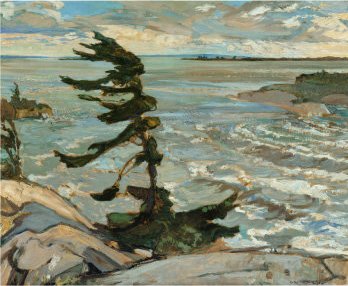
Frederick Varley, Stormy Weather, Georgian Bay

Their work reminds me of the more loosely defined California School of American landscapists, whose many paintings of the American West during the first half of the Twentieth Century exhibit a subject matter and color palette remarkably similar to that of the Group of Seven.  Both groups were obviously borrowing from and re-interpreting the approaches developed by the French Impressionists several decades earlier, and the Group of Seven evolved to adopt the vivid colors of Post-Impressionism and the simplified forms of abstraction of Art Nouveau.  While other points of commonality can be found between the work of these artists and others here in the States (for instance, Lawren Harris’s spare abstracted landscapes bear a striking resemblance to some of Georgia O’Keeffe’s pieces), even if one does not recognize these connections there is much to appreciate in the Group’s representations of Canada’s diverse geography.

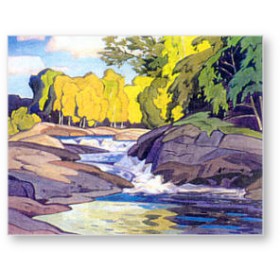
A.J. Casson, Rapids

As a whole the Group of Seven were prolific and their paintings and other works are held in many Canadian and other museums and collections.  There are also several useful websites devoted to the Group with rich resources available for further exploration.  Most notably, perhaps, is the site for Ontario’s McMichael Canadian Art Collection / Gallery (http://www.mcmichael.com/collection/seven/index.cfm), which houses one of the largest collections of the Group’s works.  The CBC has a wonderful set of digital archives (http://archives.cbc.ca/arts_entertainment/visual_arts/topics/754/) featuring video and audio on various aspects of the work of the Group, including rare interviews and footage of some of the artists themselves.

Atlantan Named Curator of Quebec’s Manif D’Art 5; Katherine Taylor and Sarah Emerson Selected to Show

This year marks the 5th Manif D’Art Biennale (actually the Manifestation internationale d’art de Quebec), a contemporary arts convocation hosted in Quebec City, Quebec.  The Manif’s program consists of a series of exhibitions throughout May and into June throughout Quebec City of major national and international artists.  That is a splendid time of the year to be in Quebec City (well, pretty much anytime is a good time of the year to be there).  More on the Manif can be found at this link:  http://manifdart.org/en.

A pleasant surprise is seeing several Atlanta connections to this major arts event.  The first is the appointment of Sylvie Fortin, the Editor-in-Chief of Atlanta-based Art Papers magazine, as the curator for this biennale.  This seems to me a brilliant choice, given the prominence of Art Papers and the direction that Fortin has taken it during her tenure over the past five years or so.

In the late 1990s, I did a good bit of art-related writing for a wonderfully quirky local publication called bluemilk.  This was partly as a sort of hobby and outlet for my creative writing interests and also part of an effort to educate myself better about the artistic process at a time when I was teaching myself to paint (but only at best as a so-called “Sunday painter”).  The dozen or so of us bluemilk-ers had a great deal of enthusiasm, creativity and chutzpah, but we were all candid about the fact that, while we had respectable foundations in art history and art technique, none of us had a strong grounding in the deeper dialogues and debates among the cognoscenti of the contemporary arts scene.  We mainly knew what we liked and went with that.  But what we also knew was that the folks over at Art Papers were definitely in the know about the underpinnings driving the direction of contemporary arts and we respected them greatly for that knowledge.  So, Fortin’s appointment as curator validates that respect.

Fortin will be curating the Manif with the theme of “Catastrophe?  Quelle Catastrophe!”   The initial group of artists announced for the Manif hale from Quebec, Toronto, Vancouver, London, Copenhagen, New York, Miami and Atlanta, among other places.  The two announced Atlanta artists are Katherine Taylor, noted for her haunting painted images of decay and devastation (represented by Marcia Wood Gallery: http://www.marciawoodgallery.com/artist/taylor_katherine/intro.html), and Sarah Emerson, remarkable for her colorful and whimsical abstracted landscapes (represented by Whitespace Gallery: http://www.whitespace814.com/artist_emerson.html).

Who’s This Tim Horton Fellow, Anyway?

In recent months, an icon of Canadian food fare has started to raise its profile here in ths U.S.  I’m speaking of Tim Hortons, whose chain of about 3,500 shops, mostly throughout Canada, offers donuts, coffee and sandwiches.  The closest comparison I can think of for those in the U.S. is a cross between Dunkin Donuts and Starbucks  —  Tim Horton’ offerings of baked goods are very similar to Dunkin Donuts but the Canadian chain’s menu includes a heavier dose of traditional lunch sandwiches and soups and Tim Hortons is Canada’s largest seller of coffee drinks, although without the complicated varieties requiring the attention of a barista.  As most Canadians of coffee-drinking age also know, the namesake of the company is Tim Horton, one of the country’s most celebrated hockey players, who played for the Toronto Maple Leafs in the 1950s and 1960s and who, in 1964, opened what was then a modest coffee and donut shop in the suburbs of Ontario.

Last summer, Tim Hortons announced the opening of about a dozen locations in New York City and a few months later cut the ribbon on a location at the U.S. Army’s facility at Fort Knox, Kentucky.  While their stores are dotted all across Canada, in the U.S. they are principally only found in the northeast and not really seen below West Virginia.  But, that may be changing.  Exhibit No 1. is this:  a couple of weeks ago a local branch of RBC (Royal Bank of Canada) in Atlanta held a “Coffee with Tim” promotion in the morning, in which RBC brought in plentiful quantities of Tim Hortons coffee to warm up patrons who may have been wondering exactly who is this Tim fellow and why does he want to have coffee with us anyway.  Clever promotion for both the bank and Tim Horton’s and a nice touch for Canadians far from home.

On my visits to many Canadian cities and towns I’ve frequently stopped in for a cup of coffee at a Tim Hortons because they are so convenient.  I suppose because of their presence just about everywhere there, these shops provide a sort of common comfort food to Canadians across their country, much like McDonald’s (at least more than any other quick service or fast food outlet) does here below the border.   Tim Hortons is so popular in Canada, I once had a Canadian friend tell me that anyone who owns one of these franchises essentially had a license to print money because, in his words, “these places are like gold mines.”

Perhaps, then, the Fort Knox location makes a symbolic statement.  Given the vast size of the U.S. market, I am sure Tim Hortons sees plenty of opportunities here, so I am sure that their stores will be popping up on more radar screens — and other bank branches — in the U.S. before too long.

Ice Wine Taste Test

An article in last Friday’s NY Times (http://travel.nytimes.com/2010/02/26/travel/escapes/26icewine.html?scp=1&sq=icewine&st=cse) on Canadian icewines caught my attention both because of the connection to Canada and because I had previously not heard of icewines.  I’ve sampled many wines over the years but am by no means an oenophile, so my being unaware of a notable wine variety is not that unusual.  It turns out that icewine has quite a following and the wineries of the Niagara Peninsula of Ontario, and to a lesser extent those in southern Quebec and the Okanagan Valley of British Columbia, have played a major part in elevating the popularity of icewine on this continent and beyond.

The key factor that distinguishes icewine is that the grapes are left on the vine past normal harvest season and when the temperature is below -8 Celsius (about 17 Farenheit), usually in December or January, the grapes are carefully picked by hand.  At such low temperatures the water content in the grape stays frozen resulting in a significantly higher concentration of juice when the grapes are crushed compared with the process for making other wines.  The yield from each harvest is also correspondingly lower, which translates into the wine being more expensive to purchase.

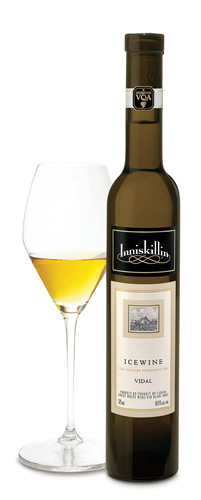
With this background in mine, a few days later I ventured out to a local wine shop to purchase a bottle to sample.  Although judging by the websites for several leading icewine wineries, there is an extensive range produced, this far south in the U.S. the selection is quite limited and I was only able to track down a bottle after visits to three shops that normally have extensive wine offerings.  At the place I located this elusive wine, Ansley Wine Merchants, they actually stocked two types of Canadian ice wine, Inniskillin’s 2006 Vidal and Jackson-Triggs 2007 Proprietor’s Reserve Vidal.   I got both thinking I would compare the two.  (They also had an Austrian icewine on hand, but the priciness — US $55 for the 375 ml bottle of Inniskillin and US $21 for a 187 ml bottle of the Jackson-Triggs — restrained me.)

A few days later, after letting the wine chill, my wife and I tried each of these two curiosities.   Icewines are generally referred to as dessert wines and I was expecting them to be sweet in the manner of many flavored liqueurs.   Sampling the Inniskillin first, this partly turned out to be the case, but the sweetness was balanced by a brisk acidity, which apparently is characteristic of icewines, so the level of sweetness is not intense to the point of tartness.   The same was true of the Jackson-Triggs, although this particular vintage seemed even sweeter.  I’ve never been good at describing the flavors present in wines, but the makers of both attribute flavors of tangerine, papaya and apricot, which even I can discern.   My wife immediately pronounced the taste pleasantly complex.  Being more of a vodka drinker myself, I was glad to see that an icewine martini was among the serving recommendations and this suited my own tastes better than the straight icewine.

Sweet drinks are not normally to my liking, so I am unlikely to become an icewine connoisseur.  Yet, all in all my introduction to icewine proved to be an interesting diversion and another useful learning experience about an aspect of Canada previously unknown to me.

Canada Shines at HIMSS Conference


This week about 28,000 healthcare IT professionals converged on Atlanta for the 2010 Healthcare Information and Management Systems Society (HIMSS) conference.  Among the hundreds of exhibitors were at least 36 Canadian information technology companies with a connection to healthcare.  On the morning of the second day of the conference the Consulate General of Canada in Atlanta hosted an informational session, which I attended, for these companies to meet with U.S. businesses interested in working together.   As usual, the outstanding staff in the Atlanta office of the Consulate General acquitted themselves well in pulling together an excellent event.

Because the Olympics had just concluded a couple of days before on a high note for Canada, there were more than a few figurative tips of the hat to the visitors from the great north.  It was nice to see Canada receiving the benefit of the goodwill generated by its successful hosting of the Winter Olympics.  A particularly humorous moment was a light-hearted expression of support (which I think was appreciated by most of those in attendance) by a U.S. panelist for the celebratory exuberance of the Canadian women’s hockey team after winning gold — a candid display of youthful joy and enthusiasm that many in the U.S. readily understood and had no problem with.

More impressive though was the depth of technical and business talent displayed by the three dozen or so Canadian companies in attendance.  While Ontario not unexpectedly had the largest contingent, many of the other provinces were also well represented.  The innovative solutions offered by these companies included mobile device accessibility to healthcare information, one-stop health information storage applications, telemedicine software, electronic patient charts for paramedics, and web-based assessment tools for behavioral issues, among many other amazing offerings.  Canada is obviously holding its own in the critically important healthcare IT arena.

A listing of many of the visiting Canadian companies follows:

Alpha Global IT (www.alpha-it.com)

Applepeak (www.applepeak.com)

Benchmark Consulting (www.benchmarkconsulting.com)

Centre for Global eHealth Innovation (www.ehealthinnovation.org)

CGI Healthcare (www.cgi.com/healthcare)

Client Outlook (www.clientoutlook.com)

Clarity Healthcare Journal (www.clarityhealthjournal.com)

Coremotive (www.coremotive.com)

Diversified Business Communications Canada (www.divbusiness.com)

Diversinet (www.diversinet.com)

eCenter Research (www.ecenterresearch.com)

Electrovaya (www.electrovaya.com)

eSentire (www.esentire.com)

Guard RFID Solutions (www.guardrfid.com)

HIPAAT  (www.hipaat.com)

Ideal Life (www.ideallifeonline.com)

Ignition (www.ignitionmsp.com)

Infonium (www.infonium.ca)

Intelliware Development (www.intelliware.ca)

ISIS Health Informatics Resource Group (no site available)

Karos Health (www.karoshealth.com)

Knowledge4You (www.knowledge4you.com)

MDIT Innovations (www.mditinnovations.com)

Medusa Medical Technologies (www.medusamedical.com)

Mensante (www.feelingbetternow.com)

Oasys Healthcare (www.oasyshealthcare.com)

Ontario Telemedicine Network (www.otn.ca)

Operitel (www.operitel.com)

Professional Quality Assurance (www.pqa.ca)

Ramsoft (www.ramsoft.com)

SmartSimple Software (www.smartsimple.com)

Strata Health Solutions (www.stratahealth.com)

SwiftRadius (www.swiftradius.com)

Telus Health Solutions (www.telushealth.com)

Teradici (www.teradici.com)

Terida Systems (www.terida.com)

ThoughtSpeed eCommerce (www.thoughtspeed.biz)

Olympics Ending With a Bang


Up to now I’ve purposely avoided posting anything on the Vancouver Olympics simply because there is so much content about the games readily available from many other sources and commentators who are far more knowledgable and insightful about the Olympics than myself.   As this quadrennial display of athletic prowess draws to a close, there are many incredible moments — some poignant and some spectacular — from the past two weeks that will make these Winter Games memorable.

I’ve only seen a fraction of the games this year but some of the moments that stand out include the unfortunate death of Georgian luger Nodar Kumaritashvili, the consistent excellence of Canadian Ashleigh McIvor in the debut of Ski Cross as she handily achieved gold, the mistaken lane mishap of Dutch speed skater Sven Kramer, the first Olympic gold for the U.S.’s Bode Miller, the record eighth medal garnered by U.S. short-track skater Apolo Ohno, and the record-setting points achieved by Kim Yu-Na of South Korea in her gold medal performance.

However, the matchup of Canada and the United States in the men’s hockey final on Sunday is for me the pinnacle of such exciting moments given the back story leading up to this match.  After seeing the U.S. best Canada in the preliminary round, one could readily empathize with the crestfallen despair of Canadians everywhere.  I dare say hockey is truly Canada’s game (its dominance in the arcane world of ice curling notwithstanding) and for the national team to endure an early loss in their own country surely startled the Canadian players at least as much as it probably surprised what was then regarded as the underdog U.S. team.

Weighing conventional wisdom about these two teams against the hockey results so far in Vancouver,  it is difficult to say who should be counted as the underdog and who the favorite going into the final.  This deciding game is likely to be at least as memorable as the astounding surprise victories of the U.S. team 50 years ago  in the 1960 Squaw Valley Winter Games and the later 1980 “Miracle on Ice” at the Lake Placid Winter Olympics.  Regardless of how each team fares on Sunday, here’s hoping for many more future and equally exciting Winter Olympics finals matches between these two countries.

Postscript (2/28/10):  Team Canada pulls off the win 3-2 in overtime play, after the U.S. tied up the score 2-2 with less than 24 seconds left in regulation play.  An exciting finish from two teams with great heart!

(Photos Courtesy of Creative Commons)

In Memory of John Babcock

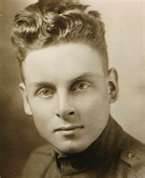
(John Babcock at age 20)

Several years ago, an office colleague shared with me his fascination with routinely reading the obituaries.  Not long afterwards, I found myself scanning that section of the papers more often.  While it seems a morbid diversion, since the time I was a kid I’ve always appreciated biographies and obituaries are a wonderful opportunity to reflect upon lives well lived.

In that vein, comes news in many of the papers (even this far south) that last week John Babcock, the last Canadian veteran of World War I, passed away at age 109.  While his age alone is amazing, his connection with the so-called Great War prompts searching thoughts about how very terrible for its time that event was.  I am sure World War I monuments exist in many places,  but I distinctly recall these most in Canada and here in the American South.  These monuments have a special majesty and on each that I’ve seen there are too many names inscribed for one not to feel moved by the human toll exacted by that sad conflict.

Concealing his actual age of 15, Babcock, originally an Ontario farm boy, enlisted and was sent overseas.  Before he could be deployed in combat,  it was discovered that he was still a minor.  Interesting to contemplate whatever sense of derring-do, adventure, patriotism, economic need or the like would prompt a young man of 15 — a boy, really! — to do such a thing.   But that, of course, was a different time when calls to duty perhaps weighed more on the collective mind, particularly of budding young men.

His passing was sufficiently noteworthy to Canada that Prime Minister Harper acknowledged the occasion and referred to Babcock as the last living link to World War I, “which in so many ways marked [Canada’s] coming of age as a nation.”  So much so that, reflecting on this, it is understandable and puts into context why Canada celebrates a specific holiday, Armistice Day, commemorating its involvement in World War I.

May John Babcock, and all the souls who valiantly sacrificed so dearly, be remembered well.

Visit to Cape Breton Island

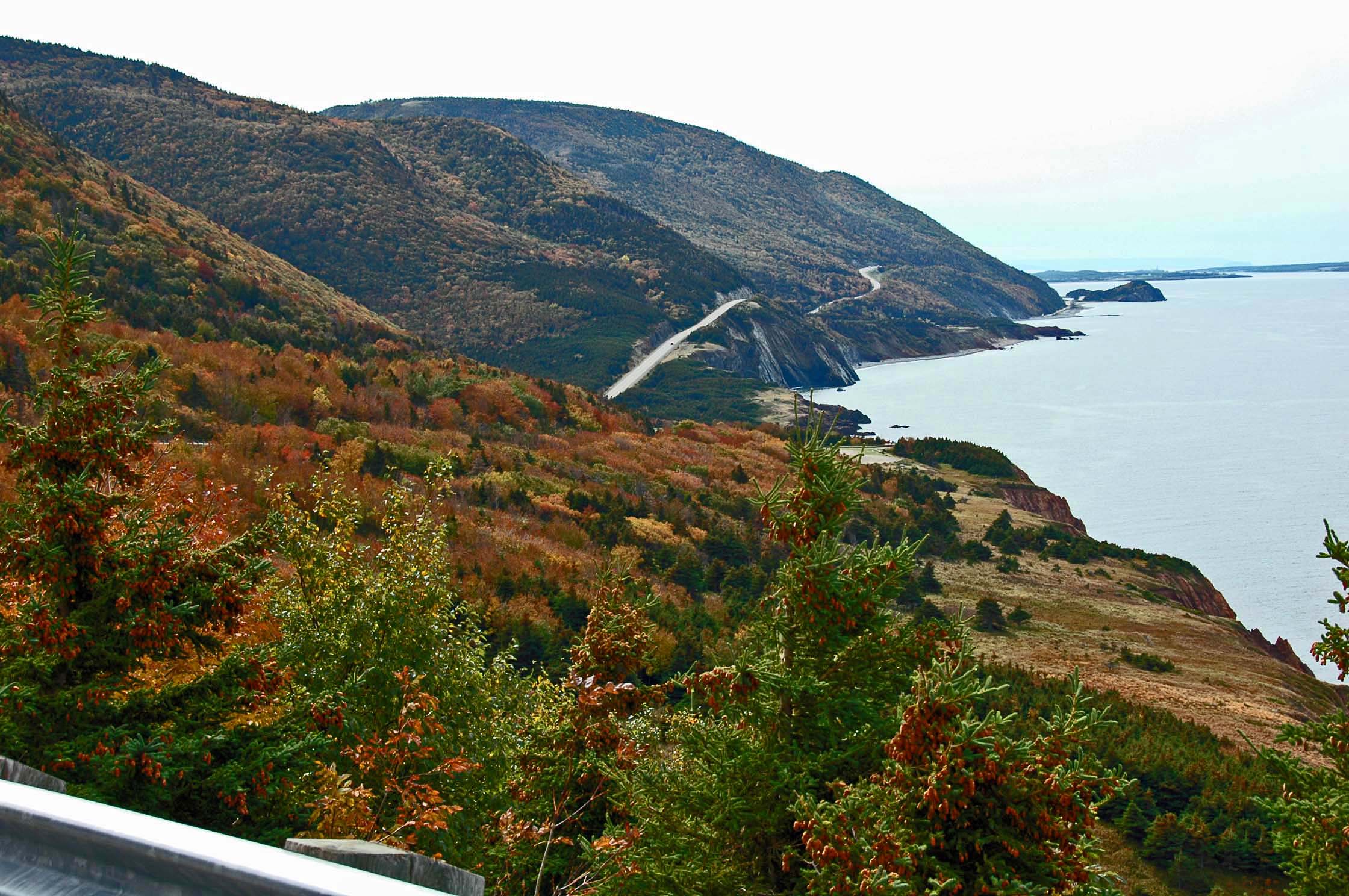
(Looking south along the Cabot Trail)

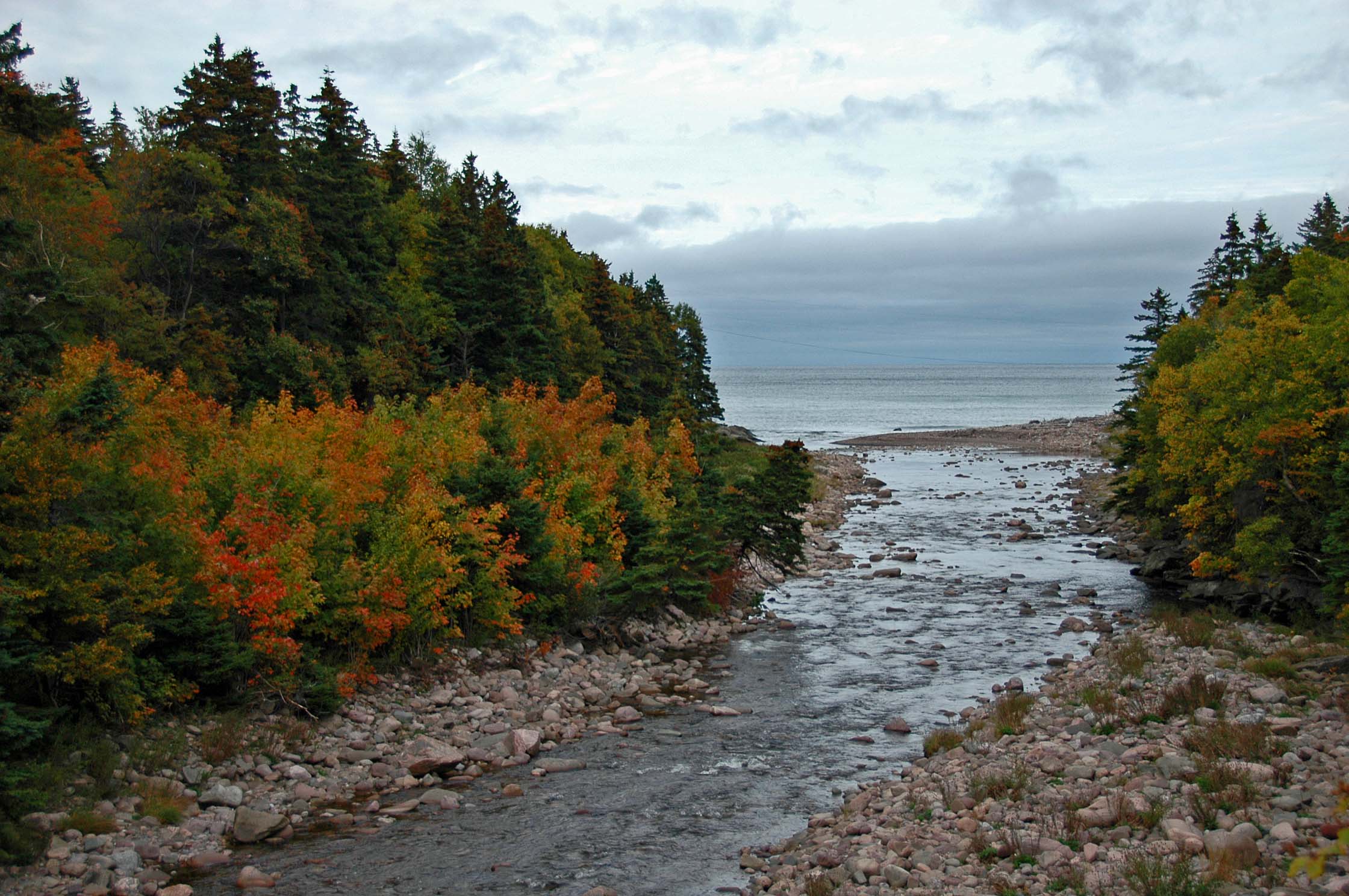
(River near Capstick, flowing out to the North Atlantic)

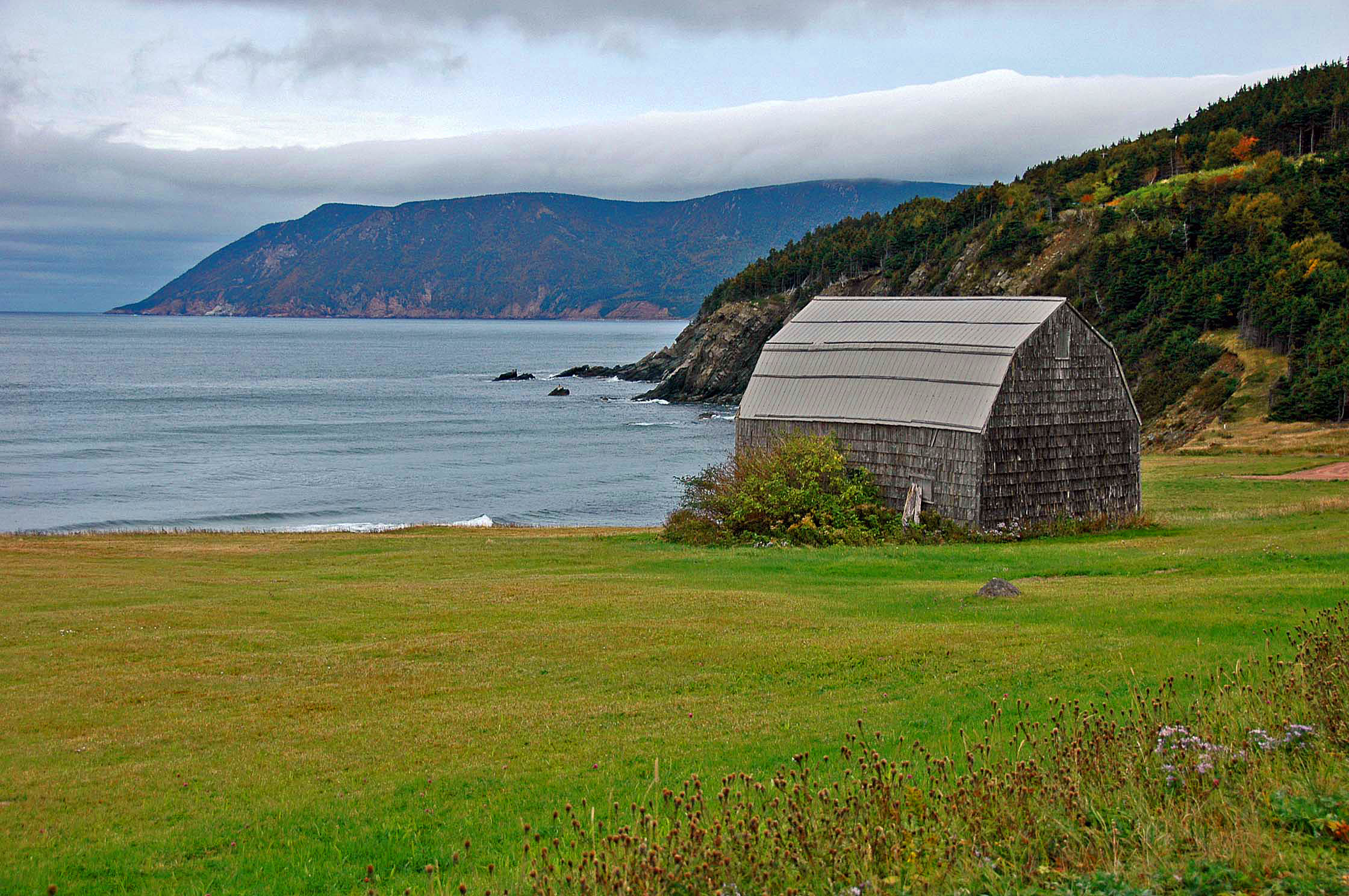
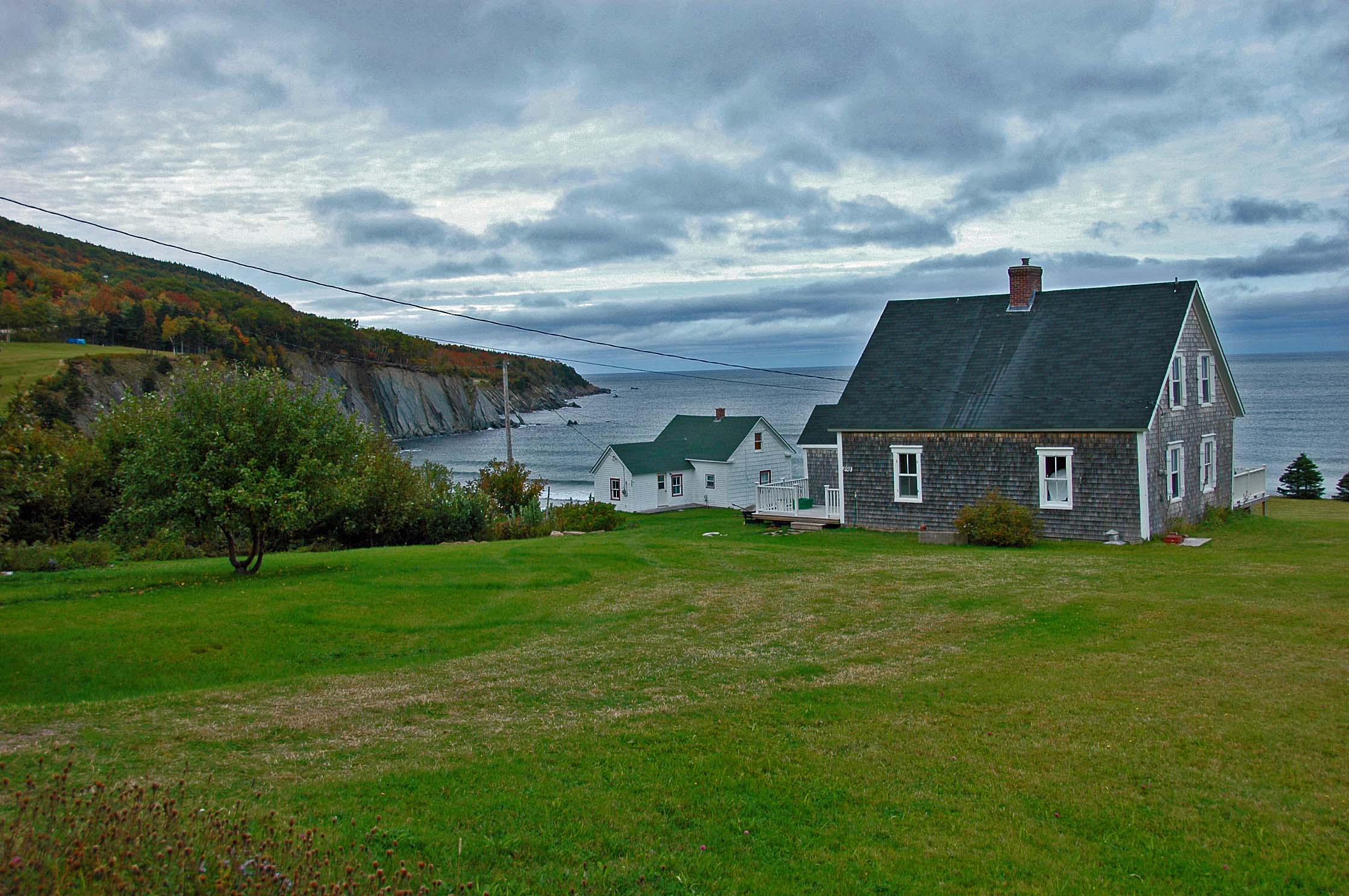
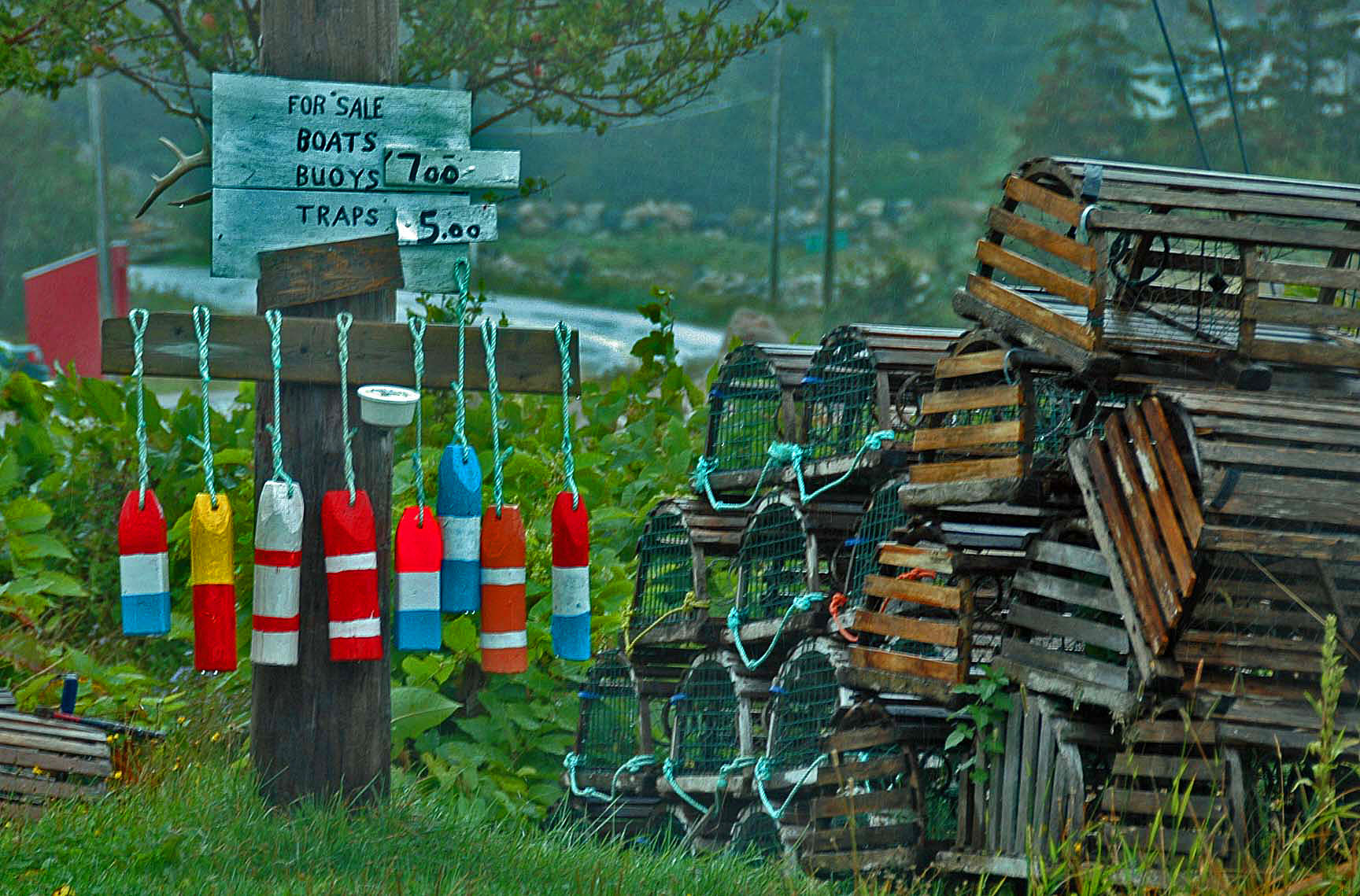
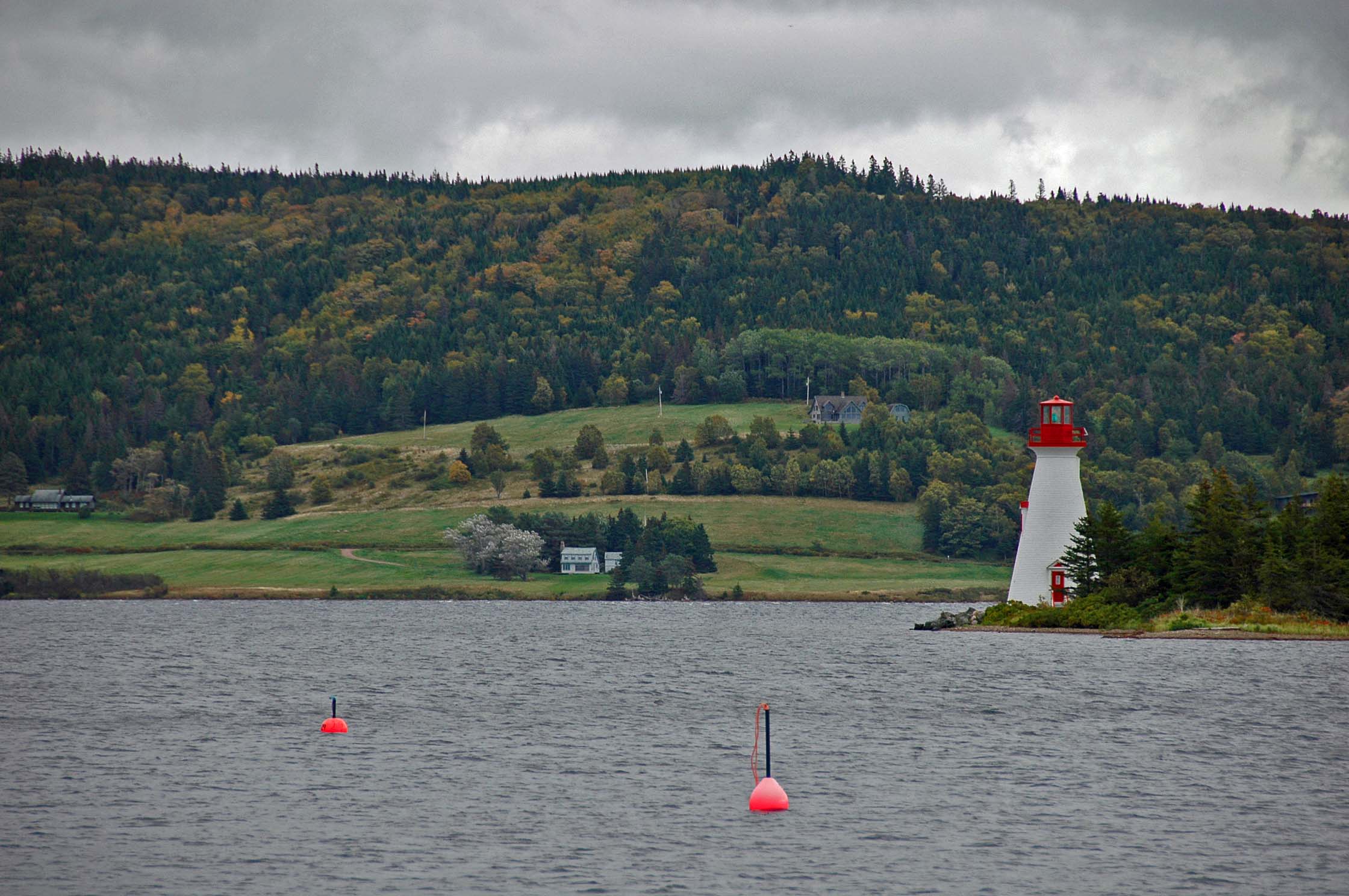
This past October, as a birthday trip for my wife, she and I visited Cape Breton Island, Nova Scotia, a place where there remains many strong connections to this province’s Acadian and Scottish heritage.  It turned out to be a perfect time of the year to take in the stunning golds, crimsons and oranges of the fall foliage.  The coastal scenery from the winding Cabot Trail roadway, which skirts much of the perimeter of Cape Breton, is rugged,  dramatic and gorgeously beautiful.  The jewel in the middle of the route is Cape Breton-Highlands National Park, a massive park which was the first designated Canadian National Park in the Atlantic Provinces.  Several strenuous to easy hiking trails accommodate different levels of hiker.  We spent several hours along the Skyline Trail, a moderate hike, from one end of which you can gaze across endless vistas of the surrounding ocean while also watching whales continually breach the water far below as eagles soar overhead and, if you’re lucky (we were!), get a glimpse of one or more moose in the surrounding bog.  For an amateur photographer such as myself there are opportunities for wonderful images in just about every direction and along every mile.  Posted below (and above) are some of my favorites from that trip.

Capstick, a tiny community on the northwestern tip of Cape Breton, just north of the Cabot Trail.  After meandering late in the afternoon to see what was around “just one more bend in the road” we came across this amazing vista:

Another view of Capstick:

Around Neils Harbor, a charming fishing village.  It was raining this day and I had to snap quickly, so shot is not as sharp as I’d like:

Bras d’Or Lake, near Baddeck — a larger town set against picture-perfect lake scenery:


Sounding Canadian

Thanks to a friend who just called my attention to a recent tongue-in-cheek article that I missed from the February 7, 2010 Atlanta Journal-Constitution by Jill Vejnoska on “How to Sound Canadian”.    Among the finer points offered is this one on the proper usage of the much-used expression “eh”:

Eh? So, this one deserves its own category, eh? It’s got to be an exaggeration, eh? But Canadians really do say it a lot, eh? Pronounced like “hey,” without the h, it’s tacked onto the end of sentences to pose a real or rhetorical question, emphasize a key point or just to make Canadians sound more articulate than us “y’know?”-ing Americans. Extra style points awarded from the judges if the sentence starts with “So.” As in: “So, trying to be more Canadian is difficult, but rewarding, eh?”

So, now you’re speaking Canadian, eh?

Full article may be accessed at www.ajc.com (no direct link).

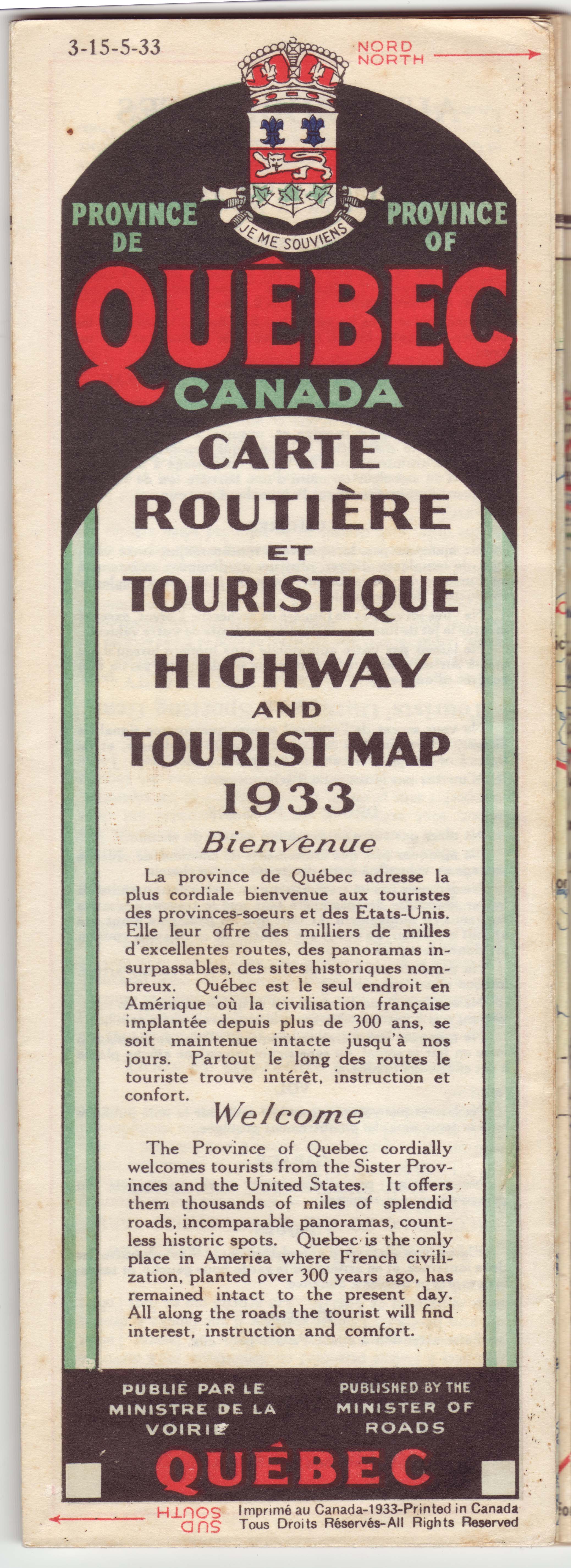
1933 Quebec Tourist Road Map

1933 Quebec Map Cover

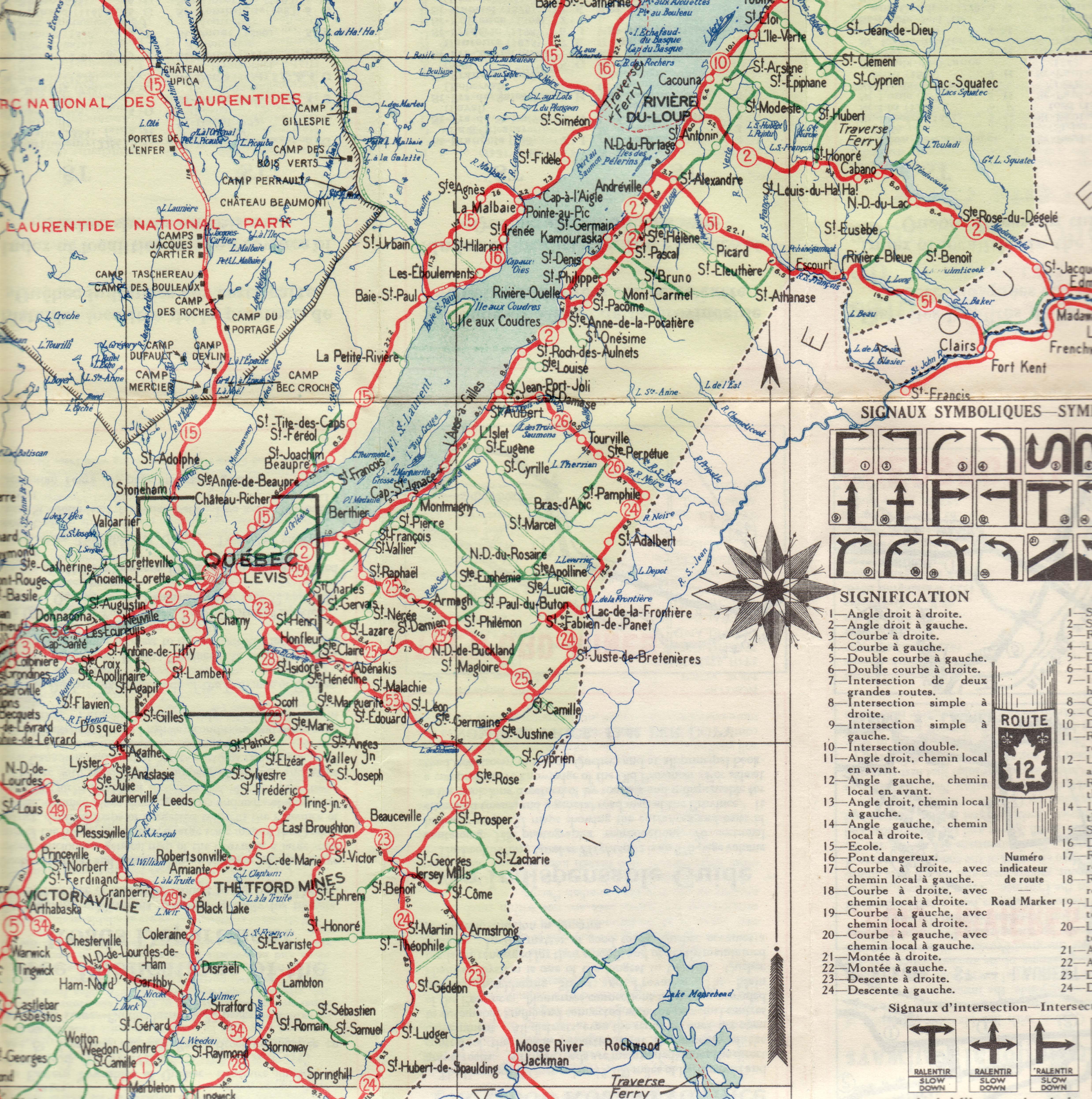
I’ve always appreciated the intricacies that permeate just about any map, each being a kind of artwork exhibiting both  numerous rules of expression and many quirky curiosities.  A few months ago, in preparation for a creative project I planned to undertake,  I assembled a collection of about 200 vintage road maps, many from the period 1930-1960.   Among the many gems in this passel was an official Canada Roads Department map of Quebec from 1933, a time when travel by car was still fairly new and roads were not nearly as well developed as today.  As evident from the lack of roads across much of the map, vast expanses of this wonderful province were virtually inaccessible by any vehicle.

Quebec City Area

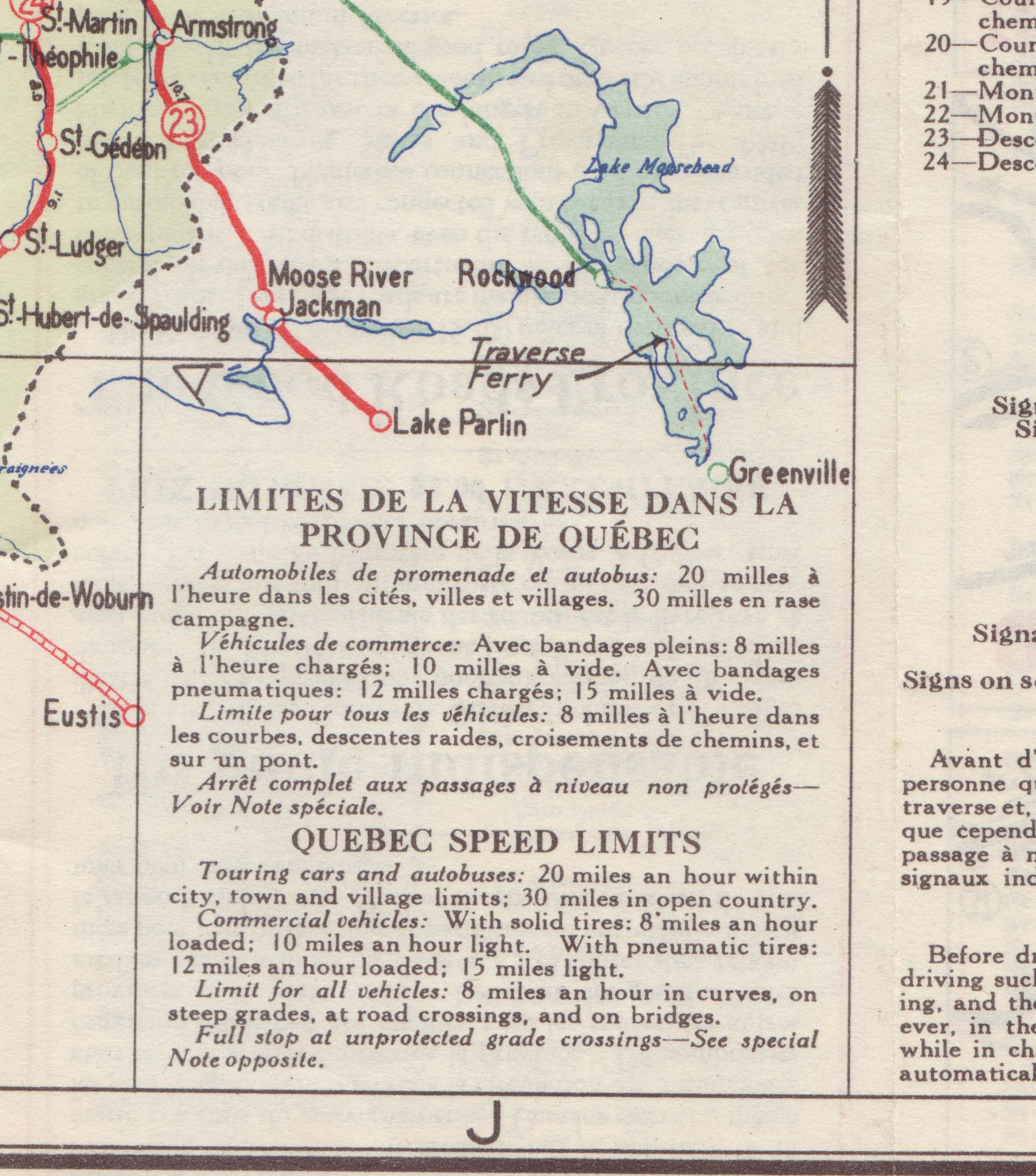
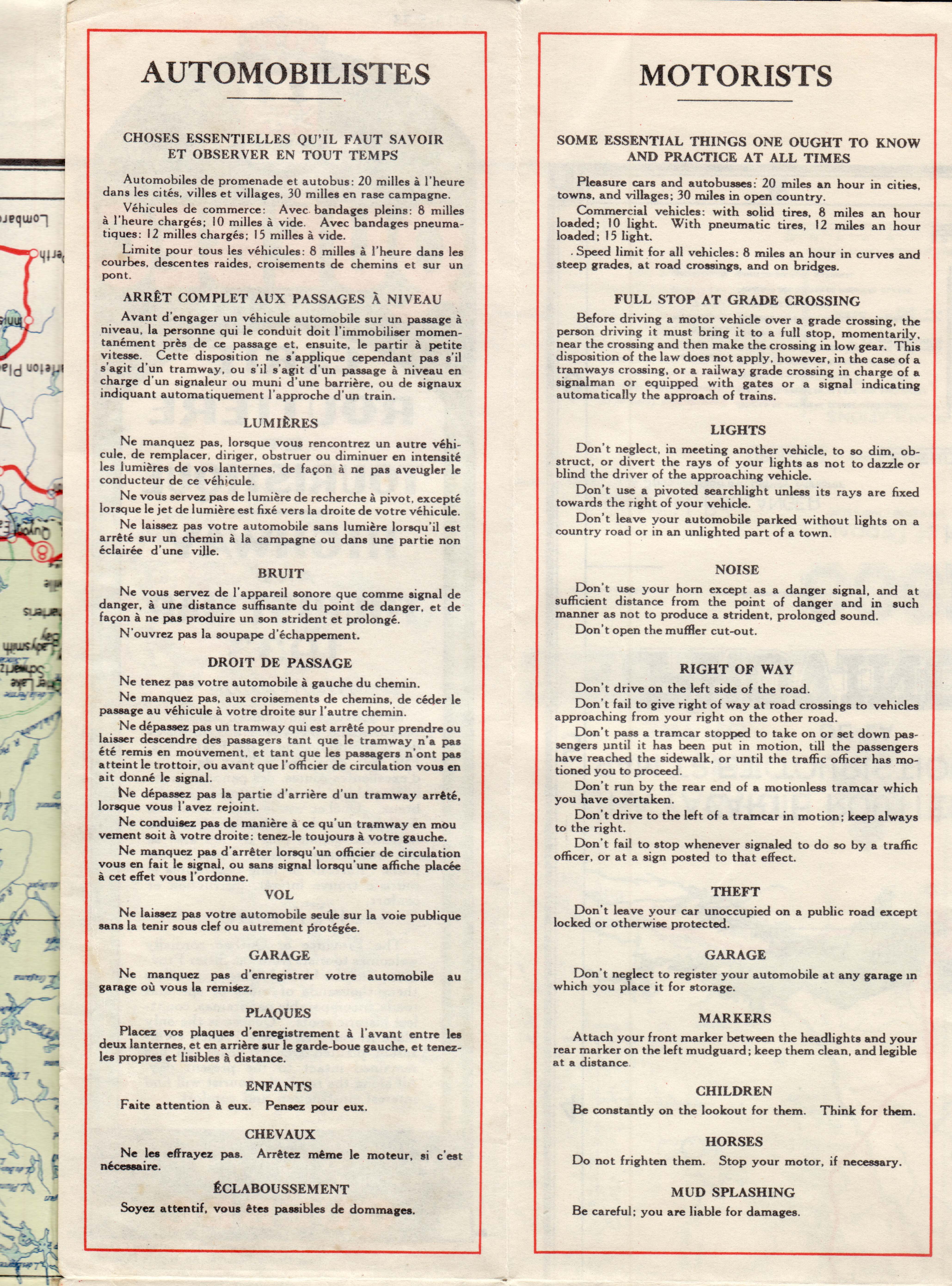
Times were obviously simpler then.  Helpful pointers on the map included the admonition that speed limits within Quebec for touring cars were 20 m.p.h. within any city or town limits and 30 m.p.h. in open country — now we’re flying!  For commercial vehicles, things were truly at a crawl, with a loaded truck with inflatable tires being limited to no more than a leisurely 12 m.p.h.  Roads being less well paved than they are are today, mud splashing was also a particular concern as the tips for motorists warned that for this “you are liable for damages.”

Quebec Map Speed Limit Detail_0002___

Quebec Map Tips

Like Minnesota — Only Bigger?

Down here below the 49th parallel (north) we’re likely to learn a whole lot more about Canada this month as an incidental effect of the attention focused on the Vancouver Winter Olympics.  And to truly appreciate the country, you have to get a sense of the affable Canadian sense of humor.  In that spirit Bruce Headlam, a Canadian who is the Media Editor of The New York Times penned a humorous piece appearing in today’s Times entitled “Crib Notes on Canada, From a Canadian”, which pokes good-natured fun at his fellow countryman.  Among his observations that prompt a hearty chuckle, Headlam offers a list of notable dates in Canadian history, including this one:

“1867: Almost a century after America declares its independence from Great Britain through the bloody crucible of revolution, Canada declares its sovereignty after filling out the necessary paperwork.”

Enjoy the rest of the article here:  http://www.nytimes.com/2010/02/14/weekinreview/14headlam.html

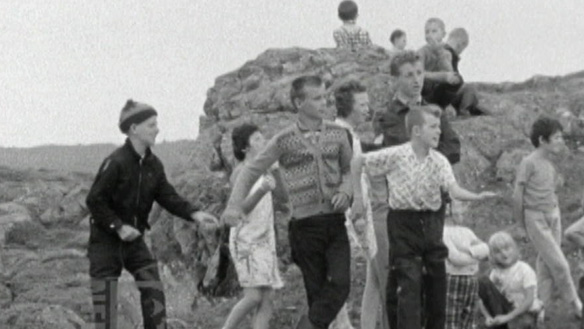
The Children of Fogo Island

I just finished watching a short documentary, The Children of Fogo Island, that consists mainly of observing children going about their daily play activities on this major island off the northern coast of Newfoundland.   Directed by Colin Low in 1967 in cooperation with the National Film Board of Canada, the film dispenses with narration in favor of a simple and melodic music track, which gives the black and white images an elegiac feel.  Aside from the nostalgia that the film evokes, there is also a sense of sadness in contemplating the tenuous hold on survival managed by the people living on this outport island.  Several years ago I had the good fortune to meet a businessman about my age in St. John’s, Newfoundland who had grown up on Fogo Island and who still held great affection for the place.  He spoke wistfully about his childhood there and how so many young people have left  due to their inability to make a living in that remote place.  This film brings me back to that conversation as well as the simpler times of a generation or so ago — which all children amazingly reinvent in their own way.

Link to video:  http://www.nfb.ca/film/children_of_fogo_island

Here Comes the Winter Olympics

For the second time, Canada is set to host the Winter Olympics (the first being in Calgary in 1988).  Here in Atlanta, where I now live, we hosted the Summer Olympics in 1996 and I recall the city was abuzz about the preparations and anticipation of having the event come together and being the focal point for so much of the world’s sports attention.  I’ve no doubt that Vancouver — what an amazing place! — will acquit itself well and that the planners and the city itself will all breathe a collective sigh of exhilaration and relief and deserve a well-earned pat on the back as the games draw to a close in about two weeks time.  Good luck to the athletes — and godspeed Vancouver!

An Appreciation for Canada

Over the past twenty years or so I’ve had the pleasure of traveling to Canada for both business and pleasure and during that time I’ve gained a deep appreciation for many aspects of Canadian culture and its people.  For such a wonderful land, Canada is frequently misperceived or underappreciated immediately south of its border.  I’ve been thinking for a while about setting up a blog to share various musings of mine on things Canadian.  So, on the eve of the opening  of the Vancouver Winter Olympics, I commence with occasional observations on a place for which I count myself an honorary countryman.