Distinctive Street Signage in Montreal

aDSC_7185

Quebec Month / Installment 3

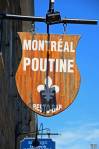
Whether directing, instructing or prohibiting, street signs constantly influence our actions along city sidewalks and roadways.  Montreal has its own distinct variations, as can be seen here.

Colorful Montreal Shop Signs

DSC_7435 2

Quebec Month / Installment 2

Vividly colorful shop signs of many shapes and varieties dot the Montreal streetscape.  Here are a few that caught my eye  while walking around there recently.

Isabelle Tremblay and The Mysterious Deep

Isabelle Tremblay -- Let It Flow Through the Heart 1

______

Quebec Month / Installment 1

The work of Quebec artist Isabelle Tremblay is dreamily mysterious and the intense faces of her child-like subjects hint at deep questions.   More of her art can be seen at Montreal’s Galerie MX.

One With Life

One With Life

Quebec Month: Des Jours de Joie

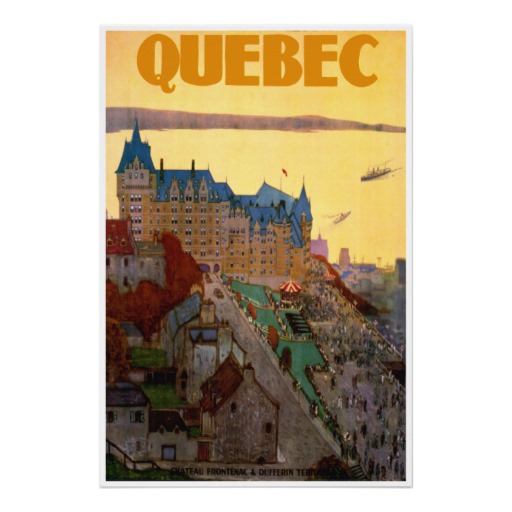
Quebec Retro Travel Poster

It’s been ages since I’ve been to Quebec and, at the moment, as I sit in Quebec City with aching feet from almost a week of walking around Montreal, Quebec City and other, smaller places in la belle province, I’m reminded of a number of things.  Among these things, and in no particular order, are how bad my French is after many years of non-use, the immensity of the St. Lawrence River, the historic charm of Quebec City, agriculture’s reach throughout much of the province, the vibrance of the Montreal arts and creative scene, how varied and delightful is the food of Quebec, and the region’s rich history and distinctive culture. 

I have a few more days before heading home and given that today is the first day of May, working on a mostly Quebec theme — dubbed by me “des jours de joie” to match the good times over the past week — for the month of May seems fitting.  I have a fair number of photos to post when I return, but for now I’ll start the theme in the next post by spotlighting a Quebec artist worth more attention and will go from there.  Jusque-là, passez une bonne journée!

Manu Keggenhoff’s Photography of the North

Manu Keggenhoff -- Arctic Cup O Grease

Arctic Cup O Grease

_ _ _

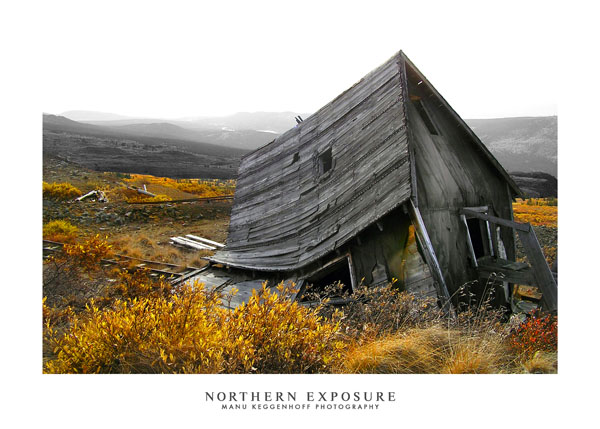
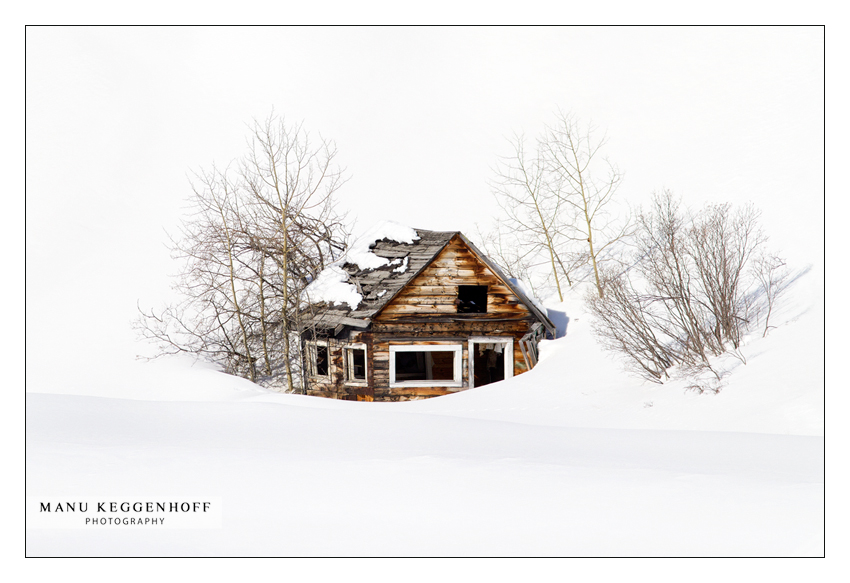
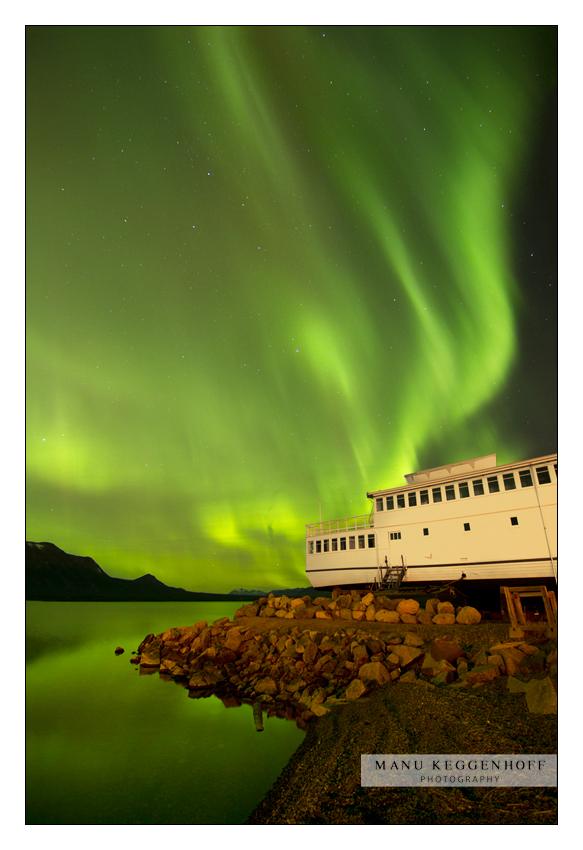
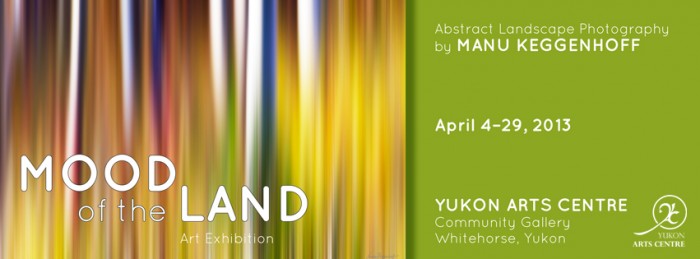
I’m a sucker for images of the lonely, serene beauty of the far northern wilderness — they readily draw me in and don’t easily let me go.  So, I was delighted recently to happen upon the work of Manu Keggenhoff, an Atlin, B.C.-based photographer whose exquisitely keen sense of composition wonderfully showcases the Yukon, British Columbia and other northern regions.  She also has a lot going on that’s worth checking out.  Among other things, her work is on display through the end of this month at the “Mood of the Land” exhibit at the Yukon Arts Centre; she’s just published a sumptuous photo book, Northern Exposure, about the Atlin, B.C. area; she’s working on a new series of photographs called “Art and Soul” that looks intriguing; and she does graphic design for Yukon, North of Ordinary magazine.

See Keggenhoff’s website for more of her outstanding photography.

M. Keggenhoff -- Northern Exposure

_ _ _

Manu Keggenhoff -- Snow Relic

Snow Relic

_ _ _

Manu Keggenhoff -- Burning Sky

Burning Sky

_ _ _

Manu Keggenhoff -- Aurora Across Atlin Lake

Aurora Across Atlin Lake

_ _ _

Mood of the Land

A Virtual Trip to The Yukon

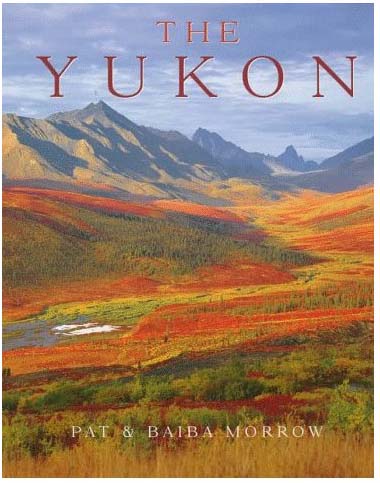
The Yukon by Pat and Baiba Morrow 1997

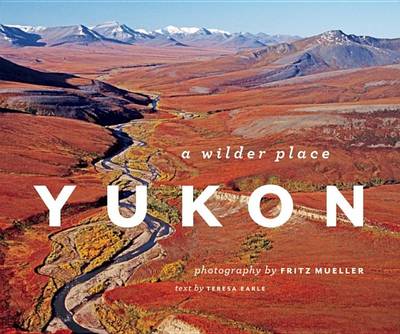
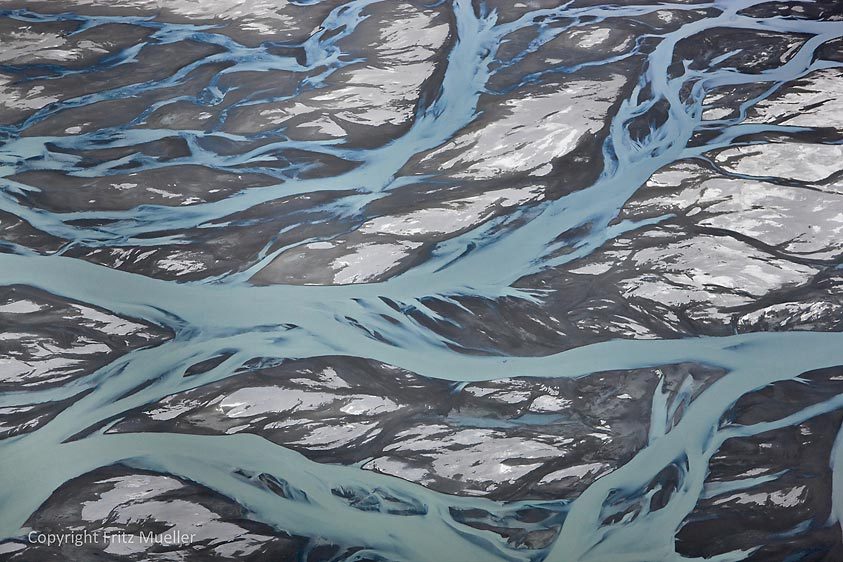
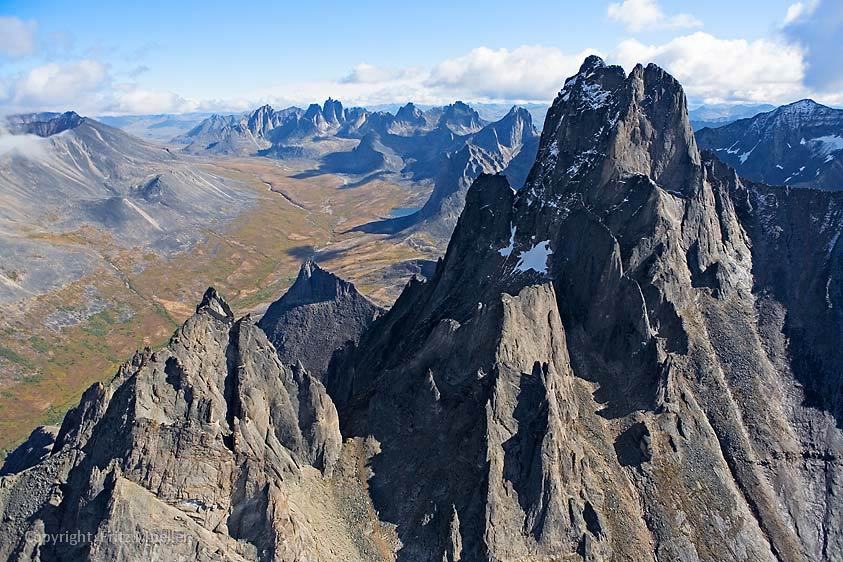
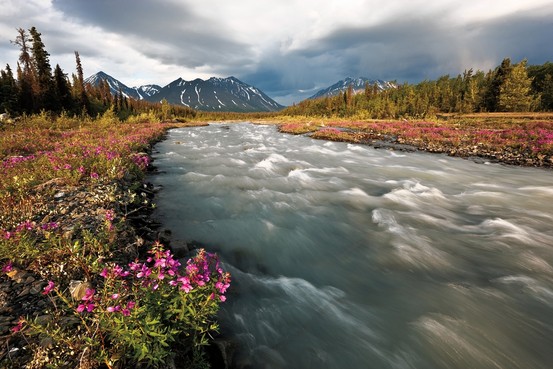
A few weeks ago I finished a couple of well executed photography books that convey the fantastic grandeur of the Yukon.  Fritz Mueller’s Yukon: A Wilder Place, with text by Teresa Earle, capture’s the natural side of this stunning and vast wilderness while Pat and Baiba Morrow’s The Yukon focuses more on the human side of this remote territory.  Together the books provide a virtual trip across a magical land where very few people live or dare to venture, its mysteries thus tucked safely away for the hardy few.  As Mueller and Earle note, “In a world where nature is becoming more cultivated, more compromised, and more rare, the Yukon is a wilder place.”

More photographs and information on these books can be found at the sites for Fritz Mueller and Pat & Baiba Morrow.

T. Earle & F. Mueller, Yukon

_ _ _

Fritz Mueller -- Kathleen River

Fritz Mueller — Kathleen River

_ _ _

Fritz Mueller -- Yukon Aurora

Fritz Mueller — Yukon Aurora

_ _ _

Fritz Mueller -- Slims River

Fritz Mueller — Slims River

_ _ _

Fritz Mueller -- Tombstone Mountain

Fritz Mueller — Tombstone Mountain

_ _ _

Fritz Mueller -- Quill Creek

Fritz Mueller — Quill Creek

Sean Yelland’s “Distant” and “Stop Everything”

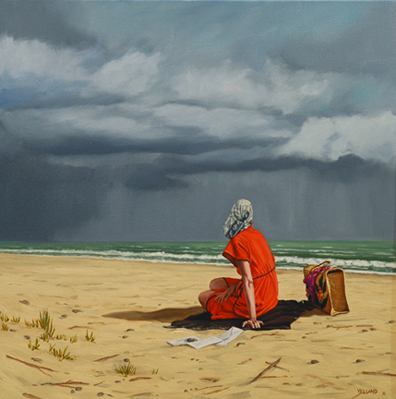
Sean Yelland, Distant (2012)

Sean Yelland, Distant (2012)

_   _   _

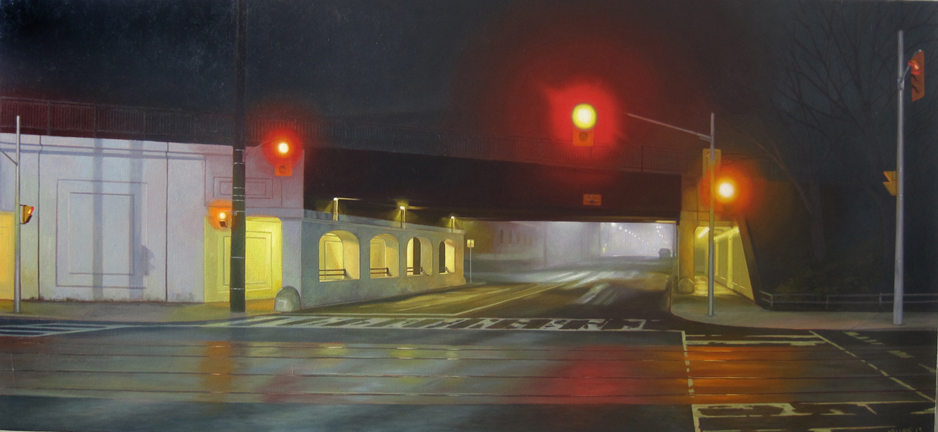
Both of these paintings by Toronto’s urbanist master Sean Yelland convey intrigue and a haunting sense of loneliness for different reasons.   “Distant” is reminiscent of Andrew Wyeth’s “Christina’s World”, while “Stop Everything” brings to mind the late night / early morning solitude evoked by Edward Hopper’s “Nighthawks” and “Early Sunday Morning”.   These pieces by Yelland also hint at his exceptional skill with the techniques of photorealism in his art — his depictions of  muted light, bokeh and blurring particularly stand out.

See more of Yelland’s outstanding work at the amazingly vibrant Ingram Gallery and on Yelland’s own site.

_   _   _

Sean Yelland, Stop Everything (2013)

Sean Yelland, Stop Everything (2013)

The Very Vital Canadian Group of Painters

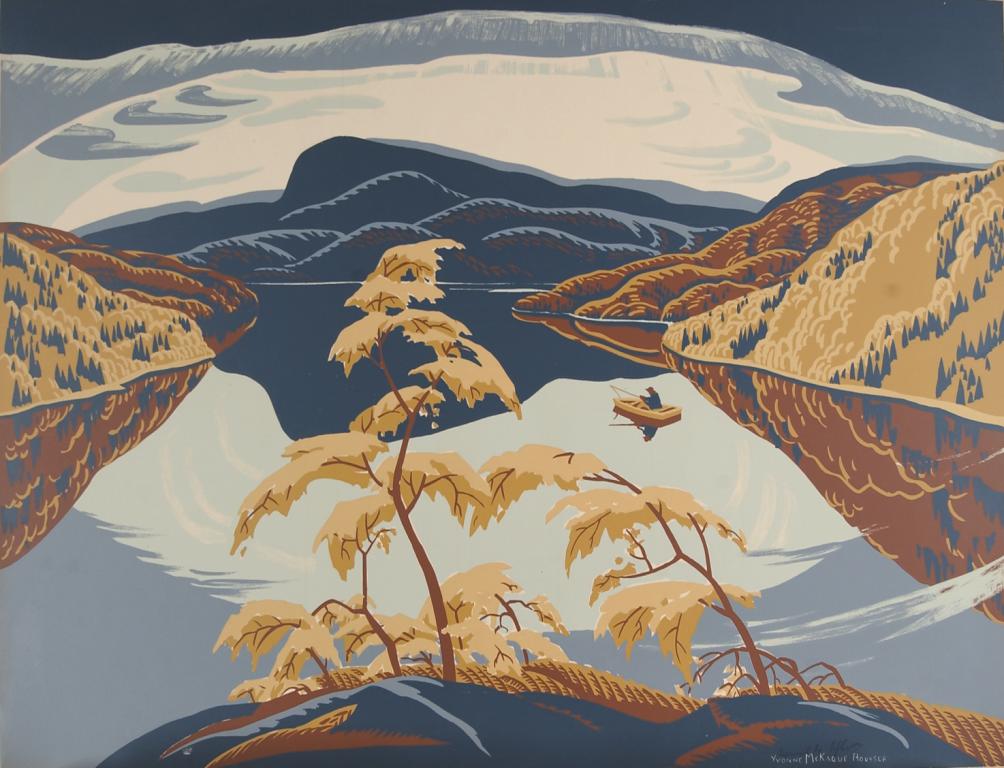
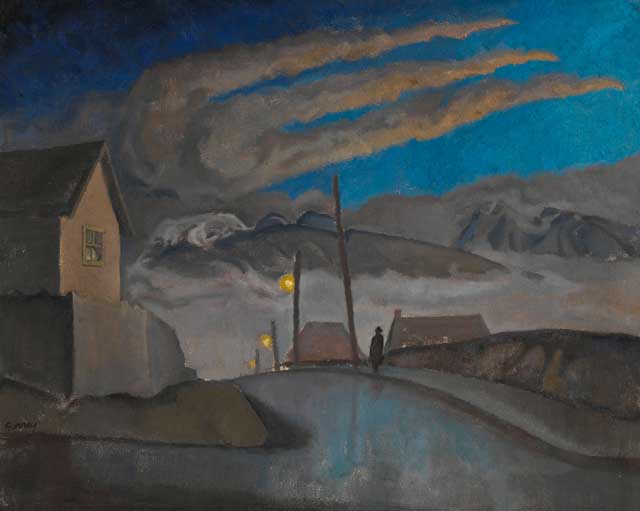
Yvonne M. Housser, Evening, Nipigon River (1942)

Yvonne M. Housser, Evening, Nipigon River (1942)

_   _   _

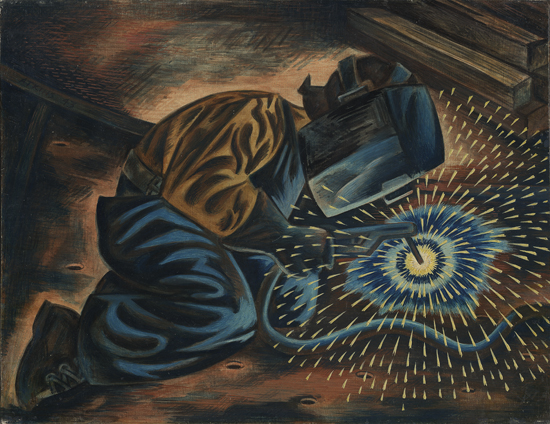
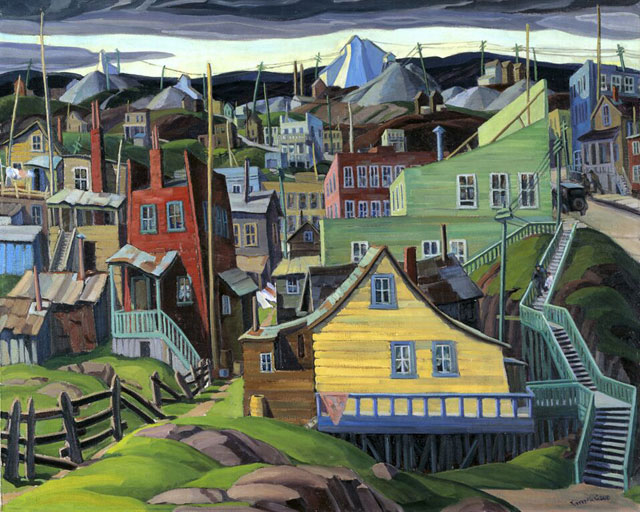
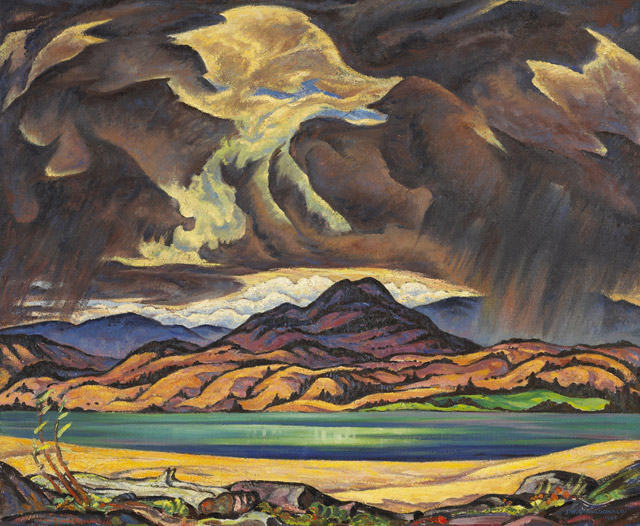
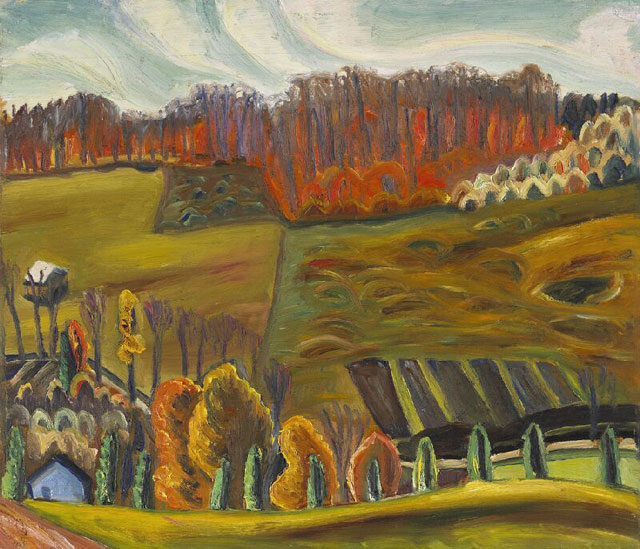
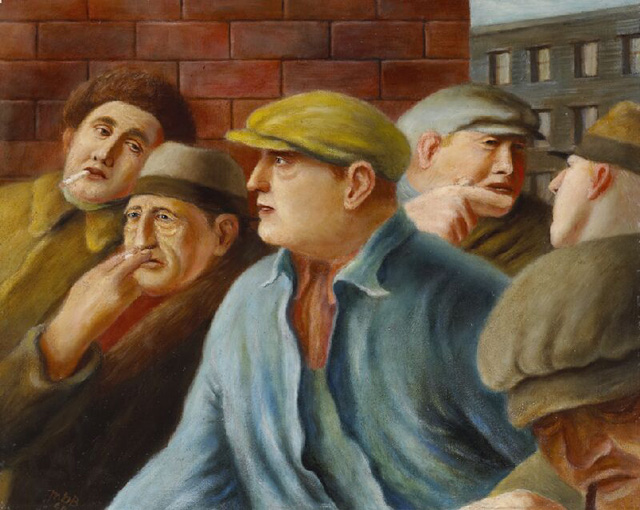
When the Group of Seven disbanded in the early 1930s, the Canadian Group of Painters arose as the creative successor to the Group of Seven’s “nationalist” art and even included several former Group of Seven members, such as Arthur Lismer and Emily Carr.    Yet, although Canadian Group artists produced significant art that was integral to defining a Canadian style of painting, the Canadian Group is not widely known.  This relative lack of attention may be due to the wider time period spanned by the work of the Canadian Group (around 1933-1953), its encompassing over forty artists, and the notably varied styles of its members who focused less on landscapes and more on modern life.   Bringing some long overdue attention to this diverse group of artists, “A Vital Force”, a traveling exhibition devoted to the Canadian Group, recently opened at the Queen’s University Agnes Etherington Art Centre in Kingston, Ontario and runs through mid-July .

Caven Atkins, Arc Welder Working on Bulkhead (1943)

Caven Atkins, Arc Welder Working on Bulkhead (1943)

+++

Yvonne M. Housser, Cobalt (1931)

Yvonne M. Housser, Cobalt (1931)

+++

Edwin Holgate, Early Autumn (1938)

Edwin Holgate, Early Autumn (1938)

+++

Philip Surrey, Going to Work (1935)

Philip Surrey, Going to Work (1935)

+++

Jock Macdonald, Thunder Clouds Over Okanagan Lake (1944-45)

Jock Macdonald, Thunder Clouds Over Okanagan Lake (1944-45)

+++

Prudence Heward, Autumn Fields (1941)

Prudence Heward, Autumn Fields (1941)

+++

Miller Brittain, Longshoremen (1940)

Miller Brittain, Longshoremen (1940)

+++

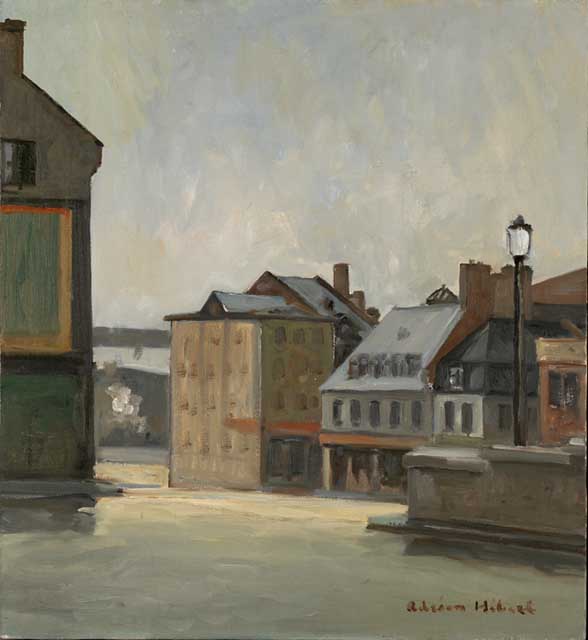
Adrien Hebert, Place Jacques Cartier (1939)

Adrien Hebert, Place Jacques Cartier (1939)

“Shapeshifter” Ben Marr Shreds the Mistassibi River

Like all the exceptional videos in the “Of Souls + Water” series, this eye-opener showing Ontario-based pro-kayaker Ben Marr’s playful mastery of Quebec’s Mistassibi River features dramatic narration, artistic filming and lighting (directed by Skip Armstrong), and an excellent soundtrack (this one: “With You” by Crystal Fighters).  On a side note, with all its hydro power, I knew Quebec has its share of massive rivers but until this video I was unaware just how big.  These waves rival some of the major whitewater swells that I’ve seen on West Virginia’s New River and stretches of the Colorado River coursing through the Grand Canyon.

Along the Ruggedly Beautiful Coast of Newfoundland

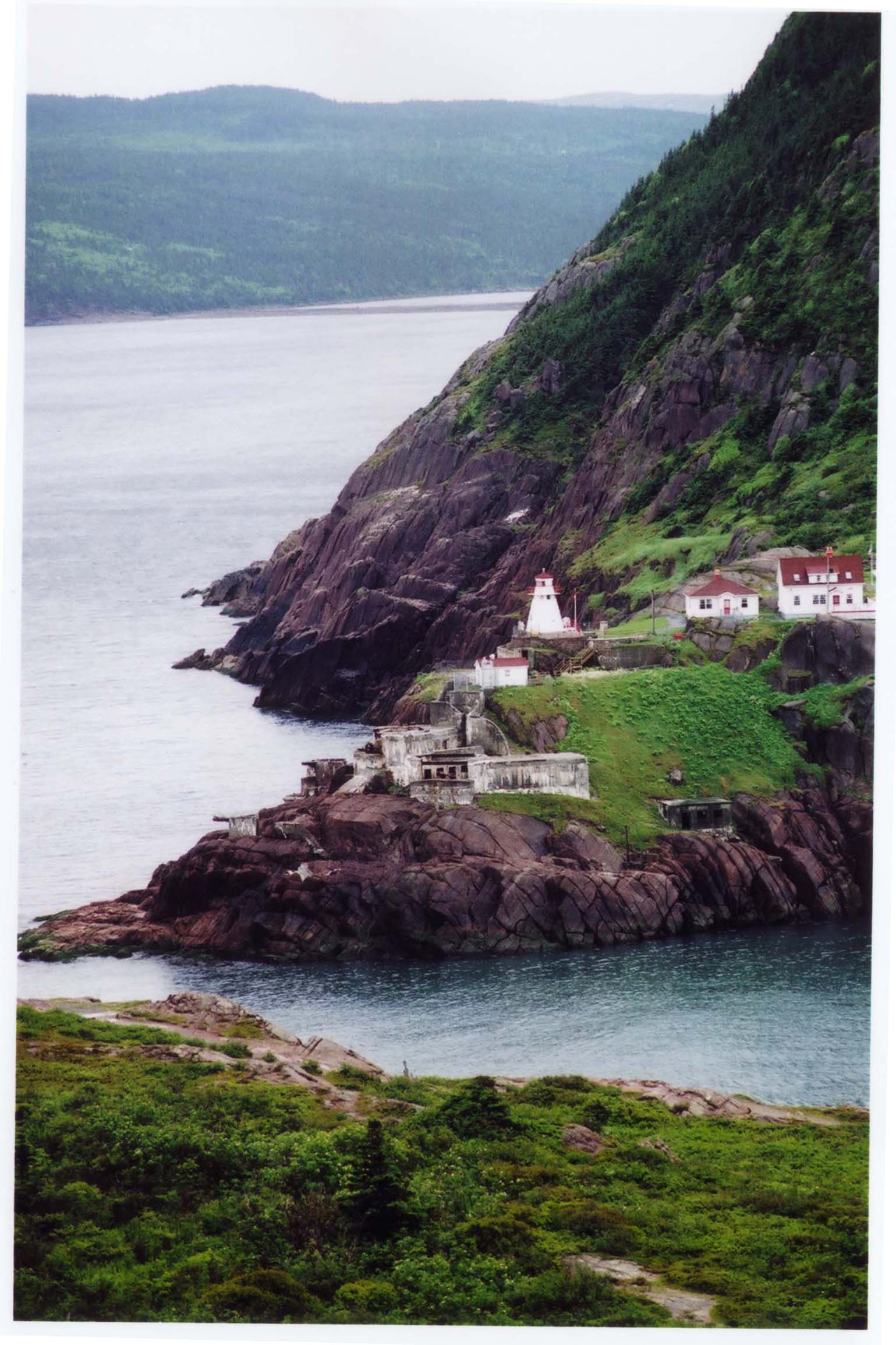
View From Signal Hill Near St. John's

View From Signal Hill Near St. John’s

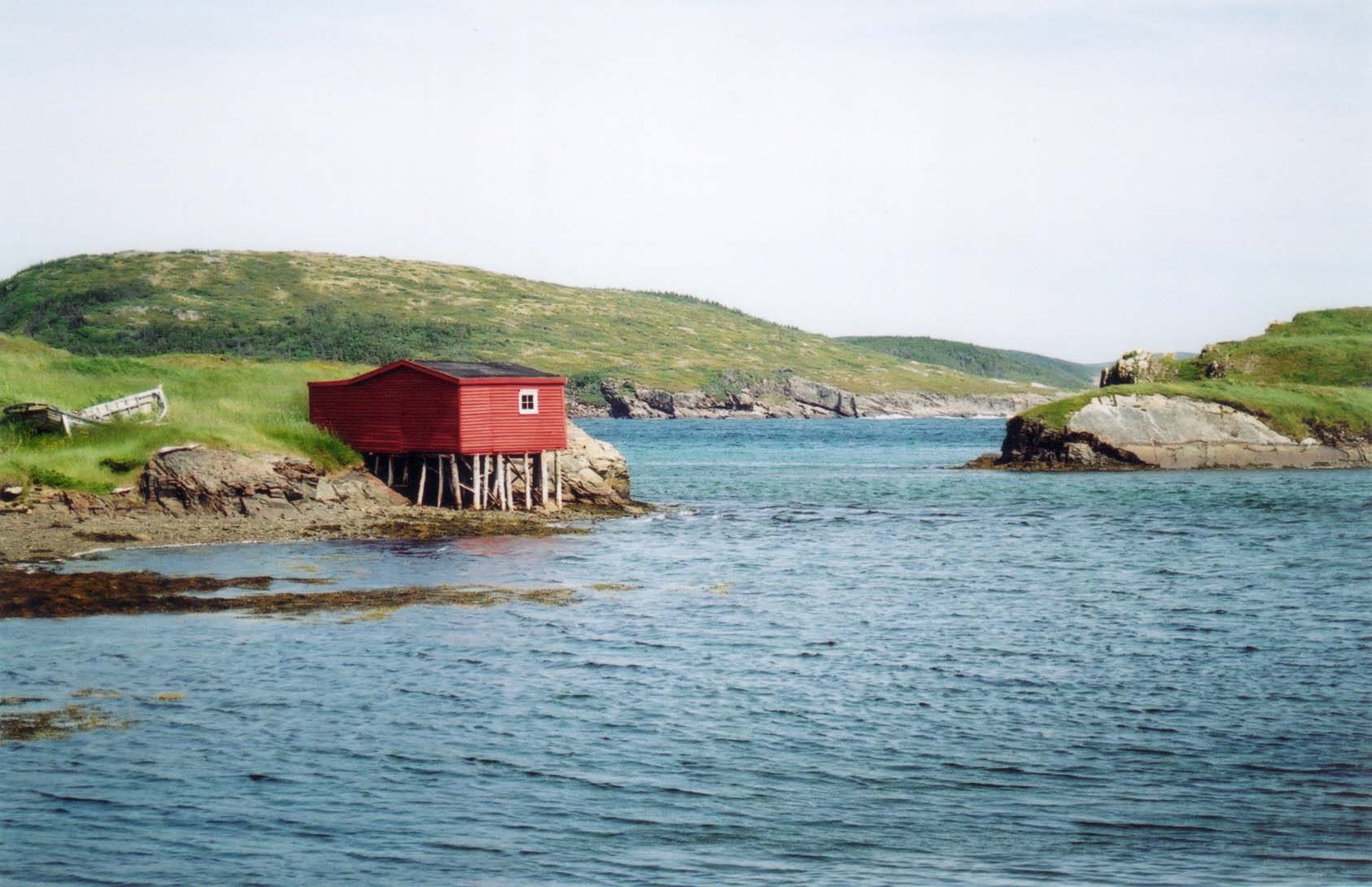
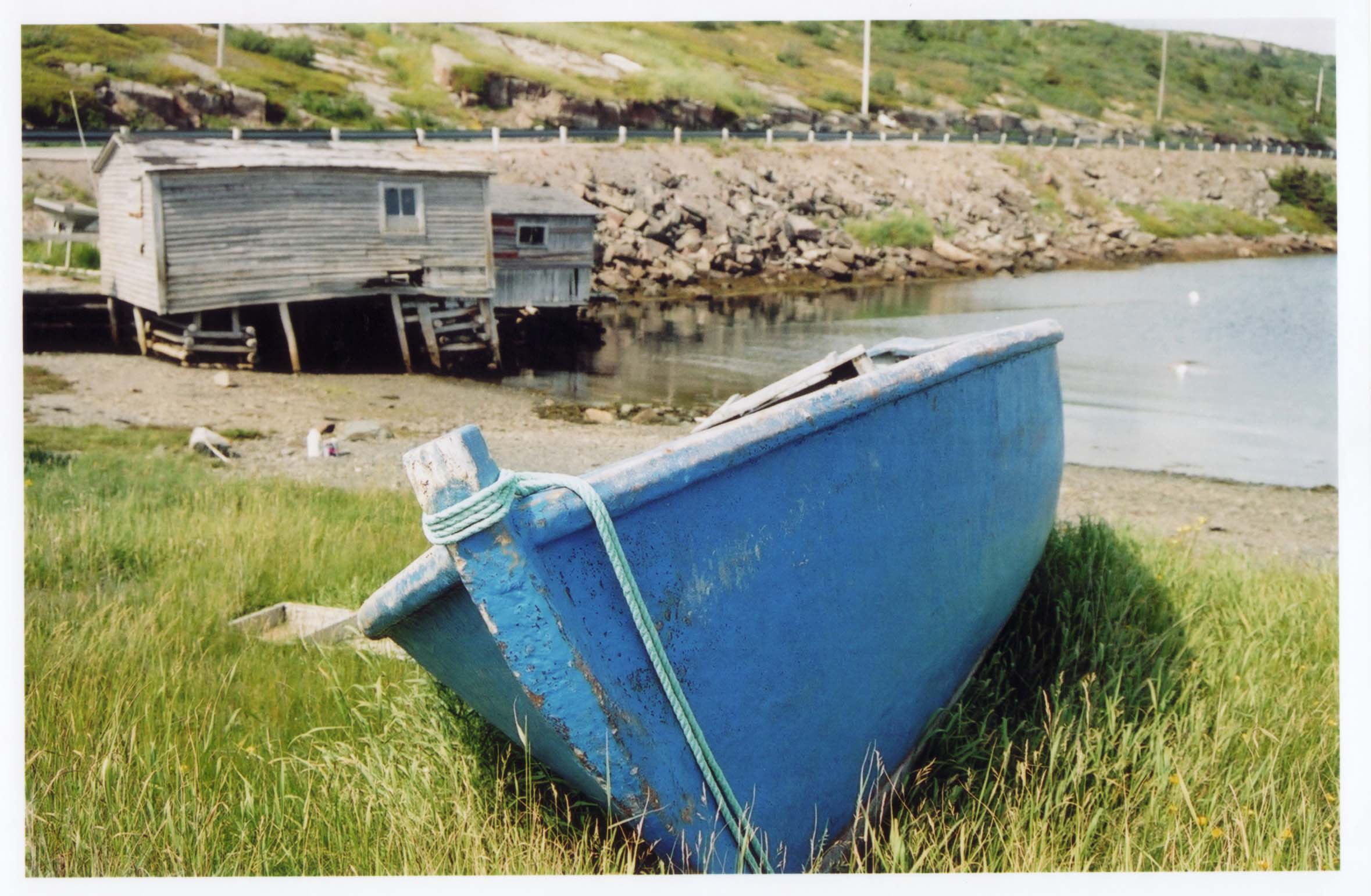
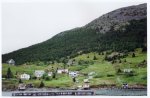
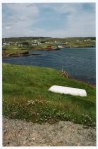
I’ve been way up to the wonderful province of Newfoundland and Labrador twice and both times were amazing.  If you have the opportunity to visit this gorgeous rugged place populated with extremely hardy and friendly people, don’t hesitate –just go!  For myself, I look forward to my next trip there, exploring quaint outports and inhaling into my soul more if its innumerable beautiful vistas.  From my last trip, here are a few images that I took along the coast near St. John’s and about 200 miles further northeast on the Bonavista Peninsula around the picturesque villages of Trinity East and Port Rexton, both of which sit on Trinity Bay across from the Avalon Peninsula.

Harbor Scene Nfld

A Fishing Stage on a Quiet Cove

Nfld -- Boat on Grass

Boat Pulled Ashore, Port Rexton

Essex County and the Lens of Memory

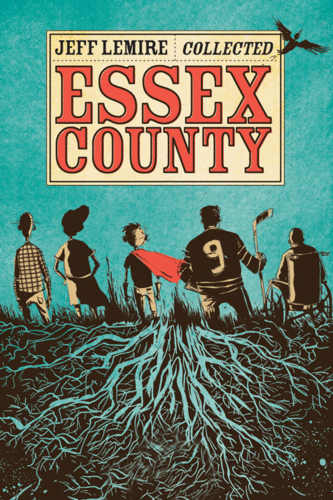
Essex County by Jeff Lemire

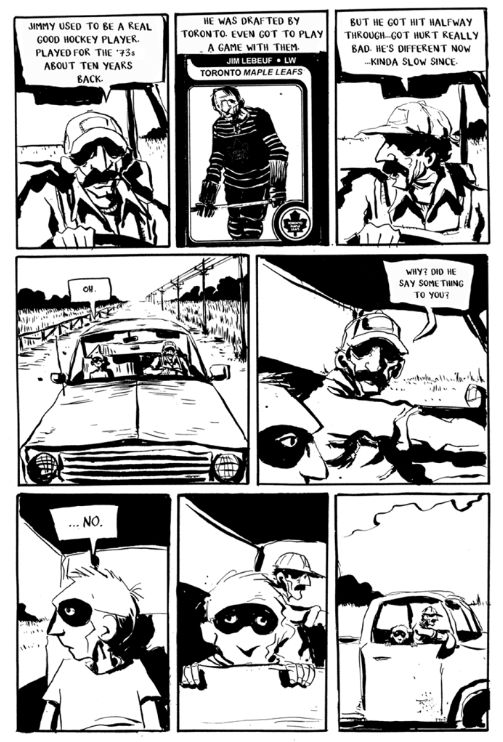
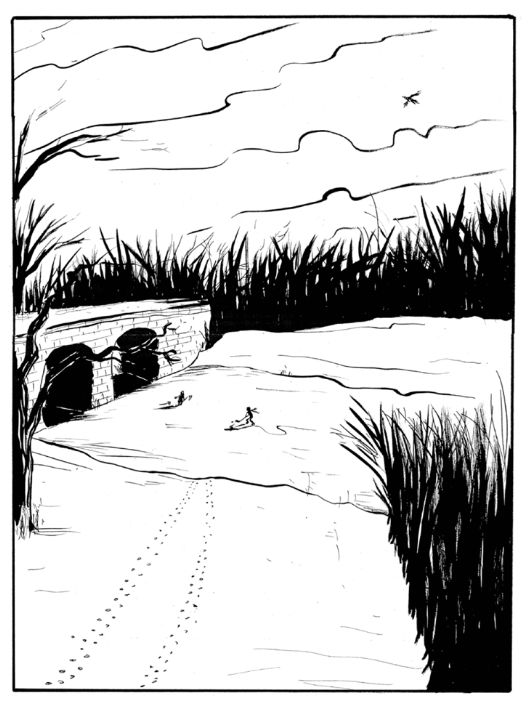
After stumbling upon Jeff Lemire’s “The Underwater Welder”, I then sought out Essex County”, his widely praised 2009 graphic novel about life across several generations in a small county in rural Ontario.  Wow!  What a masterfully written (and drawn) elegy about the power and frailties of memory and personal connections.  Highly recommended.

Essex County -- Jimmy Used To Be A Good Hockey Player

* * *

Essex County -- I've Been Here Before

* * *

Essex County -- Playing Hockey

“Wolf Pavilion” by Michael Adamson

Michael Adamson, "Wolf Pavilion" (2012) Oil on Canvas

Michael Adamson, “Wolf Pavilion” (2012) Oil on Canvas

While the shock of vibrant orange draws me in, what I like most about this vivid painting by Michael Adamson is that there is so much going on in it.   An exhibition of some recent works by this Toronto-born artist opens in May in that city’s Moore Gallery.

Reggie Watts’ Take on Canada

Seattle’s very talented musician / performer Reggie Watts shares an impromptu and humorous take on Canada at the 2012 Rifflandia Music Festival in Victoria, B.C.

April Fool’s Day with Just For Laughs

The Montreal-based TV show, “Just For Laughs,” does some clever hidden camera pranks — perfect for April Fool’s!


More of their funny videos can be found at the Just For Laughs site and on the show’s YouTube channel.

Smarties, Coffee Crisp and the Canadian Sweet Tooth

Smarties

O’Canada Food Month / Installment 7

Happy Easter to those that celebrate this holiday.  Many Canadians will also be enjoying tomorrow off from work as they observe Easter Monday as a public holiday, a day off that we do not have here in the States.   Because today is Easter and given the custom in both countries of giving candy to children on this holiday, for the last day of O’Canada Food Month, I thought I’d highlight popular Canadian candies.

While I’m not a big eater of chocolate or other candy, it’s easy to recognize that among comfort foods candies occupy a special place, especially because they frequently bring us back to memories of childhood.   Among the leading confectioners plying their trade in Canada is Cadbury and Nestle, both of which appear to dominate offerings of chocolate candies in Canada.  I assume this is because of the country’s longer standing connection to and influence by Europe, where both those companies are based (Cadbury in England; Nestle in Switzerland).  By contrast, while Cadbury and Nestle products can be found in the U.S., not surprisingly candies by U.S.-based Mars and Hershey are more common here.

There are certainly many candies in common in both places — such as Snickers, Crunch, Kit Kat and Rolo chocolates — but there are quite a few products that can only be found in Canada.  These include Smarties chocolates (similar to M&Ms and not to be confused with the tart candy wafers that bear the Smarties name in the U.S.), Coffee Crisp, Aero, Crispy Crunch, Maltesers and Wunderbar.  Also worth mentioning are Kinder Eggs, which are hollow chocolate eggs with a toy surprise inside that, while not strictly a Canadian candy, are widely sold there but are oddly banned in the U.S. (due to possible choking hazards among very young children).  Here in the States, Necco offers a line of mint candies called Canada Mints, but I’m not sure how popular those are in Canada.

Some Notable Canada Food Blogs & Sites

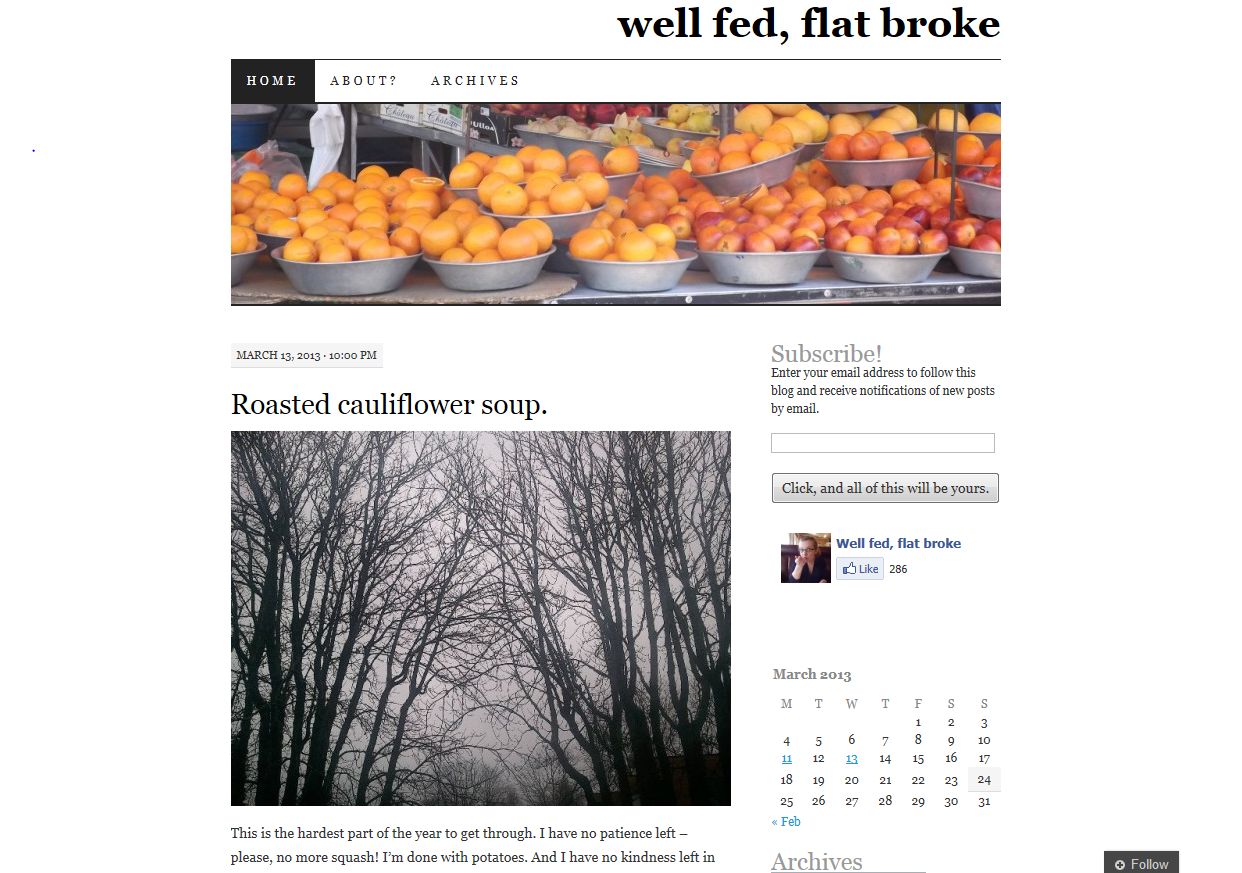
Well Fed, Flat Broke

O’Canada Food Month / Installment 6

As I round out my O’Canada Food Month theme, below are a few Canadian food-oriented sites and blogs that caught my eye this month and that are worth exploring (and with apologies to what I’m sure are many terrific food sites that I’ve overlooked):

 . . . An Endless Banquet:  Montreal-focused wide-ranging food blog

Canadian Living:  Major magazine’s take on Canadian food and recipes

Fiesta Farms Blog:  Comments on all manner of food topics by a major independent Toronto food market

I’m Mr. Fabulous:  Not strictly a food blog but lots of great food photos and amusing thoughts amid “fabulous” fun

The Mindful Table:  All about sustainable and organic dining in Canada (and elsewhere) with many recipes

The Poutine Pundit:  Mainly about poutine (as noted here earlier this month), but also quite good on other eateries

Saltscapes: Special focus on the foods of the Maritime Provinces (as also mentioned previously)

Taste of Nova Scotia: Highlighting the best of Nova Scotia’s cuisine and dining places

Unsweetened.ca:  A lot going on with this site with quite strong culinary content

Well Fed, Flat Broke:  Lots of personality and great recipes come through in this blog about good eating with sensibility

The Natural Goodness of Canadian Maple Syrup

Maple Syrup Bottle

O’Canada Food Month / Installment 5

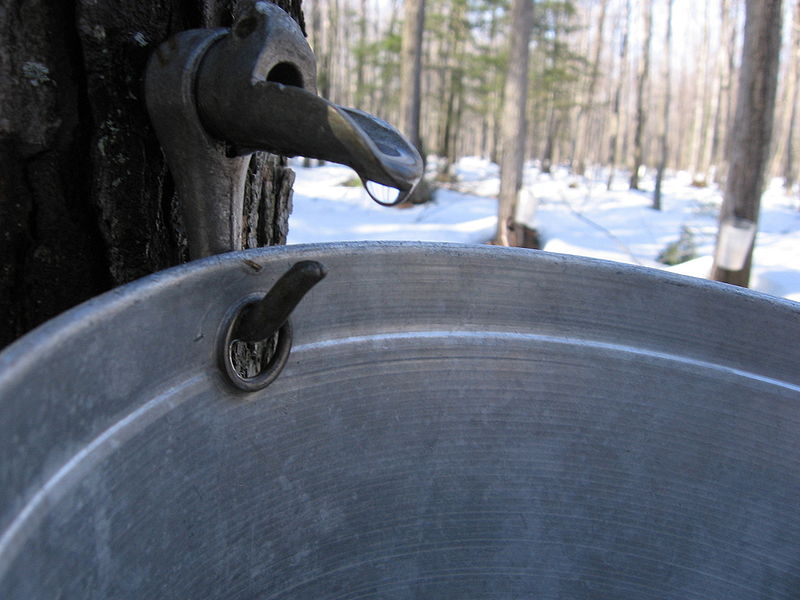
Given the prominence with which the maple leaf is emblazoned on its flag, the cultural importance to Canada of the maple tree and, by extension, the “fruit” of that tree, maple syrup, is difficult to mistake.  I recall watching a grainy black-and-white educational reel in grade school touting the time-honored process and virtues of Vermont maple syrup production, which impressed me as much as anything by the way the syrup flowed so copiously from a narrow pipe hammered into a tree’s trunk.  Vermont, of course, produces some excellent maple syrup but Quebec, which produces over 80% of the world’s supply of maple syrup, is the undisputed champion in that realm.

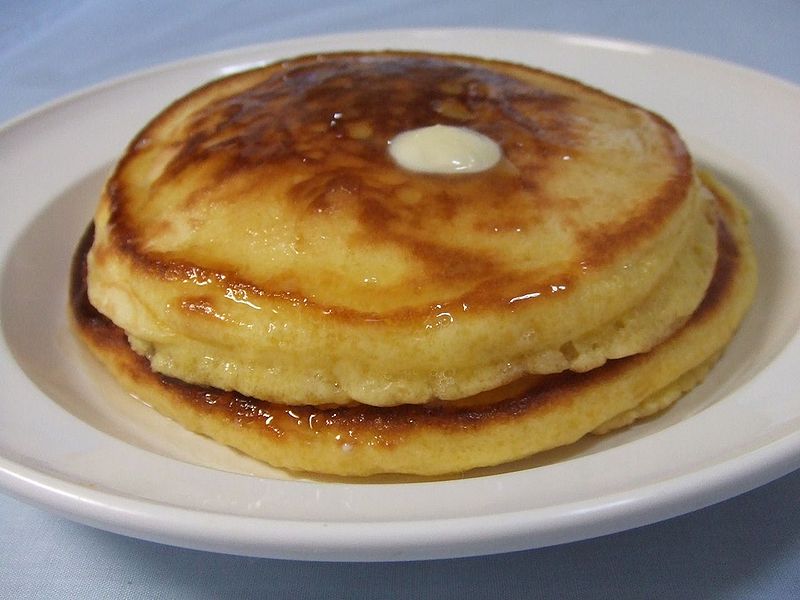
Pancakes

In addition to the early Spring thaw being upon us, which is the prime season for harvesting sap, I was reminded of maple syrup’s primacy by an article in the NY Times from this past December, which caught my attention then because of its unusual subject:  the theft in Quebec of over 6 million pounds of maple syrup valued at about $18 million from the global strategic maple syrup reserve.  Okay, that’s a huge amount of maple syrup.  But cue up the look of surprise — a global strategic maple syrup reserve!  Huh?  The very existence of a strategic reserve — now containing an estimated 46 million pounds of syrup — is even more telling about the significance of this sweet amber substance to Canada.

Maple Tree Sap

I’m not enough of a maple syrup connoisseur to easily detect the differences between Quebec / Canadian and Vermont varieties of maple syrup, but there is almost always a bottle (an actual glass bottle!) of maple syrup from Canada in the cupboard.   While I most commonly enjoy it with pancakes, it is a fitting accompaniment to eggs, oatmeal, ice cream, vegetables and other foods.  A recipe I clipped a couple of years ago from Saltscapes magazine for maple-glazed carrots produced a delicious take on that root vegetable.   On that note, here are a few links to some Canadian maple syrup recipes that look quite good:

Recipes from I Love Maple

Recipes from Pure Canadian Maple Syrup

Recipes from Canadian Living

Recipes from Saltscapes

(Photo Credits: Wikimedia Commons)

A Word or Two About Poutine

Poutine

O’Canada Food Month / Installment 4

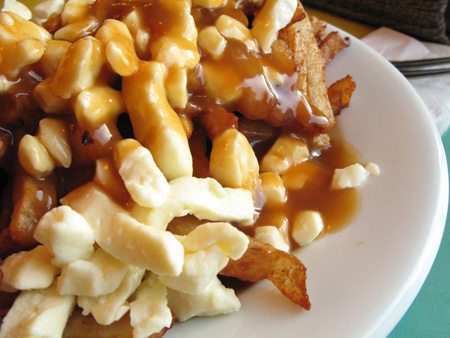
Originated in Quebec, there’s nothing in the States quite like poutine.  Although the basics of the dish are easy enough to describe — french fries and cheddar cheese curds topped with a healthy dose of brown gravy — given the extreme pro and con feelings among Canadians evoked by this dish I didn’t feel my words alone could do justice to poutine.  So what follows are some curated comments from more refined observers of poutine, which collectively provide a well-rounded sense about this peculiar Canadian food stuff.

“Poutine doesn’t have the immediate fear factor of haggis, but you do have to steel yourself for the first few bites.  Having said this, poutine’s rich content of starch, sugar, oil, fat and salt are ideal for larding it up for a dark Quebec winter.”    Douglas Coupland, in Souvenir of Canada (2002)

“On a recent trip to Montreal, a city that is to poutine what Baltimore is to crab cakes, I asked a young woman I’d met there named Emily Birnbaum why poutine often struck people as funny.  “Because it’s so gross,” she said.  “After you finish a poutine, you say, ‘I can’t believe I just ate that.'”  It almost goes without saying that she was eating poutine as we spoke.  So was I.”  Calvin Trillin, in “Funny Food,” The New Yorker (Nov. 23, 2009)

“Quebec can rightfully claim bragging rights to being the birthplace of poutine. But the gooey French fries, gravy and fresh cheese curd mix has transcended La Belle Province to become Canada’s favourite nosh.  Not officially. The motion “Poutine Should be Declared the National Dish of Canada” was narrowly defeated at the 11th Annual Leacock Debate two years ago. Pity.”    Alexandra Gill, in “Ode to True Putine Bliss at Vancuver Bistro,” The Globe and Mail (Sept. 10, 2012)

“Poutine is Acadian slang for mushy mess and is best described as a heart attack in a bowl. . . .The cheese is the most important part of good poutine. You must use FRESH white, cheddar cheese CURDS. These curds have a taste and texture very different than actual cheddar cheese. The cheese curds will actually squeak in your teeth as you bite them. . . .”   From “A Primer on the Preparation of Poutine” on The Gutsy Gourmet

“Many restaurants now serve novelty poutines made with foie gras, gnocchi, or home fries. Red wine, cream, or pepper are sometimes used to good effect in designer gravy. Interesting ingredients and cooking methods should always be reasonably accommodated, no matter what culture they come from, thereby allowing poutine to flourish and develop. However, it should be remembered that some cultural practices are repugnant to this nation’s culinary values (such as the “poutine” I had in Newfoundland that replaced cheese curds with sliced shards of Kraft singles).”  From the Criteria page on The Poutine Pundit

“Whether Montreal’s embarrassing but adored junk food does take root in New York, it may never attain the status it achieved earlier this year when the CBC revealed the results of a viewer poll on the greatest Canadian inventions of all time. Granted, poutine came in only at No. 10. But it beat, among other things, the electron microscope, the BlackBerry, the paint roller and the caulking gun, lacrosse, plexiglass, radio voice transmission and basketball.”    Kate Sekules, in “A Staple From Quebec, Embarassing But Adored,” New York Times (May 23, 2007)

The Joys of Kraft Dinner

Bowl of Mac and Cheese

O’Canada Food Month / Installment 3

Is Kraft macaroni and cheese, a/k/a Kraft Dinner, the national dish of Canada?  While not as distinctive as the uniquely Canadian cheese-laden concoction, poutine, Kraft mac and cheese is consumed in greater quantities on a per capita basis north of our borders than anywhere else and its widespread popularity across Canada appears to rival any other packaged food item for a claim to national dish status.

Kraft Dinner, from Kevin Frank's "True North"

Kraft Dinner, from Kevin Frank’s “True North”


Over the years, I’ve consumed my share of packaged macaroni and cheese, especially when my two boys were very young and this was an easy-to-fix staple that they heartily enjoyed.  Being now a fan of made-from-scratch mac & cheese, Kraft macaroni had been off my radar screen for quite a while when, during a late 2012 visit to Halifax, I came across Sasha Chapman’s very interesting article “Manufacturing Taste” in the September 2012 issue of The Walrus.
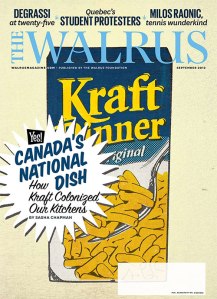
Walrus September 2012

Chapman weaves together the back story of Kraft Dinner and the relentless pursuit by J.D. Kraft, a former Ontario farm boy who went on to build the Kraft food empire, to eliminate spoilage in store-bought cheese.  Here’s Chapman on the breakthroughs that led to the convenience we now know as boxed macaroni and cheese:

The discovery that emulsifying salts could be used to make processed cheese turned out to be the great innovation—and some would say tragedy—of twentieth-century cheese making. It standardized the process and ruled out variation, good or bad, at every stage. The idea for boxed macaroni and cheese came during the Depression, from a salesman in St. Louis who wrapped rubber bands around packets of grated Kraft cheese and boxes of pasta and persuaded retailers to sell them as a unit. In 1937, the company began to market them as Kraft Dinner, promising to feed a family of four for 19 cents (US). The boxes had a good shelf life and could be kept in a pantry for about ten months; back then, many Canadian households did not yet own a refrigerator. In 1939, two years after KD launched in Canada and the US, Kraft’s Canadian sales had already reached $8 million. A mere six years later, at the end of World War II, sales had nearly doubled to $14 million, helped in large part by government requisitions for the armed forces, and at home by war rationing and general privation, which made meatless entrees more common.

Along the way she relates the ups and downs of the Canadian cheese industry from the nineteenth century forward and the role of sophisticated corporate food labs in manufacturing our collective tastes for the foods that we adopt as an expression of regional food culture but for which the local roots are usually quite tenuous.

But without getting too deep, if most Canadians prefer the Kraft Dinner variety who can really argue.  Mac and cheese of whatever sort is a wonderful comfort food, and, as we’d say here in the American South, it’s “pure “D” delicious.”

Milk (In Bags!)

Milk Sold in Bags

O’Canada Food Month / Installment 2

Differences help define cultures.  While American and Canadian cultures share a great deal, one of the more peculiar differences when it comes to food products is the custom in parts of Canada of selling milk in bags.  Here, we’re used to substantial jugs and cartons, but in Canada, particularly the eastern provinces, grocery stores stock milk in loose plastic sacks containing three smaller plastic packages of milk totaling around 4 liters (about 1 gallon).

The milk bags are used with a medium plastic pitcher, which holds the bag and from which the milky goodness is then poured after snipping off a triangle on one of the top corners of the bag.  Apparently there’s a bit of art and science to this because stories of frustrating spills among the uninitiated are legion.  Among the virtues cited for the milk bag:  its recyclability; it uses less plastic than a milk jug; because they can be stacked they’re easier to store; and they can be frozen.

My sense is that many Canadians would concede that milk bags are genuinely — but endearingly — odd.  Perhaps because of this shared bemusement, there are numerous joking videos to be found on the Internet about this milk bag thing.  Among these, I especially like the one below by CBC’s Jian Ghomeshi in which he provides an eloquently spirited and amusing defense of the milk bag as a cultural icon to be proudly embraced.

(Image credits:  Alex Dawson, Pitcherman, and Jakemaheu, all via Wikimedia)

Saltscapes and Canadian Comfort Food

O’Canada Food Month / Installment 1

To ease the transition from my more typical discussions of arts and literature talk to food, I’ll  share some thoughts on Saltscapes magazine, a publication whose editorial offices are in Nova Scotia and which bills itself as Canada’s East Coast Magazine (and of which I’ve been a happy subscriber for the past couple of years).   One of its regular features is a section called “Kitchen Party,” which is usually comprised of about half a dozen short pieces and recipes focusing on regional cuisine.

A couple of weeks ago while skimming through the January 2013, I came across a recipe for PEI baked potato soup, which received a 1st place award in Saltscapes’ annual recipe contest for 2012.   Submitted by Heather Gunn McQuillian of Morell, PEI, the dish was super easy to make and its creamy heartiness provided a perfect antidote to the winter chill swirling outside.   (The recipe is not yet posted on the Saltscapes website.)  Other award-winning recipes in that issues include: fig, goat cheese & balsamic salad; savory pesto cheesecake; sherried mushrooms & brie; croustade oberland; country potato salad; and sweet potato & spinach pizza.

Heather Gunn McQuillian's PEI Baked Potato Soup

Heather Gunn McQuillian’s PEI Baked Potato Soup

The Saltscapes website and each issue of the magazine is packed with interesting content, including well written articles on local fare, cuisine and personalities.  On the website is an extensive recipe archive and index, several images from which are posted below.

Viewing the website, it’s apparent that the commitment of Saltscapes to the tastes and interests of the Atlantic Canada region extends beyond this magazine’s pages.  Among other things, there is a Saltscapes Restaurant & General Store outside of Truro, Nova Scotia, an annual Saltscapes Expo, an annual Food and Travel Guide, a separate Living Healthy magazine, an Eastern Woods & Waters online magazine, and a Saltscapes newsletter.  The magazine publishing business is a tough one in which to thrive, so I admire the entrepreneurial resourcefulness of those behind the various enterprises affiliated with Saltscapes.  By organizing and showcasing all these activities, they serve as exceptional ambassadors for Canadian cuisine and the Atlantic Canada region as a whole.

(Image credits: Saltscapes Magazine)

March is Food Month on O’Canada

Canadian Cuisine

What people eat as a regular part of their diets is a sometimes overlooked area of a country’s culture (in the broadest sense of culture).  Although my musings on Canadian culture have gravitated principally toward arts, music, literature, history and places, I’ve written occasionally about aspects of Canadian consumables (for example, Tim Horton’s, ice wine and Labatt beer) and have observed a number of other things about Canada’s food culture about which I’ve been mulling over sharing some comments.  So, for the month of March I plan to organize comments on O’Canada around the theme of food and see where that leads.  Among the topics being cooked up (very bad pun intended and which I promise to leave behind) will be Tim Horton’s (again), milk bags, poutine, maple syrup, Kraft mac & cheese (a/k/a Kraft dinner) and some of the best Canadian food blogs.  Bon apetit!

(Image credit: Wikimedia)

The Underwater Welder by Jeff Lemire

The Underwater Welder

As I’ve recently mentioned, I’ve been checking out what’s worth reading when it comes to Canadian graphic novels.  As part of that winding exploration,  I stumbled across Jeff Lemire’s The Underwater Welder, which was published in 2012 by  Top Shelf Productions (right here in Atlanta).  Lemire, who lives in Toronto, is an award-winning writer and illustrator whose previous works include the highly acclaimed  Essex County and Sweet Tooth.

Jackie-.-.-.

Through the fascinating story told between these covers, Lemire showcases the best in the literary graphic novel form.  The Underwater Welder offers a glimpse of Jack Joseph, an oil rig welder in Nova Scotia, and his search for meaning in his life as he and his wife await the birth of their first child and he struggles with ambivalent memories of his father, who died years earlier in a diving accident off the nearby shore.   With masterful storytelling complemented by his creative graphics — drawn from many vantage points and skillfully using flashbacks,  scene blurring and other innovative techniques — Lemire touches eloquently upon the themes of memory, loss, parent-child bonds, relationships, love and purpose.

Time-to-Wake-Up

In an introduction for the book, noted television writer and producer, Damon Lindelof (Lost, Star Trek, etc.), likens Lemire’s story to an episode of The Twilight Zone and that is certainly one way of approaching this well executed tale.  However, unlike with what might be expected of a typical Twilight Zone sketch, the ending in The Underwater Welder is not discordant but instead signals a note of grace.   Lindelof’s praise for Lemire includes this amusing, good-natured observation:  “I am deeply threatened by Jeff’s creativity, a fact mitigated only partially by the fact that he is Canadian and thus, inherently non-threatening.”
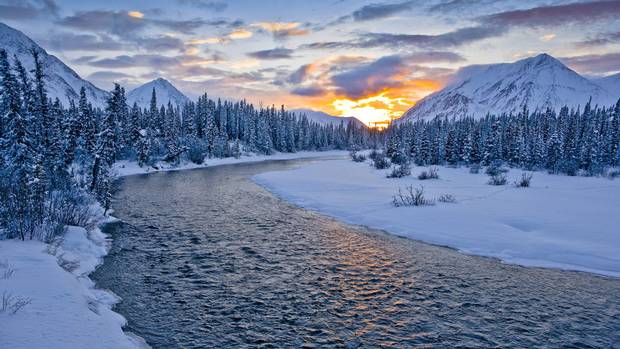
More information on The Underwater Welder, Lemire and his other outstanding works can be found on his blog here.

Back-to-Rig-1

Another Favorite Publisher: Firefly Books

Firefly Books Logo

Not long ago I commented on the remarkable Canadian publisher Douglas & McIntyre.   Another nifty Canadian publisher worth taking note of is Firefly Books, which emphasizes non-fiction.  Aside from McClelland & Stewart, a major Canadian publisher that is a division of Random House, it seems that when it comes to high quality books from Canada one of these two outfits is sure to have had a hand in such works.  While Richmond Hill, Ontario-based Firefly produces a high number of science, nature and “how to” type books, the titles that stand out for me are those focused on art and photography.  Their volumes in those two areas are among the best on their subject matters.

Pictured above is a random selection from the Firefly catalog.  Coincidentally, I have four of these and each is very well done for its subject matter.   Of these, David Silcox’s The Group of Seven and Tom Thomson, is the subject of an earlier post here, and I plan to comment on Pat & Baiba Morrow’s The Yukon and George Walker’s Graphic Witness — each mesmerizing in its own way — in the next few weeks.

Although it’s generally not fair to judge a book by its cover, the graphic elements of book design can play a role in pulling in a prospective reader.  So it’s a minor complaint that the website for Firefly Books, unfortunately, does not do its catalog justice in this respect.  When searching for a book a listing of titles is initially displayed and one must click on the title to get more information and only then get a visual on a given title.  Of course, this is a non issue once you’ve located the book for which you were searching or already have it in your hands

Canada at War: A Graphic History of WWII

Canada At War

I’ve long been a fan of graphic novels as both an art form and literary form.  Over the past decade, it seems that graphic novels as a genre have come into their own and are no longer dismissively regarded as just comics for grownups.  I like them as much for the elements of creativity that a well done volume can bring to telling a story as well as for their being excellent reflections of the adage that a picture is worth a thousand words.  So a couple of weeks ago my curiosity sent me in search of graphic novels either about Canada or by Canadian authors.  Unsurprisingly, given the many other contributions of Canadians to the culture of popular entertainment, there appear to be a fair number of such graphic novels.  In particular, Canada boasts the quite prolific graphic artists Seth (a/k/a Gregory Gallant), who has released several acclaimed graphic novels in recent years, including It’s A Good Life If You Don’t Weaken (1996), George Sprott (2009) and The Great Northern Brotherhood of Canadian Cartoonists (2011), and Scott Chantler, whose works include Northwest Passage (2005-2006) and Two Generals (2011).

I’m still exploring the Canadian graphic novel, so for now I’ll share a few thoughts on Canada At War:  A Graphic History of World War Two, written by Paul Keery and illustrated by Michael Wyatt, which was published in 2012 by Douglas & McIntyre publishers and which I just finished.  This non-fiction graphic novel provides quite an eye opener about how WWII greatly contributed to the maturing of Canada’s armed forces and the national identity.  It also helped me to understand better the circumstances that gave rise to the disastrous battle at Dieppe in 1942, one of the more tragic episodes involving the Canadian military and which I had heard mention of before but had not fully appreciated.  Among other things, Keery provides an overview of the role of each branch of Canada’s armed forces and major battles or efforts in the Atlantic, the Pacific, in Europe, in Asia and at home. There are numerous vignettes throughout the book highlighting daring acts of bravery and heroism as well as facets of the country’s war effort that remain well below the radar screen but which were, nevertheless, vitally important to the eventual success of the Allied forces.  Keery’s graceful writing and Wyatt’s riveting illustrations are well paired here.  Highly recommended reading.

Update:  Since posting the above, I discovered that Keery and Wyatt have a site devoted to Canada At War, which makes for great additional reading, especially their thoughts on the creative process and their preference in referring to the book as a graphic history as opposed to a graphic novel.  Their site is here and contains additional excerpts.

What’s Up With Canada’s Currency?

2012 Polymer Series Notes

2012 Polymer Series Notes


Amusing article (“Canada’s New Banknotes Strike Some as Loonie“) in this weekend’s edition of The Wall Street Journal on the recent switch in Canada from paper to polymer currency.  The principal reasons given by the Bank of Canada, the official issuer of the currency, for adopting the new bills are  durability and prevention of counterfeiting.  I’ve previously remarked on the creativity of the Royal Canadian Mint with its wide variety of designs for the country’s coinage and I find it interesting how Canada has done away with the dollar bill in favor of the dollar coin, an effort that has been tried in the States but not done very well here.  This year also marks the first year that the Canadian 1 cent coin will not be minted.

In any event, it seems that among other complaints about the new banknotes is that in certain conditions the notes will melt, notwithstanding the Bank of Canada’s assurances to the contrary.   The WSJ article details some other related mishaps.  What I find more intriguing  from an American perspective — and even with an understanding of the historical connection to the British monarchy — is the continuation of Queen Elizabeth II’s image on one side of Canada’s current 5¢, 10¢, 25¢, 50¢, $1 and $2 coins (and the penny while it was minted) as well as the $20 note .   (I plan to return to that peculiarity in a future post.)

Image Credit:  Bank of Canada

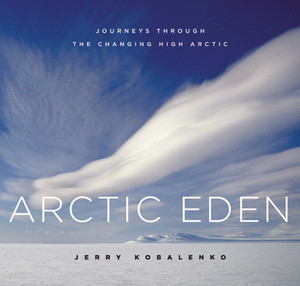
Jerry Kobalenko’s Beautifully Rendered Arctic Eden

Arctic Eden

In light of the major blizzard that struck the northeastern U.S. yesterday and the deep freeze that settled over much of eastern Canada a couple of weeks ago,  I thought I’d continue with the winter theme of some of my recent posts (see Retro Winter Travel and Recreation Ads and “Ice Break” by Astrid Blodgett) by sharing my praise for Jerry Kobalenko’s Arctic Eden:  Journeys Through the Changing High Arctic.  Although it first caught my eye over a year ago and has been sitting on one of my shelves awaiting my attention since then, perhaps because this wintry season’s colder than usual weather had set the right mood,  I finally got around to reading it this past week.

Arctic Eden is part travelogue (or better put, adventurelogue), part historical overview of explorations of the High Arctic region of Canada, but mostly it is a beautiful  showcase of Kobalenko’s exquisite photography of the stark and at times haunting landscapes of the rugged northernmost latitudes of Canada.  Through the book Kobalenko, who is based in Alberta, narrates for his readers several sled-pulling treks through the extremities of Nunavut, including Devon Island, Axel Heiberg Island and Ellesmere Island, and he does it in such a way that one can readily visualize the experience of which he writes.

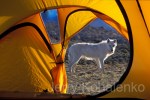
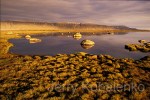
The text is nicely complemented by asides about early Arctic adventurers and local flora and fauna and the author’s stunning images that demonstrate his keen eye for the beauty of this harsh environment.   While shades of white and blue dominate the landscape, I was struck by the much wider range of vivid colors than I expected in these images of the Arctic.  What comes across most clearly is Kobalenko’s good-natured passion for outdoor adventure and his joyful appreciation for each visit to the High Arctic that he’s been privileged to make (apparently through much resourcefulness on his part).  I should also note that in several places he acknowledges his wife, Alexandra, as his steadfast companion in adventure and in preparing key parts of the book.  Undoubtedly, this thankful sensibility contributed to Arctic Eden’s receipt of the 2012 William Mills Prize for Non-Fiction with a polar theme.

I’ve posted above a handful of Kobalenko’s photos from the book, more of which can be viewed on his website (www.kobalenko.com).  His website, by the way, is quite nicely laid out and has information on ordering this and his other books as well as his photos.

Photo Credits:  Jerry Kobalenko

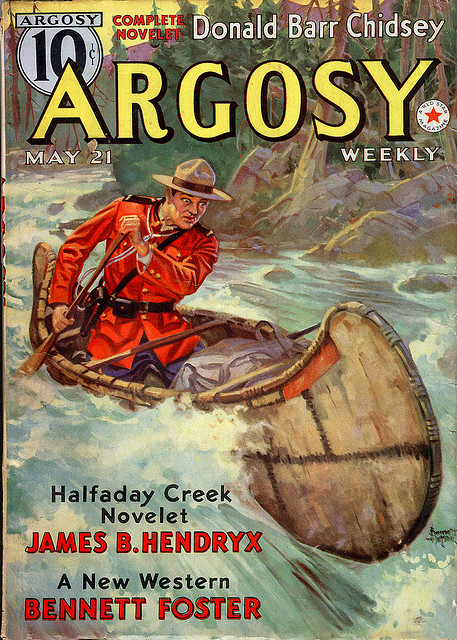
The Pride of the Mounties

Mountie On the Rapids

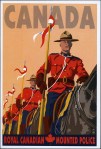
Ask most Americans about the Royal Canadian Mounted Police (RCMP) — more commonly called the Canadian Mounties — and you’ll frequently hear comments indicating a generally high regard for the Mounties and their association with the frontier derring do.  With their iconic red serge coats and dimpled Stetson hats, the public image of the Mounties has had a warm reception in the American imagination, even if over the years, like many police forces, they have had their ups and downs and share of controversies.

My early introduction to the Mounties included watching as a kid countless Dudley Do Right cartoons, which presented an amiable if bumbling caricature of a Mountie, and educational reels from school about the valor of the Mounties.  Slightly later came Monty Python’s humorous send up of another Canadian icon, the lumberjack, which featured the good-natured Mounties providing a back up chorus.  Probably because of all these sources I almost always thought of the Mounties as a wilderness fighting force, and did not fully understand their broader policing role.

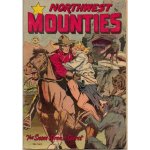
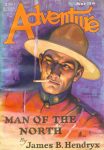
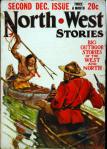
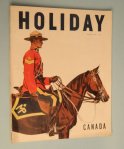
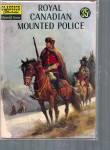
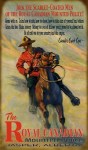
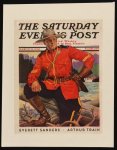
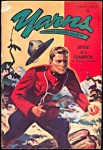
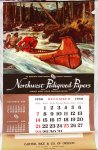
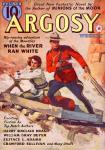
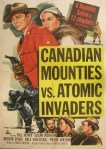
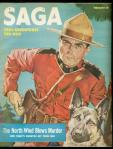
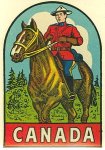
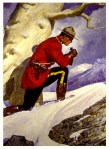
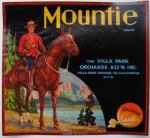
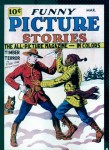
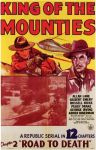
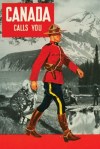
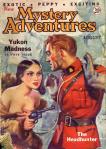
The idea that the Mounties “always got their man” also stuck with me from childhood.  Fittingly, that unofficial motto was attributed to the Mounties by an American publication (at least according to the Wikipedia entry on the RCMP).  The RCMP as we know it today resulted from the merger of the Royal Northwest Mounted Police, which first patrolled the Northwest Territories starting in the late 1800s, and the country’s Dominion Police.   As testament to the acclaim enjoyed by the Mounties, they were frequent heroic subjects of popular American books, pulp fiction, magazine stories, radio shows and movies from the 1920s through the 1960s.  A sampling of related pop culture images is collected below.

Quotable Canada: Women in Combat, Skiing the Gaspe Peninsula, Arctic Exploration, and Common Law Relationships

Some notable quotes from U.S. and Canadian media I’ve come across in the past week or so:

“I can assure you that a mother misses a son as much as a father grieves for a daughter.  Grief has no gender”  — Charlottetown, Prince Edward Island resident Tim Goddard, commenting on combat roles for men and women, in Ian Austen, “Debate on Combat Roles Is Familiar in Canada,” NY Times, Jan. 25, 2013 

“The lucky ones got to sleep under a table.  You were so exhausted you didn’t care.”   — Montrealer Sharon Braverman, commenting on the initial Traversee de la Gaspesie, the weeklong 100-mile plus cross-country skiing trek across Quebec’s Gaspe Peninsula in Tim Neville, “Quebec on Skis,” NY Times, Jan. 27, 2013

“I think it’s crazy.  Aren’t we far enough north already?”   — Deborah Iqualik, of Resolute, Nunavut, on the efforts each year (called the “silly season” by locals) by adventurers far and wide to reach the North Pole, in Margo Pfeiff, “‘If It’s Explorer Season, Why Can’t We Shoot Them?'”,  Up Here, Jan./Feb. 2013

“You’re in love, and all you think about is love and having kids, and you come last.  So a lot of women don’t see it coming.”Johanne Lapointe, of Montreal, commenting on Quebec’s  approach to common law relationships in light of a recent Canadian Supreme Court decision, in Ingrid Peritz & Sean Gordon, “Quebec is a Laboratory When It Comes to Domestic Life'”, The Globe and Mail, Jan. 25, 2013

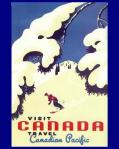
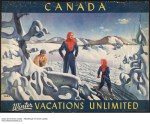
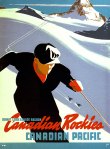
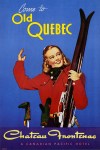
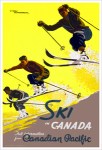
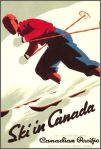
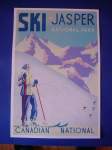
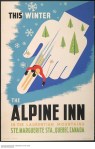
Retro Winter Recreation and Travel Ads

Temperatures this far south, as well as the extreme cold gripping much of eastern Canada this week, leave no doubt that we’re deep in the heart of winter.  Because of this, my thoughts turn toward skiing, ice skating, hockey and other winter recreations and the many places above the 49th parallel — among them Banff, Quebec, Whistler, the Laurentians and Jasper — that are popular destinations for cold weather and snowy pastimes.  So, I thought I’d share some retro travel ads and posters touting these places and this season’s activities.  Many of these are from the Canadian Pacific Railway, which engaged in  a wide range of travel promotions for locations throughout Canada (and beyond).  The vivid graphics work their magic by conveying visions of boundless wintry pleasures.  Among the more distinctive of these works are those by Peter Ewart and Roger Couillard, two of the more notable artists commissioned for their attractive illustrations.  More Canadian Pacific travel posters may be seen here on an earlier O’Canada Blog post.

Image Credits:  Library and Archives Canada; Canadian Pacific Railway Archives

“Ice Break” by Astrid Blodgett

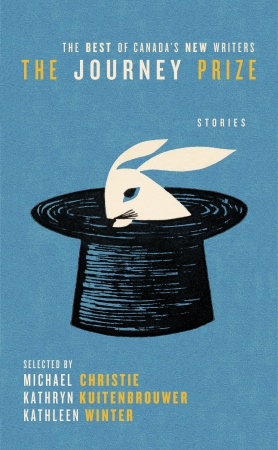
Journey Prize 24

As I’ve noted before, the annual anthology of short story finalists for the Journey Prize is regularly on my reading list.  The most recent collection, The Journey Prize, Stories, 24 (2012), selected by notable jurors Michael Christie, Kathryn Kuitenbrouwer and Kathleen Winter, contains a wide range of excellent fiction.  The winning story, “Crisis on Earth-X” by Alex Pugsley, is an engaging coming-of-age tale set against the backdrop of the societal turmoil of the early 1970s and one to which I could readily relate.  However, the story that most touches me among this collection is the tenderly told tragedy penned by Astrid Blodgett in “Ice Break”.  Edmonton-based Blodgett has a new short story collection, You Haven’t Changed A Bit, scheduled for release this March by the University of Alberta Press, which I’ve added to my reading list for this year.

A small excerpt follows:

“We’re a long way out on the lake when the ice breaks.  It’s late, after three, probably.  The sun is low in the sky.  We’ve driven past a dozen men squatting on their three-legged stools over small round holes and staring into the blackness.  We haven’t found our spot yet.  We haven’t even seen Uncle Rick.

“Everywhere I look outside there’s the lake and the sky, both the same grey-white, blurred together so you can’t see, way out there. what is lake and what is sky; and here and there in the middle distance men hunched on stools, dark silhouettes; and up close on the dashboard, dark blue, covered in a thin layer of dust except for the handprints I left when Dad turned too quickly off the gravel road onto the lake, and I grabbed on, handprints like claws.

* * *

“Earlier Dad had asked Mom to come.

“Mom said no.  She always said no.  She was doing some work, some financial stuff she needed to catch up on.  She’d already told him it was late in the season, the ice might not be good; what did Uncle Rick say.  Dad told her they knew what they were doing, they’d been doing it for years, they always assessed the risks before they went out.  So she didn’t talk about the ice anymore.

“Now she said, “I know how much you love it.”

“It was after noon.   We’d slept in, my sisters and I, and we’d been reading the coloured comics and doing Saturday morning chores.  Mom looked over at us — Marla, Dawn, Janie — all in a row on the kitchen bench, eating brunch.  Tallest to shortest.  Oldest to youngest.  Each in our own spot.

“”Sam,” Mom said, “You could take Dawn.”

“Sometimes they did that, one parent, one child.  Every six months, it seemed, we had a family meeting about it, and it worked okay for a week, one or maybe two of us doing something alone with Mom or Dad, and then they forgot about it till the next family meeting.  Or two of us wanted to do whatever it was Mom or Dad wanted to do with just one of us.  So it never really worked.”

Cool Little Squares: Vintage Canadian Postage Stamps

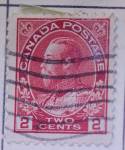
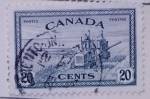
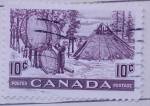
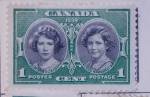
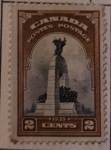
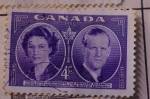
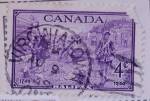
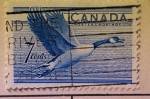
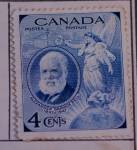
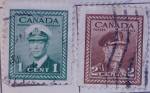
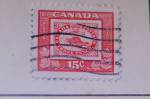
Looking through some boxes the other day I came across part of my childhood stamp collection, including a weathered album with pages arranged by country, several devoted to Canada.  This album, dating to 1953, originally belonged to my mother when she was a child and, at some point, had been handed down to me.   As I paused to consider the many stamps haphazardly pasted into the album, I realized that my first exposure to Canada came through these artistic little pieces of paper.

The earliest Canadian stamp in the album is a green-tinted square from 1898 that is graced with the dour visage of Queen Victoria.  While the British royal family appears to be the most popular subject matter among these stamps, there are also many richly tinted tributes to various aspects of Canada’s history and culture.  Several selections from my well worn collection appear below.

Lastly, here are a couple of U.S. stamps, one from 1967 and the other from 1968, commemorating Canada and both from my early collection.  I think it’s fitting that on the centennial stamp, the simple lines of the landscape appropriately harken back to the style of the Group of Seven’s Lawren Harris.

Douglas Coupland’s Souvenir of Canada

Souvenir of Canada

I just finished reading Douglas Coupland’s fascinating Souvenir of Canada (which, incidentally, is published by Douglas & McIntyre), a series of interrelated essays and photographs about the nature of Canadian identity.  Coupland uses an alphabetical arrangement of iconographic topics that most Canadian’s will readily understand or relate to —  such as “Distance”, “Maple Syrup”, “The Group of Seven”, “Hockey”, “Small Towns” and “The Trans-Canada Highway”, among many others — and his intelligent, at times highly personalized and humorous, commentary on these subjects both celebrates and challenges many of his country’s traditions.  Coupland followed up this 2002 book with a second volume and his reflections were later made into a film in 2006 by Robin Neinstein.  The initial set of essays compels me to track down these follow-up efforts.  Although Coupland targeted this work at his fellow countrymen, his frequent comparisons between Canada and the United States and the at times ambivalent cross-pollination between the two countries, allows the book to serve as a very accessible primer for American readers on Canadian culture.

Coupland’s ruminations throughout this book are worth pondering further.  As but on example, here he is commenting on the concept of distance as it relates to Canada:

“You can never overstate how large a country Canada is.  Everything is far away from everything else; nothing is close to anything.  And a sizable chunk of the Canadian identity is defined both by how we pretend this isn’t the case, and how we can be so shockingly cavalier about plane hops like Vancouver to Winnipeg or Montreal to Halifax. . . . Canadians are the same as Americans about this — Texans will drive two hours to go out for dinner.  But whereas the continental U.S. has cities plunked about its forty-eight states with quite equal spacing, Canada (at least the inhabited part) is a skinny Chile-like entity that stretches across the continent.  To the north, for millions of square kilometres, lies nothingness, and this vast space looms large in the Canadian mind.  In our national anthem, it’s called the True North strong and free.”

About Canada’s 135th birthday in 2002, the year Souvenir of Canada was published, Coupland strikes an optimistic note about the country’s future:

“. . . Canada is a staggeringly young country, and we really ought to be easier on ourselves than we are.  We beat ourselves up trying to define ourselves when, comparatively, we’ve generated more myth and identity in our short lifespan than many countries ever did before their 135th birthdays.  There’s only so much national mythology that can be created in 135 years.  Relax.

“An added bonus of being young is that you’re not, well old.  So the future belongs to you — you can still make your country what you want it to be, and you can protect it from what you don’t want it to be.  Most countries have permanently locked into their myths and identities and their time for experimenting is over.”