Stanley Park Totem Poles

Chief Skedans Mortuary Pole, Stanley Park, Vancouver

Chief Skedans Mortuary Pole, Stanley Park, Vancouver

___

Stanley Park is a beautiful, peaceful greenspace on a sprawling peninsula in the heart of bustling Vancouver.  The Park’s collection of native American totem poles is eye-catching and conjures marvelment and reverence at the creativity of the people of the Pacific Northwest that made these exquisite carvings.

In these photos from a trip there not long ago it was challenging to separate the poles from the surrounding trees so these don’t do justice to the majesty of these enduring artifacts.

Sky Chief Pole, Stanley Park, Vancouver

Sky Chief Pole, Stanley Park, Vancouver

___

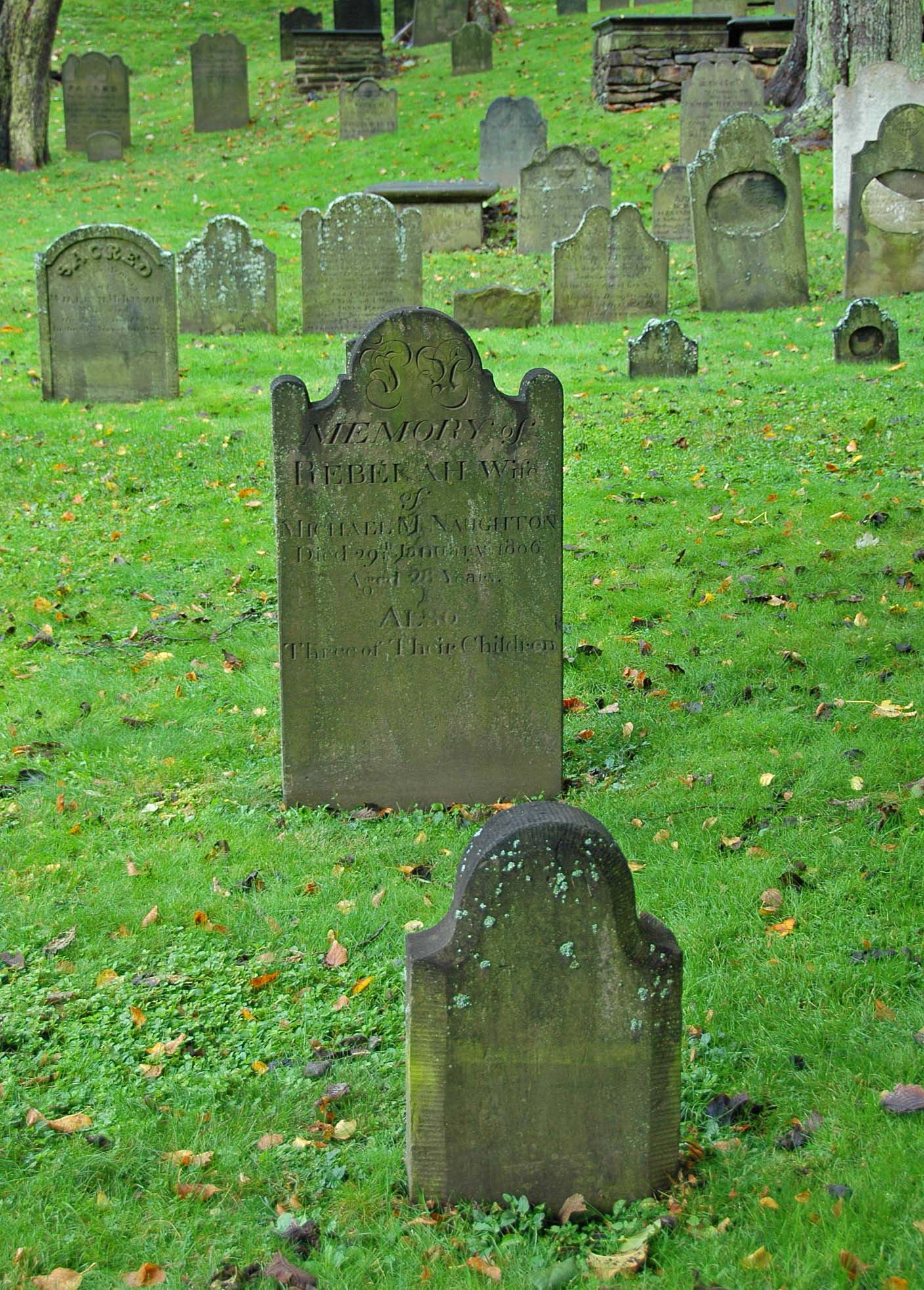
Halifax’s Beautiful Old Burying Ground

Gravestones, Old Burying Ground, Nova Scotia

Gravestones, Old Burying Ground, Nova Scotia

___

I find old cemeteries to be serene places for reflection and contemplation, and Halifax’s historic St. Paul’s Church Cemetery, also known as the Old Burying Ground, which dates back to the 1749 founding of the city, is one of the most gorgeous green spaces of this type.  Its many weathered gravestones hint at stories of lives both brief and long — and all so long ago.  The Burying Ground’s charm is evident by, among other things, the numerous times I’ve seen it used as a backdrop for wedding group photography or a leisurely setting for those simply enjoying a good book.

These photos are from an early Fall trip to Halifax a few years ago. [Click images to enlarge.]

“Sacred to the Memory of . . . “, Old Burying Ground, Halifax

___

Memories For the Ages, Old Burying Ground, Halifax

___

Solitary Gravestone, Markings Erased, Old Burying Ground, Halifax

Solitary Gravestone, Markings Erased, Old Burying Ground, Halifax

___

Weathered Gravestones, Old Burying Ground, Halifax

Imagining Canada: NY Times Photo Archive on Canada

Imagining Canada

I learned a lot by focusing on Quebec-themed posts over the past month.  With June now here, time to shift gears for a while back to good old random Canadiana.

For a nice transition, here’s a sampling from the recently published Imagining Canada: A Century of Photographs Preserved By The New York Times, a book I obtained shortly before last month’s trip to Montreal.  Over the past century The New York Times has covered many developments in Canada and Imagining Canada showcases some of the photographs that accompanied that coverage.  The images in the book and below only scratch the surface of the extensive archive acquired from the Times in 2009 by Canadian businessman Christopher Bratty and selections from which have been highlighted in the long-running “Photo of the Day” feature on TORO magazine’s website.

The photos are grouped by subject in the book, with each chapter accompanied by a brief, thoughtful essay on Canadian culture by notable figures.  The introductory essay by editor William Morassutti reflects on the relationship between Canada and the U.S. and the fact that, even if below the radar, many people in the States have been paying close attention to Canada for quite a while.

RCMP in Banff 1941

RCMP in Banff 1941

Leafs vs. Rangers 1966

Leafs vs. Rangers 1966

Deanna Durbin 1948

Deanna Durbin 1948

Royal Canadian Regiment in Halifax 1919

Royal Canadian Regiment in Halifax 1919

Notre-Dame Basilica de Montreal

Notre Dame Basillica Montreal_edited-1

Quebec Month / Installment 15

Even to a casual observer of Quebec culture, the predominance of the Catholic church, at least historically, in the province is evident in many ways, not the least of which is the prominence in many towns of a centrally located Catholic church and the widespread naming of streets and other places for saints.  The Notre-Dame Basilica de Montreal, an impressive gothic structure situated in the Vieux-Montreal area of that city, is perhaps the crown jewel of all these.  My lovely wife took these two images of the intricately ornate interior of the Basilica.

notre dame basillica 3

The Very Vital Canadian Group of Painters

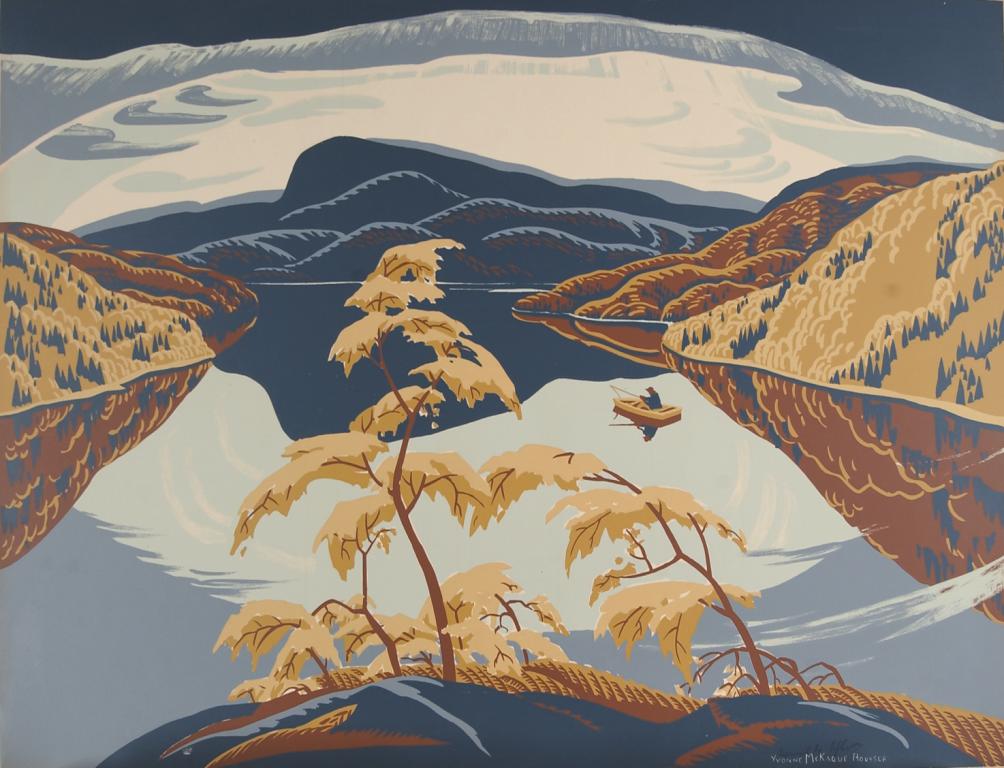
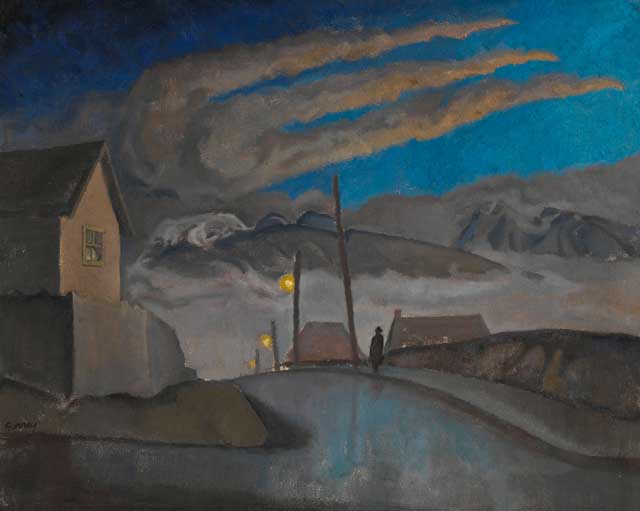
Yvonne M. Housser, Evening, Nipigon River (1942)

Yvonne M. Housser, Evening, Nipigon River (1942)

_   _   _

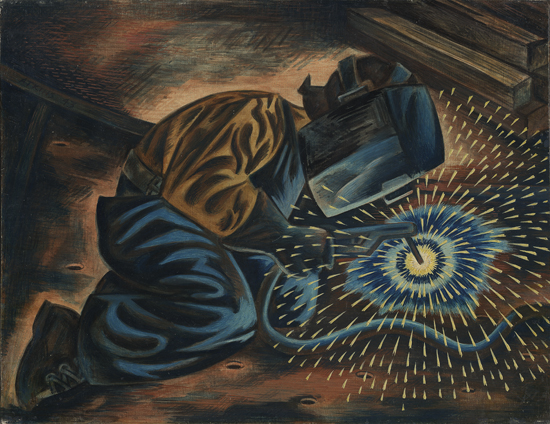
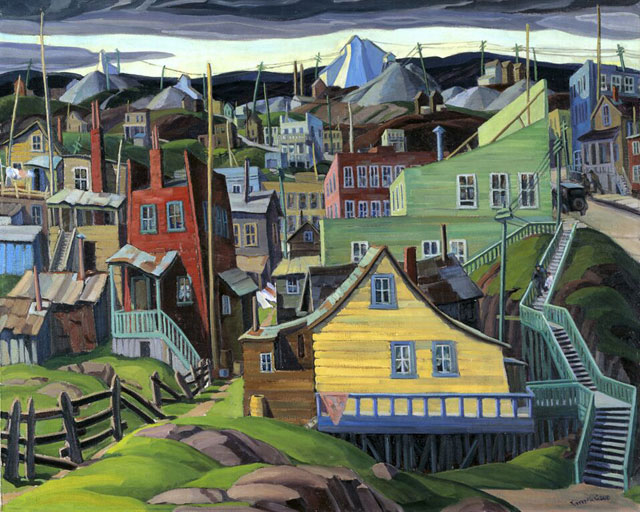
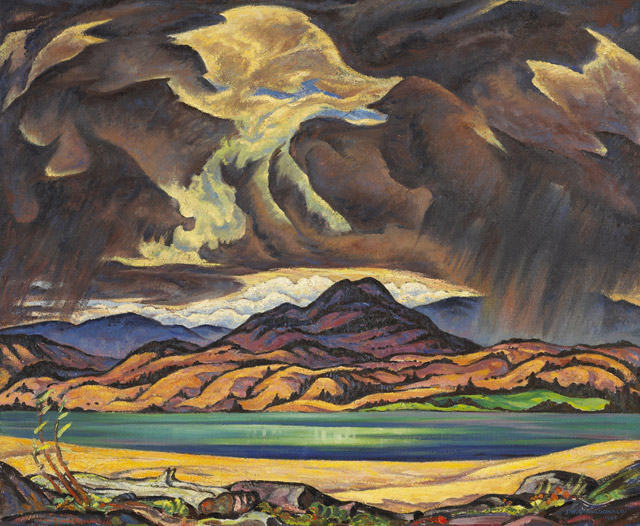
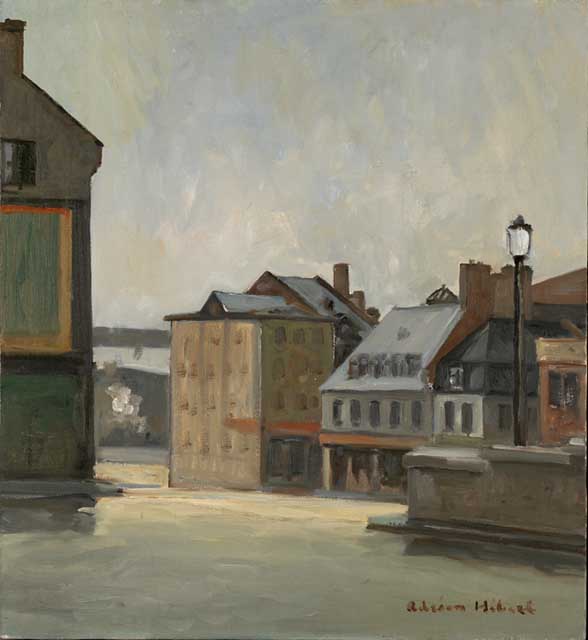
When the Group of Seven disbanded in the early 1930s, the Canadian Group of Painters arose as the creative successor to the Group of Seven’s “nationalist” art and even included several former Group of Seven members, such as Arthur Lismer and Emily Carr.    Yet, although Canadian Group artists produced significant art that was integral to defining a Canadian style of painting, the Canadian Group is not widely known.  This relative lack of attention may be due to the wider time period spanned by the work of the Canadian Group (around 1933-1953), its encompassing over forty artists, and the notably varied styles of its members who focused less on landscapes and more on modern life.   Bringing some long overdue attention to this diverse group of artists, “A Vital Force”, a traveling exhibition devoted to the Canadian Group, recently opened at the Queen’s University Agnes Etherington Art Centre in Kingston, Ontario and runs through mid-July .

Caven Atkins, Arc Welder Working on Bulkhead (1943)

Caven Atkins, Arc Welder Working on Bulkhead (1943)

+++

Yvonne M. Housser, Cobalt (1931)

Yvonne M. Housser, Cobalt (1931)

+++

Edwin Holgate, Early Autumn (1938)

Edwin Holgate, Early Autumn (1938)

+++

Philip Surrey, Going to Work (1935)

Philip Surrey, Going to Work (1935)

+++

Jock Macdonald, Thunder Clouds Over Okanagan Lake (1944-45)

Jock Macdonald, Thunder Clouds Over Okanagan Lake (1944-45)

+++

Prudence Heward, Autumn Fields (1941)

Prudence Heward, Autumn Fields (1941)

+++

Miller Brittain, Longshoremen (1940)

Miller Brittain, Longshoremen (1940)

+++

Adrien Hebert, Place Jacques Cartier (1939)

Adrien Hebert, Place Jacques Cartier (1939)

Canada at War: A Graphic History of WWII

Canada At War

I’ve long been a fan of graphic novels as both an art form and literary form.  Over the past decade, it seems that graphic novels as a genre have come into their own and are no longer dismissively regarded as just comics for grownups.  I like them as much for the elements of creativity that a well done volume can bring to telling a story as well as for their being excellent reflections of the adage that a picture is worth a thousand words.  So a couple of weeks ago my curiosity sent me in search of graphic novels either about Canada or by Canadian authors.  Unsurprisingly, given the many other contributions of Canadians to the culture of popular entertainment, there appear to be a fair number of such graphic novels.  In particular, Canada boasts the quite prolific graphic artists Seth (a/k/a Gregory Gallant), who has released several acclaimed graphic novels in recent years, including It’s A Good Life If You Don’t Weaken (1996), George Sprott (2009) and The Great Northern Brotherhood of Canadian Cartoonists (2011), and Scott Chantler, whose works include Northwest Passage (2005-2006) and Two Generals (2011).

I’m still exploring the Canadian graphic novel, so for now I’ll share a few thoughts on Canada At War:  A Graphic History of World War Two, written by Paul Keery and illustrated by Michael Wyatt, which was published in 2012 by Douglas & McIntyre publishers and which I just finished.  This non-fiction graphic novel provides quite an eye opener about how WWII greatly contributed to the maturing of Canada’s armed forces and the national identity.  It also helped me to understand better the circumstances that gave rise to the disastrous battle at Dieppe in 1942, one of the more tragic episodes involving the Canadian military and which I had heard mention of before but had not fully appreciated.  Among other things, Keery provides an overview of the role of each branch of Canada’s armed forces and major battles or efforts in the Atlantic, the Pacific, in Europe, in Asia and at home. There are numerous vignettes throughout the book highlighting daring acts of bravery and heroism as well as facets of the country’s war effort that remain well below the radar screen but which were, nevertheless, vitally important to the eventual success of the Allied forces.  Keery’s graceful writing and Wyatt’s riveting illustrations are well paired here.  Highly recommended reading.

Update:  Since posting the above, I discovered that Keery and Wyatt have a site devoted to Canada At War, which makes for great additional reading, especially their thoughts on the creative process and their preference in referring to the book as a graphic history as opposed to a graphic novel.  Their site is here and contains additional excerpts.

Cool Little Squares: Vintage Canadian Postage Stamps

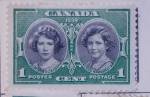
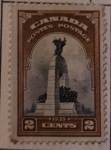
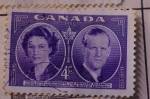
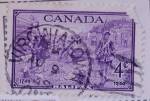
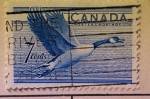
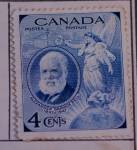
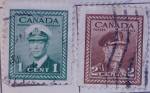
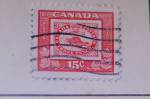
Looking through some boxes the other day I came across part of my childhood stamp collection, including a weathered album with pages arranged by country, several devoted to Canada.  This album, dating to 1953, originally belonged to my mother when she was a child and, at some point, had been handed down to me.   As I paused to consider the many stamps haphazardly pasted into the album, I realized that my first exposure to Canada came through these artistic little pieces of paper.

The earliest Canadian stamp in the album is a green-tinted square from 1898 that is graced with the dour visage of Queen Victoria.  While the British royal family appears to be the most popular subject matter among these stamps, there are also many richly tinted tributes to various aspects of Canada’s history and culture.  Several selections from my well worn collection appear below.

Lastly, here are a couple of U.S. stamps, one from 1967 and the other from 1968, commemorating Canada and both from my early collection.  I think it’s fitting that on the centennial stamp, the simple lines of the landscape appropriately harken back to the style of the Group of Seven’s Lawren Harris.

Victoria Day Ushers in Summer

Canadians today celebrate Victoria Day, a holiday that officially commemorates the birthday of Queen Victoria and acknowledges the reigning British monarch and the peculiar British monarchial connection to Canada.  Less formally and probably more significantly for most Canadians, it marks the start of summer across the country.  So, if we see the cars of numerous “snow birds” — obvious by their Canadian plates — heading north this month back to Canada, this may be part of the reason.

To Canadians everywhere, here’s hoping this Victoria Day is grand and your summer is full of pleasure!

More Magazines: Canadian Geographic and Canada’s History

The last time I reviewed a couple of Canadian magazines the subjects were two interesting regional publications focused on the far North.  Now I’d like to mention a couple of other impressive mags to which I subscribe and the geographic scopes of which encompass the entire country.

Cover of April 2011 Canadian Geographic magazine April 2011

Canadian Geographic:  This magazine does an exceptional job of making accessible the country’s many natural wonders.  The writing and photography are superb and the content is varied enough that I believe there’s something for every type of reader in each issue.  The cover story for April’s issue explores the centennial of the establishment of Canada’s national park system, with additional features that include on dark sky preserves for infinite star gazing, the story of Quebec’s Lachine Canal and Labrador’s Mealy Mountains.  The magazine’s website features additional content that complements the print version as well as the mission of the Royal Canadian Geographic Society.

Canada's History Magazine - Latest issue!

Canada’s History:  As its name suggests. this publication explores Canada’s history and is the organ of Canada’s National History Society.  Conceived in 1920 by the Hudson’s Bay Company as a promotional piece called the Beaver until 2010 (when it was given its current name), the magazine evolved to have broad national appeal.  Each issue contains a diverse selection of historical accounts and is well laid out and full of engaging book reviews, pictures, maps and other illustrations of bygone times.  Among the stories in the latest issue (April-May) are a piece on the Jesuits’ role in the country’s early history, a story on Canada’s first car and an exploration of many facets of the history of the far northern portions of the country.  Its website also nicely extends the features of print version.

Ottawa’s Guarded Location

Rideau Canal near Parliament Hill, Ottawa

I’m pretty good staying abreast of notable political developments, but in many conversations it’s usually a good idea to avoid discussions of politics and religion, and I try to adhere to that conventional wisdom.    However, given that politics is such a big part of the American and Canadian cultures and the fact that a federal election has been called by Canada’s current government, I thought during Canada’s version of what we in the States call the “silly season” I’d find a few political-related things about which to comment.

So, installment 1 is  about a piece of historical / political trivia about Ottawa of which I was unaware.  Given the prominence of Toronto, Montreal, Vancouver and Calgary, among other major cities in Canada, I’ve wondered why it is that Ottawa is Canada’s capital city.  That question was partially answered for me during a conversation earlier this week from a couple of visitors from Toronto.  Continue reading

Spooky Canada

Because today is Halloween, I thought I’d share some comments on a book I picked up a few weeks ago that seems fitting for the occasion.   Spooky Canada: Tales of Hauntings, Strange Happenings and Other Local Lore (Insiders’ Guide 2007), is a diverse collection of Canadian folklore as retold by S.E. Schlosser.  There are 30 stories in all and each of the country’s provinces is represented, with tales from Quebec and the Maritimes predominating in number.  The illustrations by Paul Hoffman nicely complement the tales and among the graphics is a map pinpointing the local area associated with each story.

Many of these are traditional tales that harken back to much earlier days when the vastness of Canada was first being explored and settled.  So, the book echoes the history of some of the regions.  Pioneers and native people experienced a life of relative isolation that, while full of virtues, can also prey on the sensibilities, especially during the harsh winters featured prominently in many of the stories.  It’s clear that Schlosser has kept her ear to the ground in collecting and recounting these tales of ghosts, spirits and general spookiness, which come across as though the narrator is speaking around a cozy fire with the reader among the listeners huddled closely.

If you can’t locate the book, parts of many of these stories can be found on the American Folklore website, which Schlosser maintains and which contains a wide compendium of folklore, including an extensive section on Canadian folklore.

Snowbirds to Perform in Atlanta

When most Americans think of snowbirds, what springs to  mind are Canadian travelers heading south to Florida for the winter.  Today, Atlantans will have an opportunity to see a different type of Canadian snowbird as the 431st Squadron of the Canadian Air Force, known as the Canadian Snowbirds, participates in the annual air show at nearby Dobbins Air Force Base.

For a time when I was a kid, my family lived in a small city with several military bases.  Occasionally, we attended air shows at which the Navy’s precision flying squadron, the Blue Angels, would perform (they will also be at the show this weekend).  Definitely awe-inspiring stuff — watching huge flying machines maneuvered in formation at incredible speeds.

The 431st Squadron of the Snowbirds dates back to World War II and they have been performing flight exhibitions since at least the 1960s as goodwill ambassadors for both Canada and the Canadian Air Force.  If you can’t attend the show, the Squadron maintains several videos of their aerobatic displays, which can be accessed here: http://www.snowbirds.dnd.ca/v2/index-eng.asp

Walt Whitman’s Visits Up North

A couple of weeks ago, I had occasion to discuss Walt Whitman’s wonderfully contemplative poem “Song of Myself” with my youngest son.  Prompted by our talk, I started skimming my compact volume of Whitman’s collected poetry and prose works, which I had not paid any attention to in quite a while, and stumbled upon his Specimen Days, a collection of his reflections on his life and travels.   Besides being an innovative writer, Whitman was something of an adventurer in his day, so it was not surprising to learn that some of these reminisces included observations on Canada, which his biography indicates he traveled to in the summer and early fall of 1880, just about a dozen years after the formation of the Canadian Confederation.  I’ve recounted below some of Whitman’s comments from Specimen Days, in each of which he marvels at the amazing beauty and warm people encountered on his journey.

From “The St. Lawrence Line”:

“. . . [H]ere I am writing this nearly a thousand miles north of my Philadelphia starting-point (by way of Montreal and Quebec) in the midst of regions that go to a further extreme of grimness, wildness of beauty, and a sort of still and pagan sacredness, while yet Christian, inhabitable, and partially fertile, than perhaps any other on earth.”

From “The Inhabitants — Good Living”: 

“Grim and rocky and black-water’d as the demesne hereabout, however; you must not think genial humanity, and comfort, and good-living are not to be met.  Before I began this memorandum I made a first-rate  breakfast of sea-trout, finishing off with wild raspberries.  I find smiles and courtesy everywhere . . . .  In general the inhabitants of this rugged country (Charlevoix, Chicoutimi and Tadousac counties, and lake St. John region) a simple, hardy population, lumbering, trapping furs, boating, fishing, berry-picking and a little farming.   I was watching a group of young boatmen eating their early dinner — nothing but an immense loaf of bread, had apparently been the size of a bushel measure, from which they cut chunks with a jackknife.  Must be a tremendous winter country this, when the solid frost and ice fully set in.”

From “Capes Eternity and Trinity”:

“But the great, haughty capes, silent capes themselves: I doubt if any crack points, or hills, or historic places of note, or anything of the kind elsewhere in the world, outvies these objects . . . .  Then they are as distinct in form as a perfect physical man or a perfect physical woman.   Cape Eternity is bare rising, as just said, sheer out of the water, rugged and grim (yet with an indescribable beauty) nearly two thousand feet high. Trinity rock, even a little higher, also rising flush top-rounded like a great head with close-cut verdure of hair.  . . . They have stirr’d me more profoundly than anything of the kind I have yet seen.  If Europe or Asia had them, we should certainly hear of them in all sorts of sent-back poems, rhapsodies, &c., a dozen times a year through our papers and magazines.”

(From Walt Whitman:  Complete Poetry and Collected Prose (Library of America 1982))

Ahoy, Mates!: Canada’s Navy Centennial

HMCS Ville de Quebec

As many Canadians know (but not so many Americans), this year marks the centennial of the establishment of Canada’s Navy, a naval force that is among the world’s largest.  Getting to the grand old age of 100 is a major achievement regardless of what is being counted.  I first learned about the centennial when I spotted an ad by the Royal Canadian Mint for commemorative coins honoring the Navy.  I wrote about the special coinage of Canada in an earlier post  on this blog (see “Canada’s Colorful Coinage” on 4/18/10) and made a note to later look into the Navy centennial, which I’ve since done.

For a country with as strong a seafaring tradition as Canada, it’s interesting how there was such a struggle in the early days to establish the Navy.  This was because, in large measure, in the early twentieth century Canada was much more in the orbit of Britain and the then dominance of the British Navy prompted many to question the necessity of maintaining a separate Canadian naval operation.  Shortly after its formation in 1910, the Royal Canadian Navy assisted Britain in World War I but thereafter had difficulty finding its place within the armed services of Canada.  The all-encompassing nature of World War II transformed the shaky standing of the Navy.  Since then, the Navy, now part of the unified Canadian Forces, has evolved into one of the world’s best equipped fleets, which is only fitting given that Canada’s coastline is the longest of any country.

HMCS Corner Brook

Useful resources abound to learn more about Canada’s Navy.  Among those that I’d recommend are the home page of the Canadian Navy, the interactive features on the website of Canadian Geographic magazine, and the very good overview available at Wikipedia.  Links are below.

Link to Home Page of Canadian Navy:  http://www.navy.forces.gc.ca/cms/0/0_eng.asp

Link to Canadian Geographic Features on Canadian Navy:  http://www.canadiangeographic.ca/navy/

Link to Wikipedia Overview on Canadian Navy:  http://en.wikipedia.org/wiki/Royal_Canadian_Navy

Ahhh . . . It’s First Monday in August!


No doubt things north of the border have been a bit quieter today, seeing as how today, being the first Monday of August, is treated as an official or semi-official holiday in nine of the twelve Canadian provinces.  Only Newfoundland and Labrador, Nunavut and Quebec –what’s up with you guys!? — don’t recognize this August holiday that goes  by various names in the provinces that do celebrate it. 

From an American point of view, the idea of a holiday, official or not, that is as much about taking a break during the depths of summer seems both pleasingly quaint and consistent with the idea that many of us have of Canada as a laid back place.  Sure, we have things like Arbor Day, a holiday for which as a child we would occasionally take note of in school if a teacher was alert enough to make us aware of it.  But, as far as I know, we don’t have any holidays devoted simply to taking a break just because we feel like it.

So, here’s to our Canadian friends kicking back today to enjoy this day, whether for a specific reason or, even better, for no good reason at all!

(Photo Credit:  Nils Steindorf-Sabath)

Canada’s Regional Sounds on Smithsonian Folkways

French Canadian Folk Songs Track Listing  (Song suggestion:  “A la Claire Fontaine”)

Pretty much for as long as I can remember I’ve always liked folk music.  Among the earliest folk songs I can recall is the French-Canadian song “Alouette,” which every now and then would be played in one of my grade school classes as I was growing up in New York.  I enjoyed the fast, playful pacing of this simple children’s tune and, not knowing any French at the time, was more than amused years later to learn that it dealt with the plucking of a chicken.
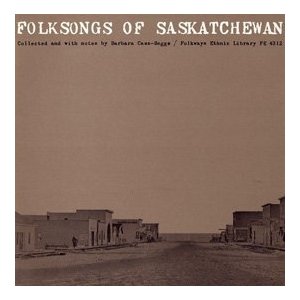
Folksongs of Saskatchewan Track Listing:  http://www.folkways.si.edu/albumdetails.aspx?itemid=761

(Song suggestion: “Saskatchewan”)

That song, along with hundreds of other Canadian regional tunes, can be readily found through the website for Smithsonian Folkways.  Over almost  40 years, Folkways Records devoted itself to recording songs and sounds from America, Canada and other parts of the world, producing a prodigious 2,168 albums.  Several years ago, the Smithsonian acquired the archives of Folkways Records and part of the Smithsonian’s mission was to make the collection widely available, which it accomplishes, in part, through the website.

A search of “Canada” on the Smithsonian Folkways site reveals a total of 118 Canada-related records.  Because most of these recordings are from the 1950s and 60s, they are very difficult to find elsewhere, so it is amazing that so many are collected in one location.  (Link to Canadian-Related Records on Smithsonian Folkways:  http://www.folkways.si.edu/searchresults.aspx?sPhrase=canada&sType=’phrase’).

While the Smithsonian Folkways collection is broader than just Canadian music, there is a further strong Canadian connection of this music by virtue of the University of Alberta’s folkwaysAlive! project that is part of the Canadian Centre for Ethnomusicology.  The University of Alberta has also made a significant grant in support of the mission of Smithsonian Folkways.  (Link to University of Alberta’s folkwaysAlive!:  http://www.fwalive.ualberta.ca/home/about-us/)

There are many albums worth noting on the Folkways site.   A few examples, with links to album track listings and a suggested song to which you might listen for a flavor of the album, are noted above and below.
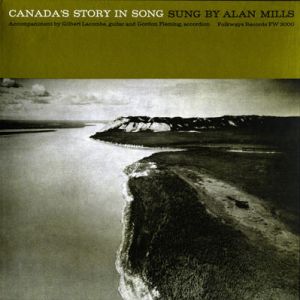
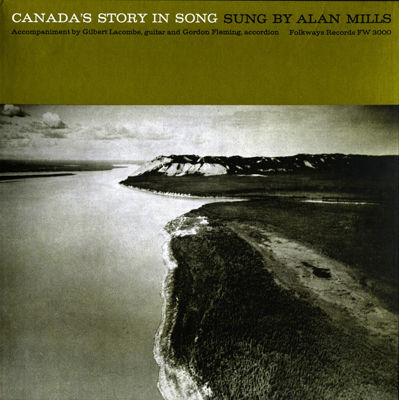
Canada’s Story in Song Track Listing: http://www.folkways.si.edu/albumdetails.aspx?itemid=2116

(Song suggestion:  “Poor Little Girls of Ontario”)
We’ll Rant and We’ll Rave Track Listing:    http://www.folkways.si.edu/albumdetails.aspx?itemid=1523

(Song suggestion:  “Harbour Place”)
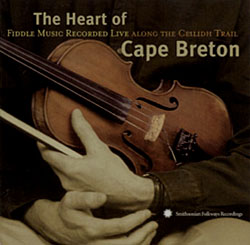
Heart of Cape Breton Track Listing:  http://www.folkways.si.edu/albumdetails.aspx?itemid=2973

(Song suggestion:  My Great Friend John Morris Rankin, etc.” — Medley)

Songs and Dances of Quebec Track Listing:  http://www.folkways.si.edu/albumdetails.aspx?itemid=1241

(Song suggestion:  “Danse Carre”)

Magnificent Travel Art of the Canadian Pacific Railway

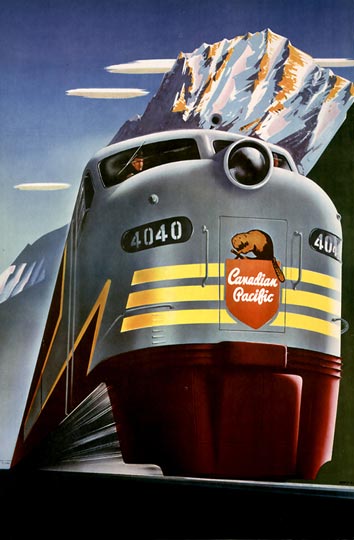
Chartered in 1881 as a means of fulfilling the federal government’s commitment to British Columbia when it joined into the Canadian Confederation with the condition that a transport link from the east be established all the way to B.C., the Canadian Pacific Railway became a crucial link in forging a national identity that literally and figuratively united the east and west coasts of Canada.  As it grew, the CPR, as it was sometimes called, acquired additional rail corridors, steam ship lines, hotels and telegraph facilities.

Because of its many transport holdings, the Railway became associated more generally with travel of all sorts within the Canadian border, and, for many, even travel far beyond the country.  To promote its extensive travel offerings, the CPR commissioned a diverse array of what is now regarded as classic travel art, in the form of exquisitely illustrated posters, brochures and other advertising pieces.  A few examples are shown below (click on image for larger view).

Graphics courtesy of the Canadian Pacific Railway Archives.  Link:   http://www8.cpr.ca/cms/English/General+Public/Heritage/Graphic+Arts+Gallery/default.htm

In Memory of John Babcock

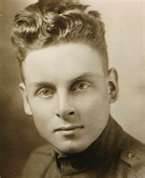
(John Babcock at age 20)

Several years ago, an office colleague shared with me his fascination with routinely reading the obituaries.  Not long afterwards, I found myself scanning that section of the papers more often.  While it seems a morbid diversion, since the time I was a kid I’ve always appreciated biographies and obituaries are a wonderful opportunity to reflect upon lives well lived.

In that vein, comes news in many of the papers (even this far south) that last week John Babcock, the last Canadian veteran of World War I, passed away at age 109.  While his age alone is amazing, his connection with the so-called Great War prompts searching thoughts about how very terrible for its time that event was.  I am sure World War I monuments exist in many places,  but I distinctly recall these most in Canada and here in the American South.  These monuments have a special majesty and on each that I’ve seen there are too many names inscribed for one not to feel moved by the human toll exacted by that sad conflict.


Concealing his actual age of 15, Babcock, originally an Ontario farm boy, enlisted and was sent overseas.  Before he could be deployed in combat,  it was discovered that he was still a minor.  Interesting to contemplate whatever sense of derring-do, adventure, patriotism, economic need or the like would prompt a young man of 15 — a boy, really! — to do such a thing.   But that, of course, was a different time when calls to duty perhaps weighed more on the collective mind, particularly of budding young men.
His passing was sufficiently noteworthy to Canada that Prime Minister Harper acknowledged the occasion and referred to Babcock as the last living link to World War I, “which in so many ways marked [Canada’s] coming of age as a nation.”  So much so that, reflecting on this, it is understandable and puts into context why Canada celebrates a specific holiday, Armistice Day, commemorating its involvement in World War I.

May John Babcock, and all the souls who valiantly sacrificed so dearly, be remembered well.

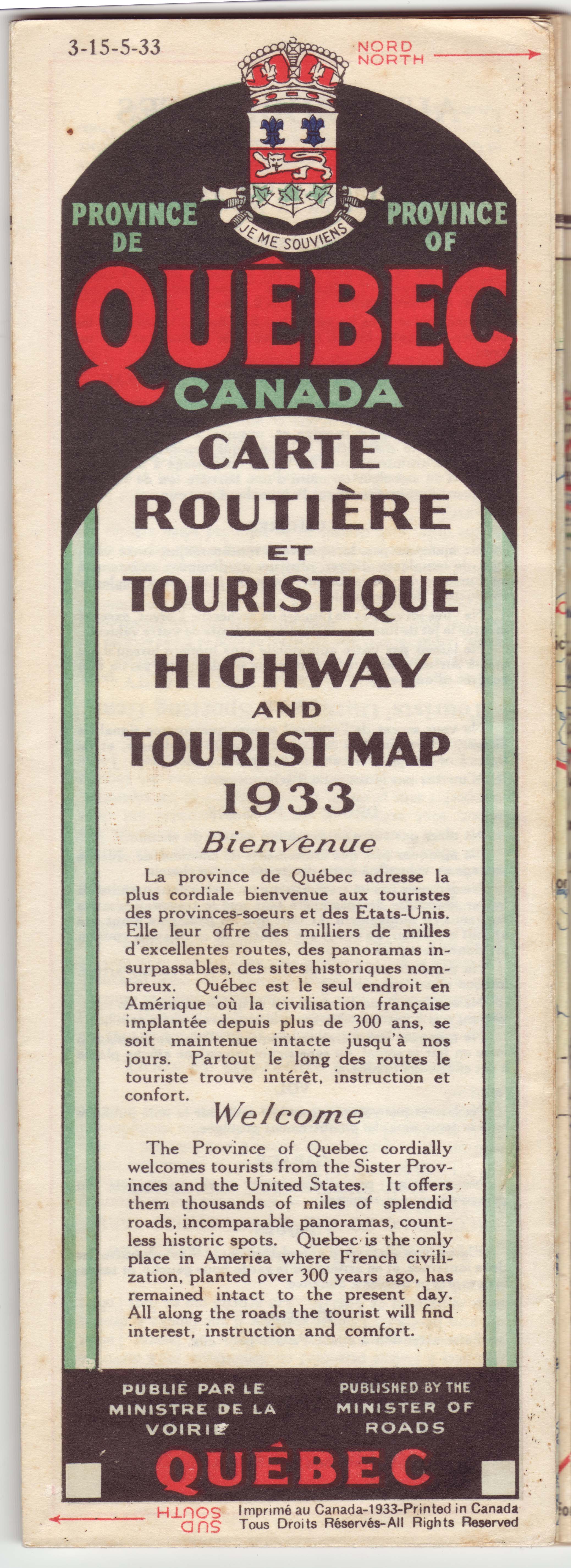
1933 Quebec Tourist Road Map

1933 Quebec Map Cover

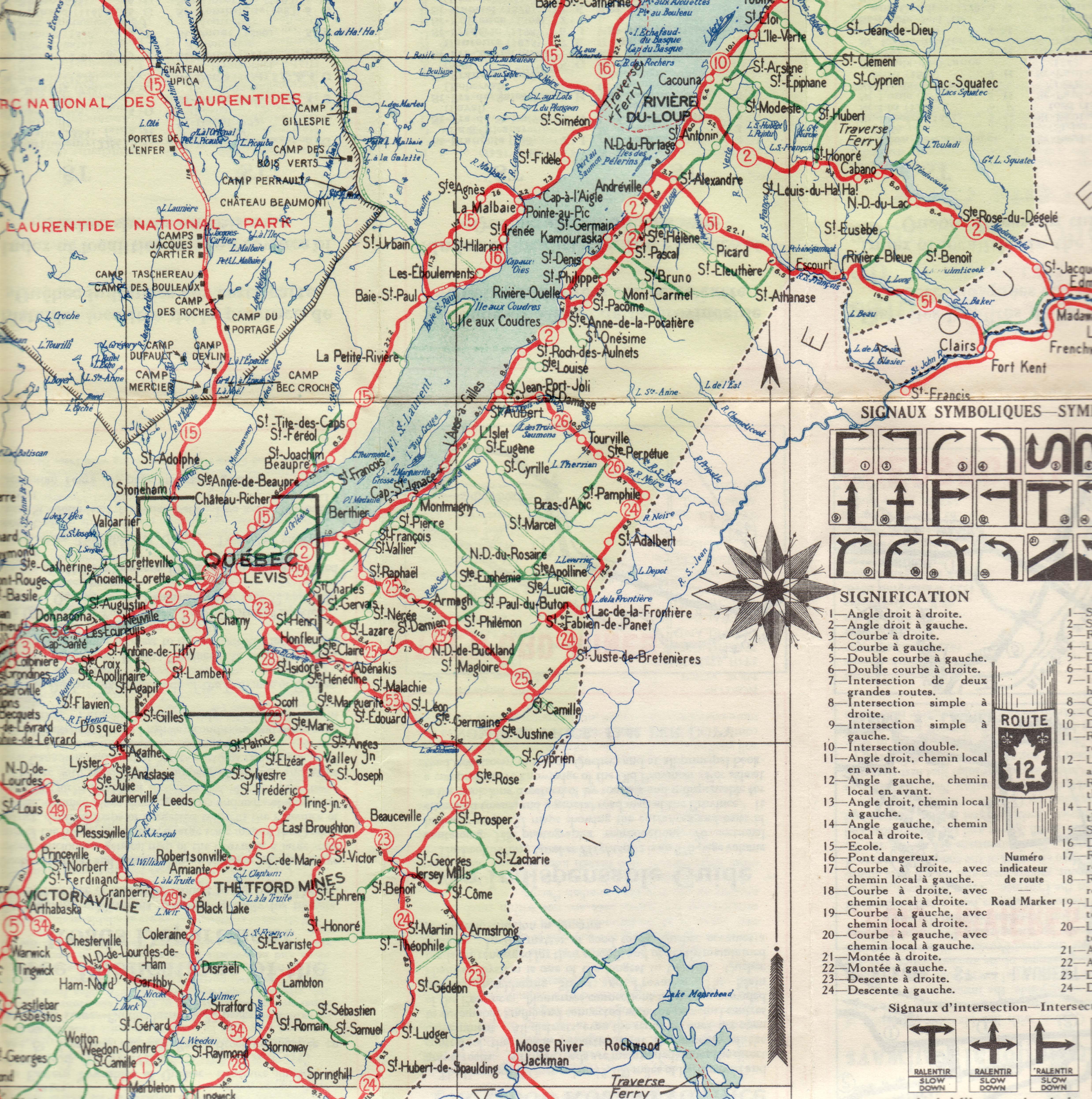
I’ve always appreciated the intricacies that permeate just about any map, each being a kind of artwork exhibiting both  numerous rules of expression and many quirky curiosities.  A few months ago, in preparation for a creative project I planned to undertake,  I assembled a collection of about 200 vintage road maps, many from the period 1930-1960.   Among the many gems in this passel was an official Canada Roads Department map of Quebec from 1933, a time when travel by car was still fairly new and roads were not nearly as well developed as today.  As evident from the lack of roads across much of the map, vast expanses of this wonderful province were virtually inaccessible by any vehicle.

Quebec City Area

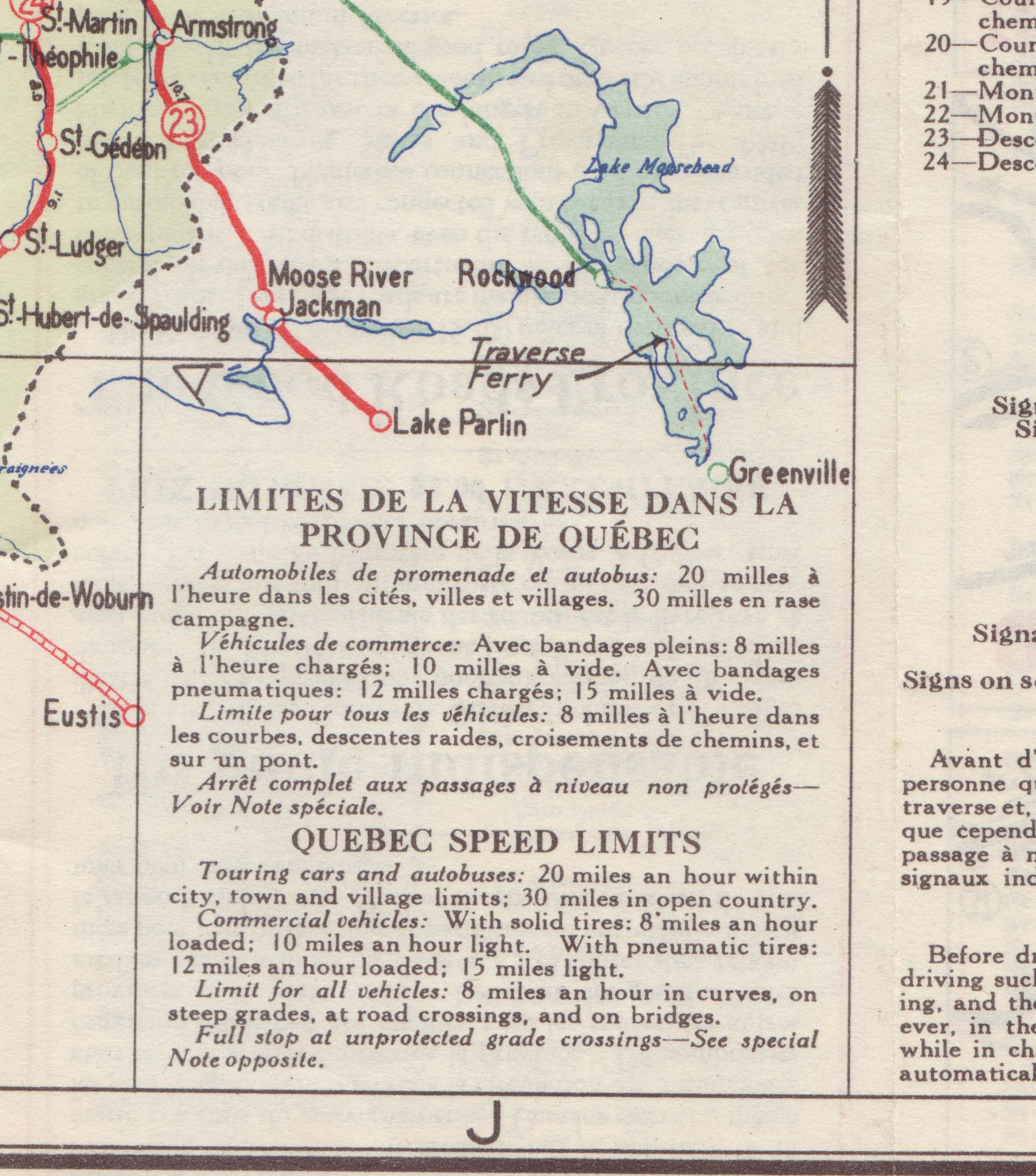
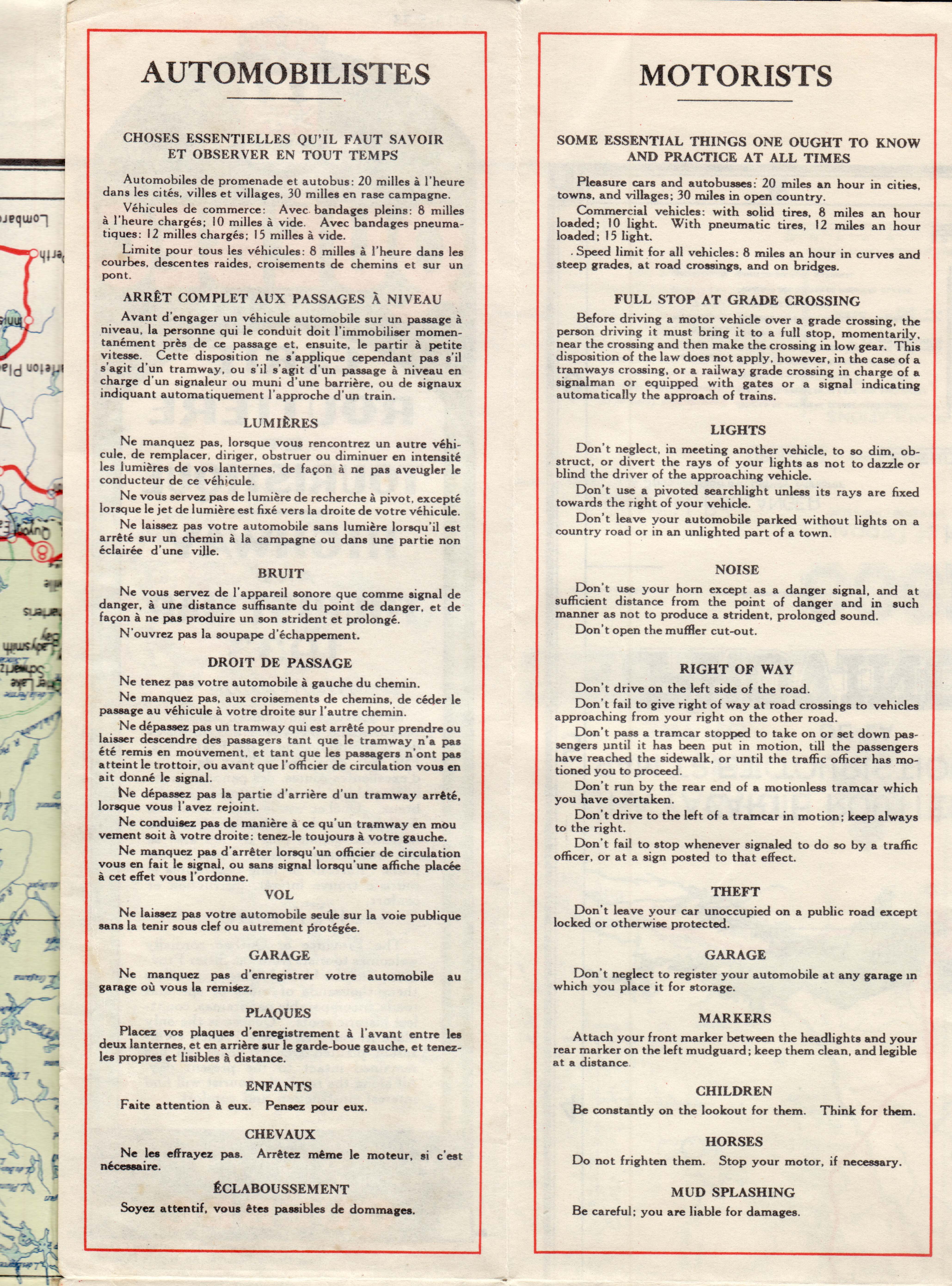
Times were obviously simpler then.  Helpful pointers on the map included the admonition that speed limits within Quebec for touring cars were 20 m.p.h. within any city or town limits and 30 m.p.h. in open country — now we’re flying!  For commercial vehicles, things were truly at a crawl, with a loaded truck with inflatable tires being limited to no more than a leisurely 12 m.p.h.  Roads being less well paved than they are are today, mud splashing was also a particular concern as the tips for motorists warned that for this “you are liable for damages.”

Quebec Map Speed Limit Detail_0002___

Quebec Map Tips

The Children of Fogo Island

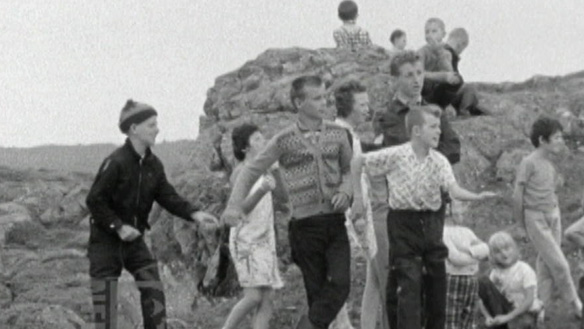
I just finished watching a short documentary, The Children of Fogo Island, that consists mainly of observing children going about their daily play activities on this major island off the northern coast of Newfoundland.   Directed by Colin Low in 1967 in cooperation with the National Film Board of Canada, the film dispenses with narration in favor of a simple and melodic music track, which gives the black and white images an elegiac feel.  Aside from the nostalgia that the film evokes, there is also a sense of sadness in contemplating the tenuous hold on survival managed by the people living on this outport island.  Several years ago I had the good fortune to meet a businessman about my age in St. John’s, Newfoundland who had grown up on Fogo Island and who still held great affection for the place.  He spoke wistfully about his childhood there and how so many young people have left  due to their inability to make a living in that remote place.  This film brings me back to that conversation as well as the simpler times of a generation or so ago — which all children amazingly reinvent in their own way.

Link to video:  http://www.nfb.ca/film/children_of_fogo_island