Remembrance Day and the Home Front

_OLYMPUS DIGITAL CAMERA__

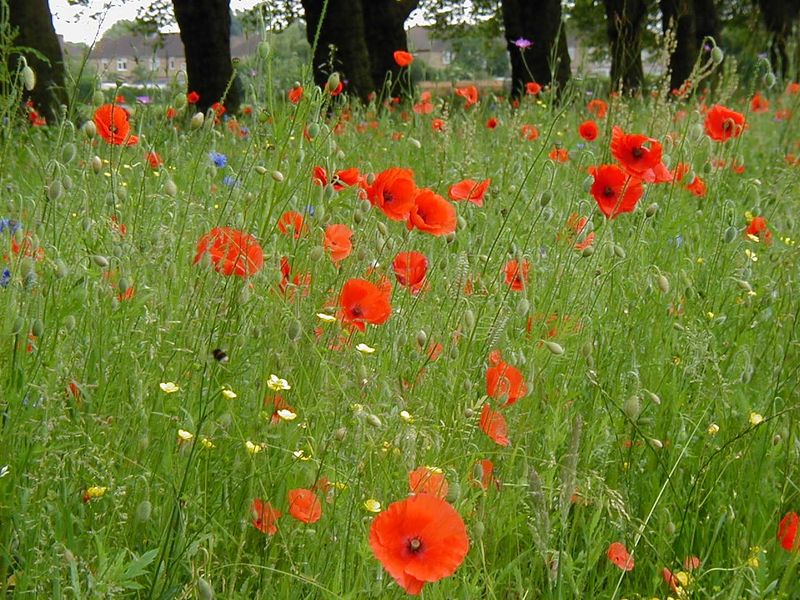
Red poppies already adorn many a chest and collar on each side of the border as a lead up to Monday when the U.S. marks Veteran’s Day and Canada observes Remembrance Day.   Both occasions mark and honor the difficult sacrifices made by our respective veterans in service to their country.  These vintage wartime posters from World War I remind us that the reach and privations of the war that prompted the first Remembrance Day extended, as most wars do, to the home front as well.

(Poppy Image Credit: Wikimedia Commons)

Halloween Haunts: Joe’s Scarecrow Village

awScarecrow4

___

Several years ago, while winding through the gorgeous scenery that graces Cape Breton, Nova Scotia’s Cabot Trail we came across a head-turning collection of freaky scarecrows begging to be photographed.  This was Joe’s Scarecrow Village, a homegrown roadside attraction in Cap LeMoine with great character that was originally created by local Joe Delaney to ward animals away from his planting field. Halloween seems a fitting time to share these colorful oddities.  Sadly, this piece of rustic Canadiana has since been closed.

More info on Joe’s Scarecrow Village can be found here.

Stanley Park — Non-Traditional Views

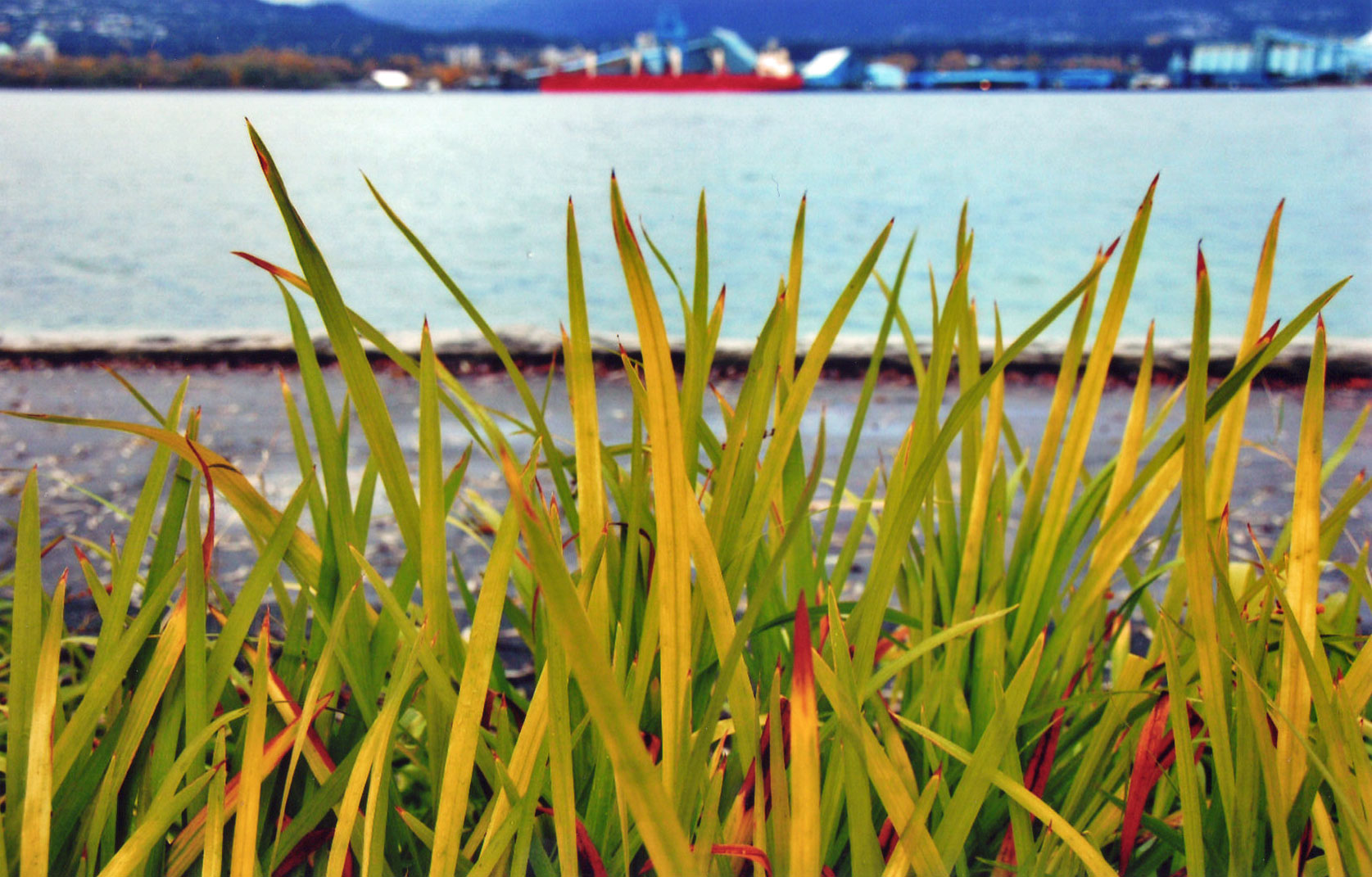
Blades of Grass, Stanley Park

Blades of Grass, Stanley Park

___

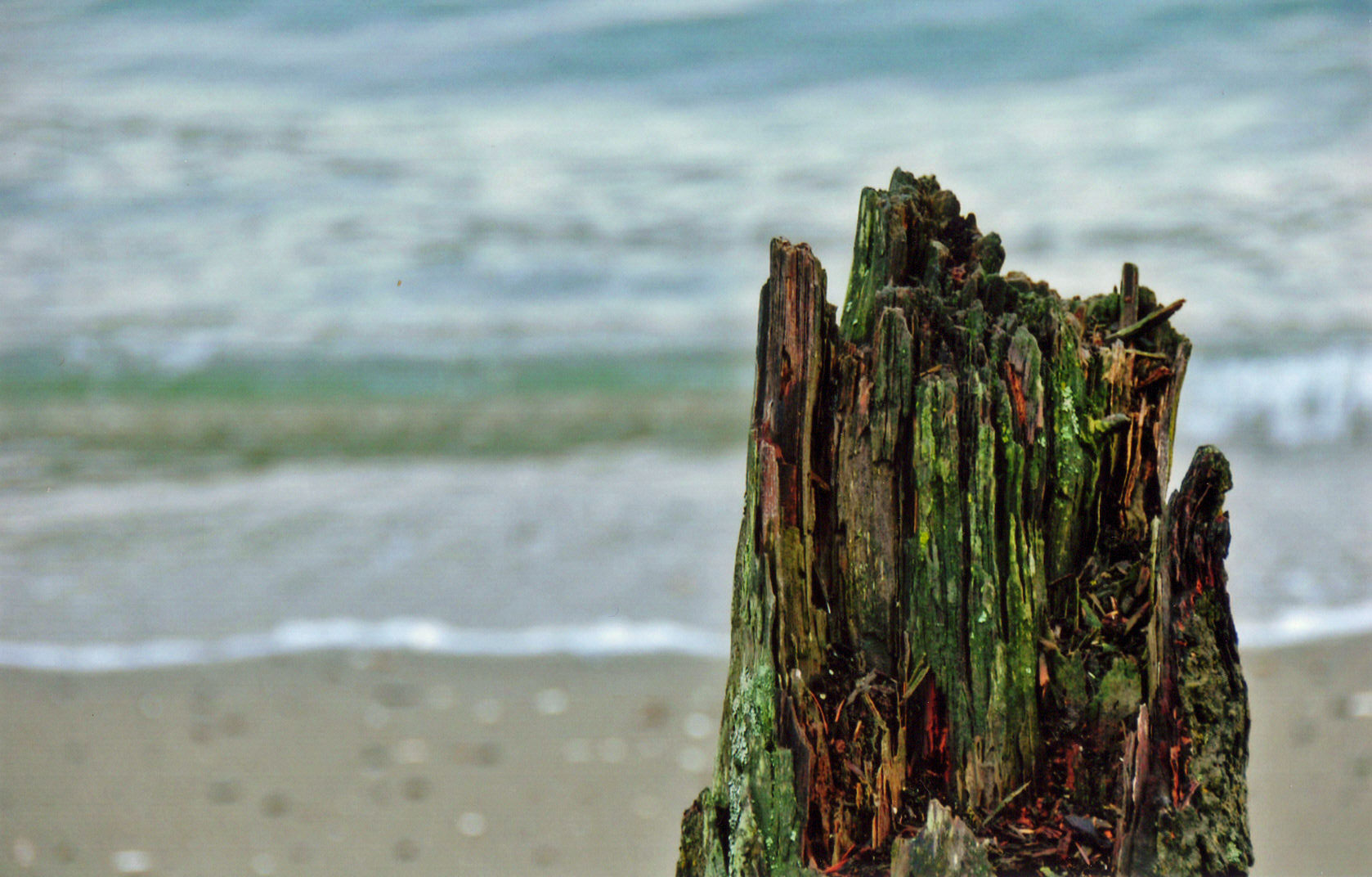
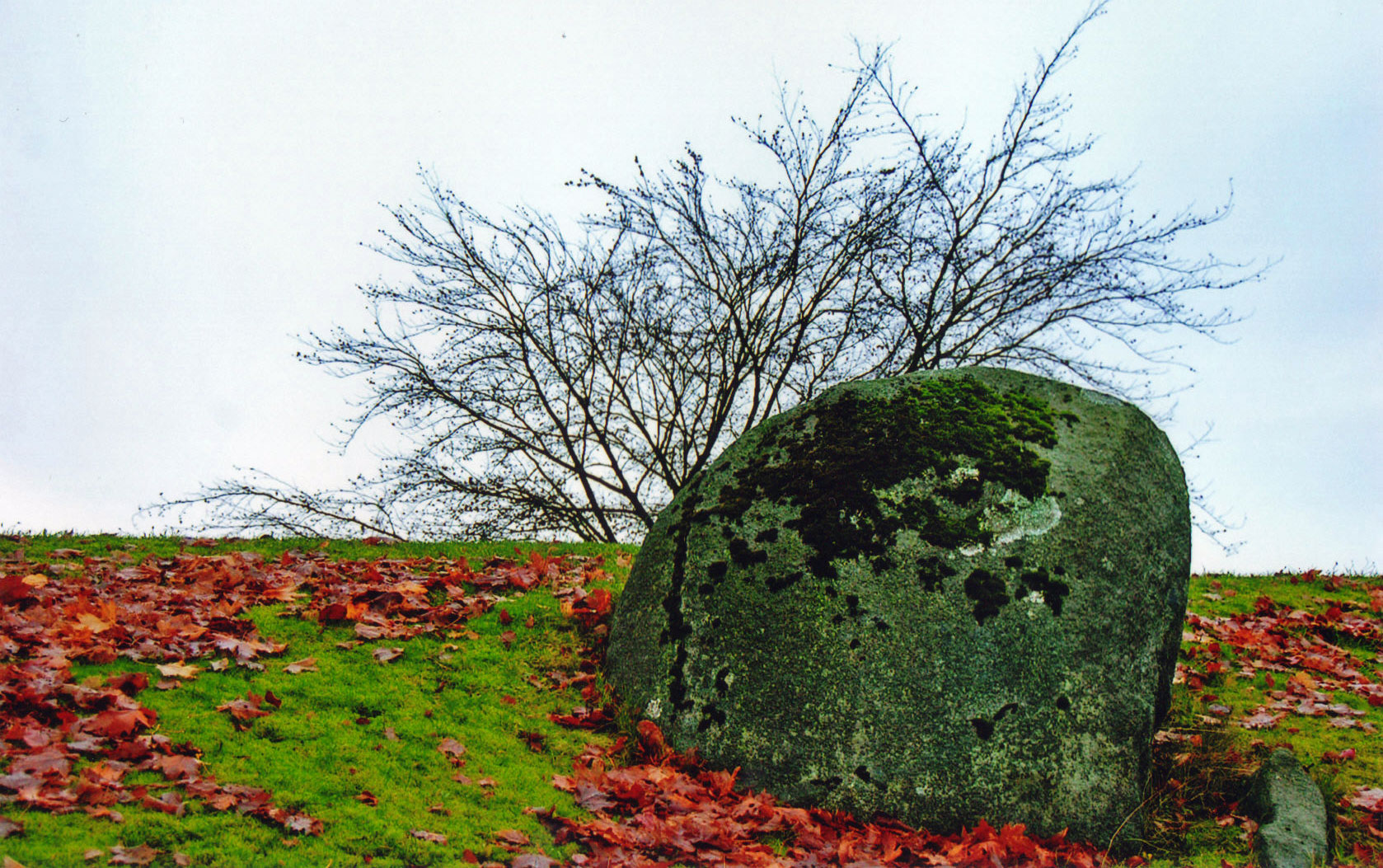
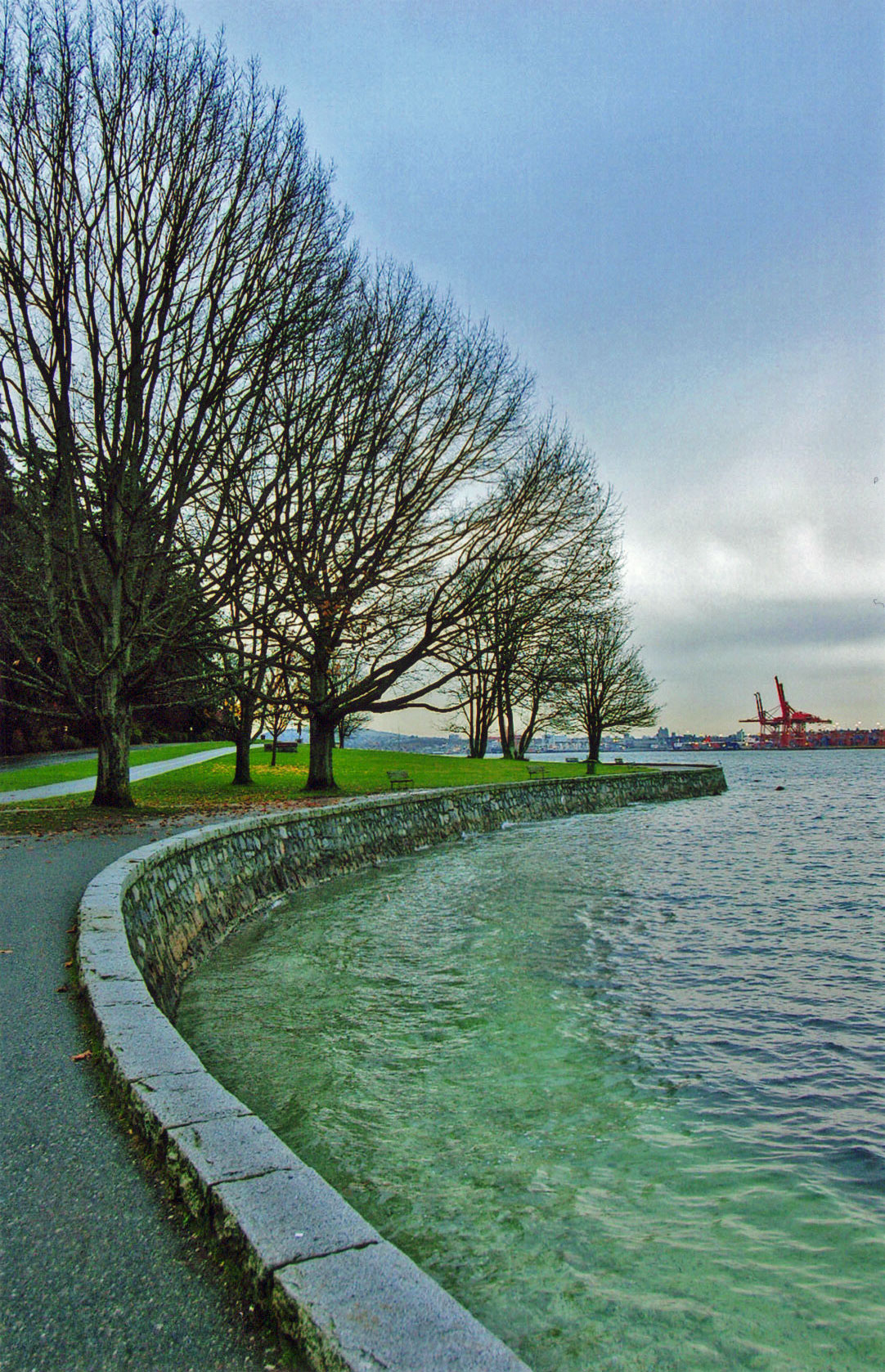
Many photos from Vancouver’s Stanley Park are of the more traditional sights there, such as the native American totem poles about which I posted earlier.  I certainly have taken my share of those but I also like less customary images of off-the-beaten-track details from a location such as Stanley Park.   These images I captured from the Park are examples of ordinary details that convey a different sort of majesty for that place.

Weathered Mooring, Stanley Park

Weathered Mooring, Stanley Park

___

Bush and Rock Minimalism, Stanley Park

Bush and Rock Minimalism, Stanley Park

___

Along the Seawall, Stanley Park

Along the Seawall, Stanley Park

Vintage Canadian Apple Crate Labels

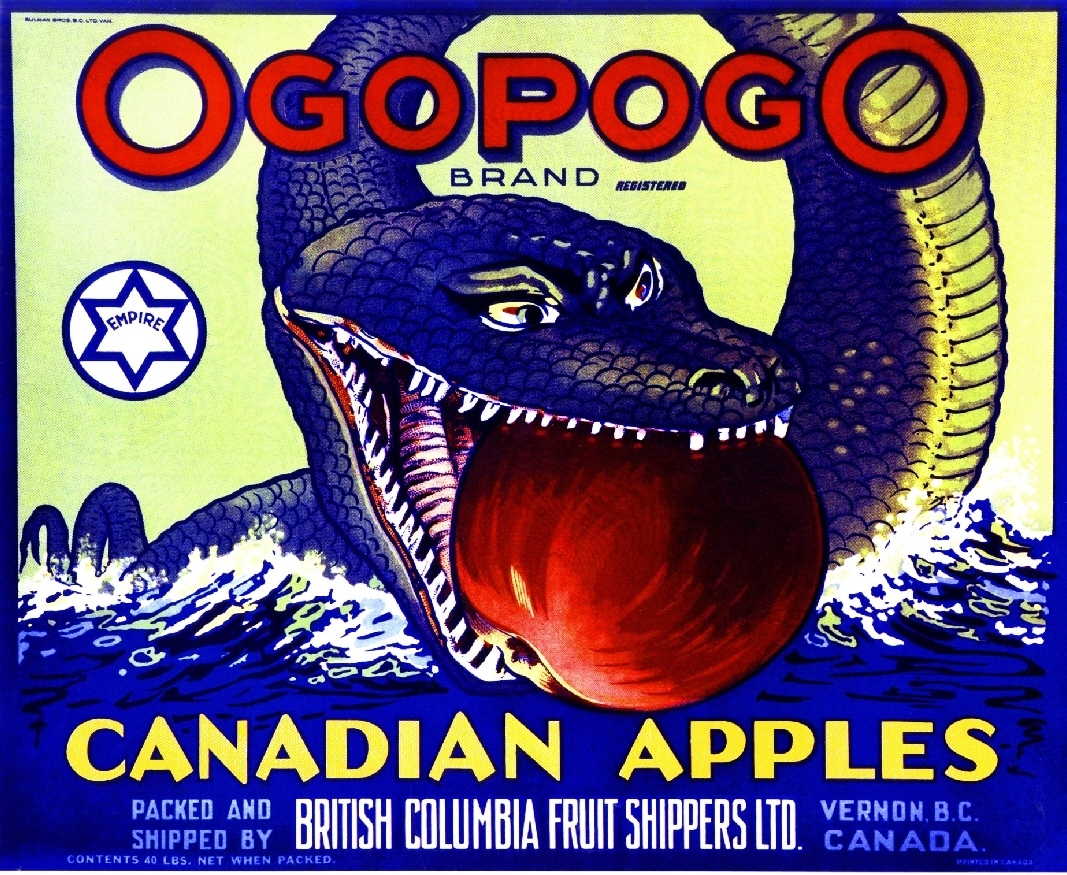
Ogopogo Apples

___

In the Okanagan Valley of British Columbia, the Annapolis Valley of Nova Scotia and many places in between, Fall is harvest time from coast to coast for Canada’s rich variety of apples.    That variety is also reflected in the colorful artistry of numerous vintage apple crate labels — such as the incredible OgoPogo one above — which recently caught my eye and which I thought would be worth collecting here to share.  (You can click through the slides below.)

This slideshow requires JavaScript.

Thanksgiving and a Taste of Fall at the Local Market

abwDSC_5634_edited-1

___

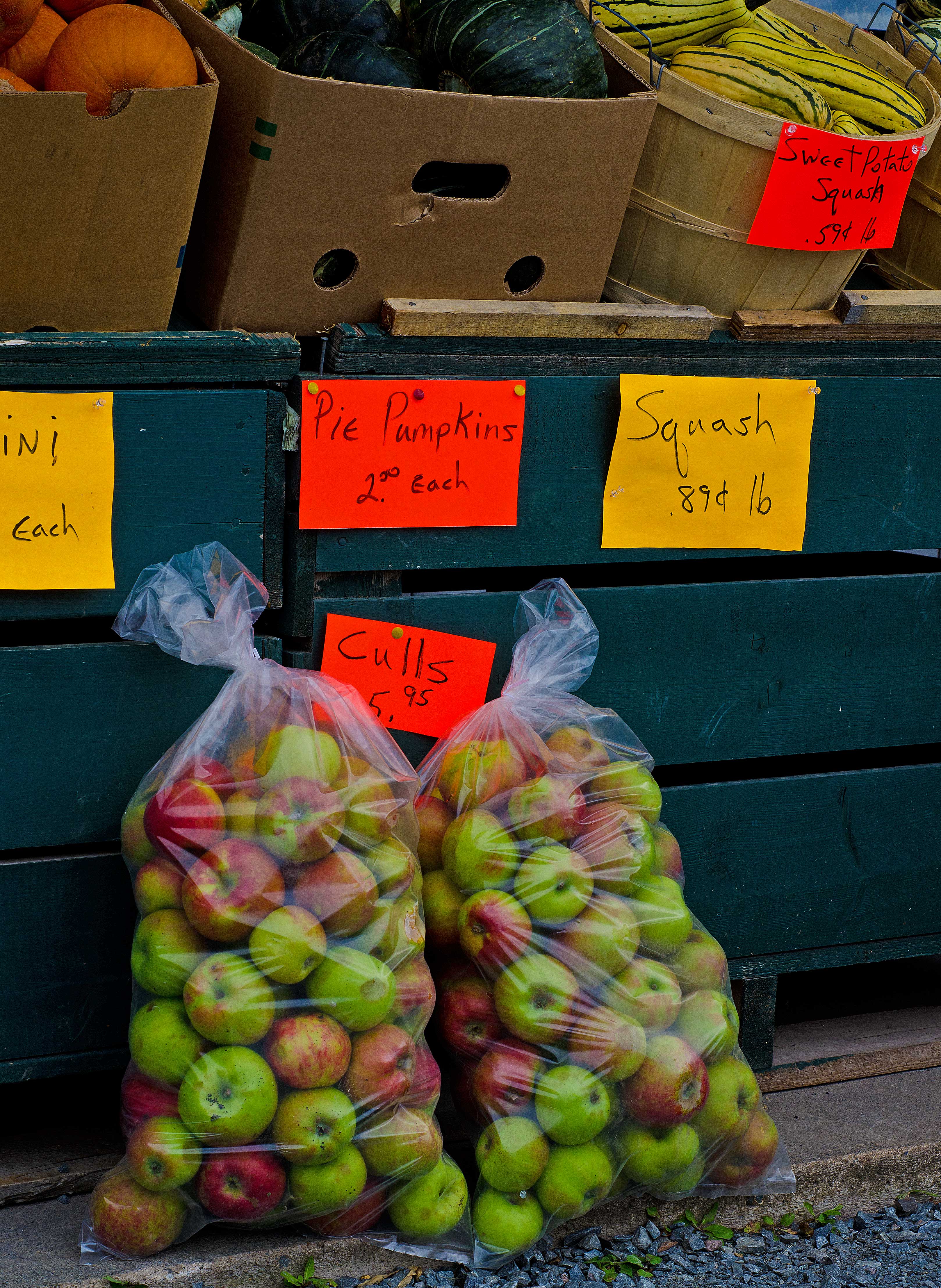
Fall bursts forth with dappled reds, glowing oranges, bright yellows and other striking shades to complement the muted greens lingering from Summer.  These pics from a visit to a local farm stand near Upper Burlington, Nova Scotia nicely capture the Fall spirit and provide a nice lead into Canada’s upcoming Thanksgiving weekend and this Monday’s holiday.

abDSC_5625_edited-1___

aDSC_5631

___

aDSC_5641

___

abDSC_5630_edited-1

Artist to Appreciate: Michael E. Glover

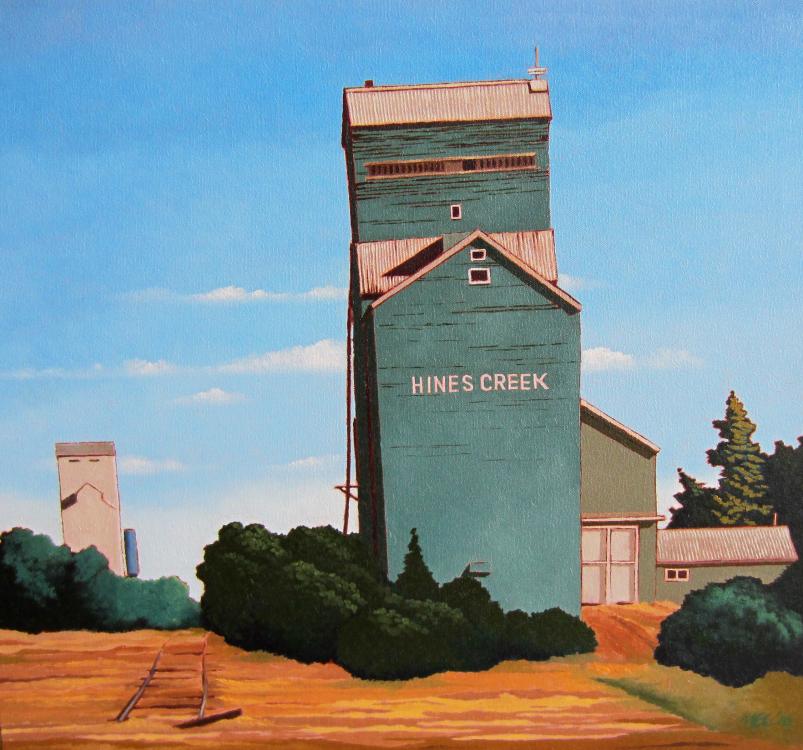
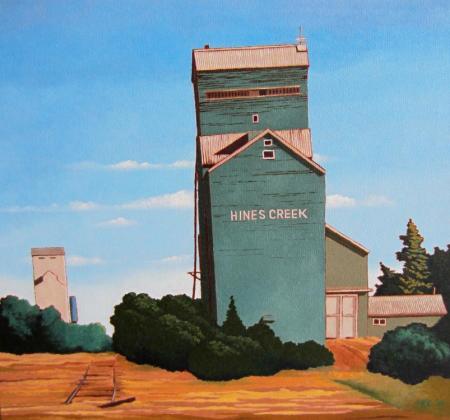
Michael Glover, End of the Line, Hines Creek, Alberta (2010) 2

Michael Glover, End of the Line, Hines Creek, Alberta (2010)

___

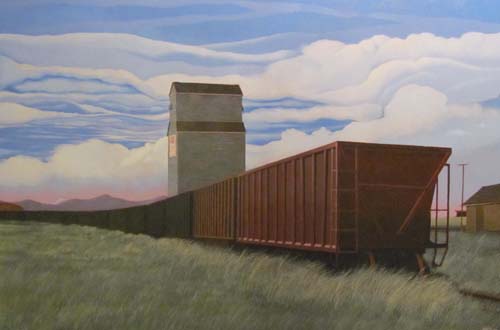
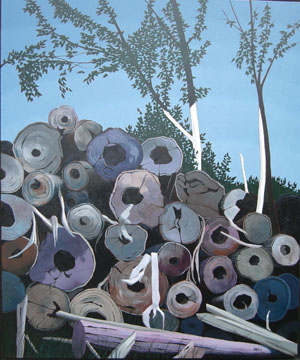
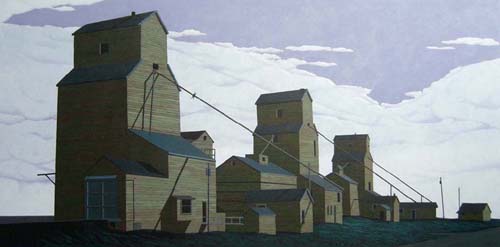
Michael Glover’s realist artwork conveys a deep appreciation for the stark and forlorn rural and industrial landscapes that hint at the hardscrabble existence of the hardy folks who settled such remote areas long ago.  His sense of place is strong — even to the point that the titles of his paintings denote the specific towns depicted — and I like that much of his work focuses on the often overlooked Canadian heartland regions of Saskatchewan, Manitoba and Alberta.  However, Glover is the rare Canadian painter whose work embraces images of virtually all the country’s provinces, reflecting his wide travels across Canada’s vast expanse.
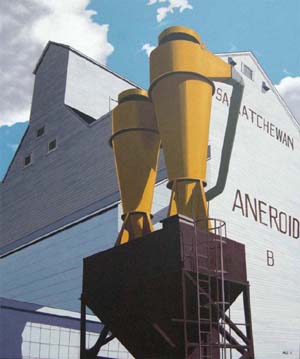
Michael Glover, In The Heartland, Aneroid, Saskatchewan (2006)

Michael Glover, In The Heartland, Aneroid, Saskatchewan (2006)

___
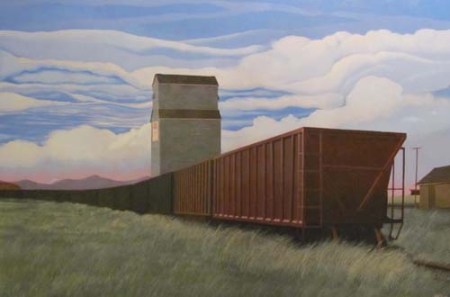
Michael Glover, On the Crowsnest Line, Pincher Station, Alberta (2012)
Michael Glover, On the Crowsnest Line, Pincher Station, Alberta (2012)

Michael Glover, Forgotten Timber, Wawa, Ontario (2007)

Michael Glover, Forgotten Timber, Wawa, Ontario (2007)

___
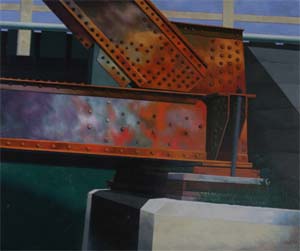
Michael Glover, Once Proud, Still Strong, Fredericton, N.B. (2004)

Michael Glover, Once Proud, Still Strong, Fredericton, N.B. (2004)

___
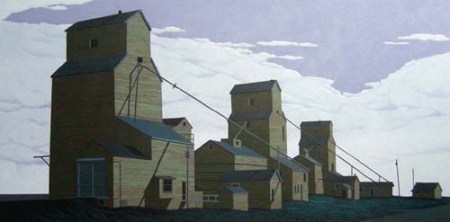
Michael Glover, Standing Proud in the Eleventh Hour, Mossleigh, Alberta (2006)

Michael Glover, Standing Proud in the Eleventh Hour, Mossleigh, Alberta (2006)

___
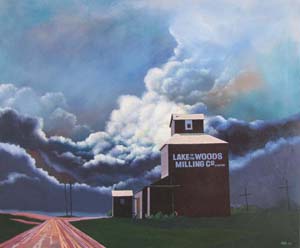
Michael Glover, The Final Days of Fleming, Fleming, Saskatchewan (2012)

Michael Glover, The Final Days of Fleming, Fleming, Saskatchewan (2012)

___
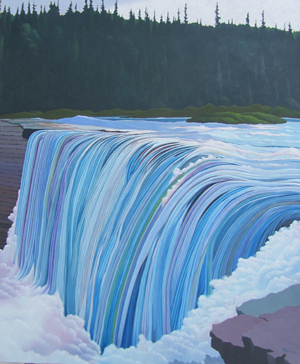
Michael Glover, Alexandria Falls, Enterprise, NWT (2012)

Michael Glover, Alexandria Falls, Enterprise, NWT (2012)

___
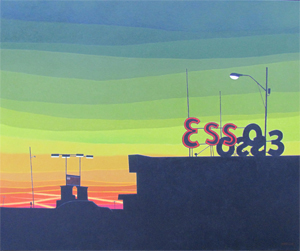
Michael Glover, Nightstop, Grenfell, Saskatchewan (2012)

Michael Glover, Nightstop, Grenfell, Saskatchewan (2012)

___

Glover has a much-deserved exhibition opening in late November 2013 at the Art Gallery of Northumberland (Ontario), appropriately entitled “The Lost and Forgotten: Canada’s Vanishing Landscape.”   More of Glover’s exceptional art may also be viewed at his website here and at the Quinn’s of Tweed (Ontario) gallery.

Image Credits:  Michael E. Glover
Head in the Clouds in Nova Scotia

Clouds Near Grand Pre, Nova Scotia

Clouds Near Grand Pre, Nova Scotia

___
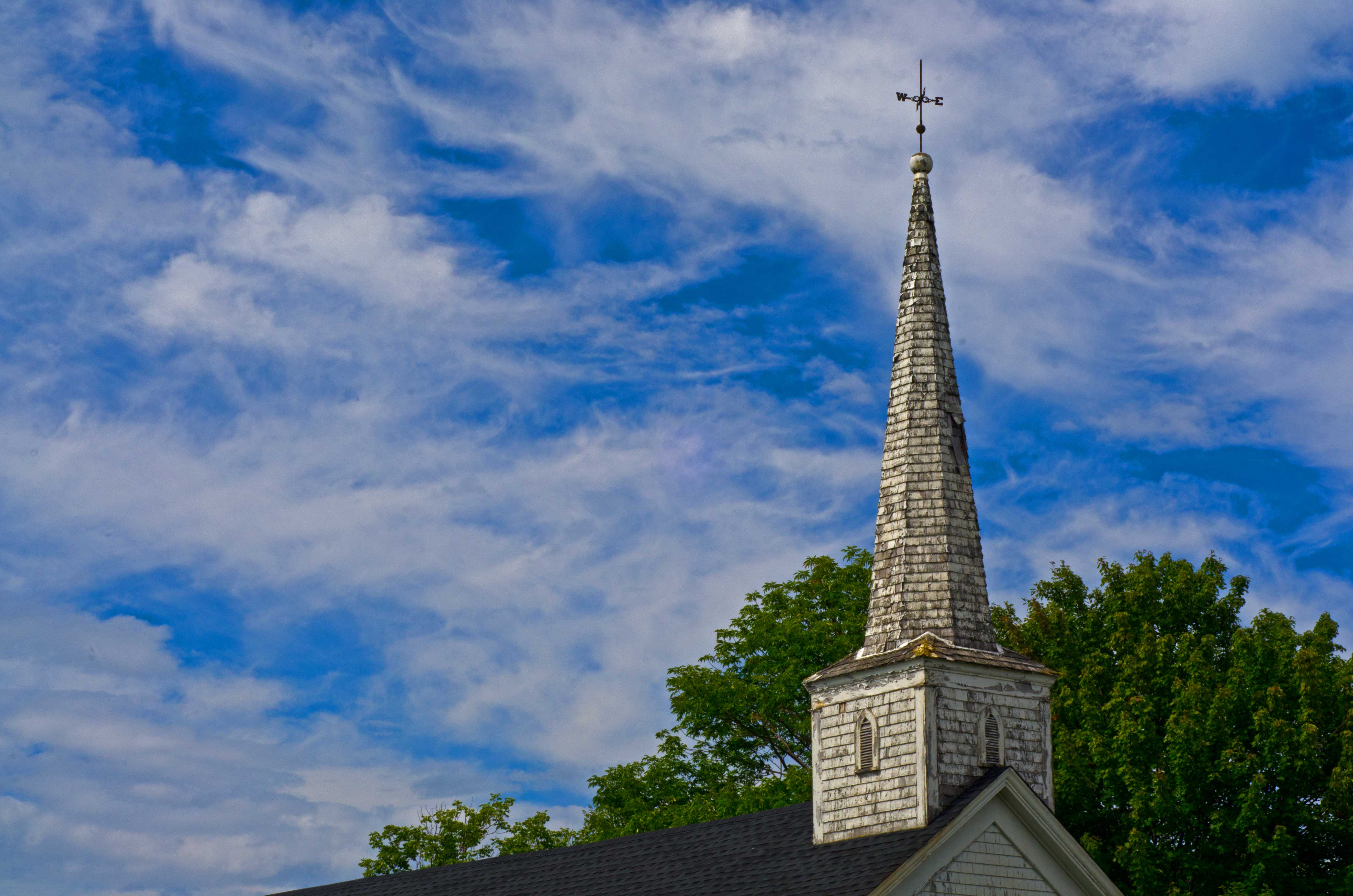
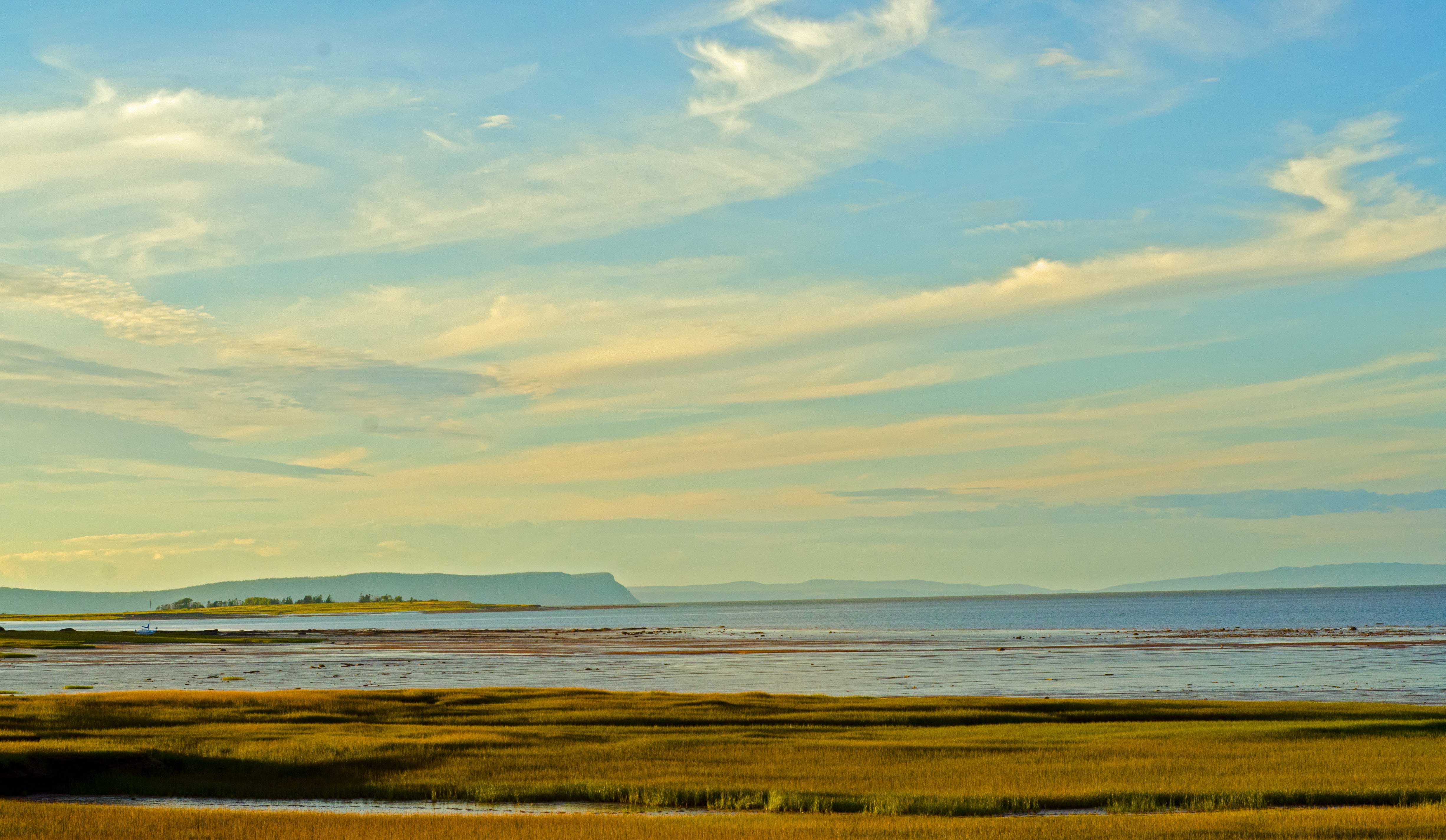
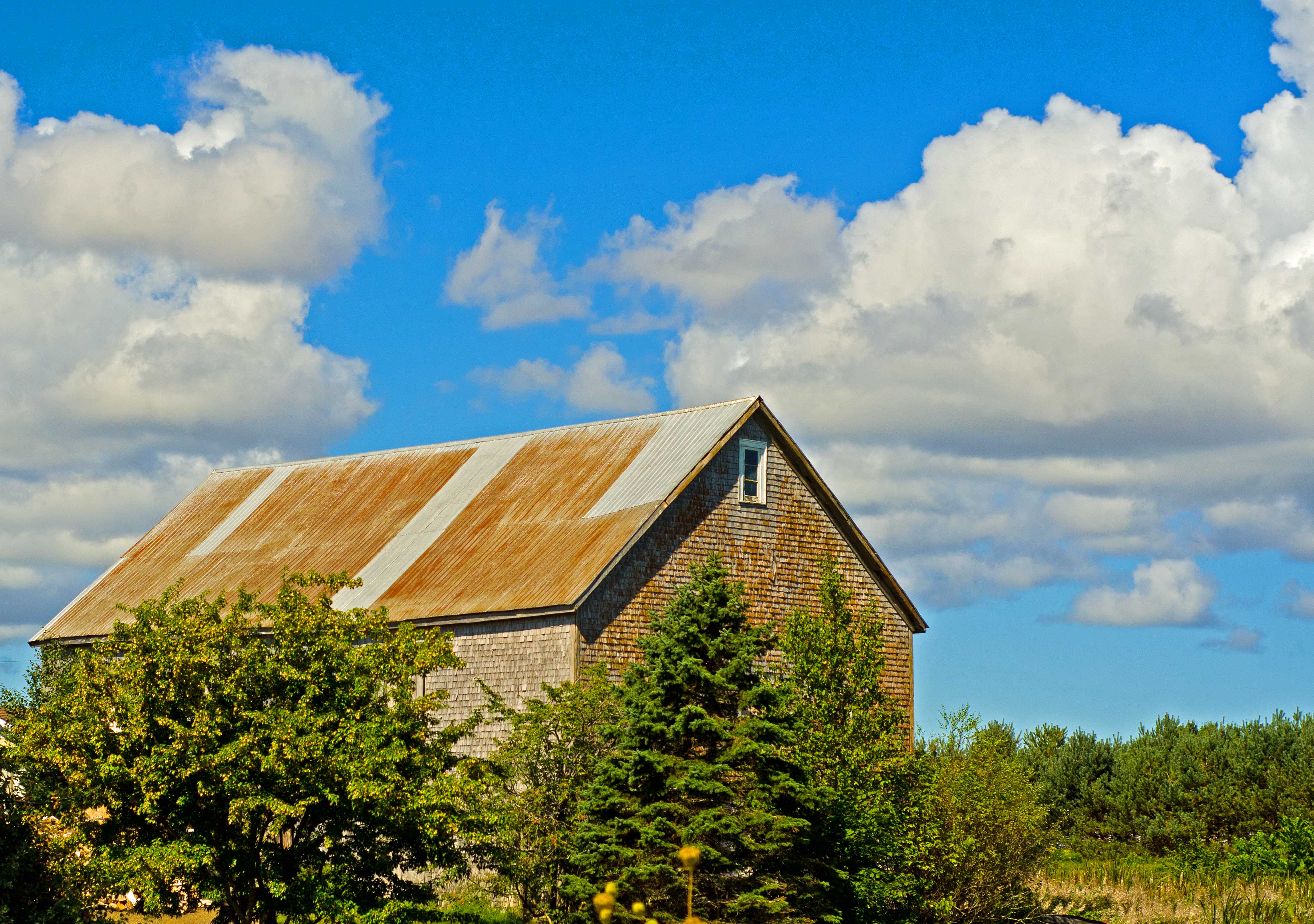
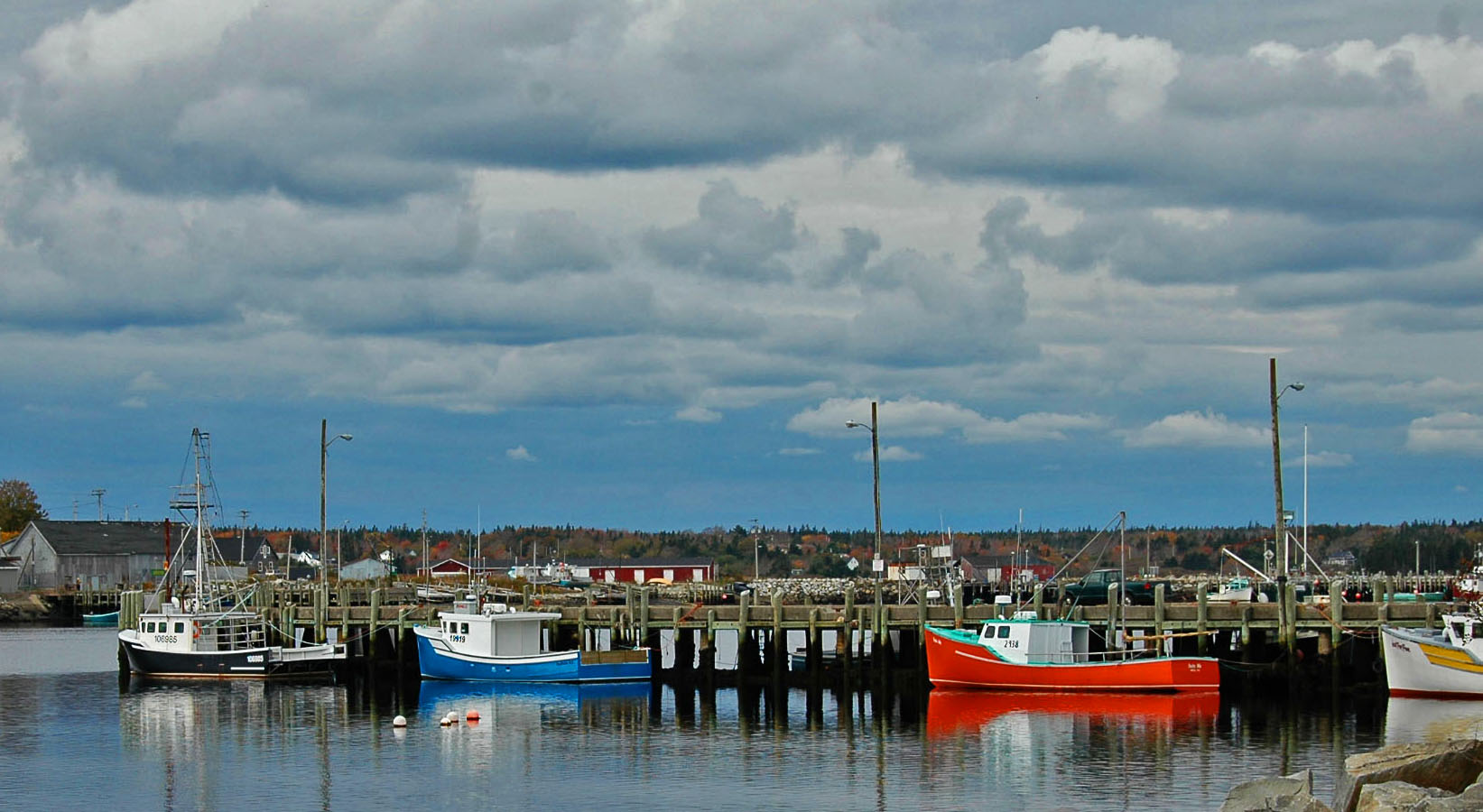
While I love all manner of landscape photography, over and over I come back to clouds in all their variety — whether cirrus, cumulus, stratus or any of their many variations.  Clouds add drama and moodiness to an image and, for me, help balance a scene.  I always notice cloudy days and frame pictures with their billows and wispiness in mind.   During my last couple of visits to Nova Scotia, there were quite a few days when the clouds were exceptional and I’ve posted a handful of examples here.  I look forward to catching more special cloudy days across the great plains of Saskatchewan, against the reigning heights of Banff and beyond the soaring cliffs near St. John’s, Newfoundland, among many other places across Canada.

Sunset, Gaspereau Valley, Nova Scotia

Sunset, Gaspereau Valley, Nova Scotia

___
Windswept Sky, Near Cheverie, Nova Scotia

Windswept Sky, Near Cheverie, Nova Scotia

___
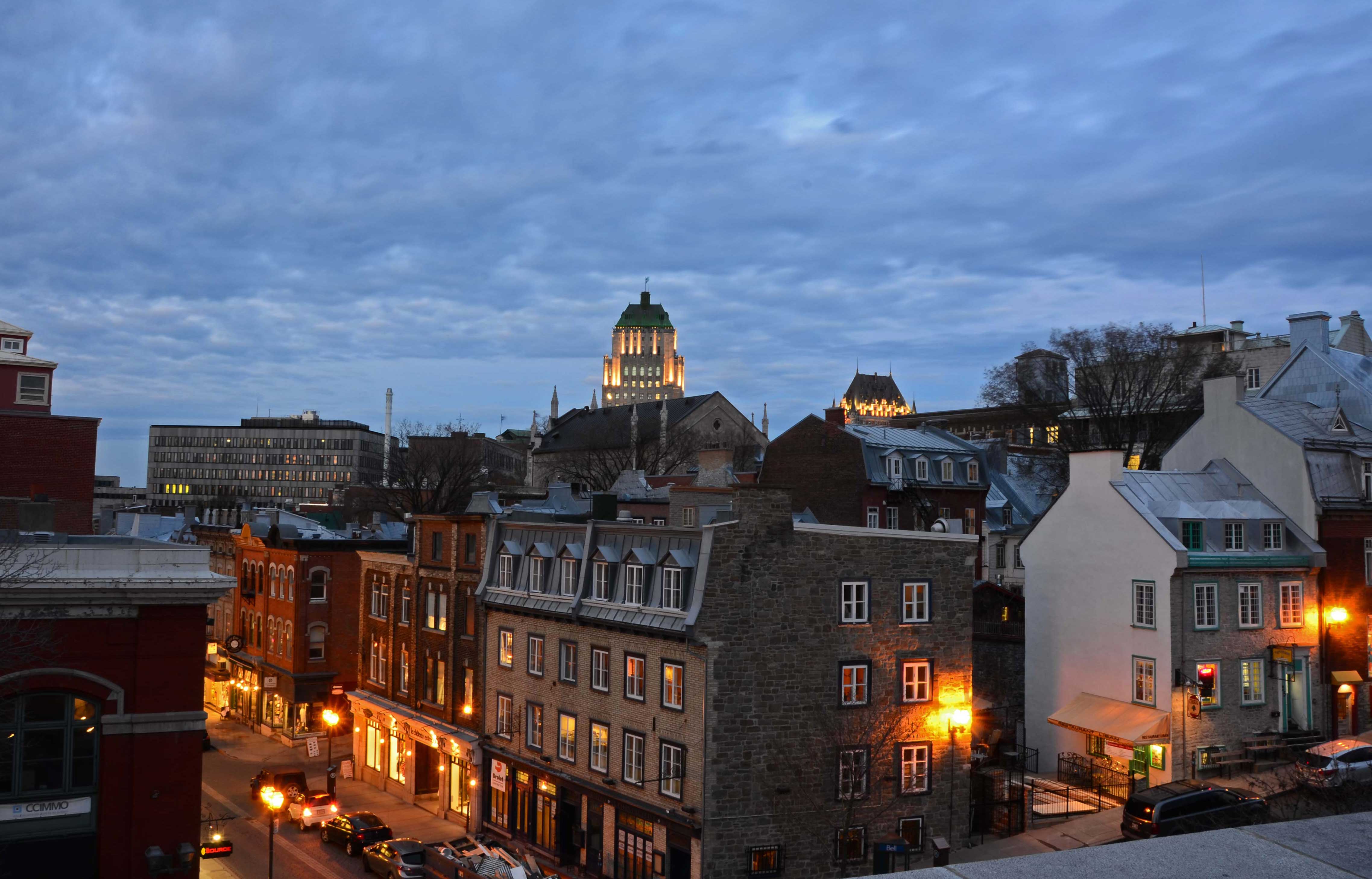
Boat Prow with Cloudy Backdrop, Lunenberg, Nova Scotia

Boat Prow with Cloudy Backdrop, Lunenberg, Nova Scotia

___
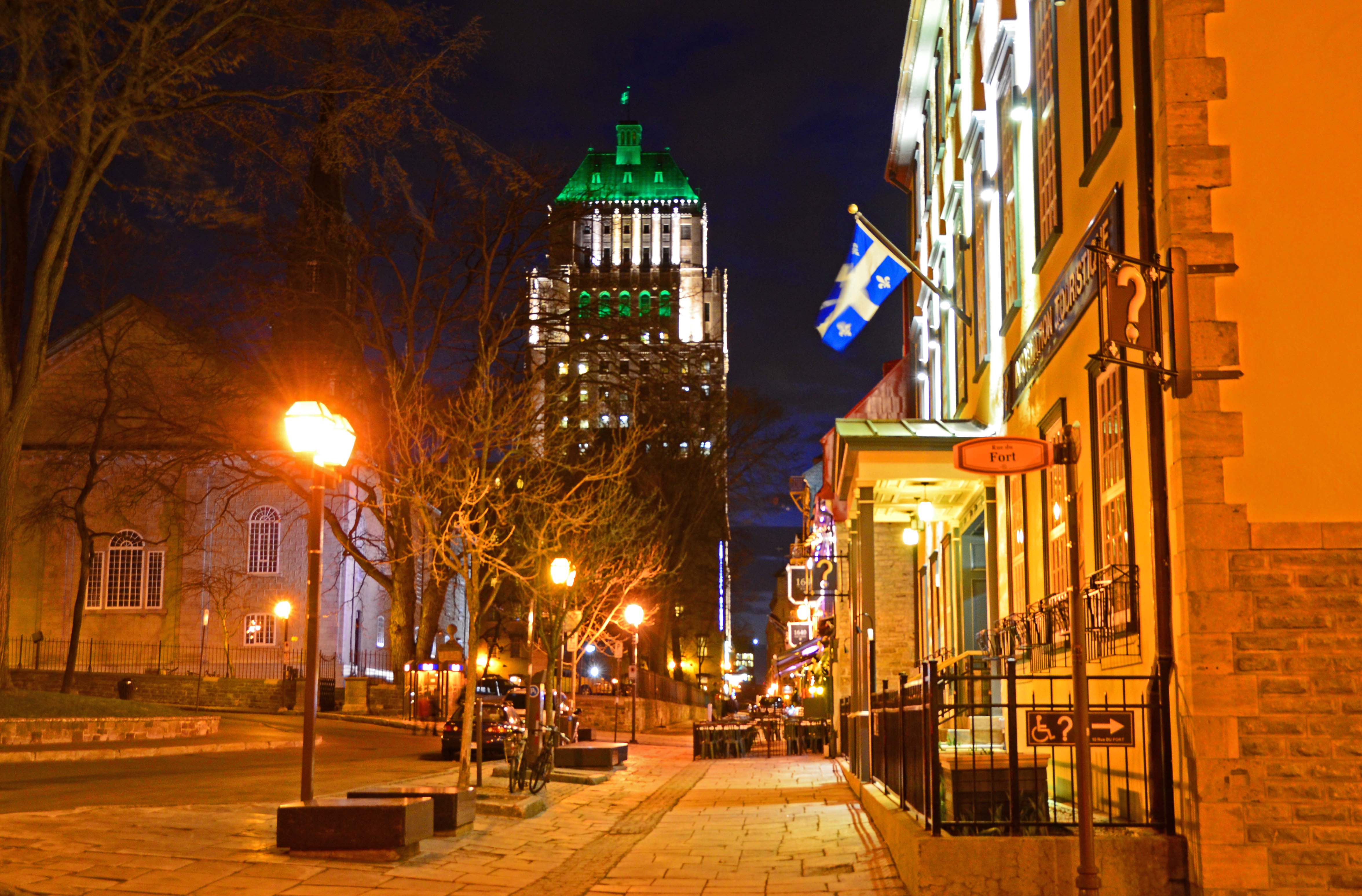
Stratus and Cirrus Clouds, Near Aberdeen Beach, Nova Scotia

Stratus and Cirrus Clouds, Near Aberdeen Beach, Nova Scotia

___

Art Doors, Near Evangeline Beach, Nova Scotia

Art Doors, Near Evangeline Beach, Nova Scotia

___

Barn Scene, Near Grande Pre, Nova Scotia

Barn Scene, Near Grande Pre, Nova Scotia

___

Dockside Scene, Chester, Nova Scotia

Dockside Scene, Chester, Nova Scotia

___

Cloudy Day, Capstick, Nova Scotia

Cloudy Day, Capstick, Nova Scotia

___

Cat Tails, North Grand Pre, Nova Scotia

Cat Tails, North Grand Pre, Nova Scotia

___

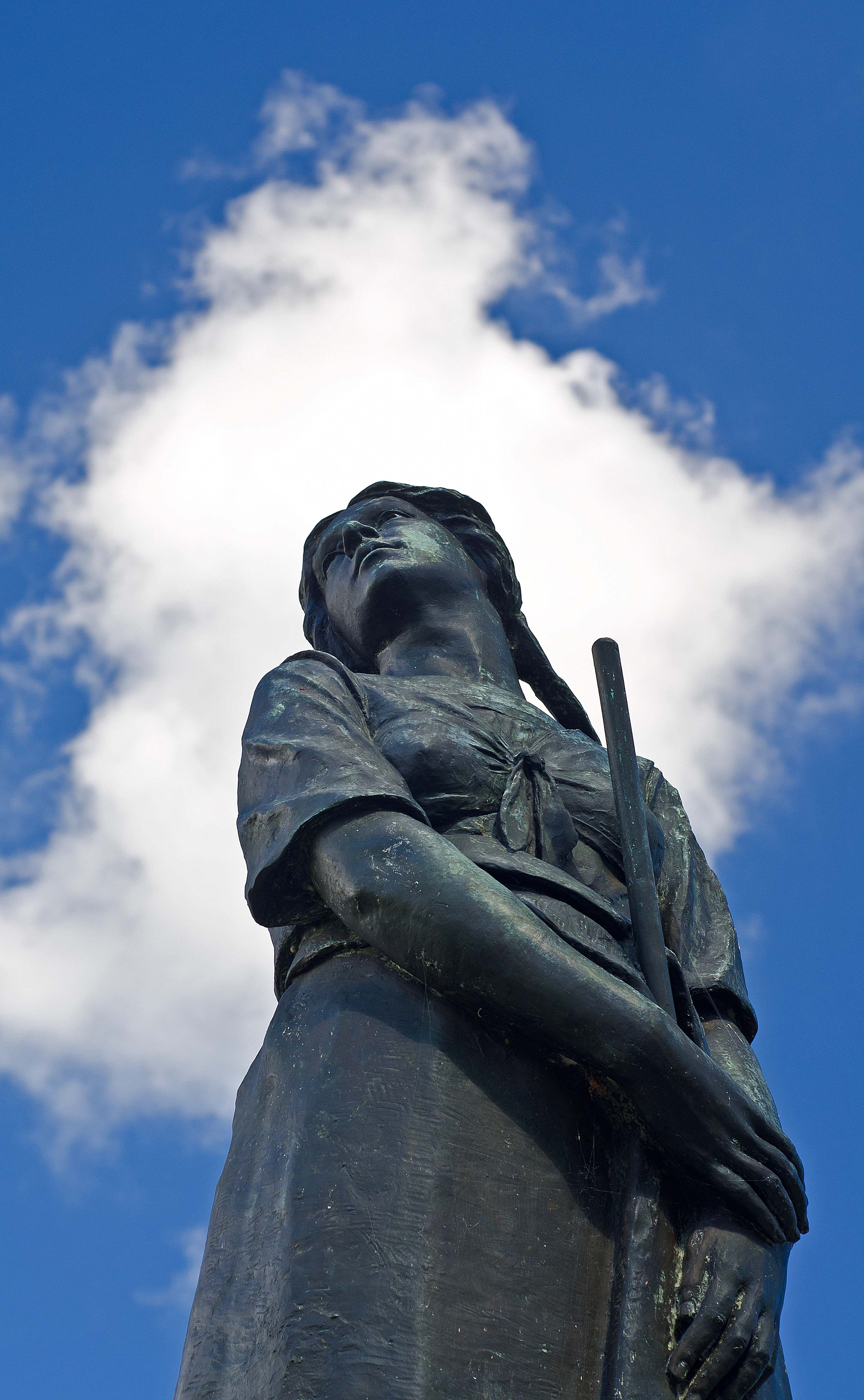
Statue of Evangeline, Grand Pre, Nova Scotia

Statue of Evangeline, Grand Pre, Nova Scotia

Canada Dry’s Cross-Cultural Appeal

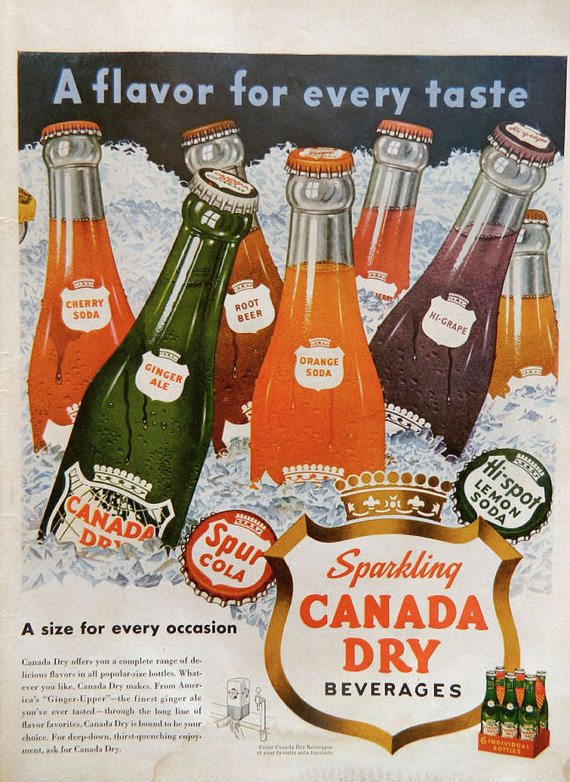
Canada Dry -- Sparkling

___

I remember as a child that we would drink Canada Dry Ginger Ale about as often as we drank Coca Cola.  Originated in Canada and adopted by America, the Canada Dry brand serves as a cultural bridge between our two countries.  Canada Dry Ginger Ale was created in 1890 by John J. McLaughlin, an Ontario pharmacist, and for a few decades thereafter this effervescent beverage was mainly a Canadian regional drink.  (Coincidentally, Coca Cola was also concocted a few years before in 1886 by a pharmacist, John Pemberton.)  Once its popularity spread to the U.S. around the 1920s, it eventually became a major American brand as attested by this assortment of vintage advertisements.

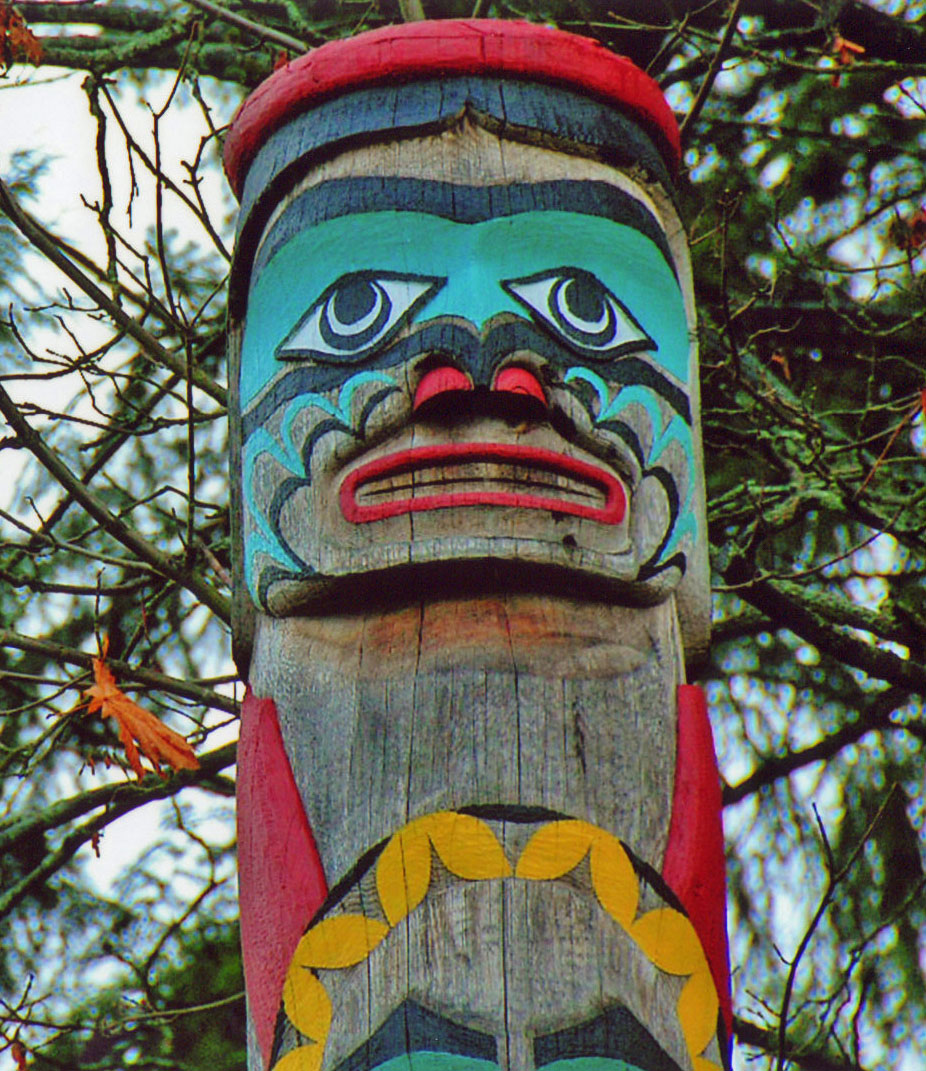
Stanley Park Totem Poles

Chief Skedans Mortuary Pole, Stanley Park, Vancouver

Chief Skedans Mortuary Pole, Stanley Park, Vancouver

___

Stanley Park is a beautiful, peaceful greenspace on a sprawling peninsula in the heart of bustling Vancouver.  The Park’s collection of native American totem poles is eye-catching and conjures marvelment and reverence at the creativity of the people of the Pacific Northwest that made these exquisite carvings.

In these photos from a trip there not long ago it was challenging to separate the poles from the surrounding trees so these don’t do justice to the majesty of these enduring artifacts.

Sky Chief Pole, Stanley Park, Vancouver

Sky Chief Pole, Stanley Park, Vancouver

___

Breathtaking Kejimkujik Seaside

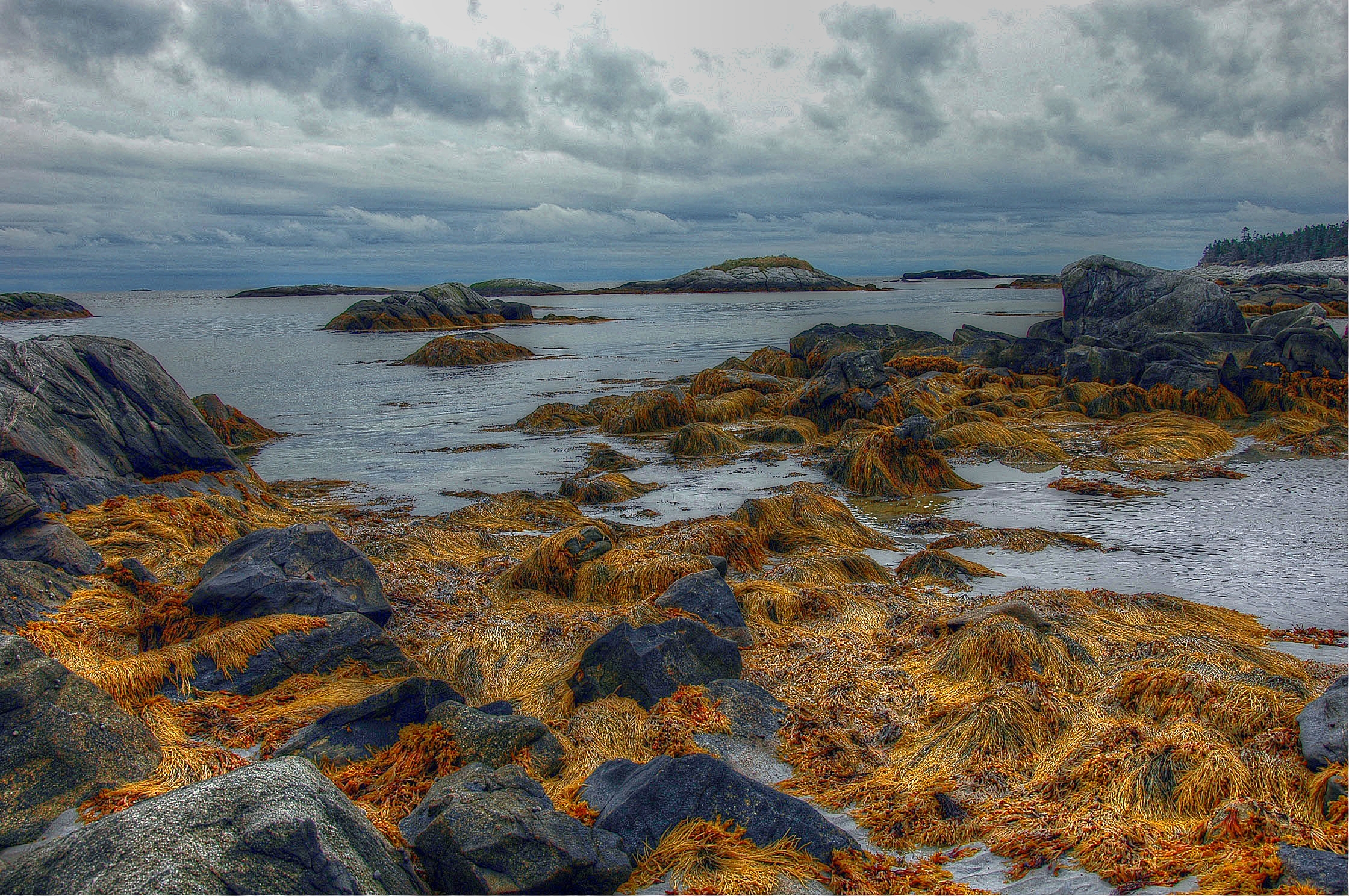
Seaweed and rocks, Kejimkujik National Seashore, NS

Seaweed and Rocks, Kejimkujik National Seaside, NS

___

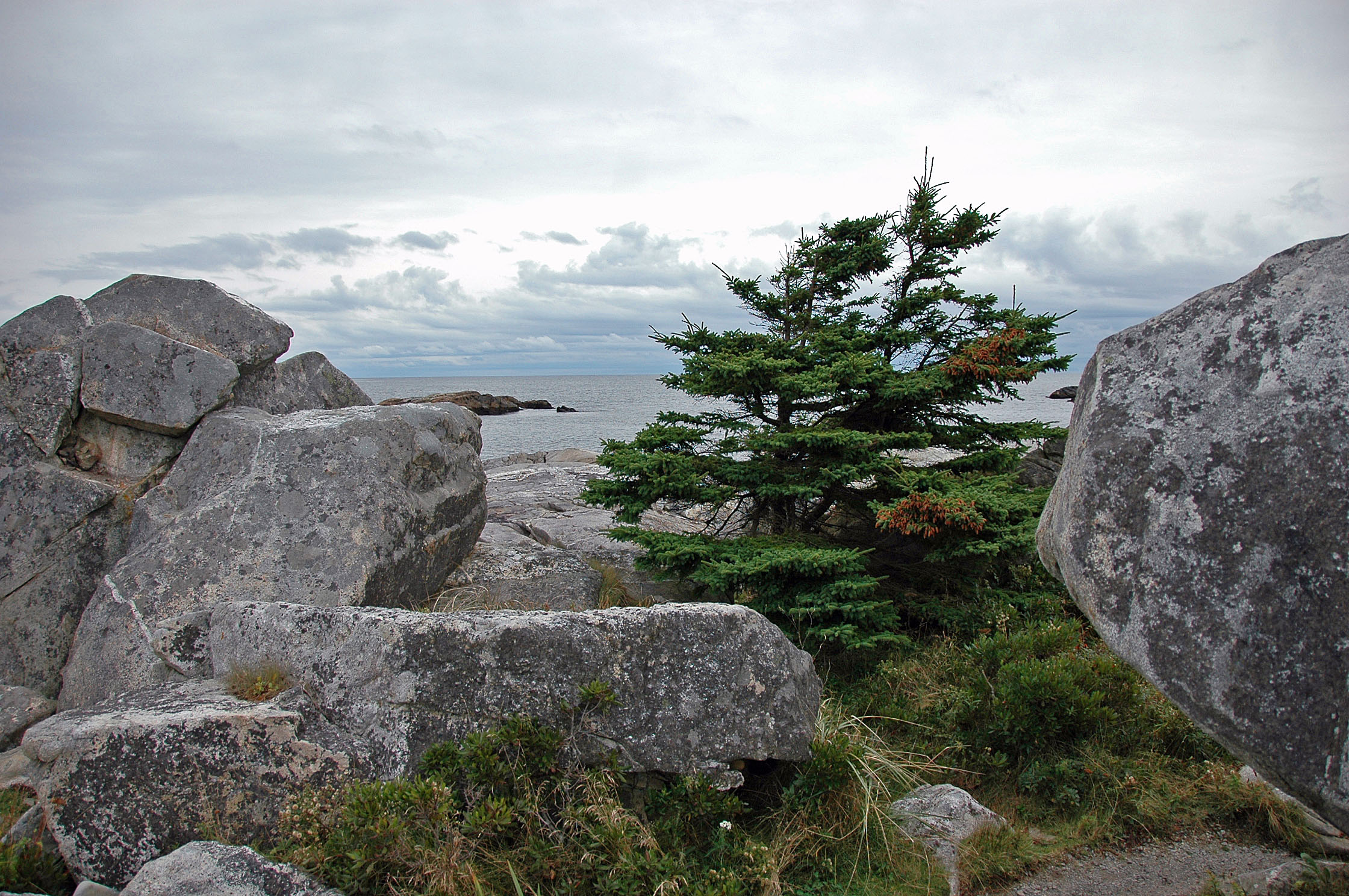
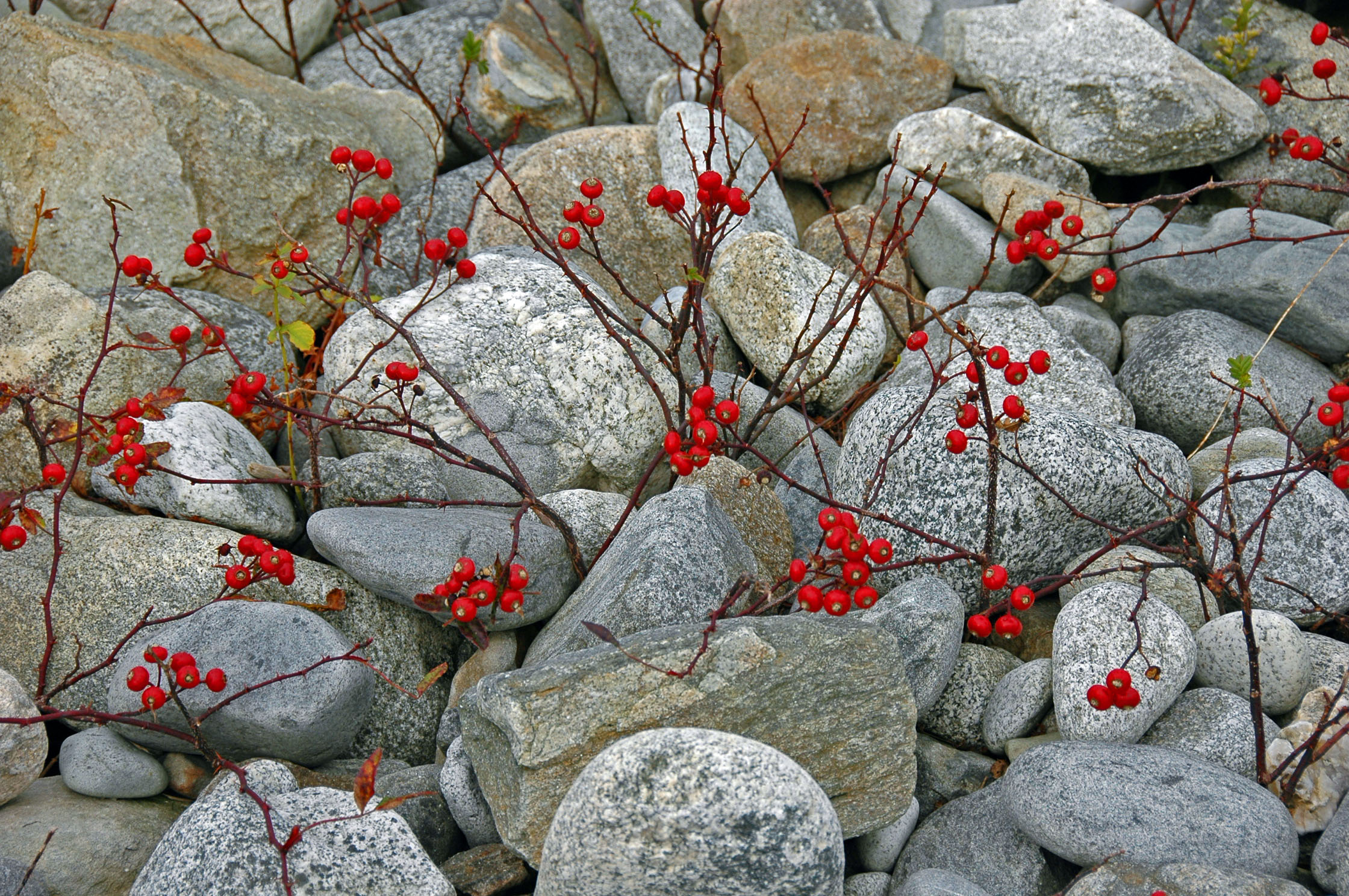
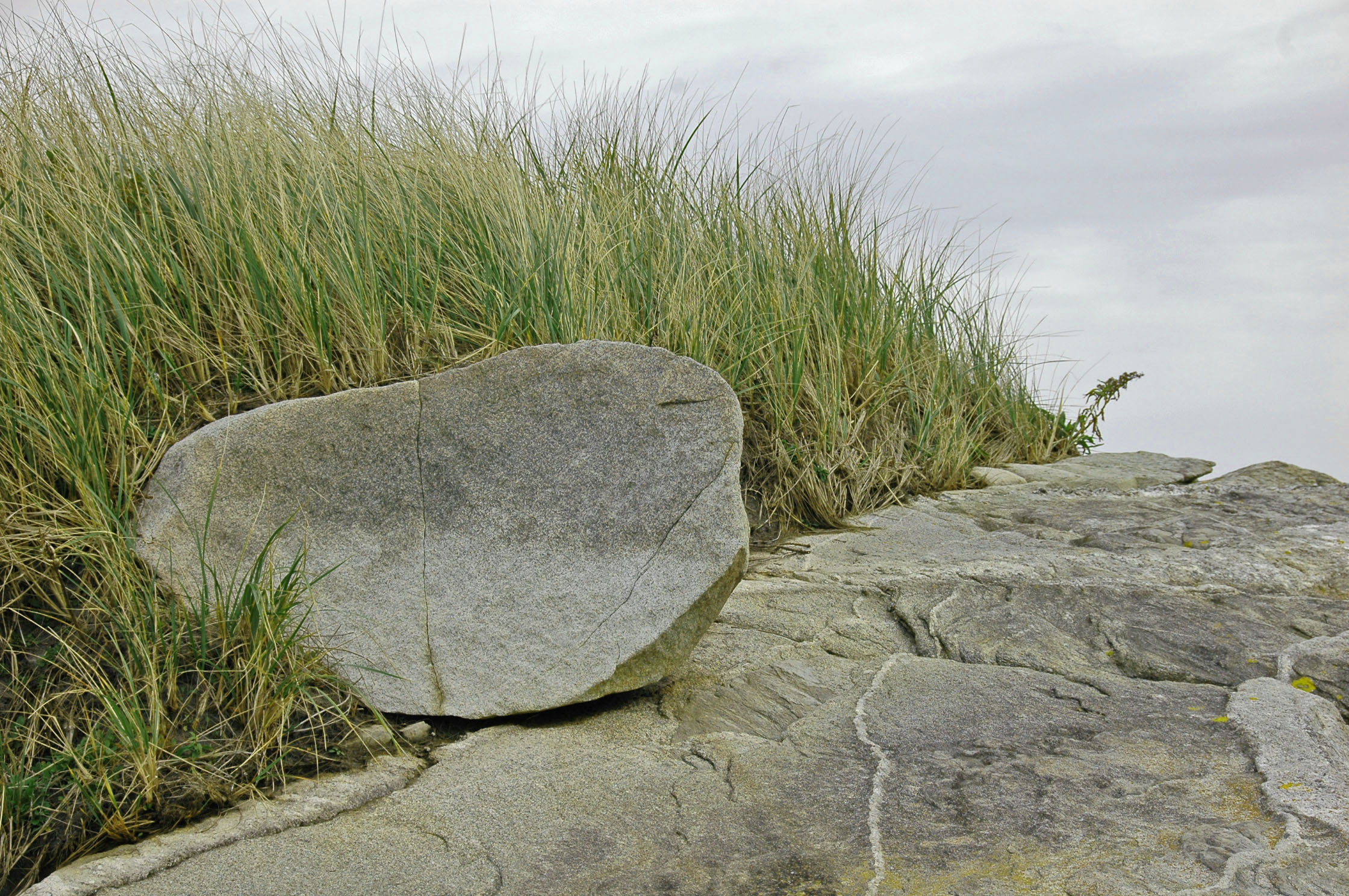
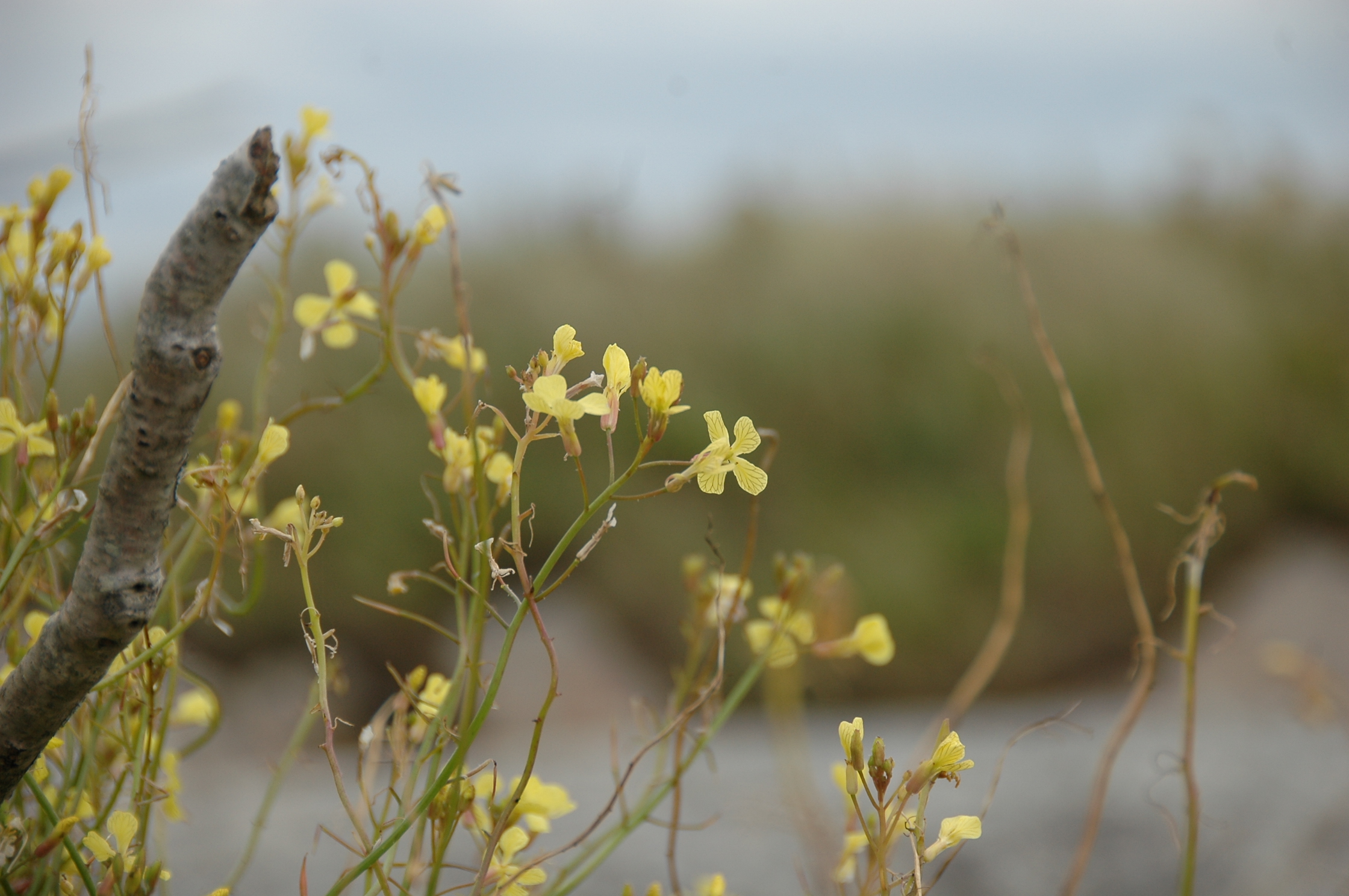
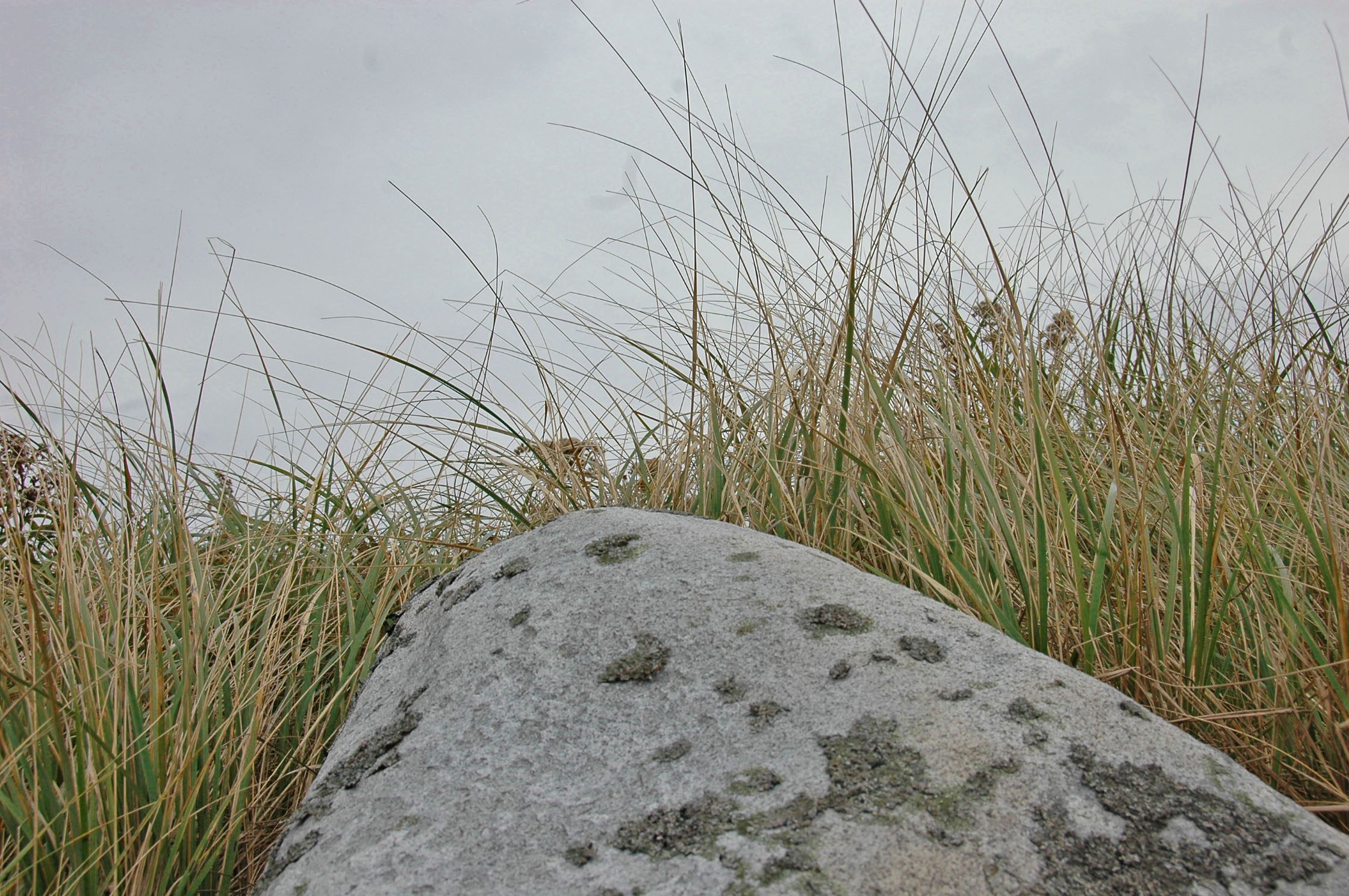
On the south shore of Nova Scotia about 110 miles (175 km) southwest of Halifax sits the amazing Kejimkujik Seaside, which is an extension of the much larger inland Kejimkujik National Park.  Its remote hiking paths along windy shores offer breathtaking views of Nova Scotia at its natural best.  These pics are from a memorable hike there on an overcast day.

Windswept pine, Kejimkujik National Seashore, NS

Windswept Spruce, Kejimkujik National Seaside, NS

___

Color amidst the rocks, Kejimkujik National Seashore, NS

Color Amidst the Rocks, Kejimkujik National Seaside, NS

___

Rocks Among Tall Grass, Kejimkujik Seaside, NS

Rocks Among Tall Grass, Kejimkujik Seaside, NS

___

Wildflowers, Kejimkujik Seaside, NS

Wildflowers, Kejimkujik Seaside, NS

___

Lichen-Speckled Boulder, Kejimkujik Seaside, NS

Lichen-Speckled Boulder, Kejimkujik Seaside, NS

___

Halifax’s Beautiful Old Burying Ground

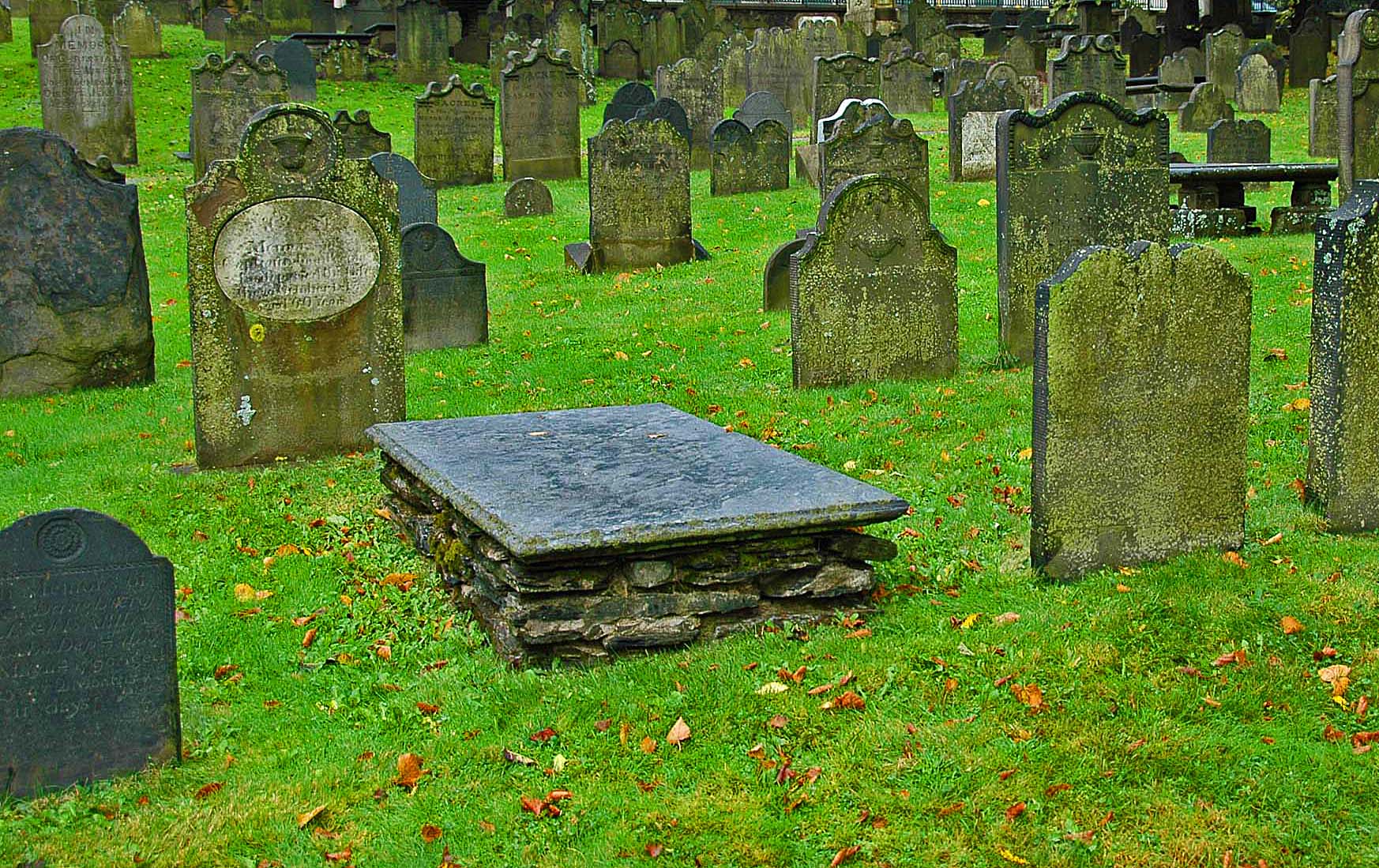
Gravestones, Old Burying Ground, Nova Scotia

Gravestones, Old Burying Ground, Nova Scotia

___

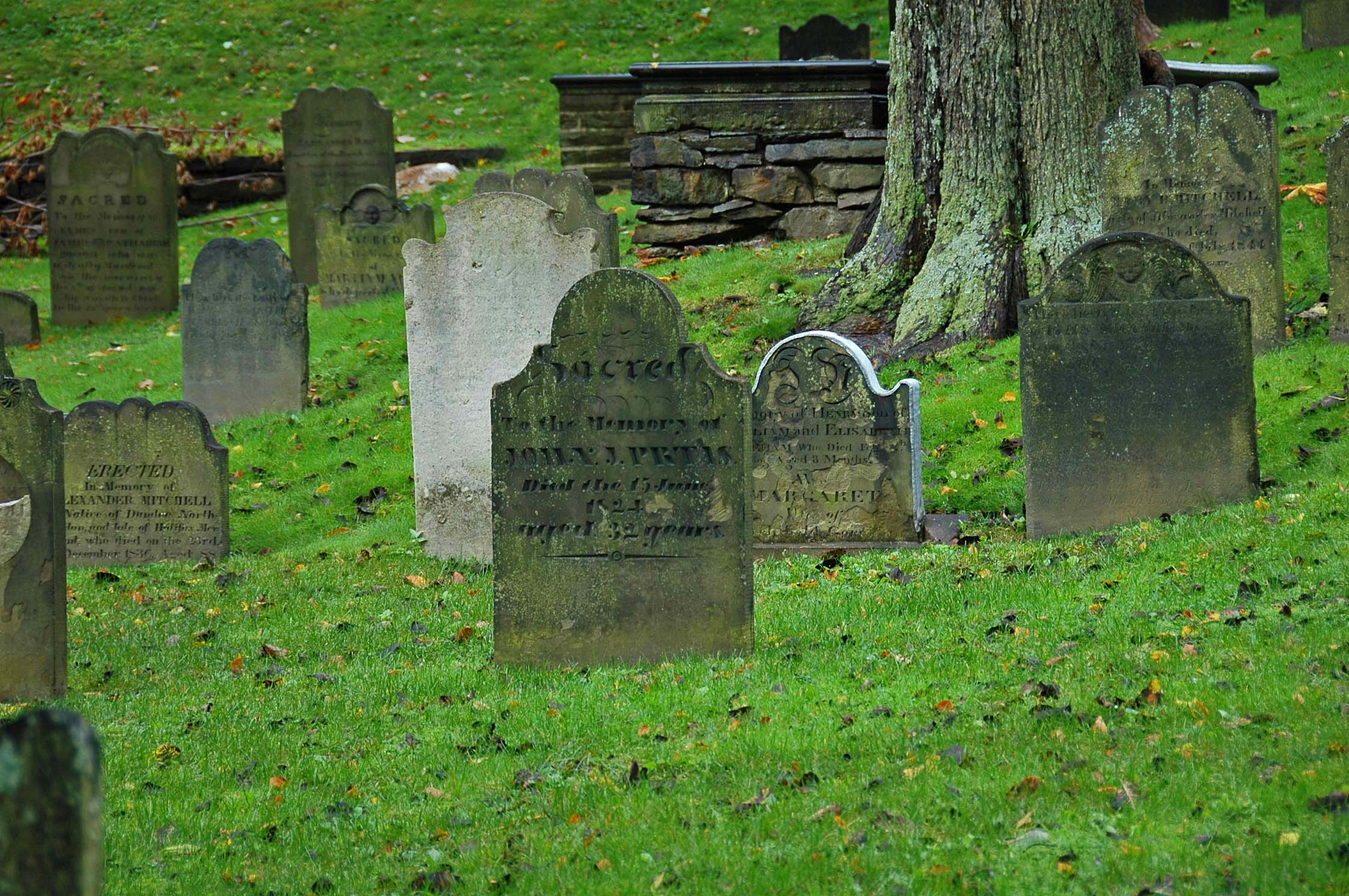
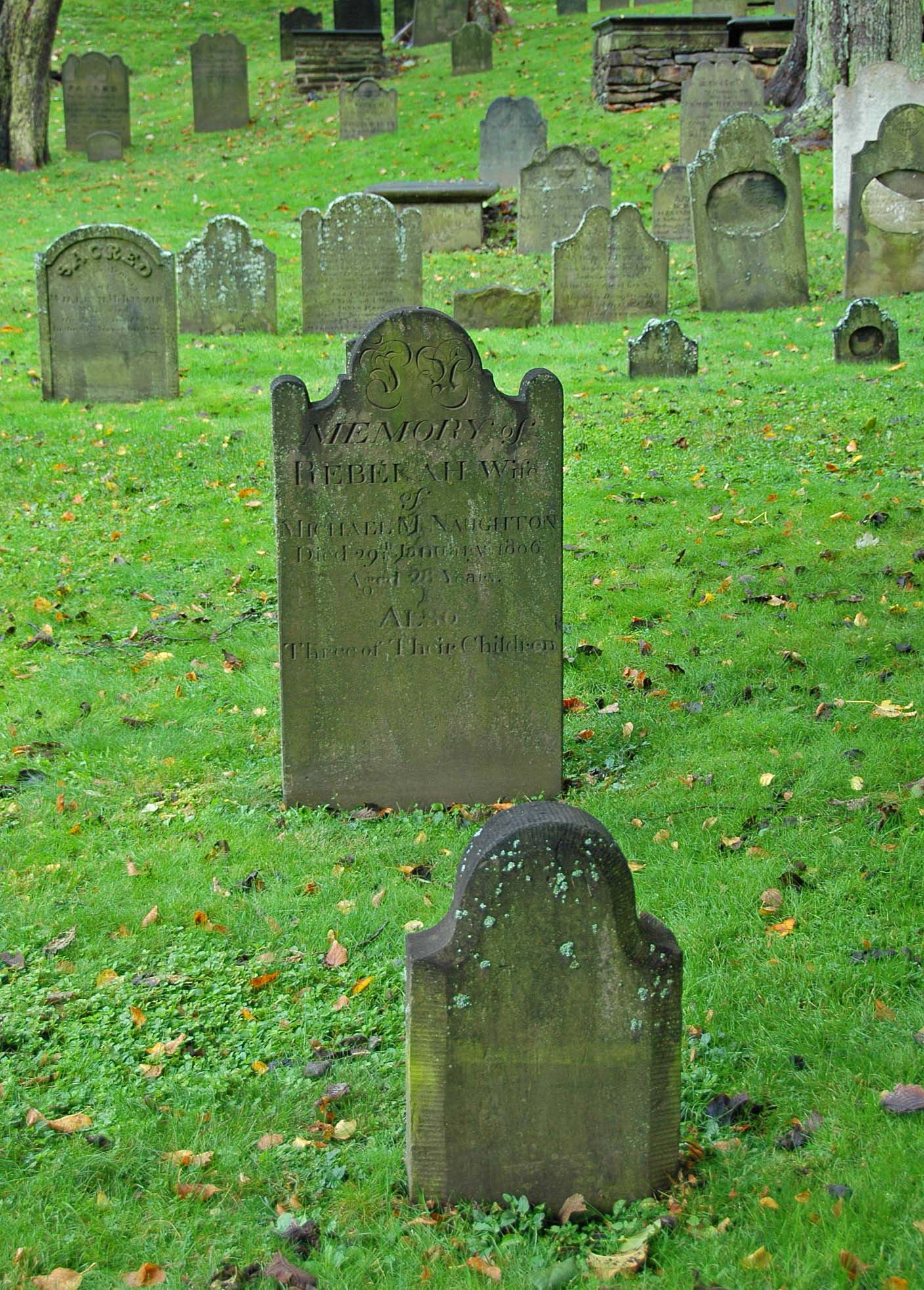
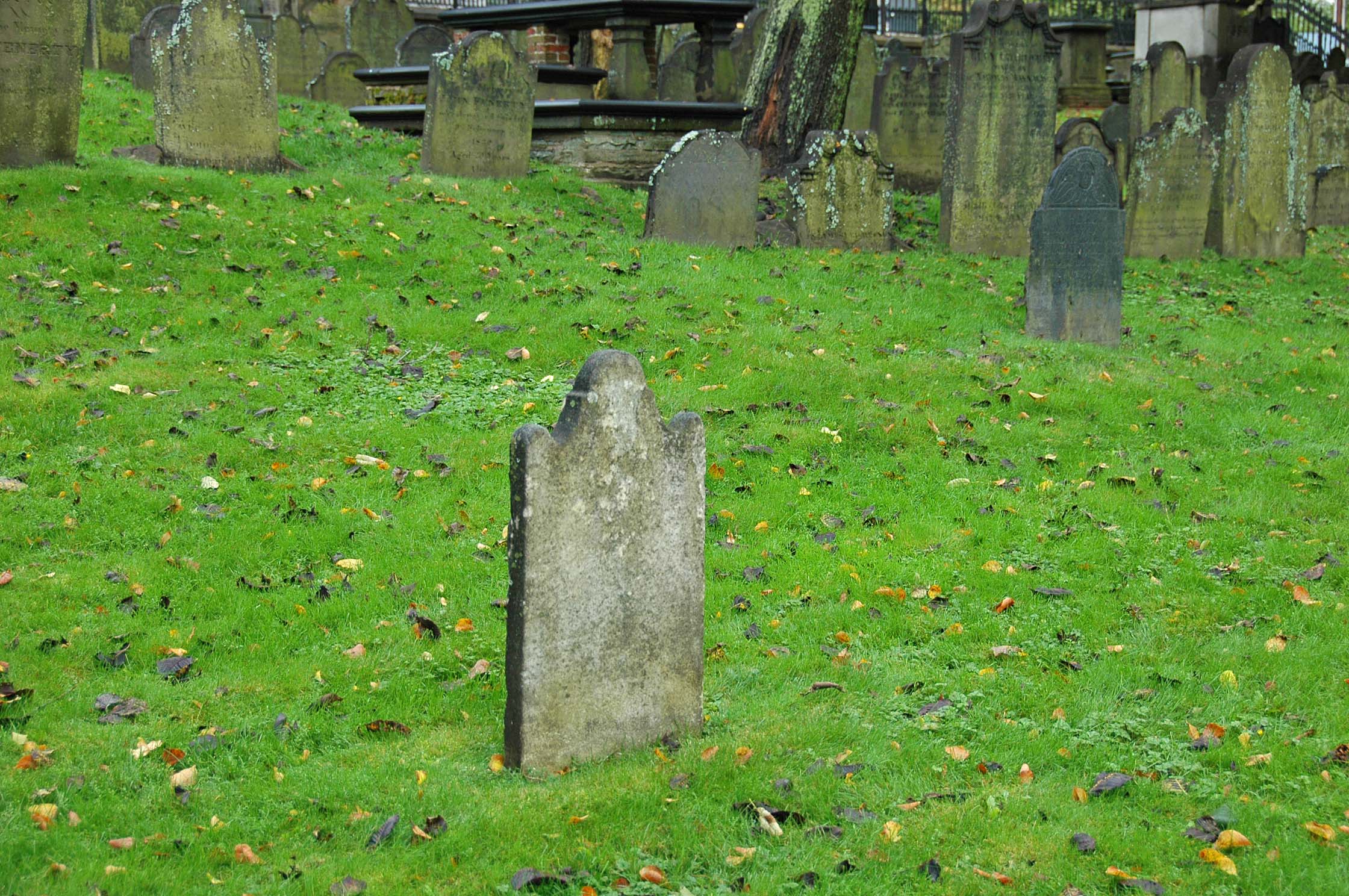
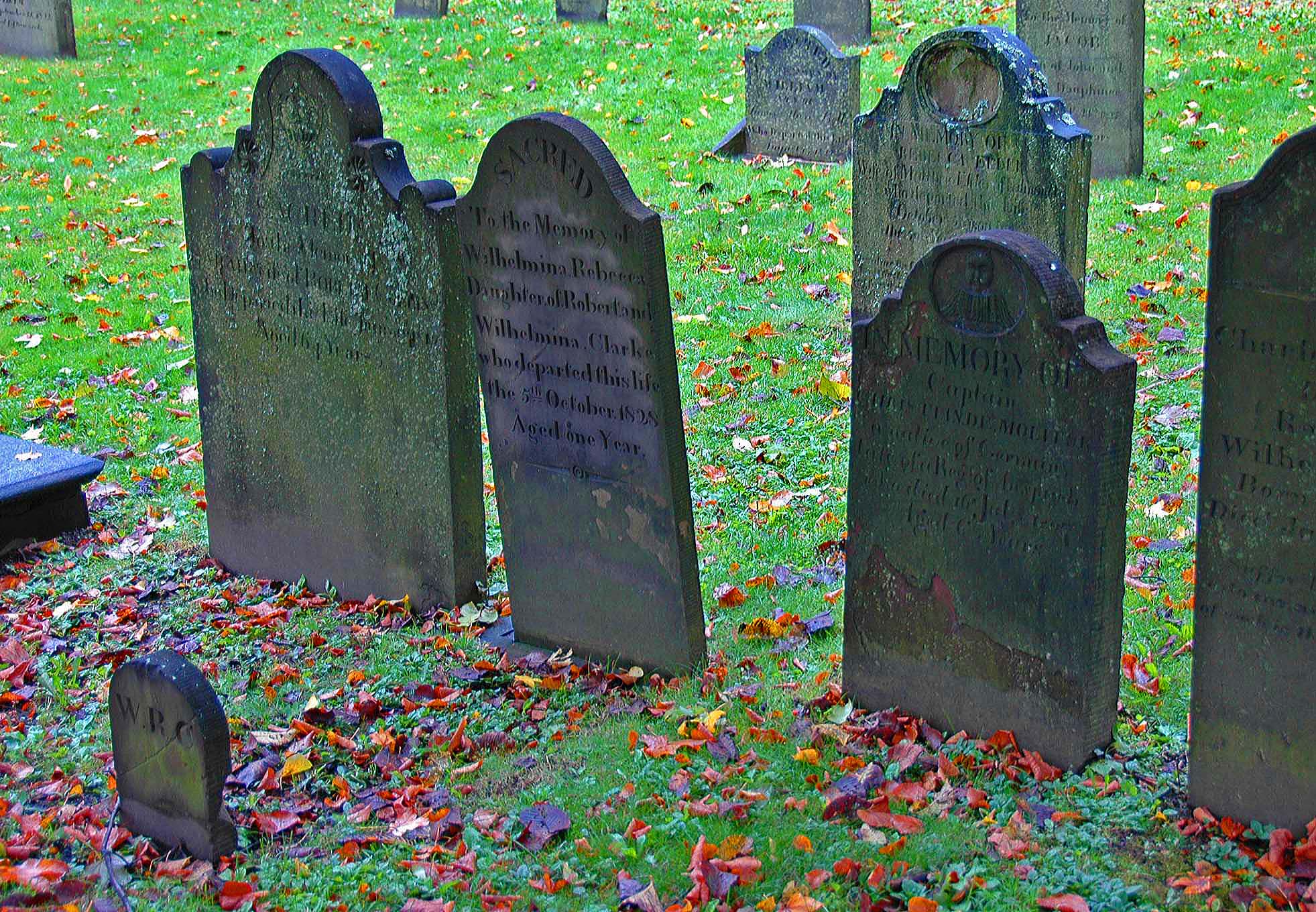
I find old cemeteries to be serene places for reflection and contemplation, and Halifax’s historic St. Paul’s Church Cemetery, also known as the Old Burying Ground, which dates back to the 1749 founding of the city, is one of the most gorgeous green spaces of this type.  Its many weathered gravestones hint at stories of lives both brief and long — and all so long ago.  The Burying Ground’s charm is evident by, among other things, the numerous times I’ve seen it used as a backdrop for wedding group photography or a leisurely setting for those simply enjoying a good book.

These photos are from an early Fall trip to Halifax a few years ago. [Click images to enlarge.]

“Sacred to the Memory of . . . “, Old Burying Ground, Halifax

___

Memories For the Ages, Old Burying Ground, Halifax

___

Solitary Gravestone, Markings Erased, Old Burying Ground, Halifax

Solitary Gravestone, Markings Erased, Old Burying Ground, Halifax

___

Weathered Gravestones, Old Burying Ground, Halifax

Another Amusing Take on Canadian Politeness

Canadian-Lemmings

___

Similar to the “Canadian Standoff” cartoon by Roz Chast in an issue of the New Yorker from this past January, the above illustration by Robert Leighton in the August 5, 2013 issue of that magazine pokes good-natured fun at the Canadian penchant for politeness.  Not really a bad reputation to have though.

In Memory of Alex Colville

Alex Colville in 1945

Alex Colville in 1945

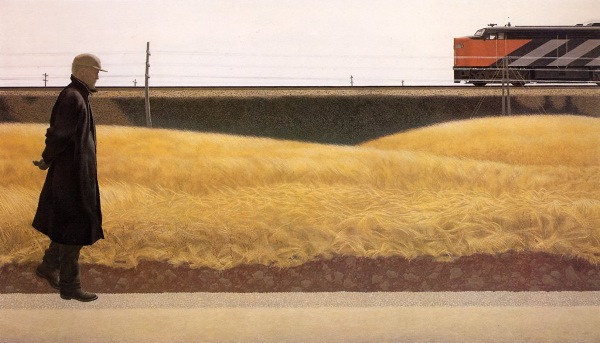
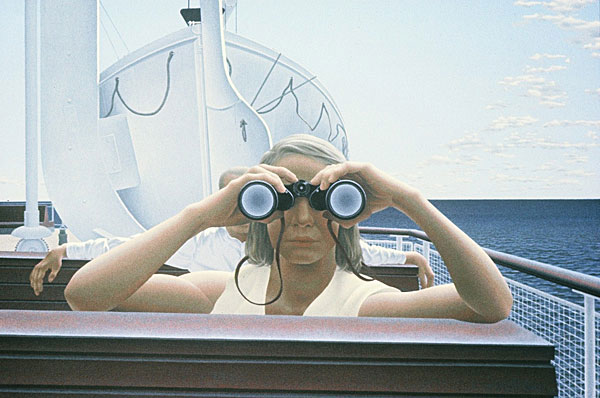
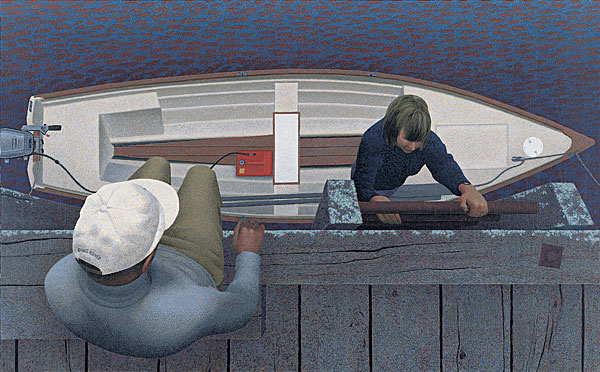
Yesterday, upon coming upon the notice in the NY Times of Alex Colville’s recent passing, I realized that Canada lost a giant of the art world.  Colville’s brand of realism conveyed mystery and left much to the viewer. His striking composition “Horse and Train” is a perfect example of this.   Its uneasy turbulence is illuminated by Colville’s explanation that his inspiration derived from a line in a Roy Campbell poem:  “Against a regiment I oppose a brain/ And a dark horse against an armoured train.”  Thus, did the Toronto-born and Nova Scotia-raised Colville movingly represent the struggle and strength of the individual against the mainstream.  Fantastic!

That and several of his other works are below.

"Horse and Train" by Alex Colville

Horse and Train (1954)

___

Ocean Limited

Ocean Limited (1962)

___

Soldier and Girl at Station (1953)

Soldier and Girl at Station (1953)

___

To Prince Edward Island (1965)

To Prince Edward Island (1965)

___

Embarkation (1994)

Embarkation (1994)

Quebec City at Night

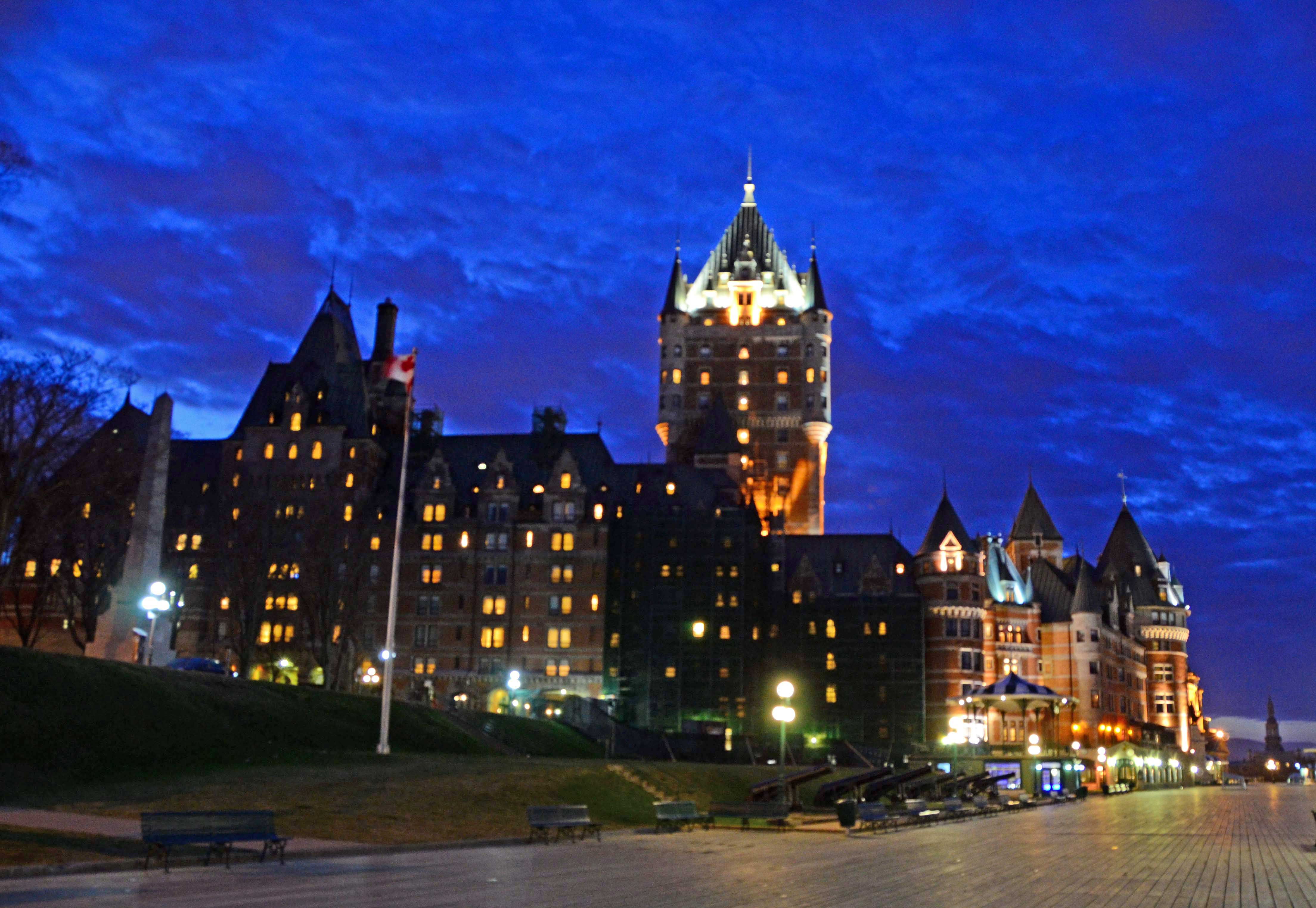
Chateau Frontenac, Quebec City

Chateau Frontenac, Quebec City

___

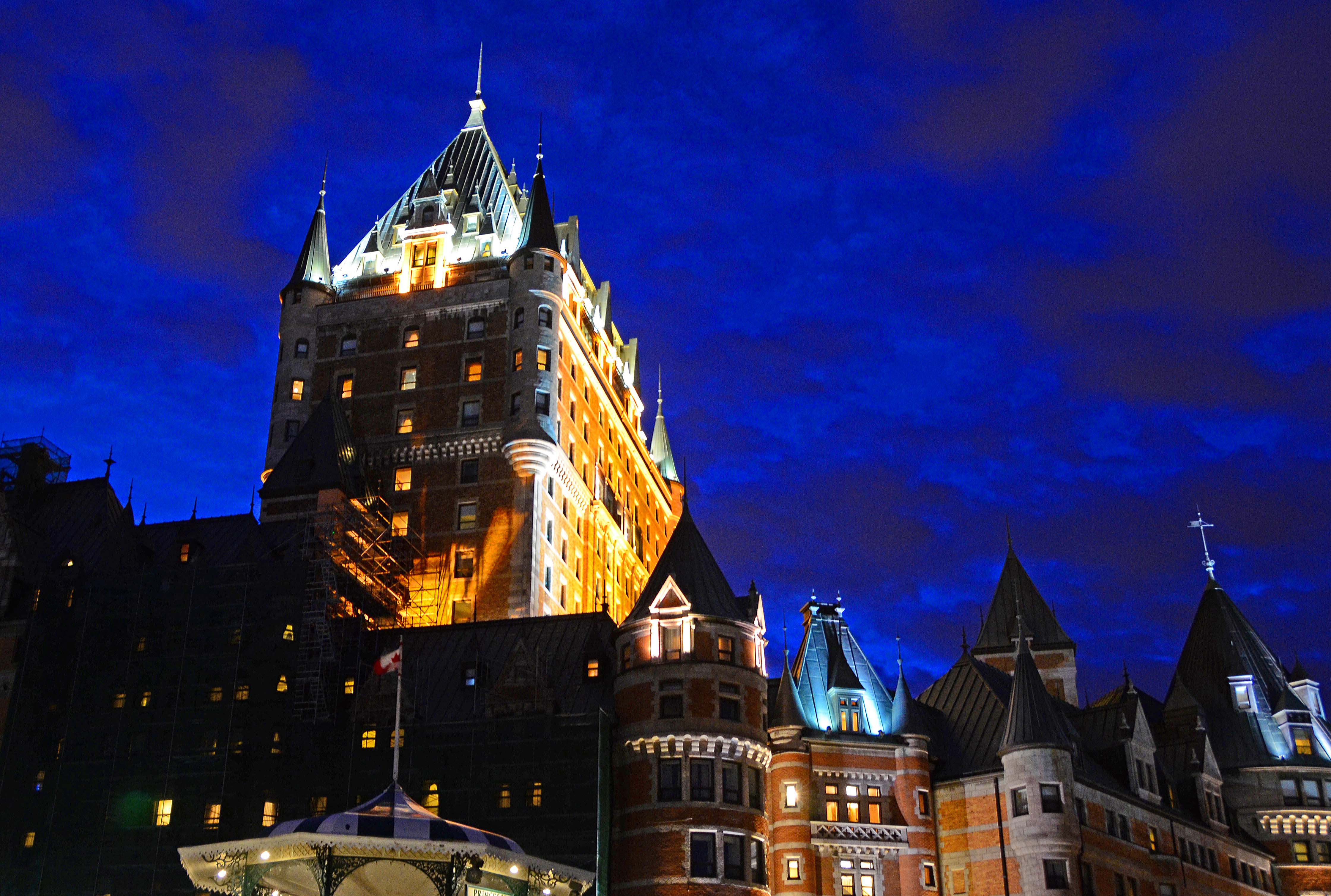
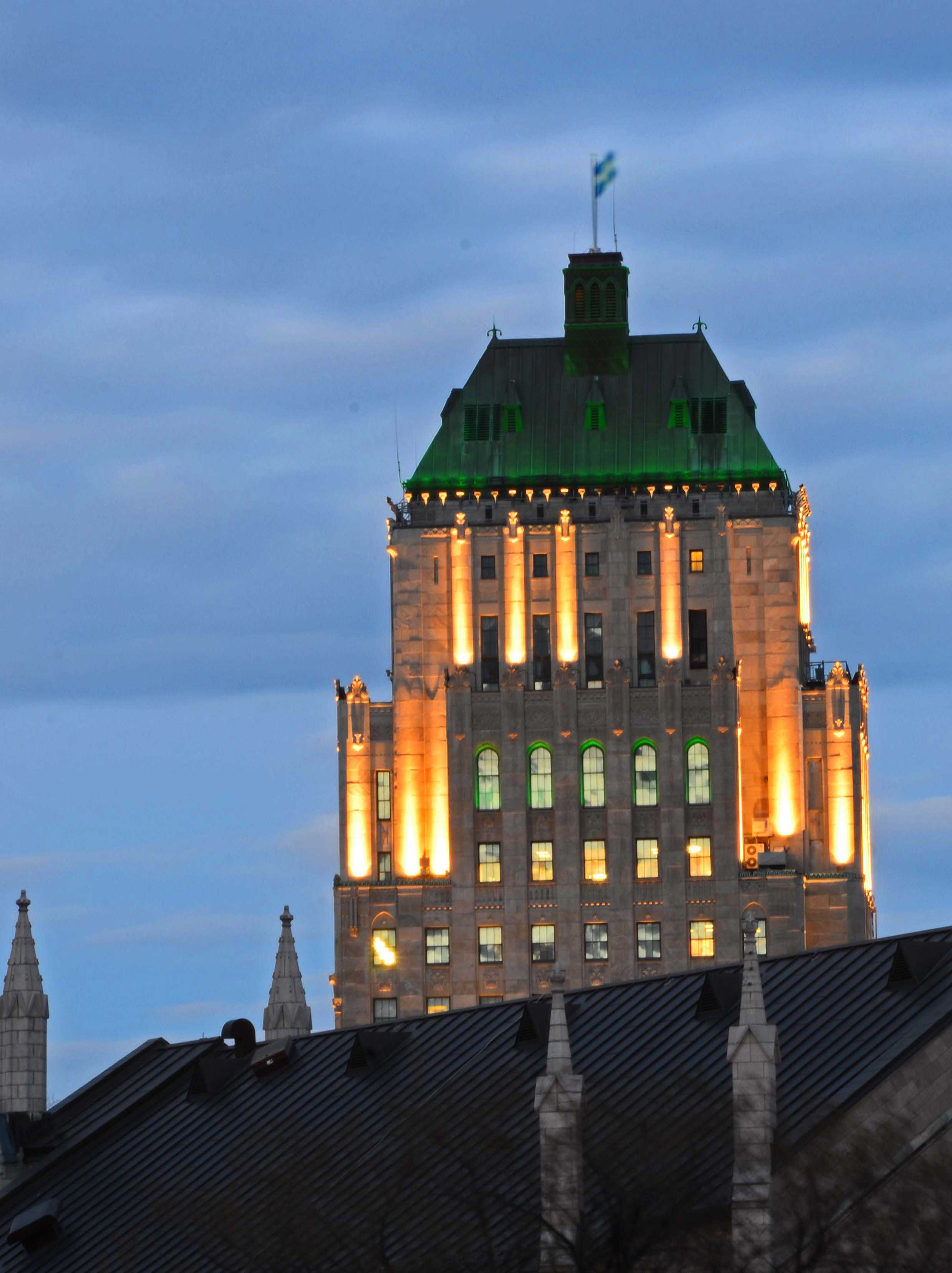
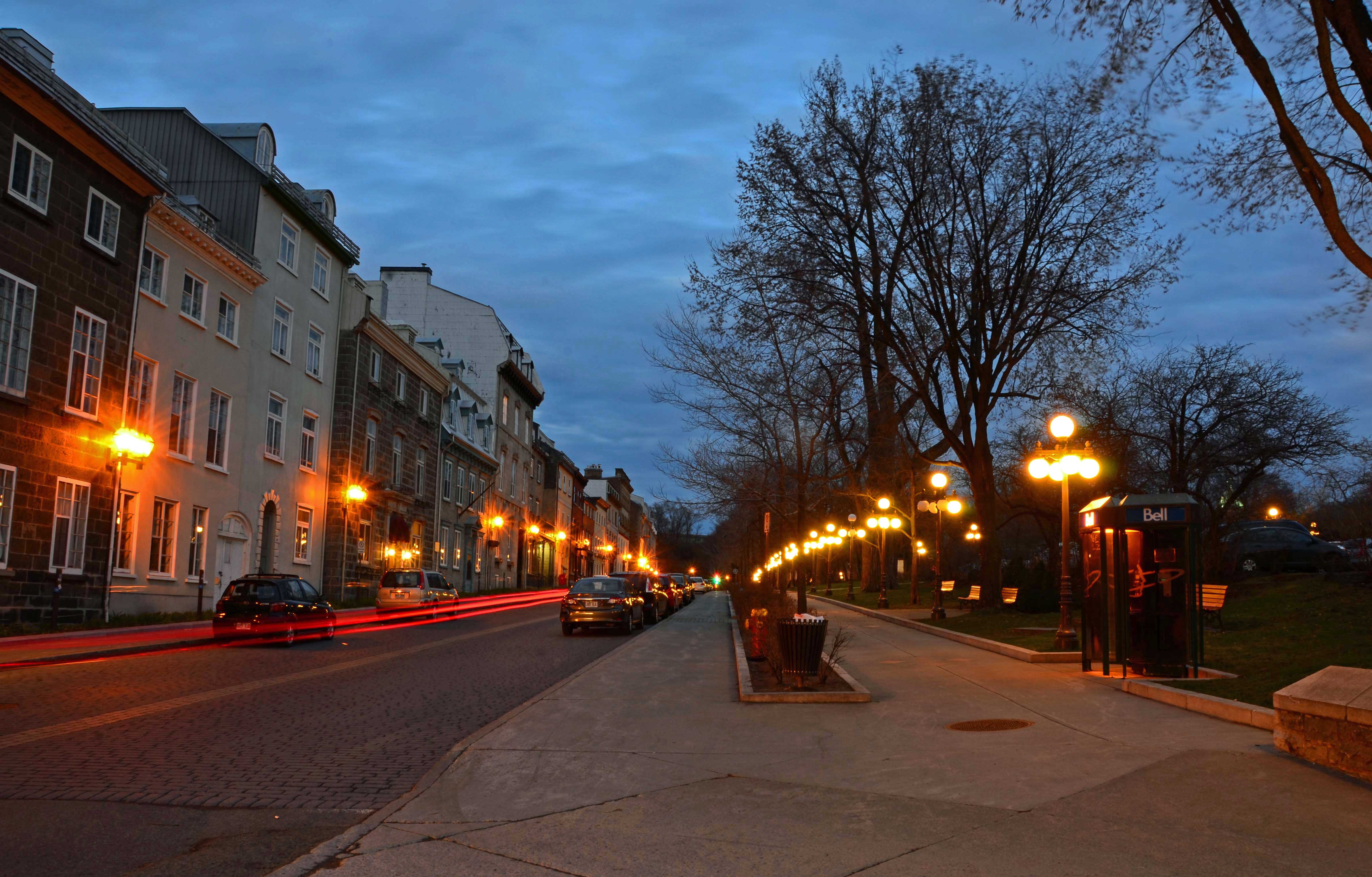
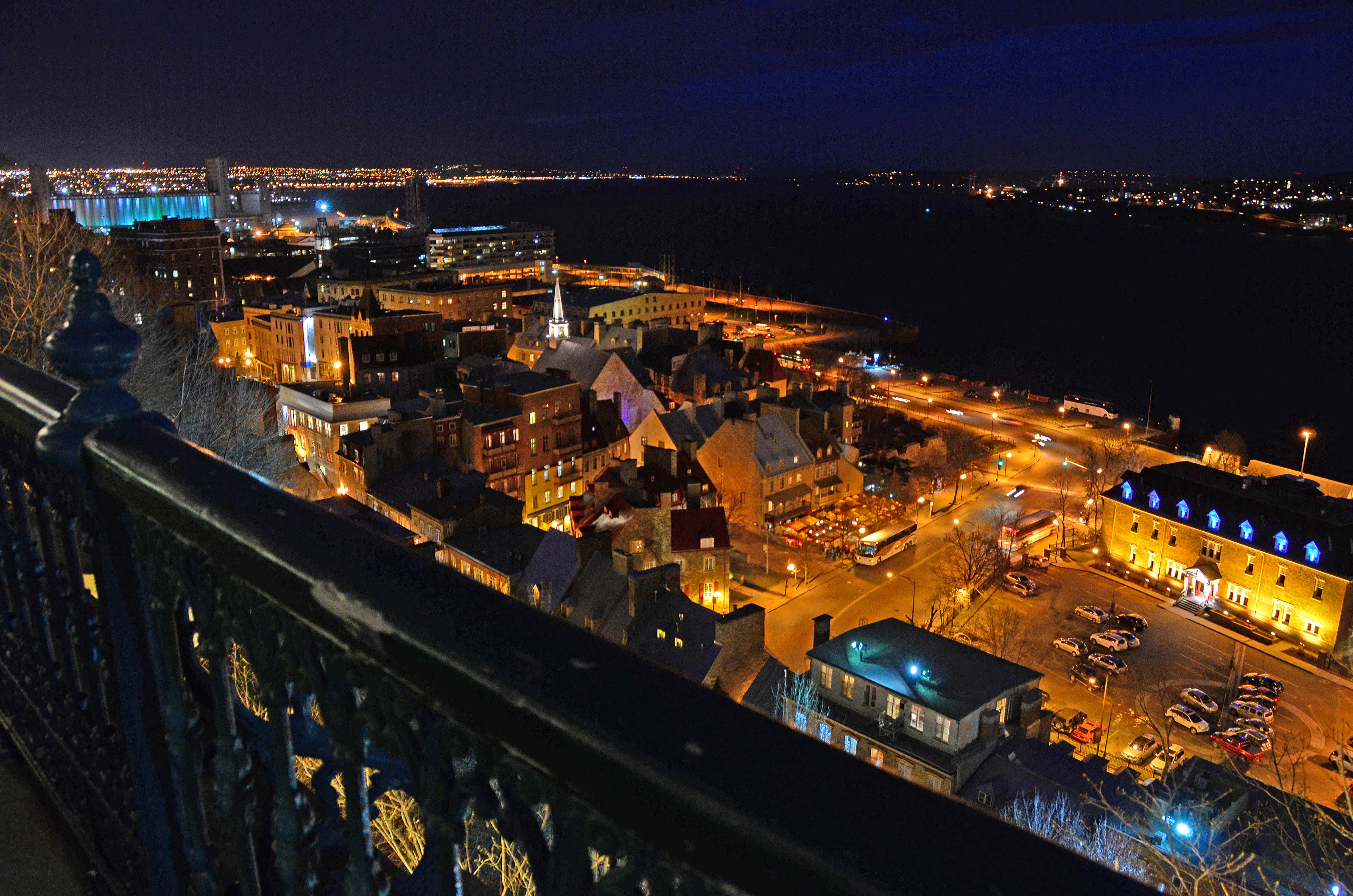
A few night time images from most recent trip (Spring 2013) to Quebec City.  The night was crazy cold and windy, which greatly challenged my patience and tripod so the images are not as sharp as I’d like.

___

Along the Wall, Quebec City

Along the Wall, Quebec City

___

Evening, Rue de St. Jean, Quebec City

Evening, Rue de St. Jean, Quebec City

___

Night's Glow, Quebec City

Night’s Glow, Quebec City

___

City Hall, Quebec City

City Hall, Quebec City

___

Night Fall, Quebec City

Night Fall, Quebec City

___

Night Above Lower Town, Quebec City

Night Above Lower Town, Quebec City

___

Antique Shop at Night, Quebec City

Antique Shop at Night, Quebec City

___

Windy Night Near Chateau Frontenac, Quebec City

Windy Night Near Chateau Frontenac, Quebec City

Random Images of Quebec City

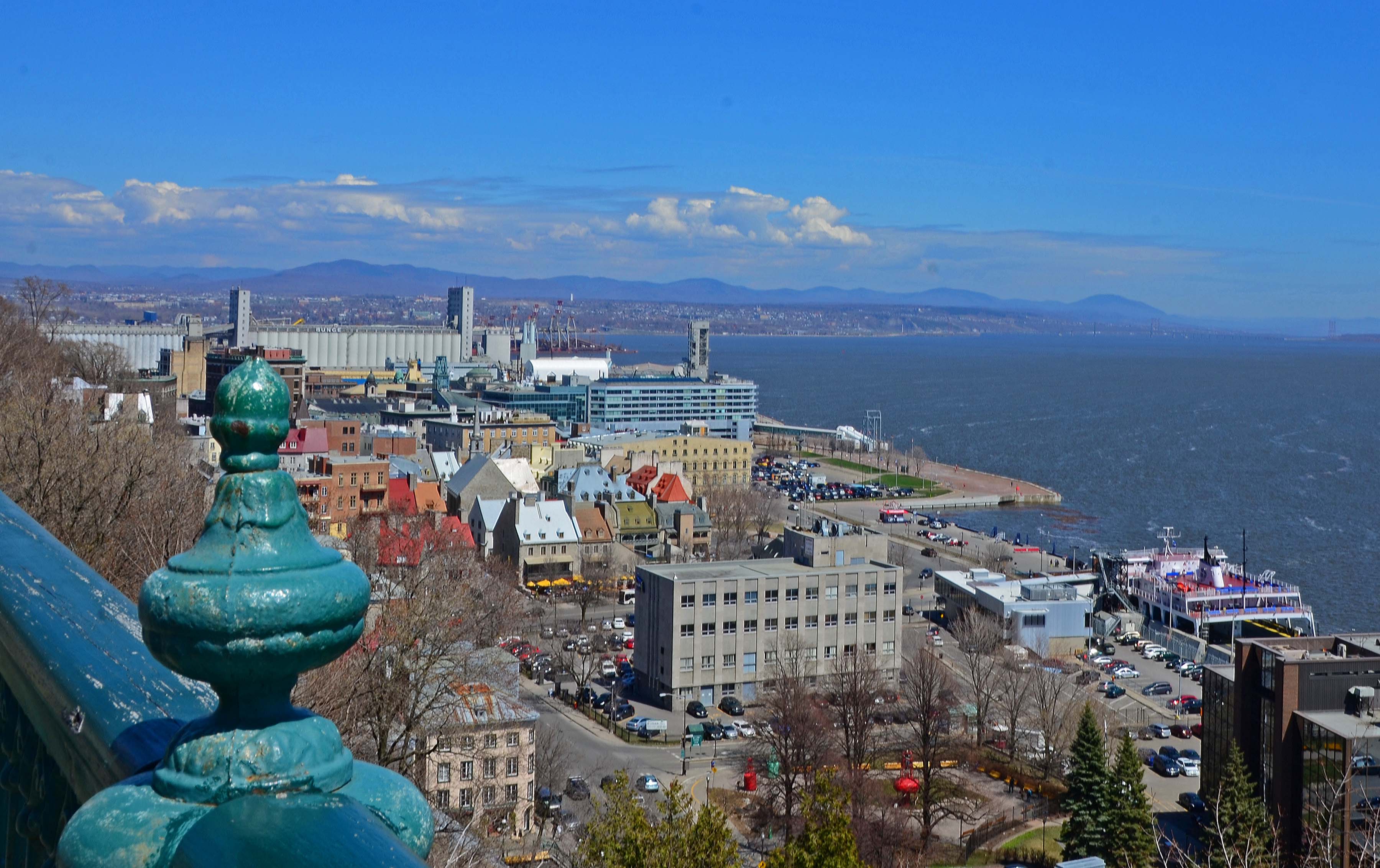
Some random images from a recent trip to Quebec City.
___
Tower on City Gate, Quebec City

Tower on City Gate, Quebec City

___

Looking Out on the St. Lawrance, Quebec City

Looking Out on the St. Lawrance, Quebec City

___

Rooftop Windows and Angles, Quebec City

Rooftop Windows and Angles, Quebec City

___

Rustic Fire Hydrant, Quebec City

Rustic Fire Hydrant, Quebec City

___

Looking Down the Avenue, Quebec City

Looking Down the Avenue, Quebec City

___

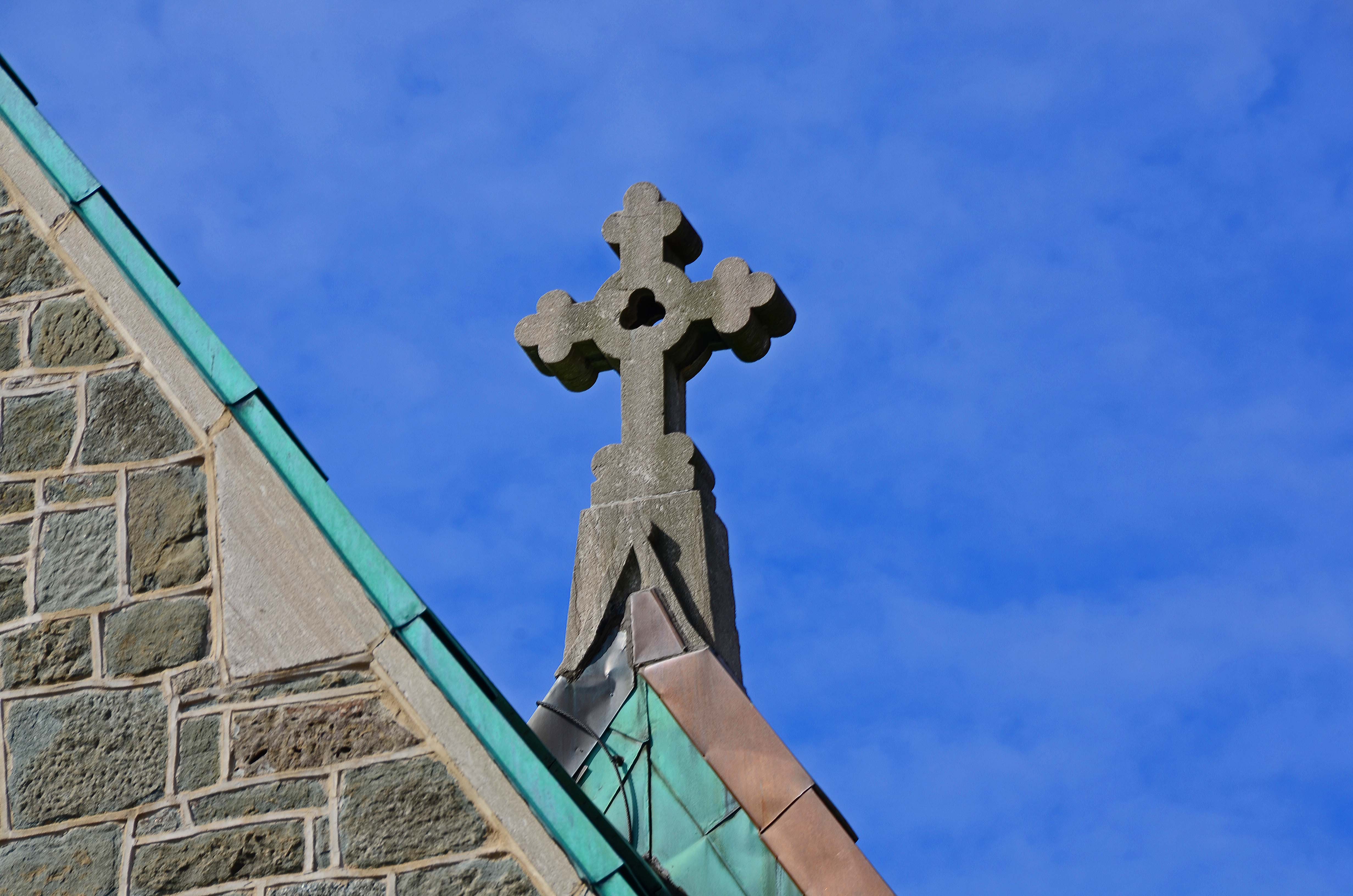
Church Top, Quebec City

Church Top, Quebec City

___

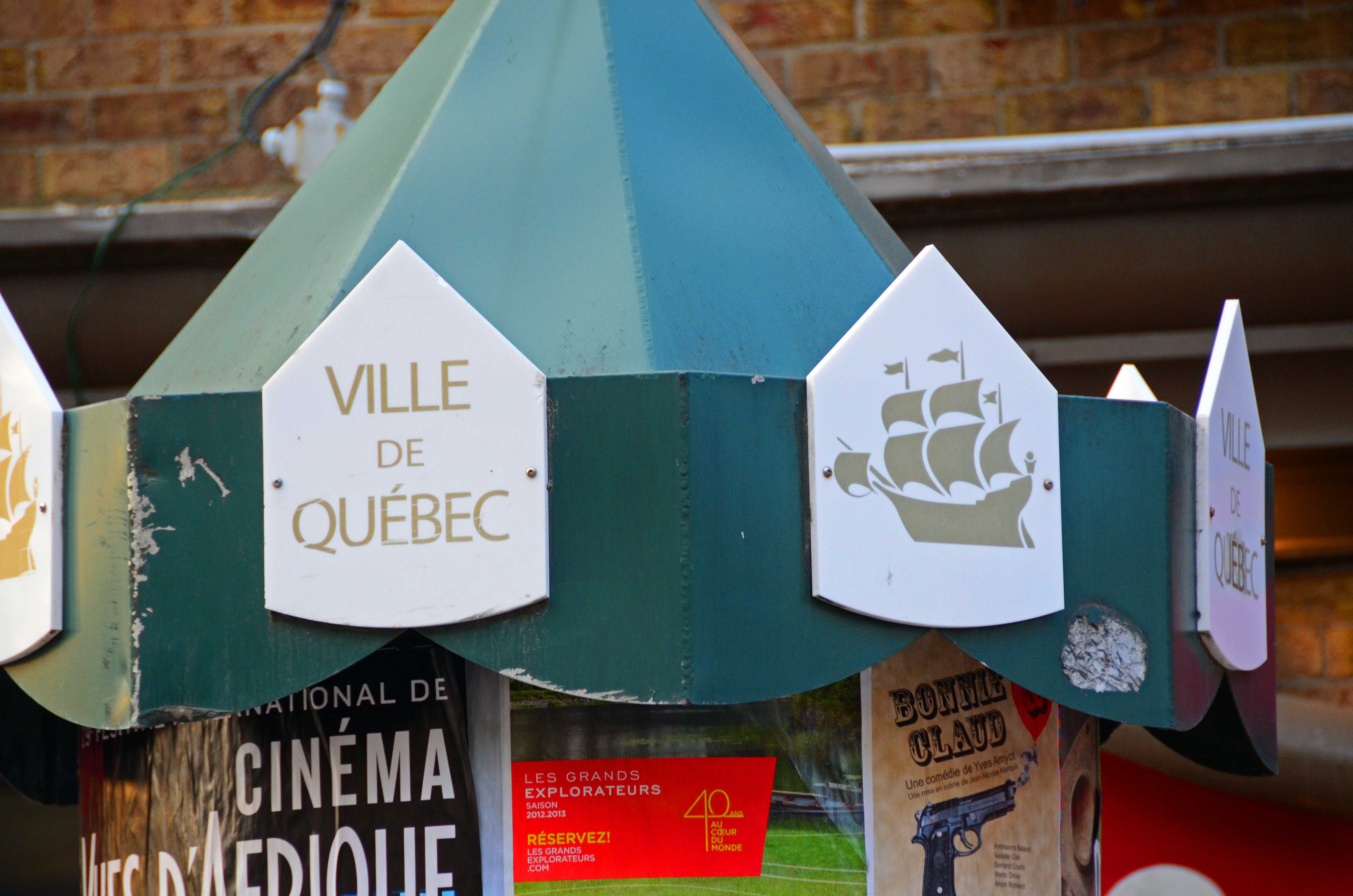
Sign Kiosk, Quebec City

Sign Kiosk, Quebec City

___

Quebec's Banner, Quebec City

Quebec’s Banner Fluttering, Quebec City

___

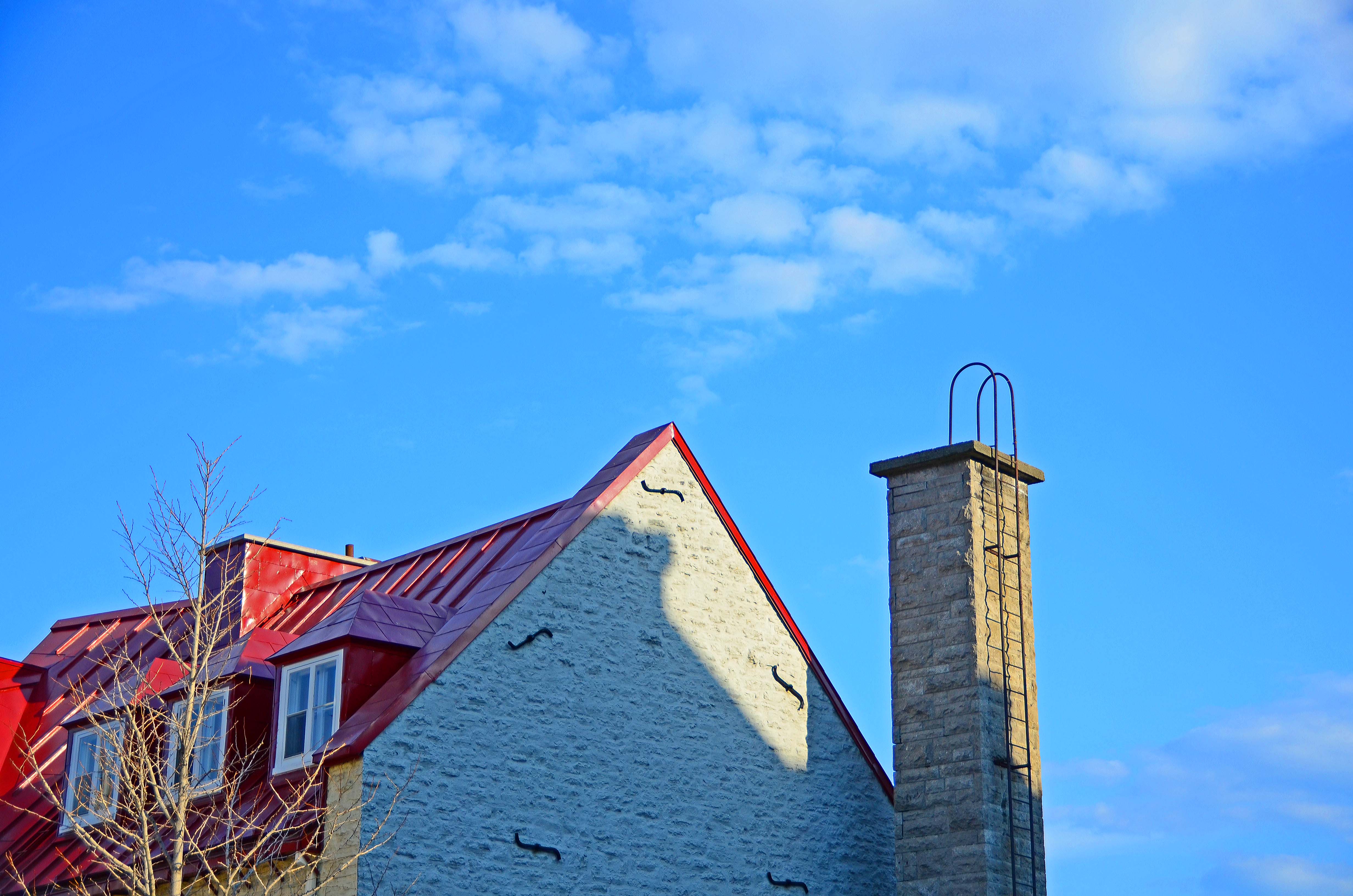
Colorful Roof, Quebec City

Colorful Roof, Quebec City

Edward Burtynsky and Industrial Landscapes

E. Burtynsky -- Nickel Tailings No. 31, Sudbury, Ontario (1996)

E. Burtynsky — Nickel Tailings No. 31, Sudbury, Ontario (1996)

The Summer issue of Canadian Art just arrived and includes a feature (written by Daniel Baird) about recent projects of Toronto photographer Edward Burtynsky.  Looking at Burtynsky’s oversized images of industrial landscapes, it’s difficult not to appreciate their sublime beauty while also being astounded by the impact humans have on the environment.

More about Burtynsky and his amazing work can be seen at his website and at the just-opened exhibition “Edward Burtynsky: The Landscape That We Change” at Kleinburg, Ontario’s McMichael Canadian Art Collection Gallery, which runs through September 29, 2013.

E. Burtynsky -- Inco-Frod Open Pit, Sudbury, Ontario (1985)

E. Burtynsky — Inco-Frod Open Pit, Sudbury, Ontario (1985)

___

E. Burtynsky -- Oxford Tire Pile No. 9a, Westley, California (1999)

E. Burtynsky — Oxford Tire Pile No. 9a, Westley, California (1999)

___

E. Burtynsky -- Rock of Ages No. 1, Barre, Vermont (1991)

E. Burtynsky — Rock of Ages No. 1, Barre, Vermont (1991)

“Stories We Tell” and How We See Things

Earlier today I saw — and highly recommend — “Stories We Tell”, a riveting and thought-provoking 2012 documentary directed by Sarah Polley of Ontario with major support by the National Film Board of  Canada.   While the surface-level story is about the members of a family recounting their personal perspectives on the once carefree and now-deceased family matriarch and a secret that she kept from them, this wonderful, award-winning film goes further by gently prompting its viewers to reflect on the nature of truth, memory, relationships and certain aspects of the human condition.  The way in which this loving family and friends deal with these perplexing issues is a beautiful example of a kind of grace to be treasured.

“Stories We Tell” also very much brings to mind Jeff Lemire’s Essex Countywhich eloquently uses the graphic novel  genre to ponder tricky issues of truth and memory and which, coincidentally, also involves the search for meaning after the revelation of long-held family secrets.

Official website for the film and more info is here.

Images of Butchart Gardens

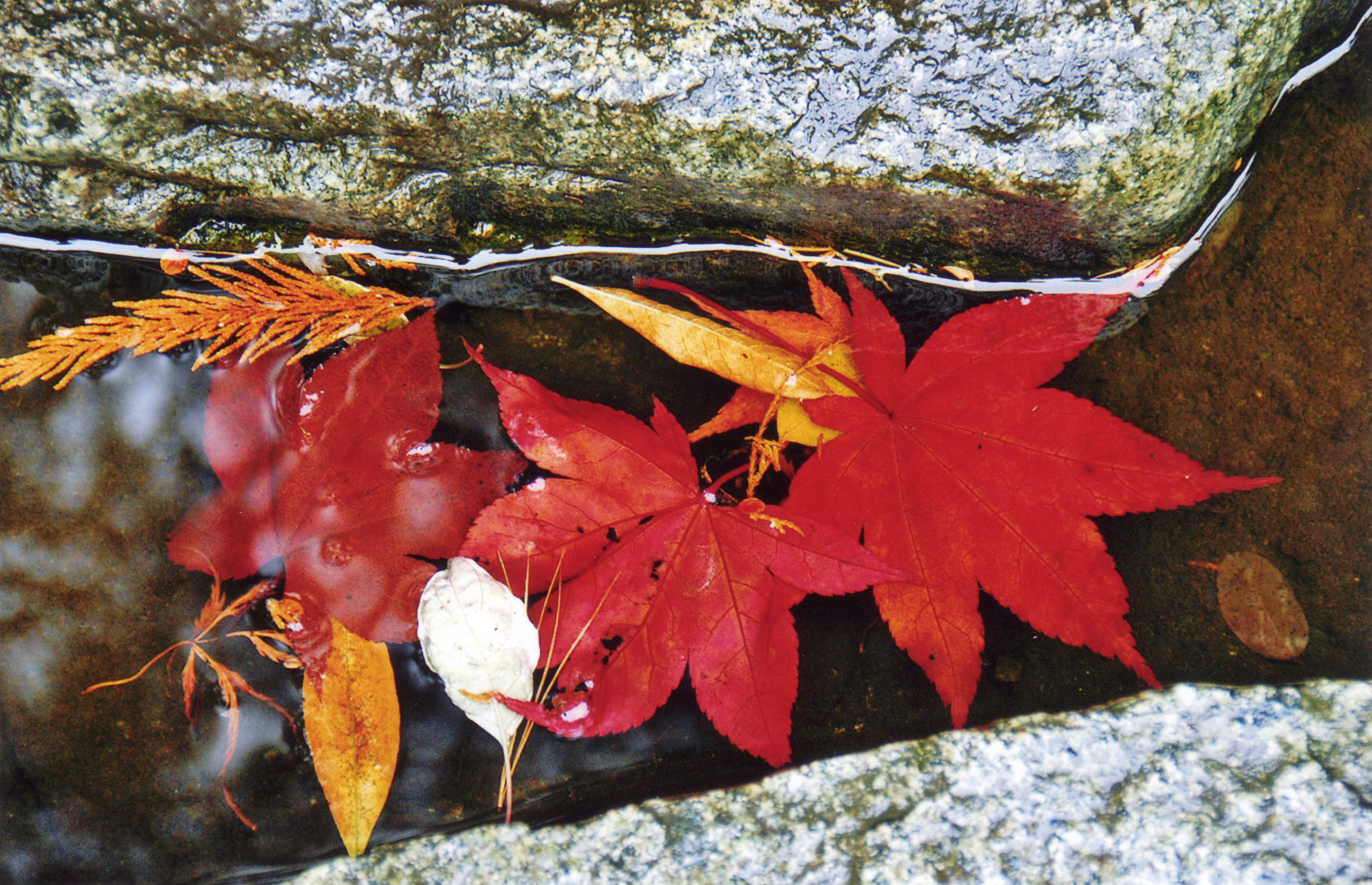
Butchart Gardens -- Water Leaves

Butchart Gardens — Maple Leaves on Water

___

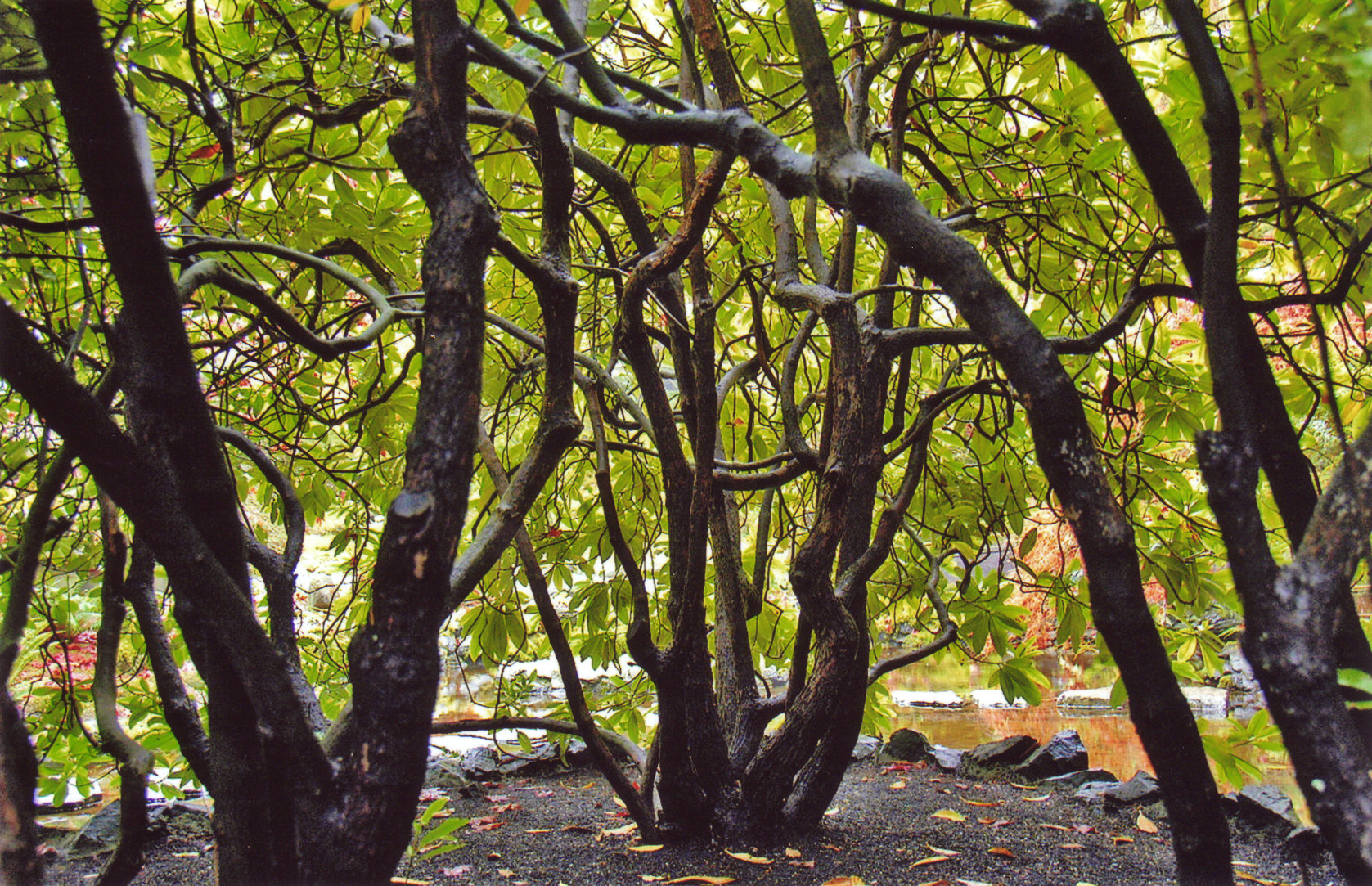
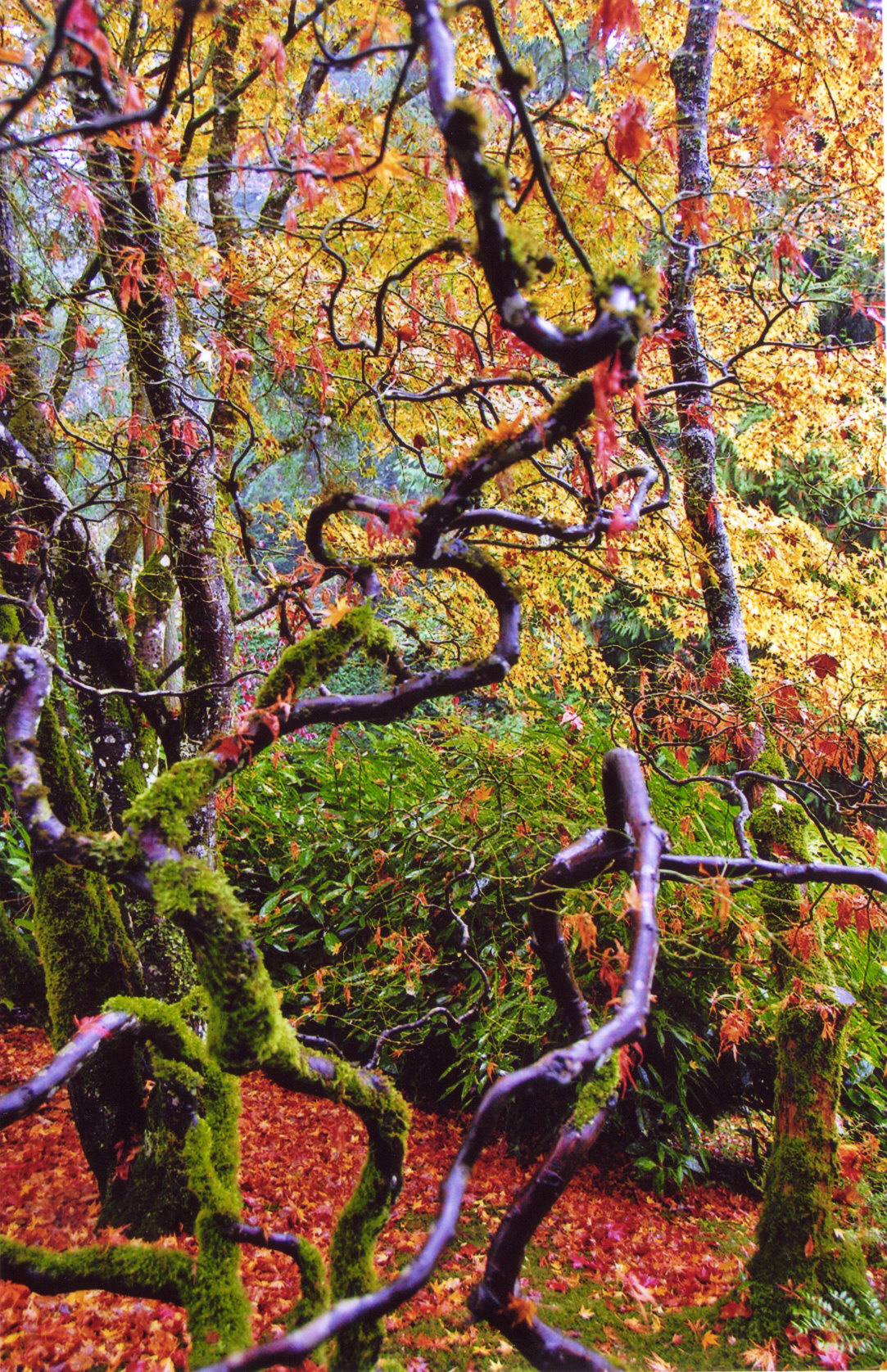
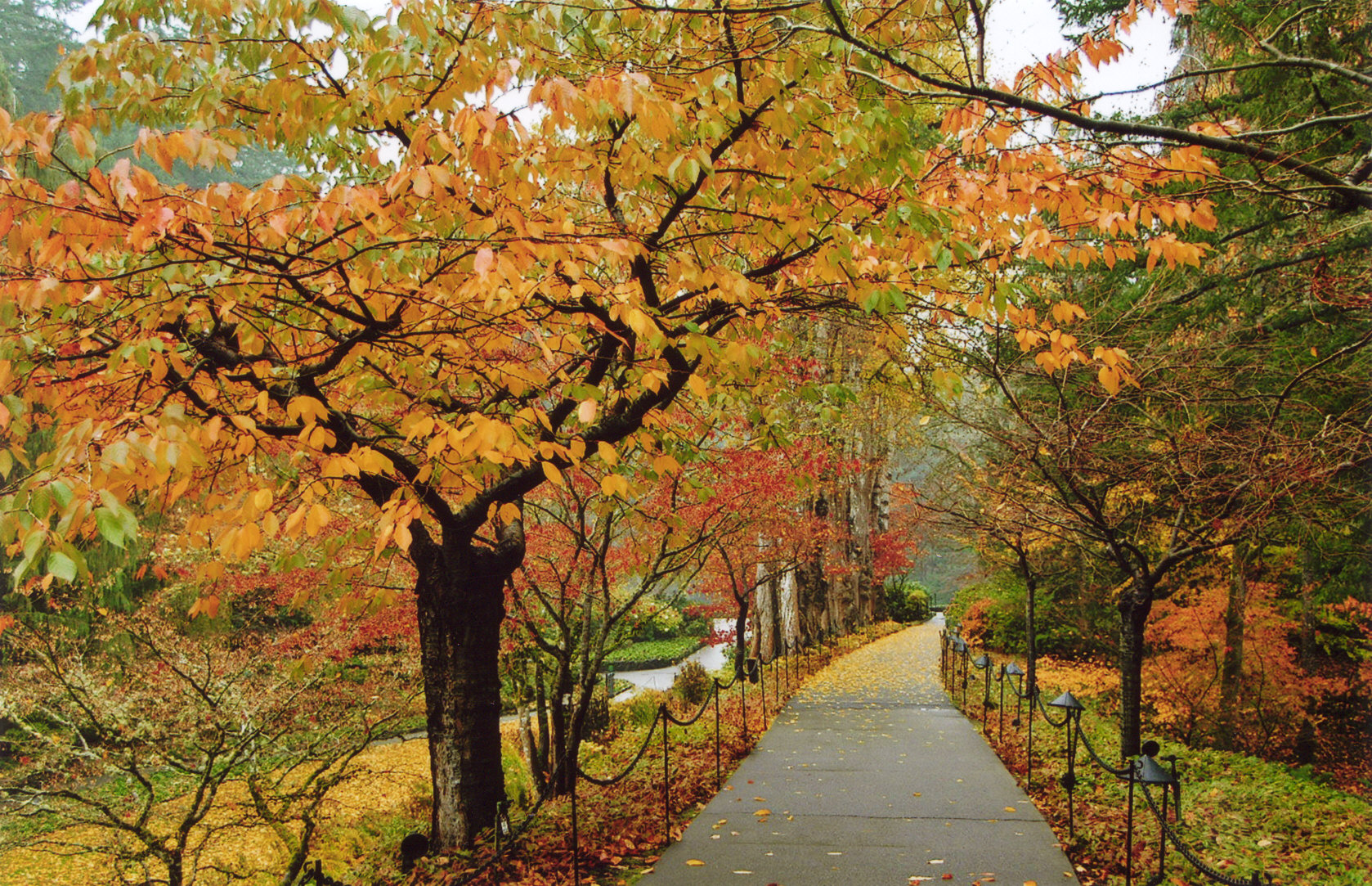
The spectacularly beautiful Butchart Gardens in Victoria, B.C. has many gorgeous flower gardens, but I gravitated toward the serenity of its many trees as these images show from a trip there a few years ago.

Butchart Gardens -- Gnarly Limbs

Butchart Gardens — Gnarly Limbs

___

Butchart Gardens -- Moss and Branches

Butchart Gardens — Moss and Branches

___

Butchart Gardens -- Walkway

Butchart Gardens — Tree-Lined Walkway

Laurence Hyde’s Southern Cross

Southern Cross -- Block 29

Southern Cross — Block 29

___

In 2007 Ontario’s Firefly Books published Graphic Witness: Four Wordless Graphic Novels, which features four  exceptional examples of the early graphic novel form and the beautiful artistry of its practitioners.   Among these is Canadian Laurence Hyde’s masterful Southern Cross from 1951.  Through a series of 120 striking wood engravings Hyde shares a story that reflects on the impact of nuclear testing on the simple way of life that then existed on Bikini Atoll in 1946.

Southern Cross -- Block 23

Southern Cross — Block 23

___

Southern Cross -- Block 27

Southern Cross — Block 27

___

Southern Cross -- Block 107

Southern Cross — Block 107

___

Graphic Witness Cover

Todd McLellan: Taking Things Apart

Todd McLellan -- Push Mower Apart

Todd McLellan — Push Mower Apart

Toronto-based photographer Todd McLellan loves to take apart machines — especially more solidly built older ones — and capture all the related parts in  striking photographic compositions.  I really like these — they appeal to both an aesthetic and design sensibility as well as my penchant for building things.   See more of his photos and other work on his website here.

Todd McLellan -- Bike Apart

Todd McLellan — Bike Apart

Todd McLellan -- Typewriter Apart

Todd McLellan — Typewriter Apart

Todd McLellan -- Chainsaw Apart

Todd McLellan — Chainsaw Apart

Imagining Canada: NY Times Photo Archive on Canada

Imagining Canada

I learned a lot by focusing on Quebec-themed posts over the past month.  With June now here, time to shift gears for a while back to good old random Canadiana.

For a nice transition, here’s a sampling from the recently published Imagining Canada: A Century of Photographs Preserved By The New York Times, a book I obtained shortly before last month’s trip to Montreal.  Over the past century The New York Times has covered many developments in Canada and Imagining Canada showcases some of the photographs that accompanied that coverage.  The images in the book and below only scratch the surface of the extensive archive acquired from the Times in 2009 by Canadian businessman Christopher Bratty and selections from which have been highlighted in the long-running “Photo of the Day” feature on TORO magazine’s website.

The photos are grouped by subject in the book, with each chapter accompanied by a brief, thoughtful essay on Canadian culture by notable figures.  The introductory essay by editor William Morassutti reflects on the relationship between Canada and the U.S. and the fact that, even if below the radar, many people in the States have been paying close attention to Canada for quite a while.

RCMP in Banff 1941

RCMP in Banff 1941

Leafs vs. Rangers 1966

Leafs vs. Rangers 1966

Deanna Durbin 1948

Deanna Durbin 1948

Royal Canadian Regiment in Halifax 1919

Royal Canadian Regiment in Halifax 1919

Notre-Dame Basilica de Montreal

Notre Dame Basillica Montreal_edited-1

Quebec Month / Installment 15

Even to a casual observer of Quebec culture, the predominance of the Catholic church, at least historically, in the province is evident in many ways, not the least of which is the prominence in many towns of a centrally located Catholic church and the widespread naming of streets and other places for saints.  The Notre-Dame Basilica de Montreal, an impressive gothic structure situated in the Vieux-Montreal area of that city, is perhaps the crown jewel of all these.  My lovely wife took these two images of the intricately ornate interior of the Basilica.

notre dame basillica 3

Closeup on Architectural Detail Around Montreal

aDSC_7278_edited-1

Quebec Month / Installment 14

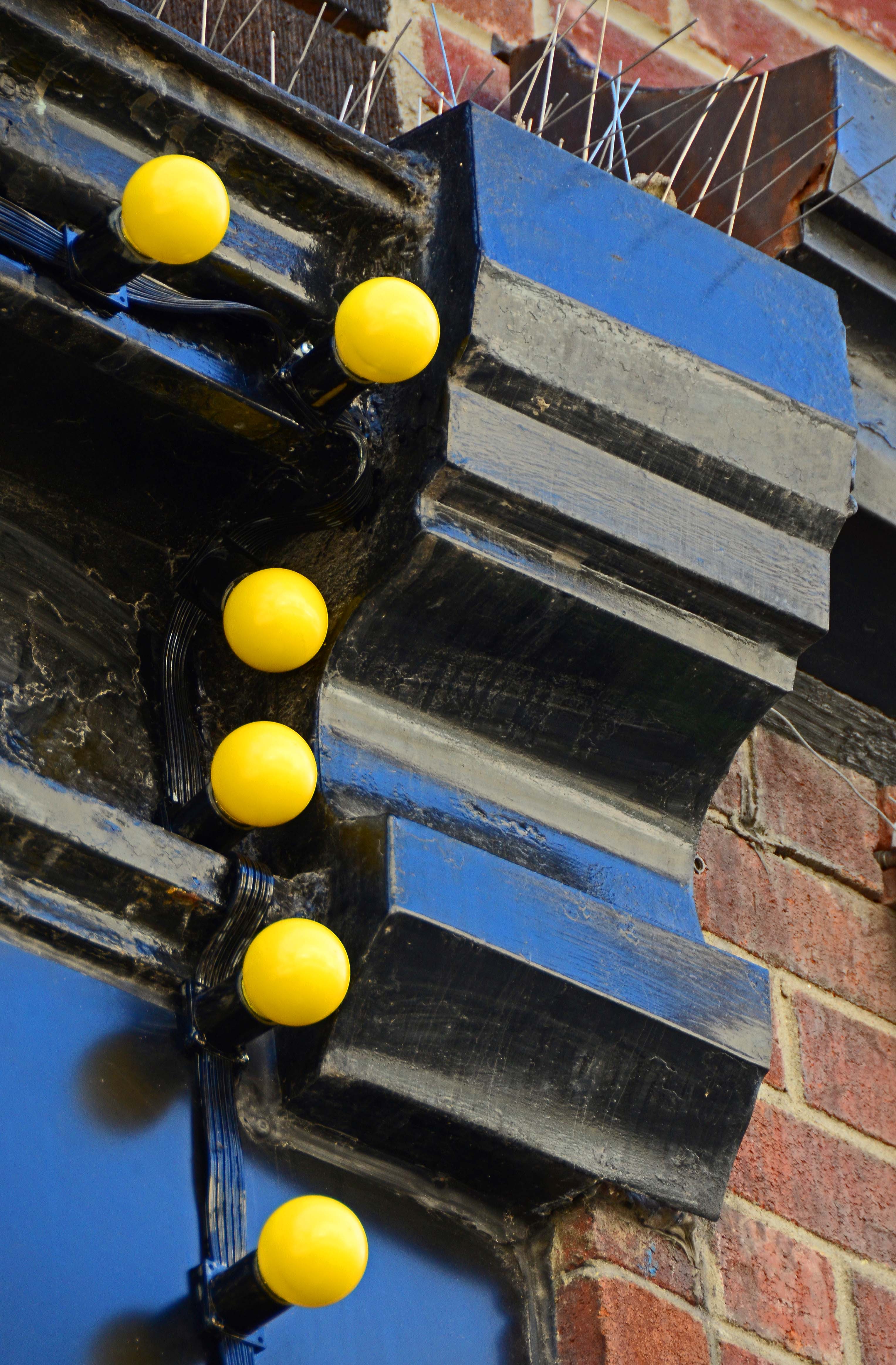
Pediments, bas relief sculptures, window moldings, fanciful brickworks, roof fixtures and decorative doors are among the many intricate architectural details that vie for our attention as we walk down a street and absorb all that is before us.  Here are some pics of such adornments from a recent trip to Montreal.

Manhole Covers of Quebec City

aDSC_7943

Quebec Month / Installment 13

Underfoot and mostly unnoticed as we trek to our destinations, manhole covers rest snugly in their circular grade-level perches all around Quebec City.  With their spare adornment, they are immovable except with great effort, securely guarding their underground treasures of utility.

Old Farm Tractor Along Charlevoix / St. Lawrence Shore

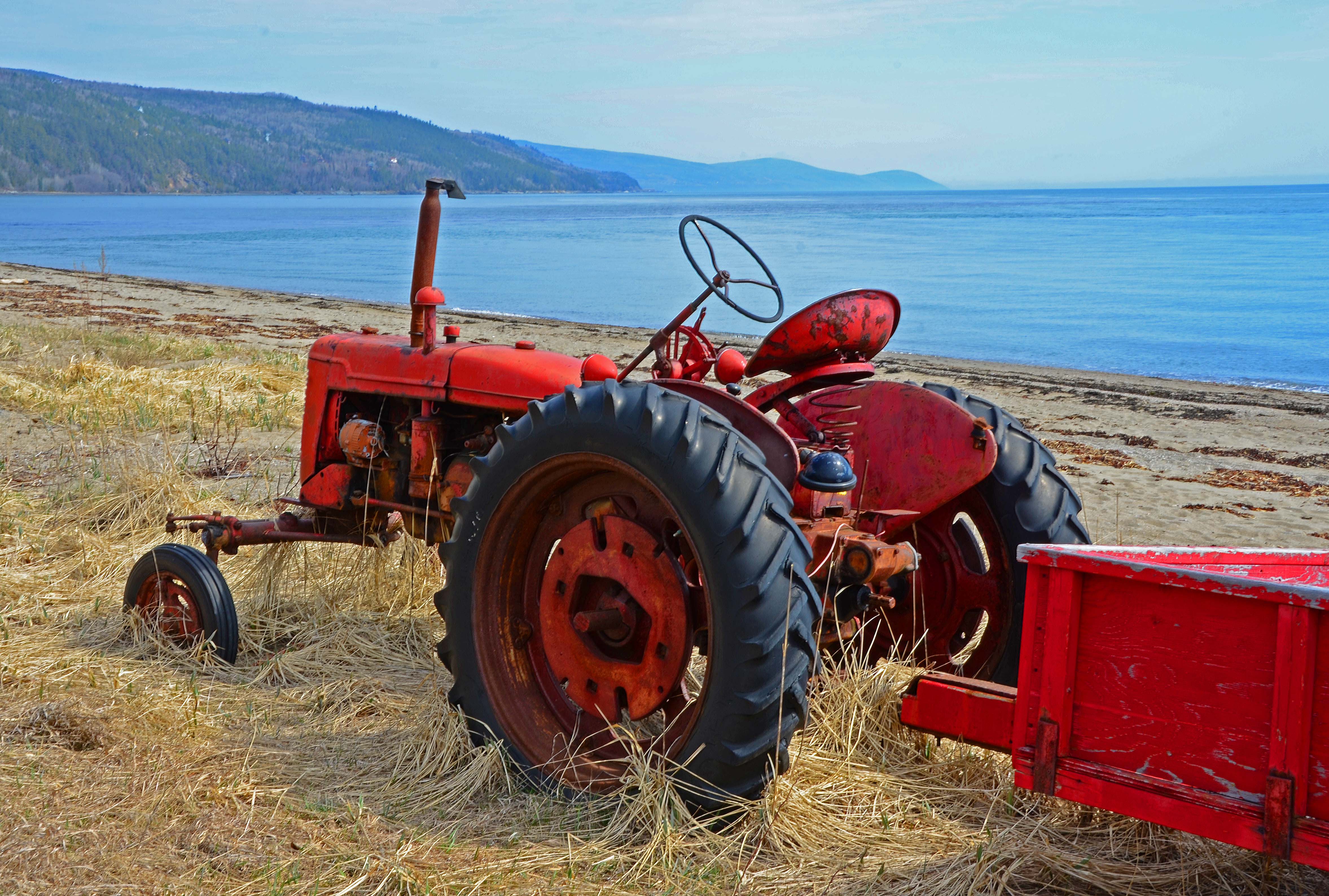
addDSC_7808_edited-1

Quebec Month / Installment 12

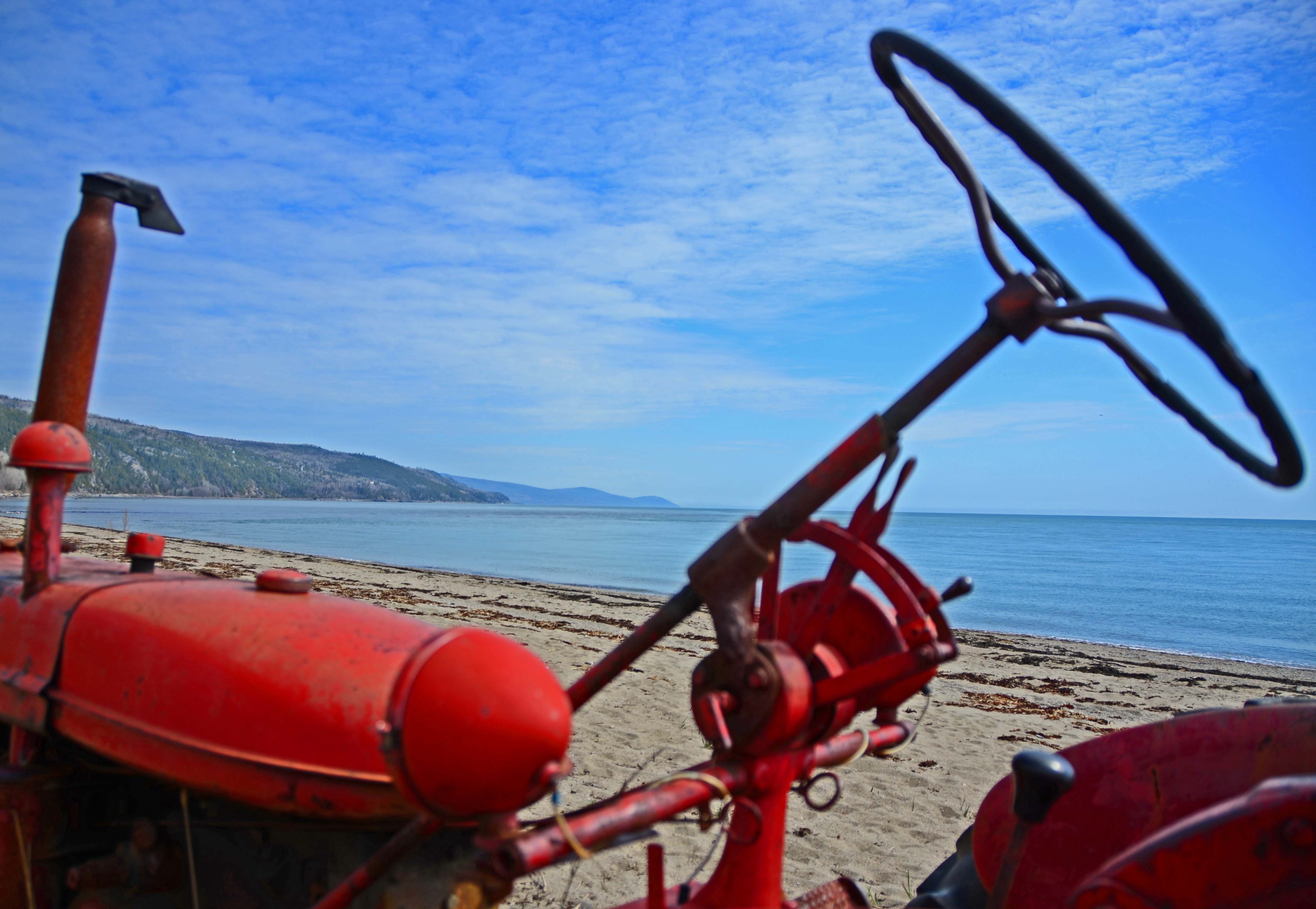
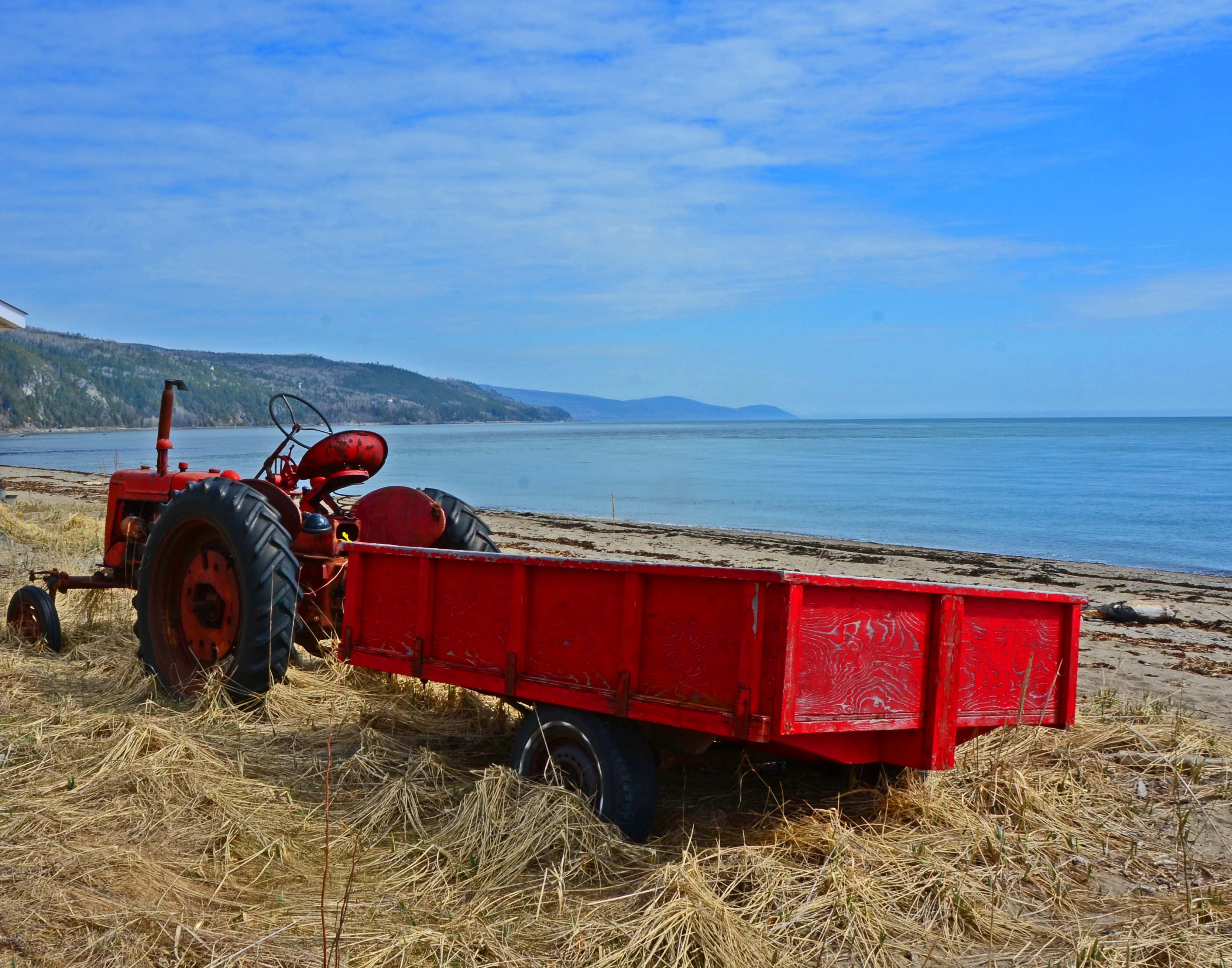
Driving a couple of hours north of Quebec City in the beautiful Charlevoix region, we came across this bright red tractor along a scenic stretch of the St. Lawrence coast. Farm tractors are rarely situated this close to a shore line, so its rustic charm beckoned the camera.

addDSC_7791_edited-1

addDSC_7796_edited-1

Wall Art a la Montreal

aDSC_7491

Jazz Saints

Quebec Month / Installment 11

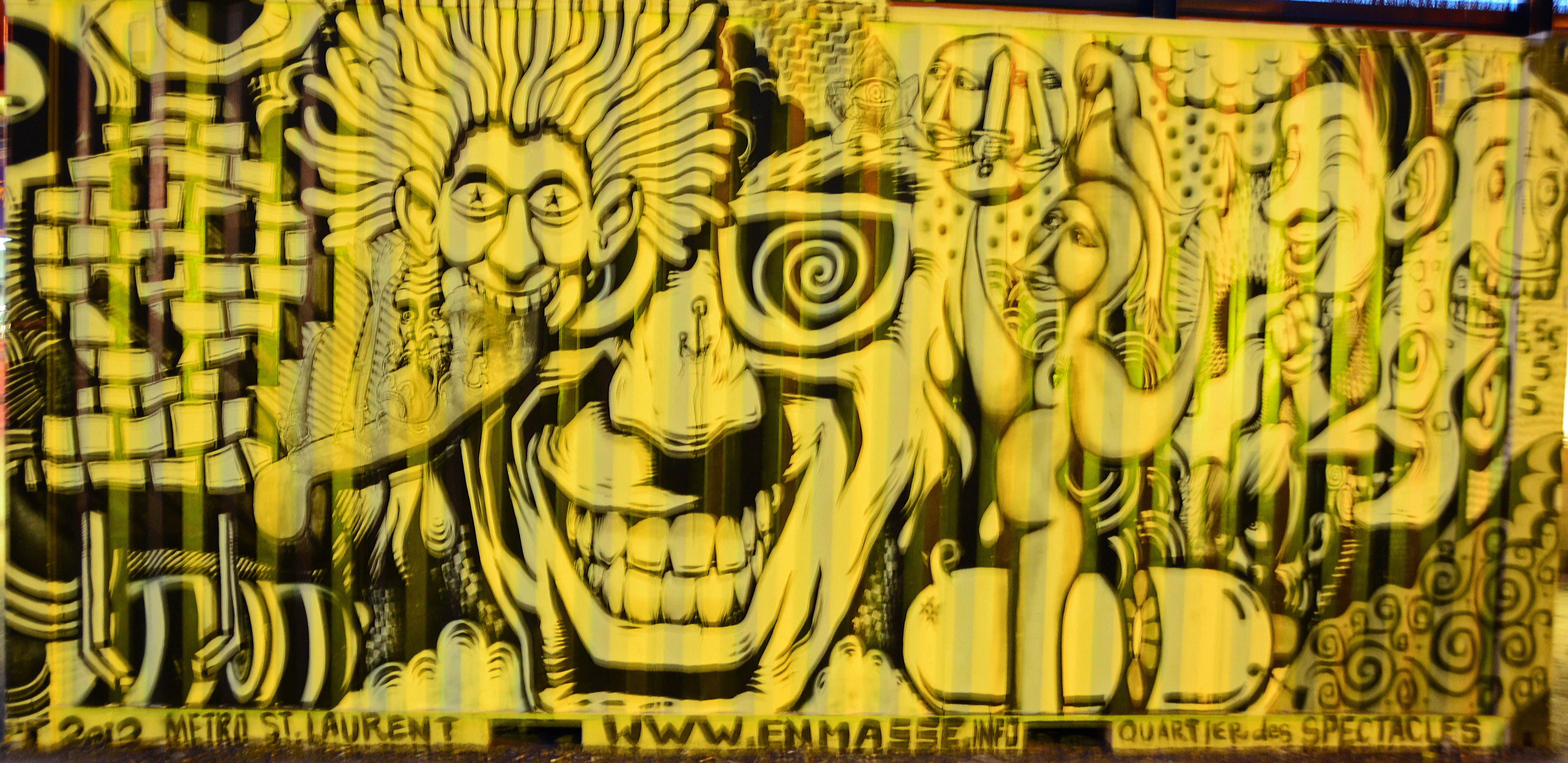
Not long ago I posted some pics I took of graffiti in Montreal.  Painted wall art is another form of creative expression that is different from graffiti, but sometimes in only subtle ways.  I’m sure someone has worked out the technical distinction between such things, but however these art forms are categorized, Montreal is a rich showcase for a great deal of both (as well as other street art variants — such as kinetic art, elaborate light shows and light sculptures — that I could not readily capture).

aDSC_7653

Painted Cargo Container

Montreal Timelapse

Quebec Month / Installment 9

This video by Takki Eddine Alimat, an independent Montreal filmmaker, nicely captures the intense energy and colors of his hometown.

Random Montreal: Bright Lights

Quebec Month / Installment 8

Multicolored Marquee

Multicolored Marquee, Rue Sainte Catherine

_____

Theater Lights

Theater Lights, Rue Sainte Catherine


Cardboard Totem Pole Wall Art

aDSC_7358

Quebec Month / Installment 7

I have some other Montreal wall art still to share, but, at the moment, I’ve singled out the above piece because of the unusual medium — painted cardboard — used by its creator.  By the time I came upon this contemporary take on a traditional Pacific Northwest totem pole, the work had seen better days but it still held up quite well.  The brightly colored eagle, beaver and cow (a modern update for a totem pole!)  are set off nicely by the intricate carvings in the corrugated cardboard.

Montreal as Muse for Jeremy Price

Jeremy-Price----St.-Henri

Jeremy Price, “St. Henri”

Quebec Month / Installment 6

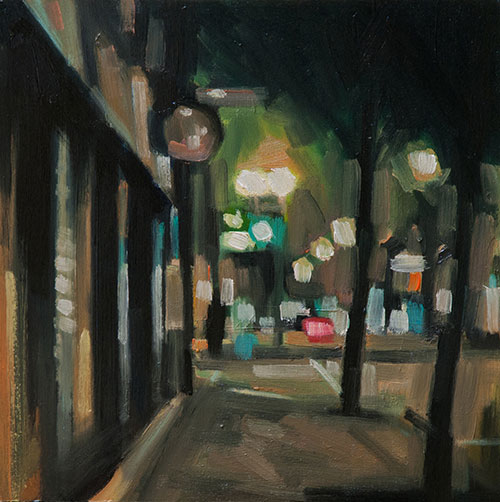
Although Jeremy Price is originally from Ontario and studied art in both Ontario and British Columbia, much of his body of work is a modern impressionist take on Montreal, a city where he now lives and which serves as his muse.  With precise painterly brush strokes, he nicely captures the character of that busy city and explores the every day goings on within its many quaint neighborhoods.   “St. Henri” (above) splashes dappled city lights across its canvas, while “Rink Maintenance” (below) depicts an annual rite that is quintessentially Canadian.

Jeremy-Price----Rink-Maintenance

Jeremy Price, “Rink Maintenance”

More of Price’s terrific takes on Montreal can be seen at his cjeremyprice website here and his WordPress blog, cjeremyprice.

Montreal’s Vibrant Walls of Graffiti

aDSC_7489

Quebec Month / Installment 5

Wow!  Montreal has a lot of amazingly cool graffiti — and not just the quickly dashed out monochromatic tag variety.  In that city, wielders of spray paint have taken the graffiti form to a more vibrant, artistic level that brightens rather than blightens.  Here are some of these artfully done works that caught my eye as I recently roamed the city’s streets.

aDSC_7506

[Click on Image to Enlarge]

Pastoral Splendor On the Ile d’Orleans

addDSC_8152_edited-1

Rustic Barn with Red Doors, Ile d’Orleans

Quebec Month / Installment 4

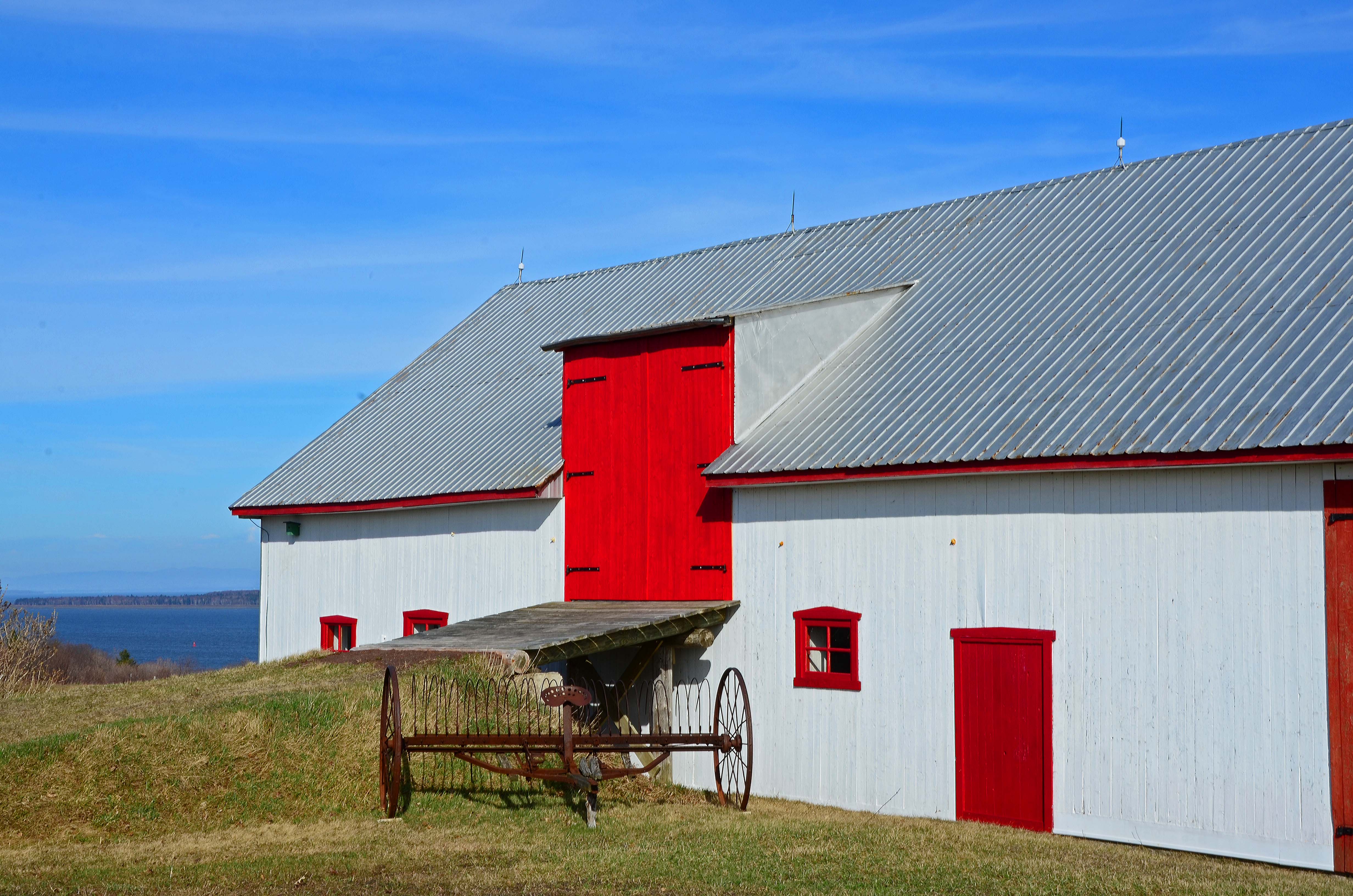
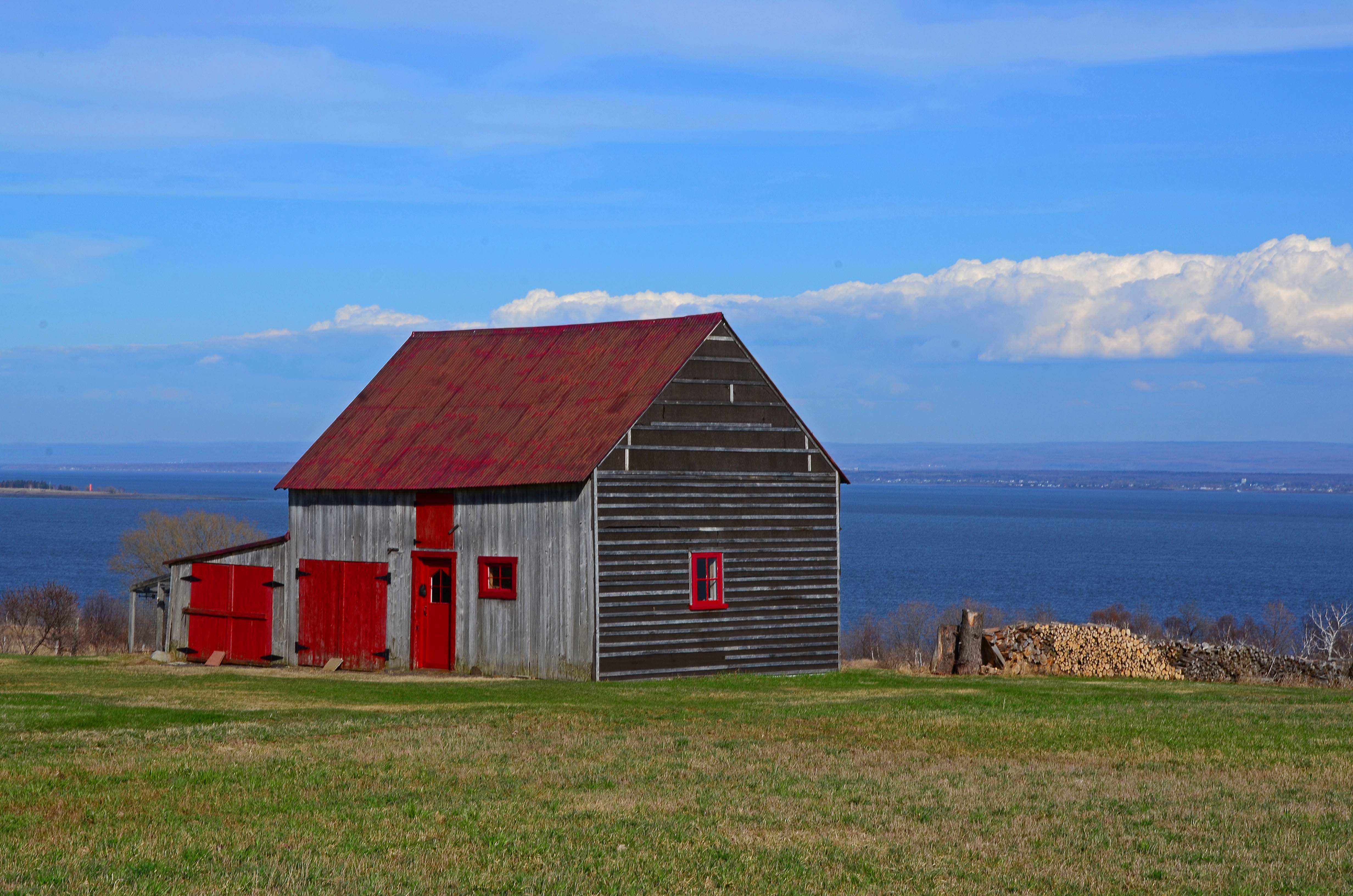
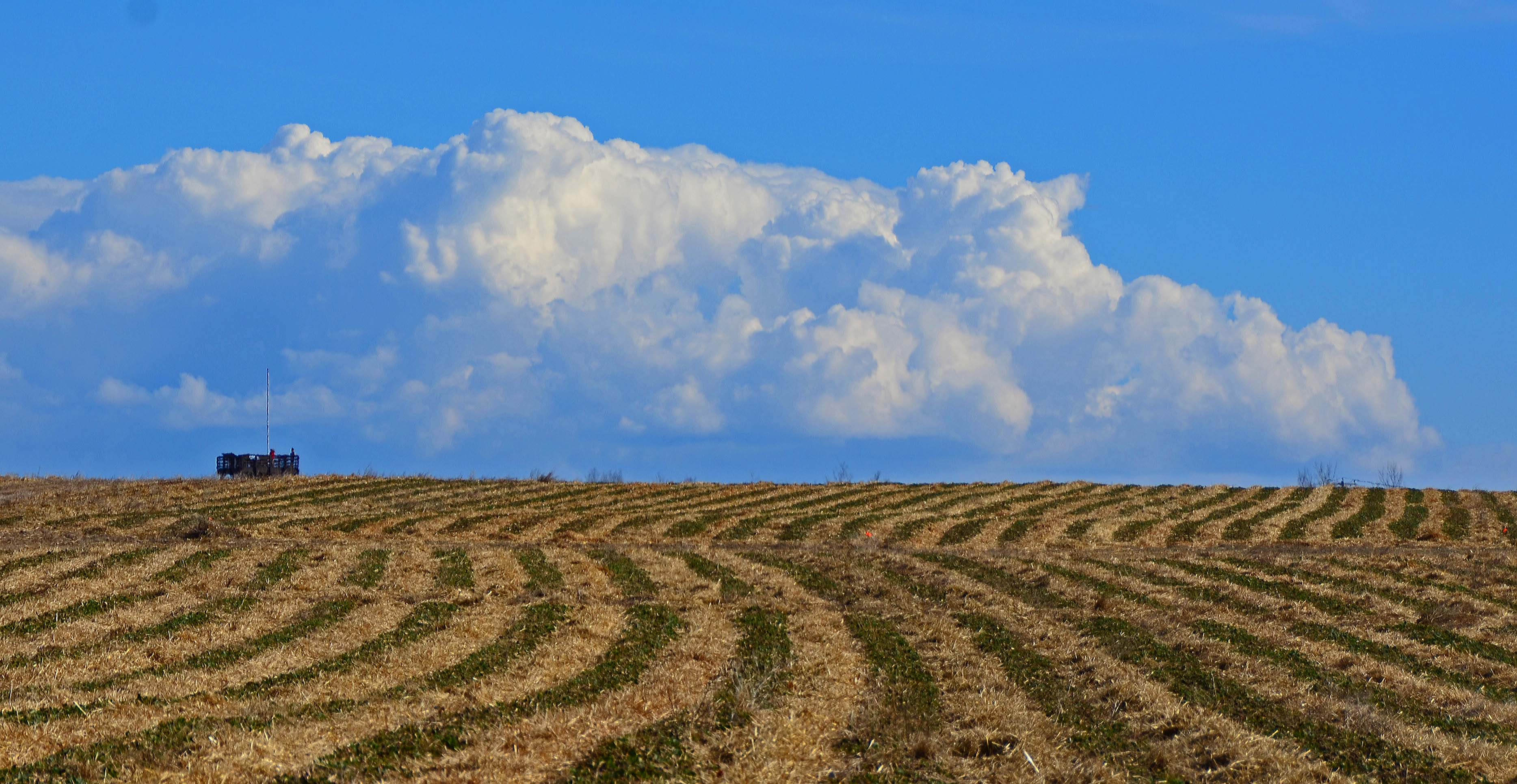
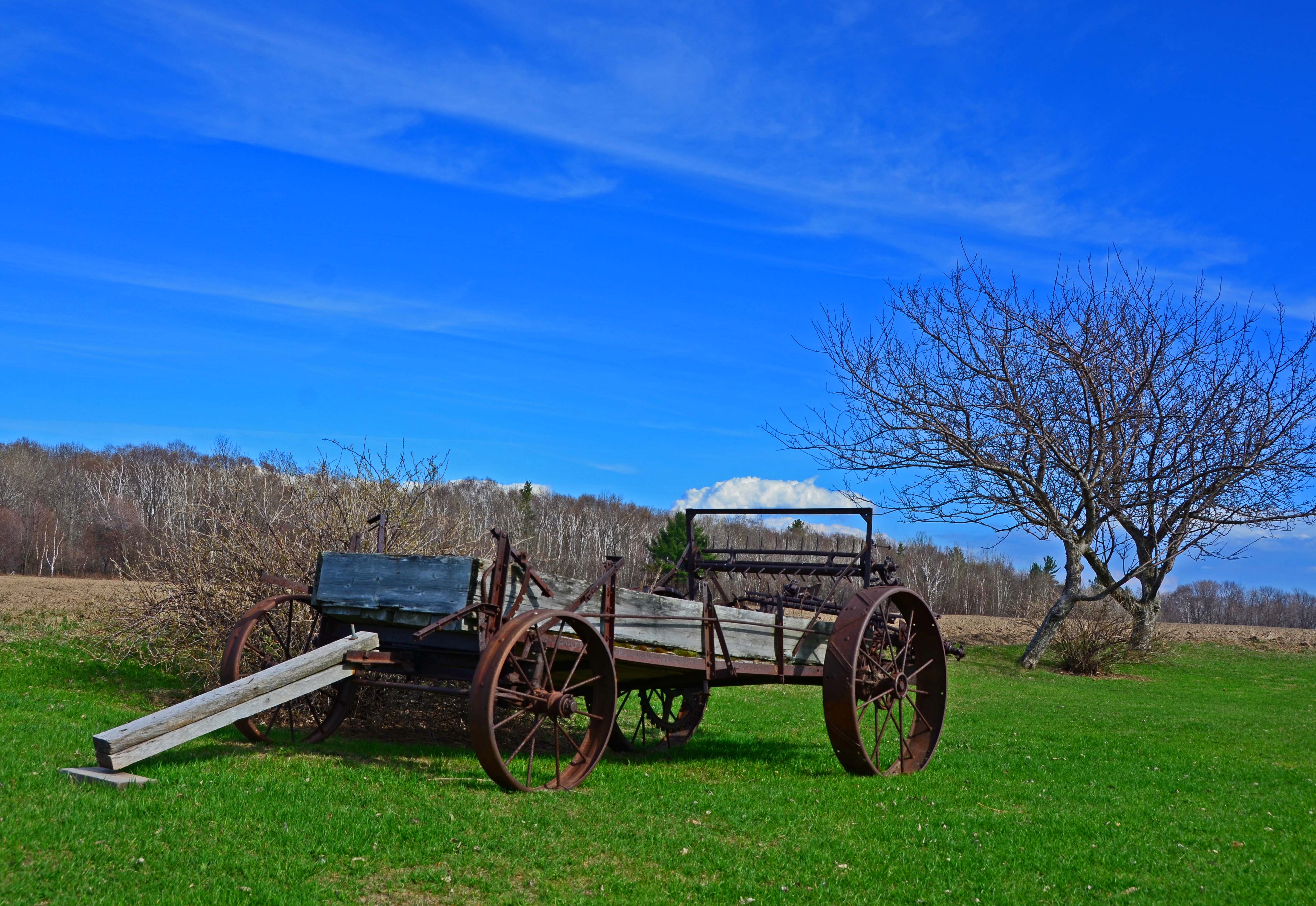
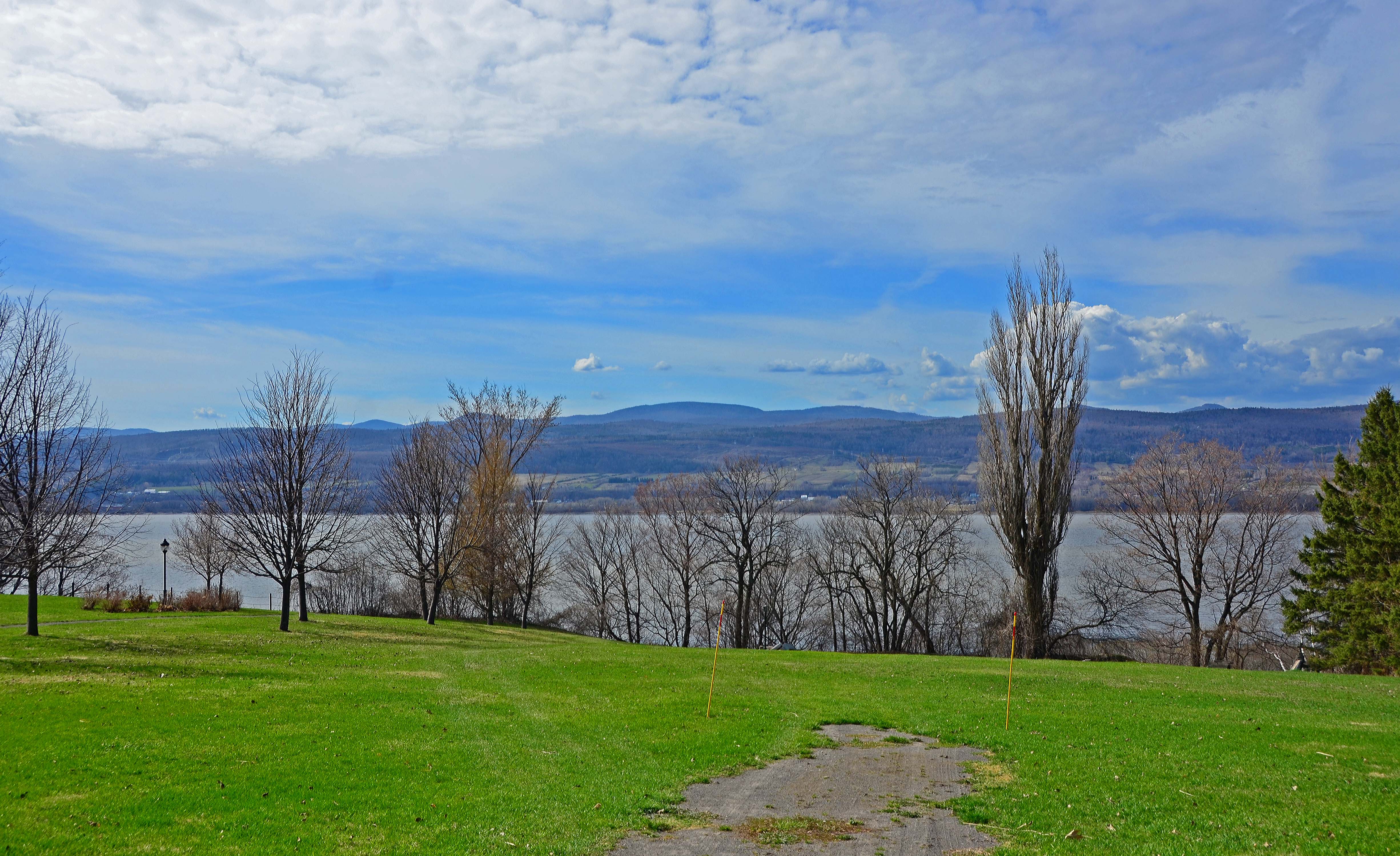
Situated just a few miles north of Quebec City is the Ile d’Orleans, a smallish island of about 20 miles in length (about the size of N.Y.’s Manhattan Island) and one of the earliest areas settled in Quebec.  Its coast-hugging main road is filled with postcard-perfect pastoral vistas bordered by wide expanses of the St. Lawrence and distant rolling mountains.

addDSC_8124_edited-1

Small Barn Overlooking St. Lawrence River, Ile de Orleans

addDSC_8102_edited-1

Early Spring Farm Field, Ile d’Orleans

addDSC_8073_edited-1

Old Farm Wagon, Ile d’Orleans

addDSC_8046_edited-1

Green Space On the St. Lawrence, Ile d’Orleans

addDSC_8037_edited-1

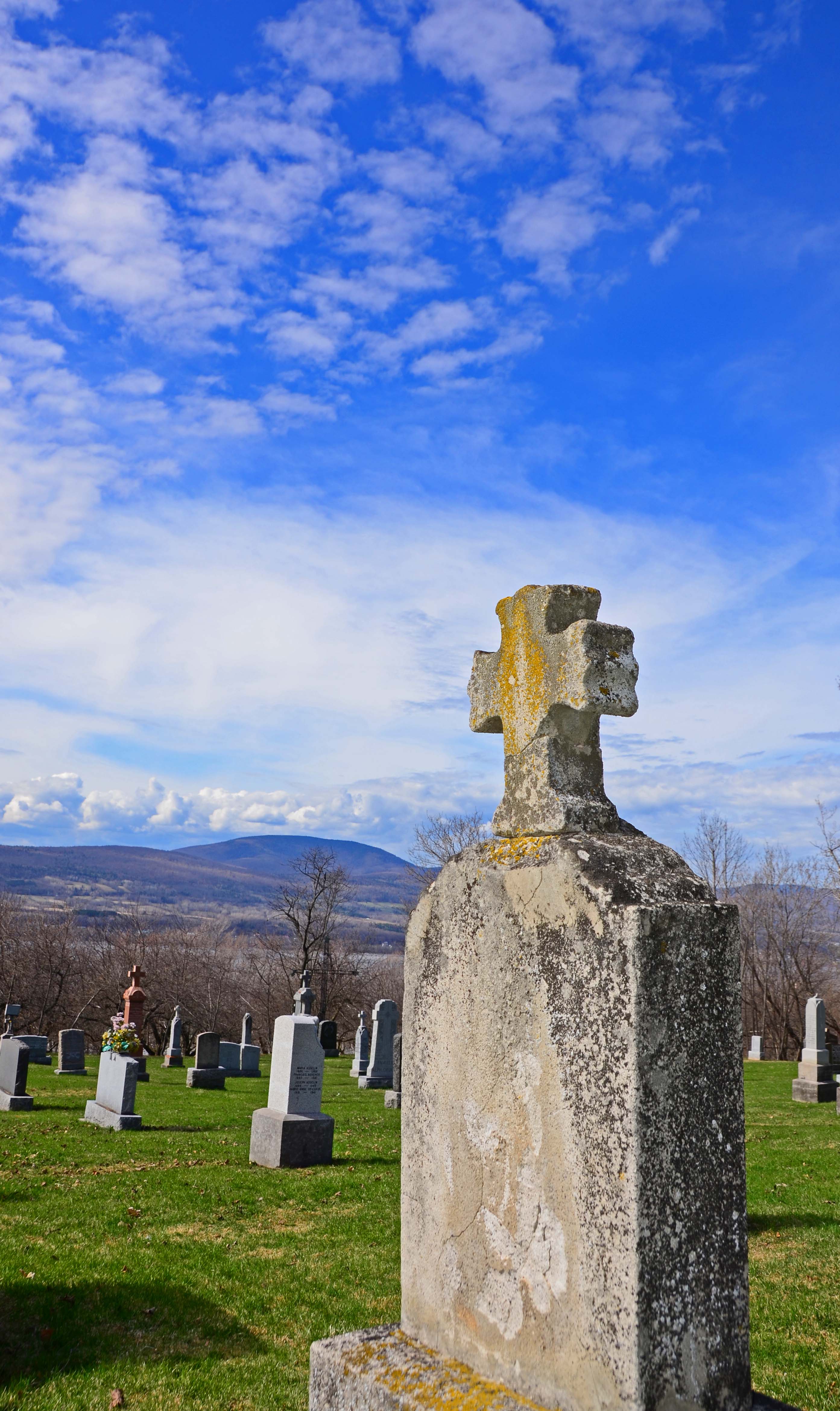
Tombstone with Cross, Sainte Famille Church, Ile d’Orleans

addDSC_8163_edited-1

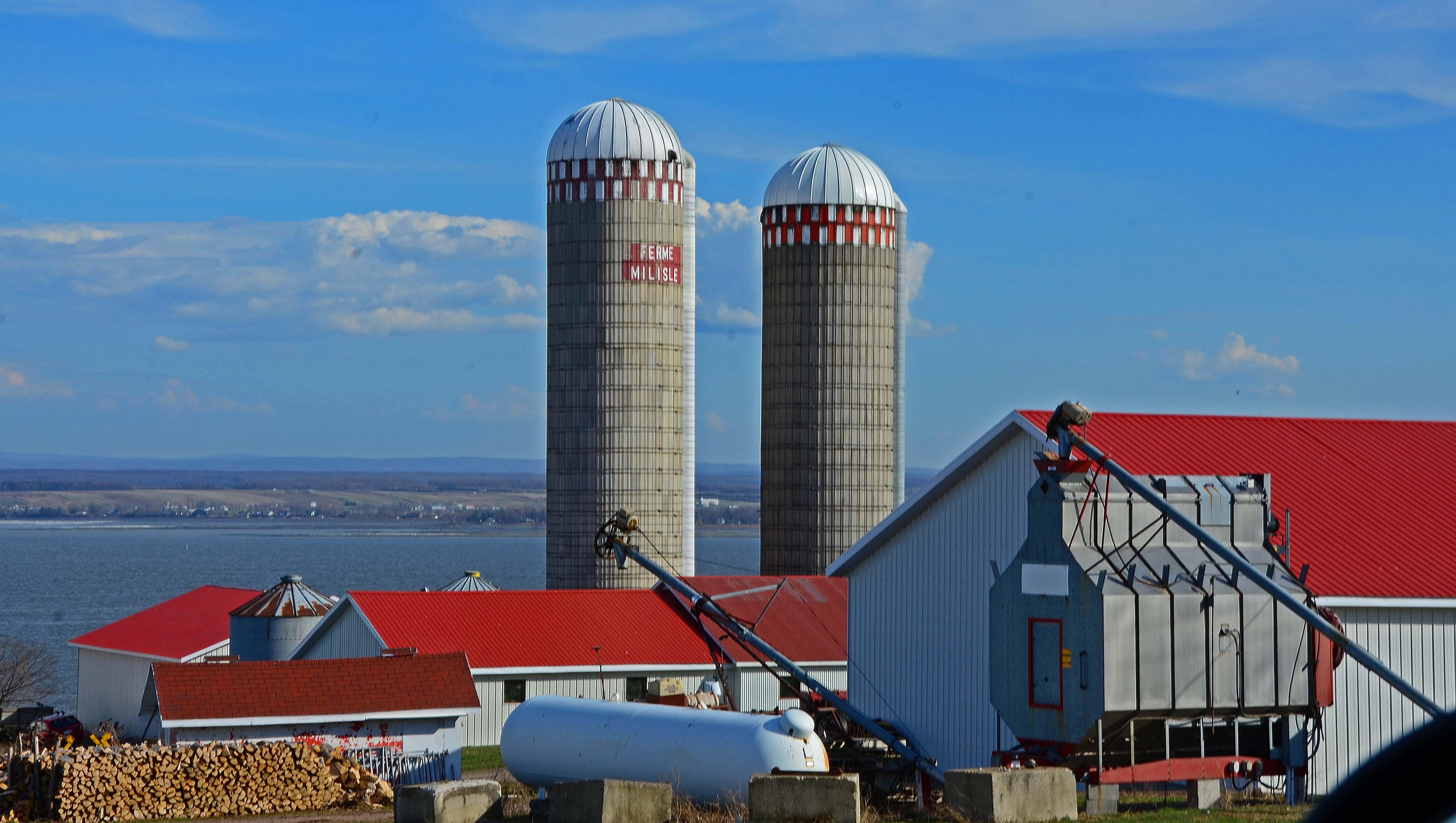
Farm and Silos, Ile d’Orleans

addDSC_8160_edited-1

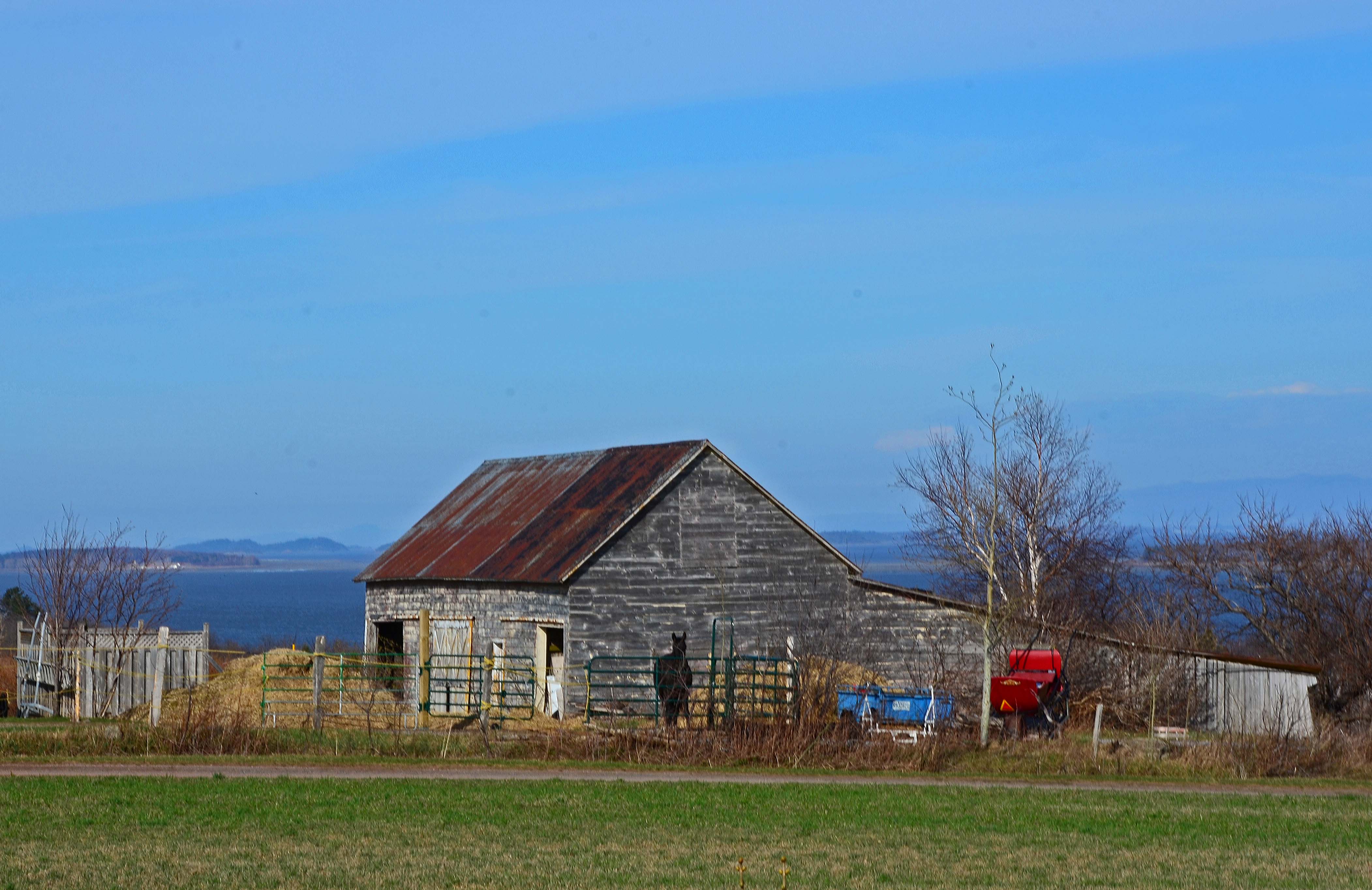
Old Barn with Rusted Roof, Ile d’Orleans

addDSC_8033_edited-1

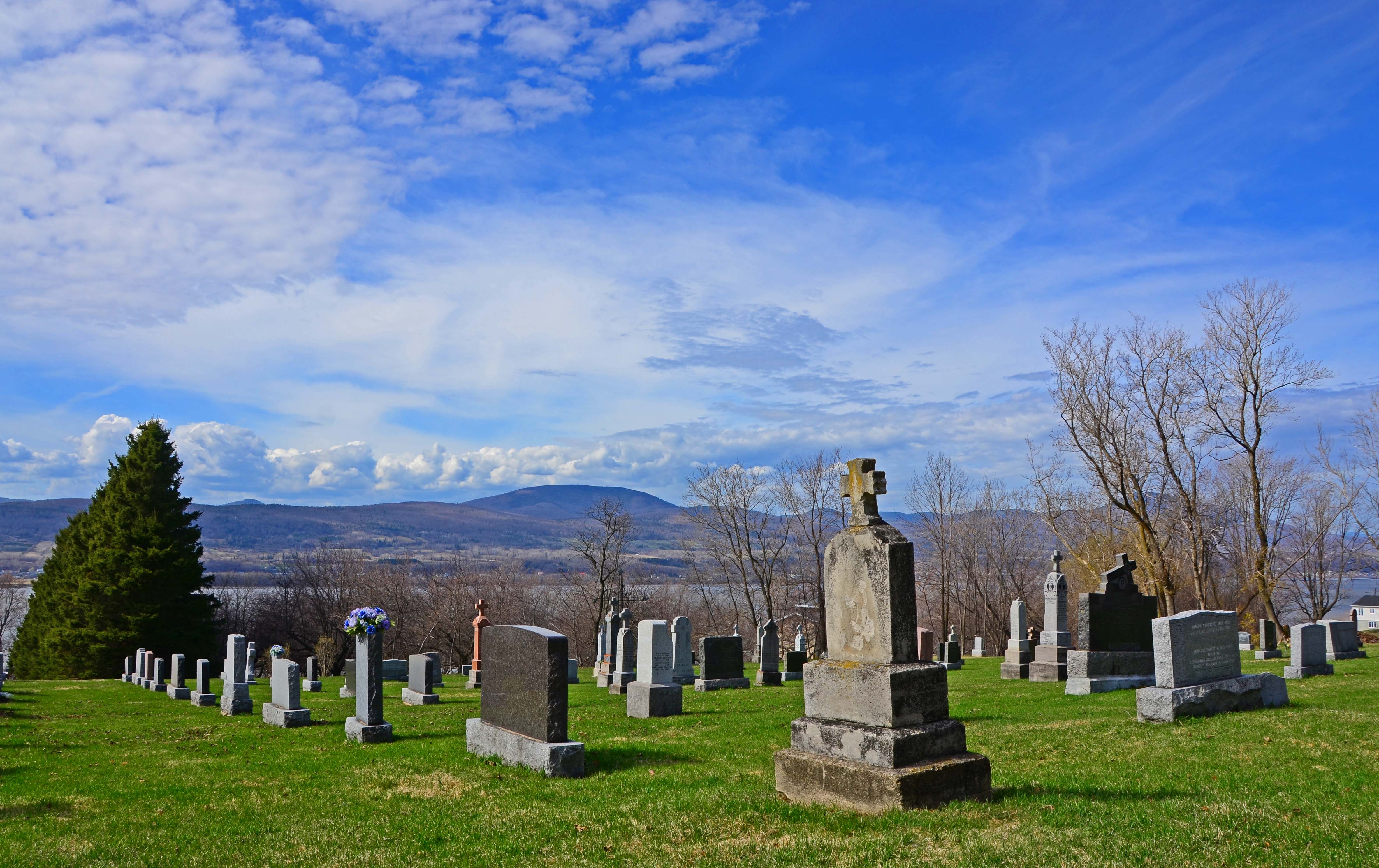
Cemetery, Sainte Famille Church, Ile d’Orleans

addDSC_8041_edited-1

Sainte Famille Church, Ile d’Orleans