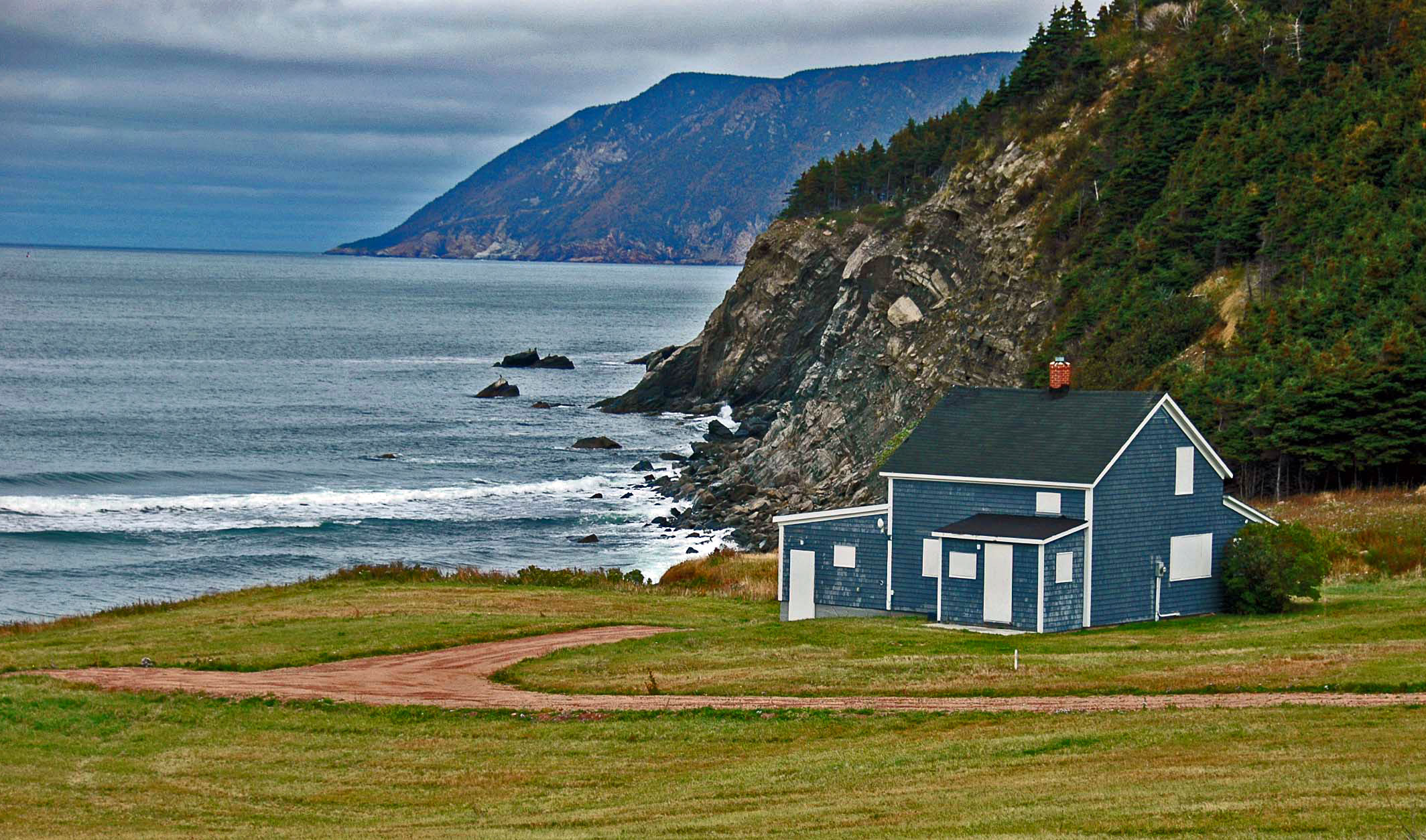
“If you will stay close to nature, to its simplicity, to the small things hardly noticeable, those things can unexpectedly become great and immeasurable.”
~ Rainer Maria Rilke
“If you will stay close to nature, to its simplicity, to the small things hardly noticeable, those things can unexpectedly become great and immeasurable.”
~ Rainer Maria Rilke
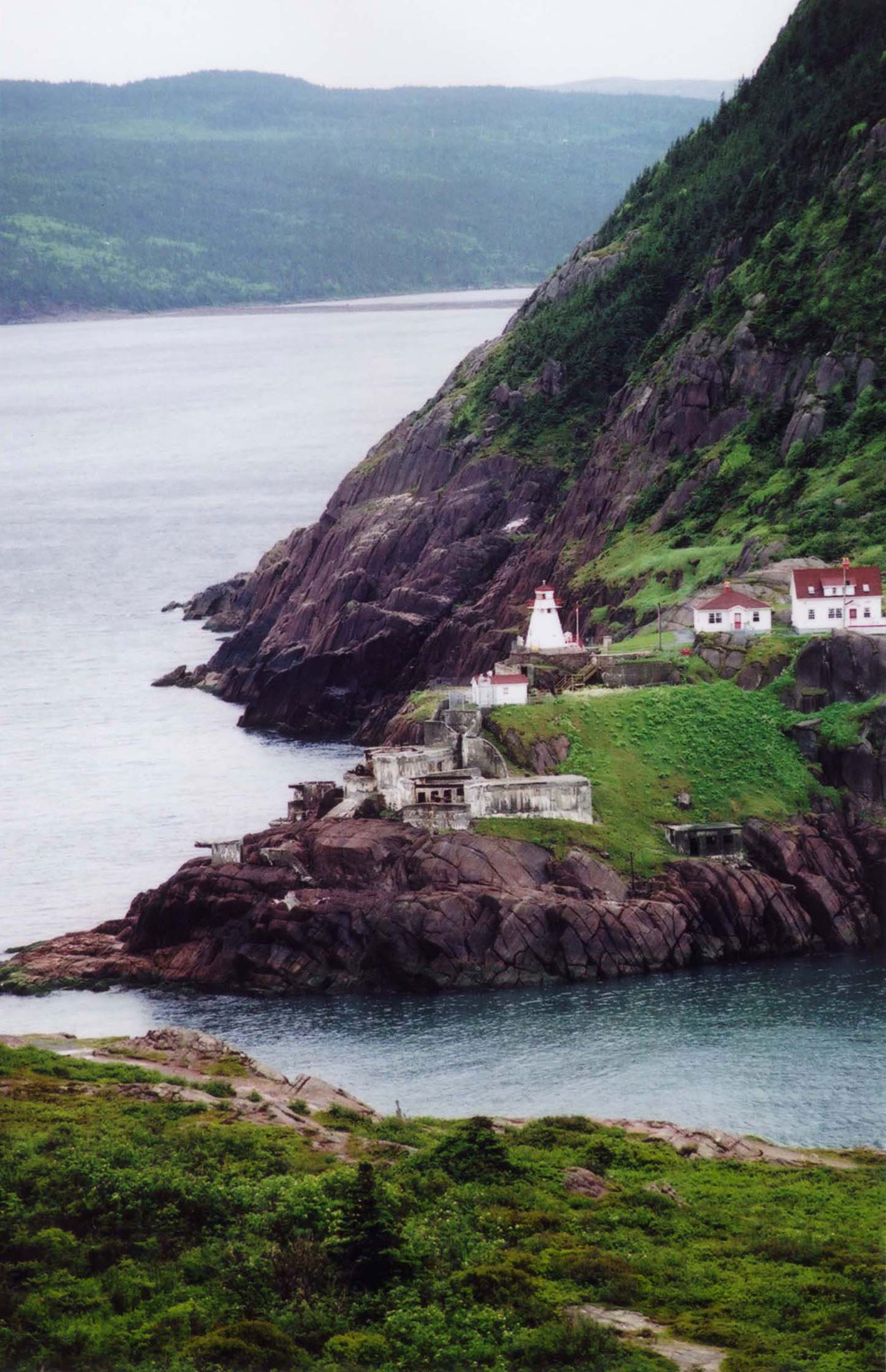
“Everybody needs beauty as well as bread, places to play in and pray in,
where nature may heal and give strength to body and soul.”
~ John Muir
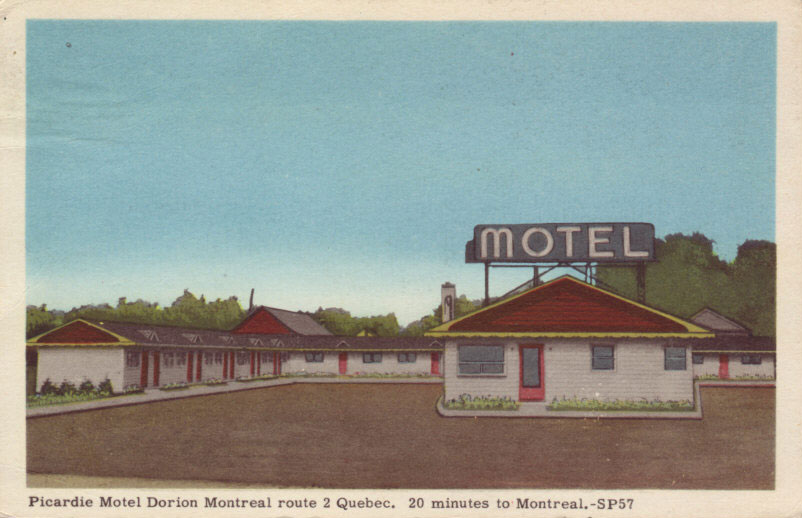
Lovely watercolor effect, simple signage and lines, very retro!
___
From the 1920s to the early 1960s, the automobile led the way to leisurely road trips and the chance for a quick getaway down newly paved highways across Canada and the U.S. The cozy roadside motel filled the need for an affordable, convenient place for the weary driver and family to kick back and relax in relative luxury with then modern conveniences (such as showers in each room, radio, TV and Hi-Fi!), as these vintage postcards attest.


These colored photo postcards from the early 1900s highlight the importance of town markets as hubs of community activity. Lots of horses and wagons, ladies in long dresses and men in dark hats and not an automobile in sight.
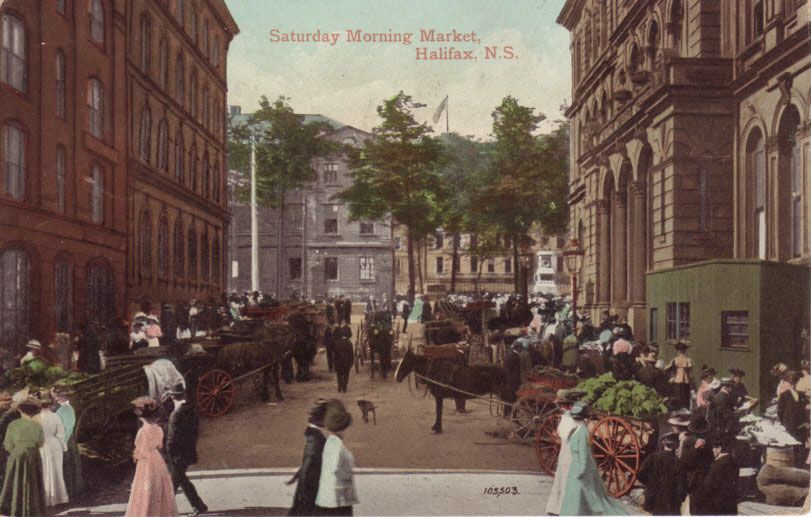
Postmarked October 6, 1910, Reads: “Dear Cousin, I have not received any letters from you, nor from Oscar. Hope you will write to the above address and by the time I return here, there will be many letters. Kind Love, Edgar”
__
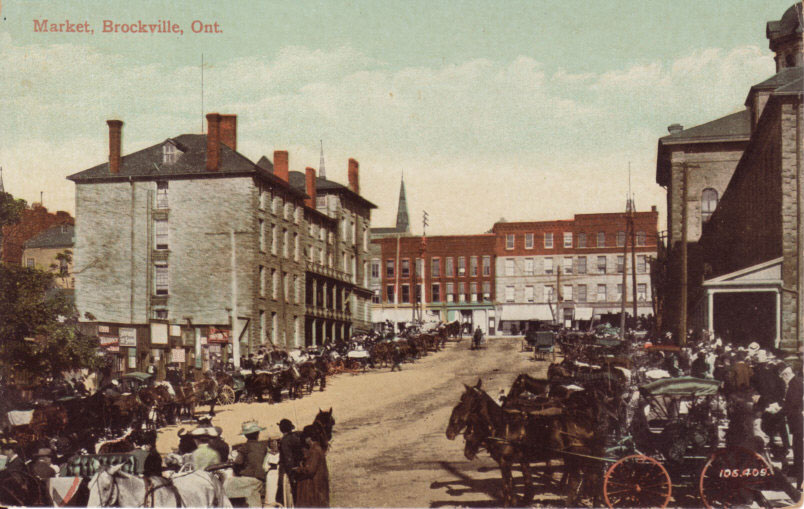
No postmark, but likely around 1910; No note
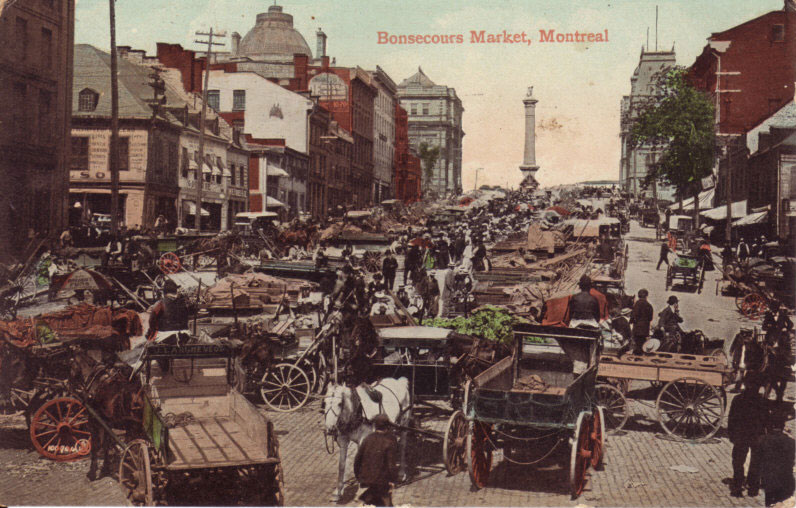
Postmarked September 8, 1909; No note
Similar posts:
♦ Moonlit Views of Yesteryear Canada
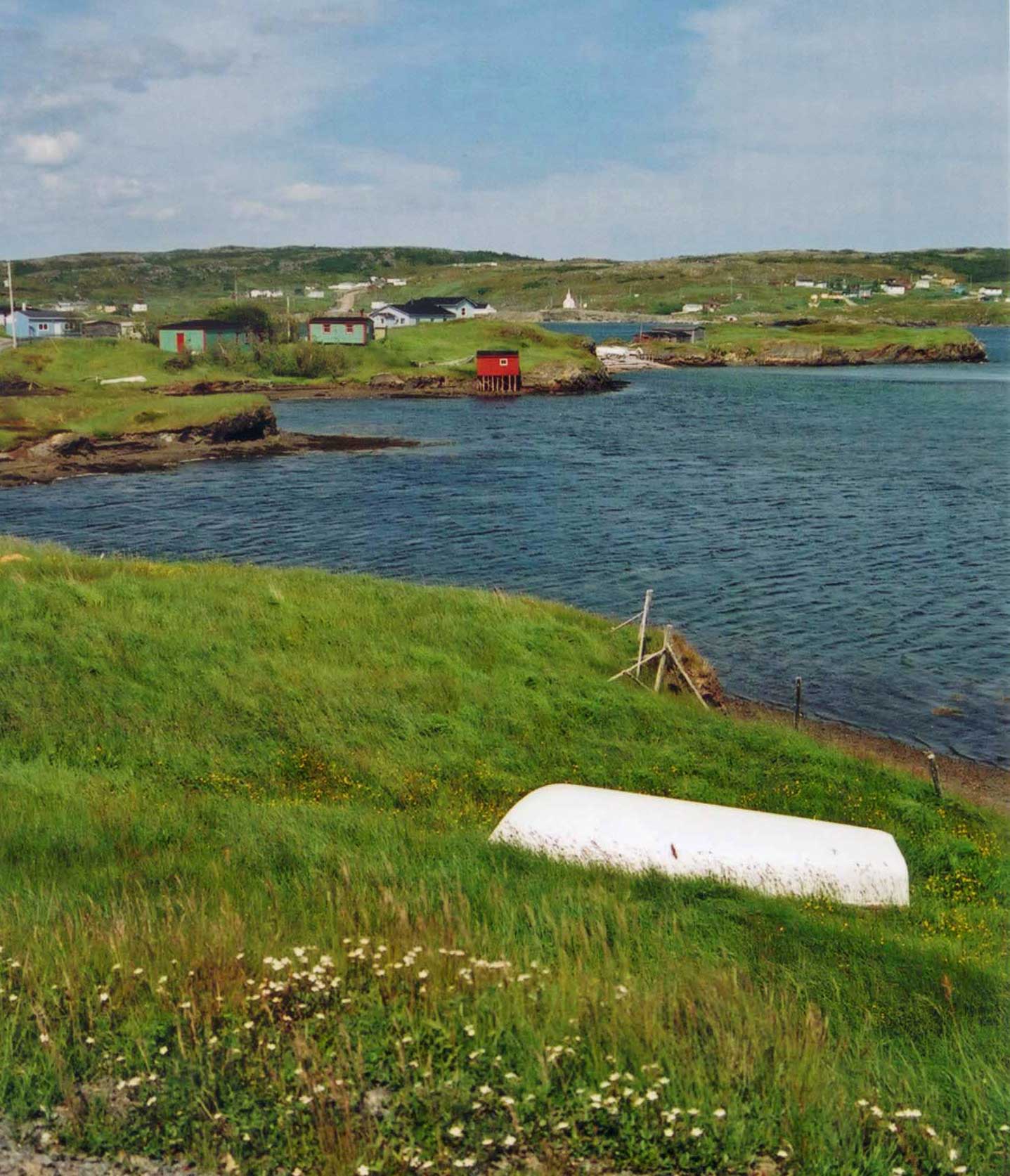
A Quiet Fishing Village, Newfoundland
“This world is but a canvas to our imagination.”
~Henry David Thoreau
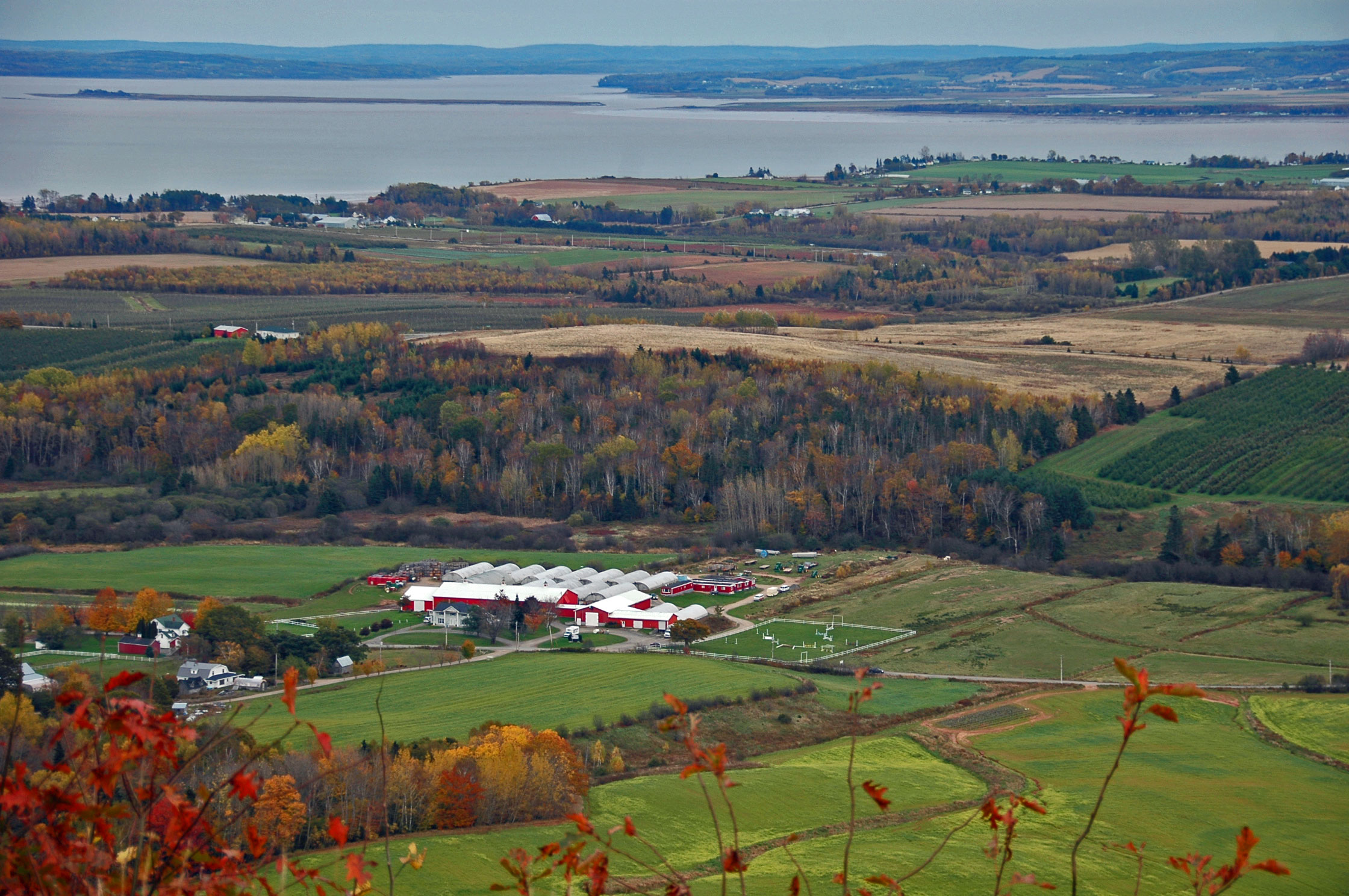
View Across the Annapolis Valley and Minas Basin I, Nova Scotia
___
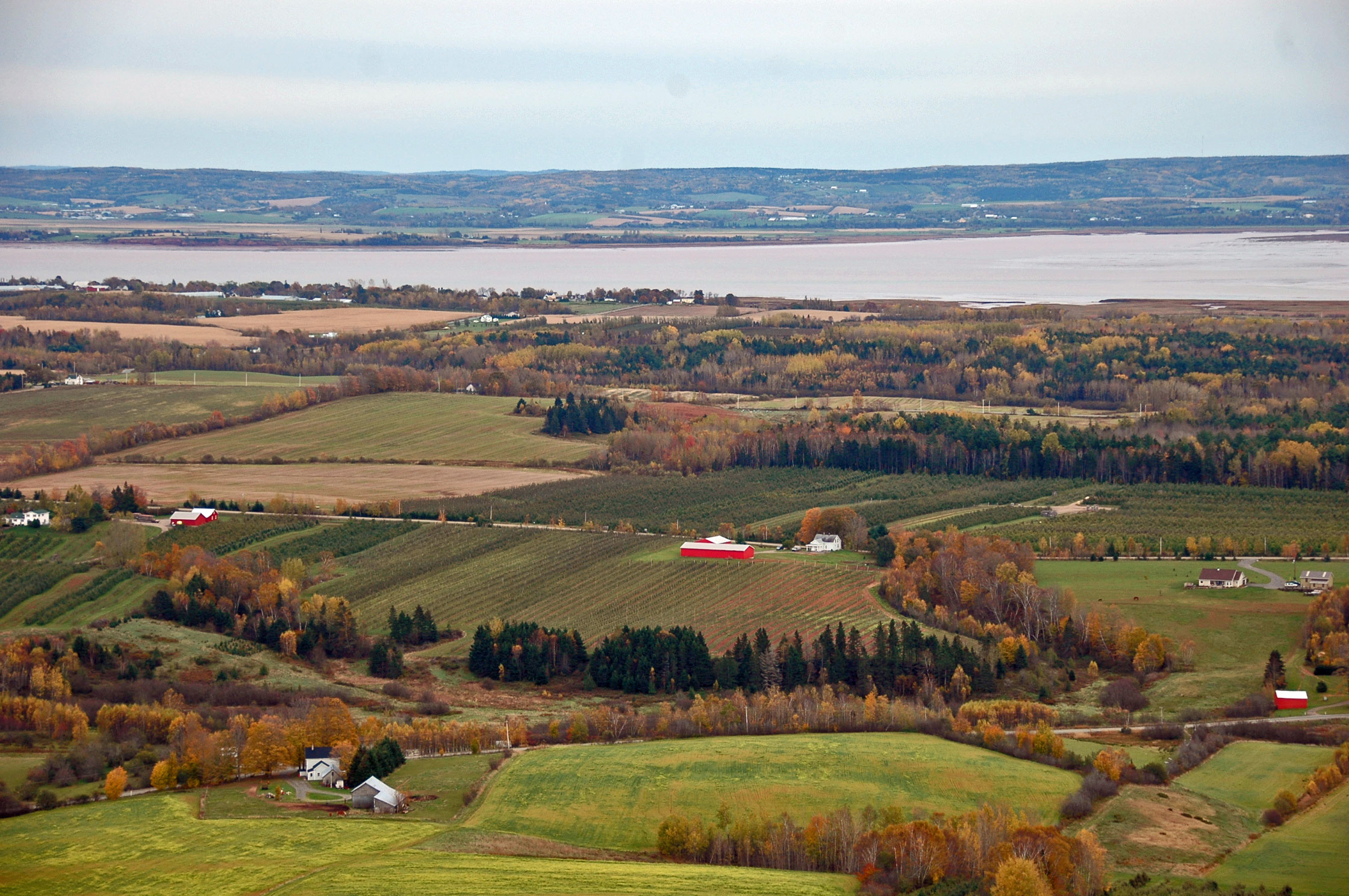
View Across the Annapolis Valley and Minas Basin II, Nova Scotia
“This is what you shall do: Love the earth and sun and the animals . . . .”
~Walt Whitman
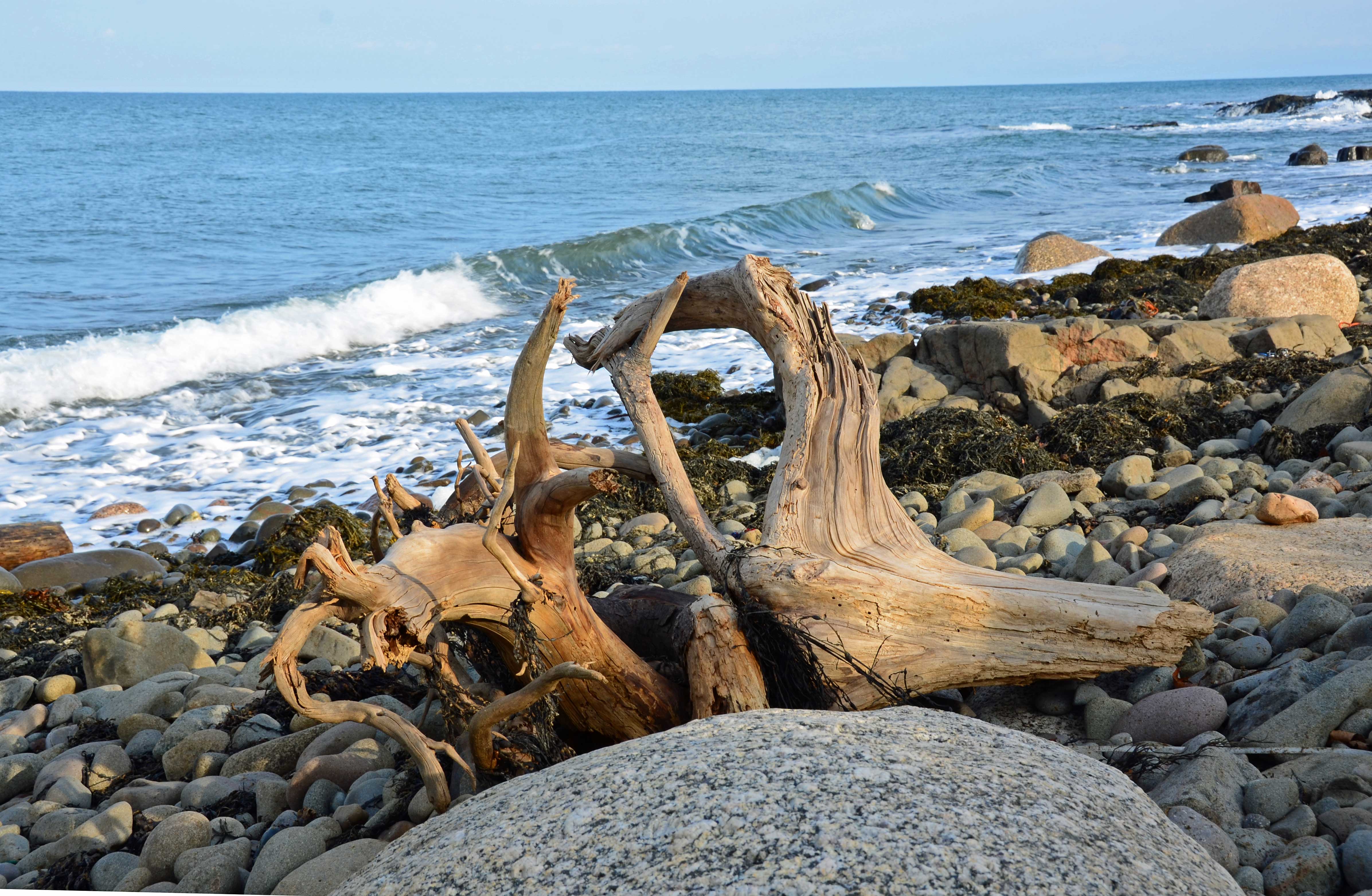
Driftwood, Early Morning, Parker’s Cove, Nova Scotia
* * *
“Live in the sunshine, swim the sea, drink the wild air.”
— Ralph Waldo Emerson
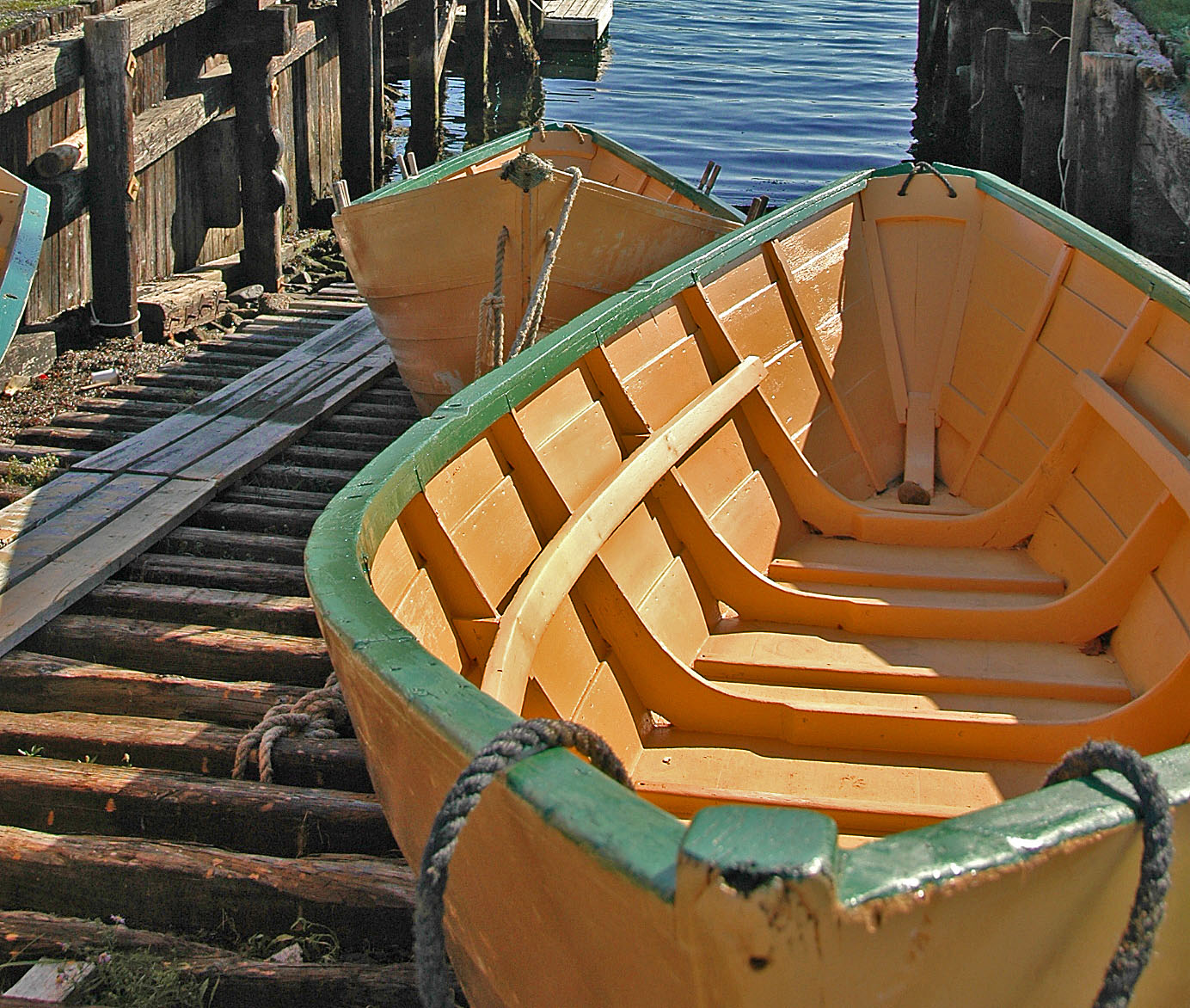
Brightly Colored Colorful Dories, Lunenburg, Nova Scotia
_
Atlantic Canada’s many docks in all shapes and sizes connect its people to the sea for work and recreation. There’s also lots of stuff to see while sitting for a spell alongside these bustling docks, a small sense of which can be gleaned in these photos from several relaxing trips to Nova Scotia.
_
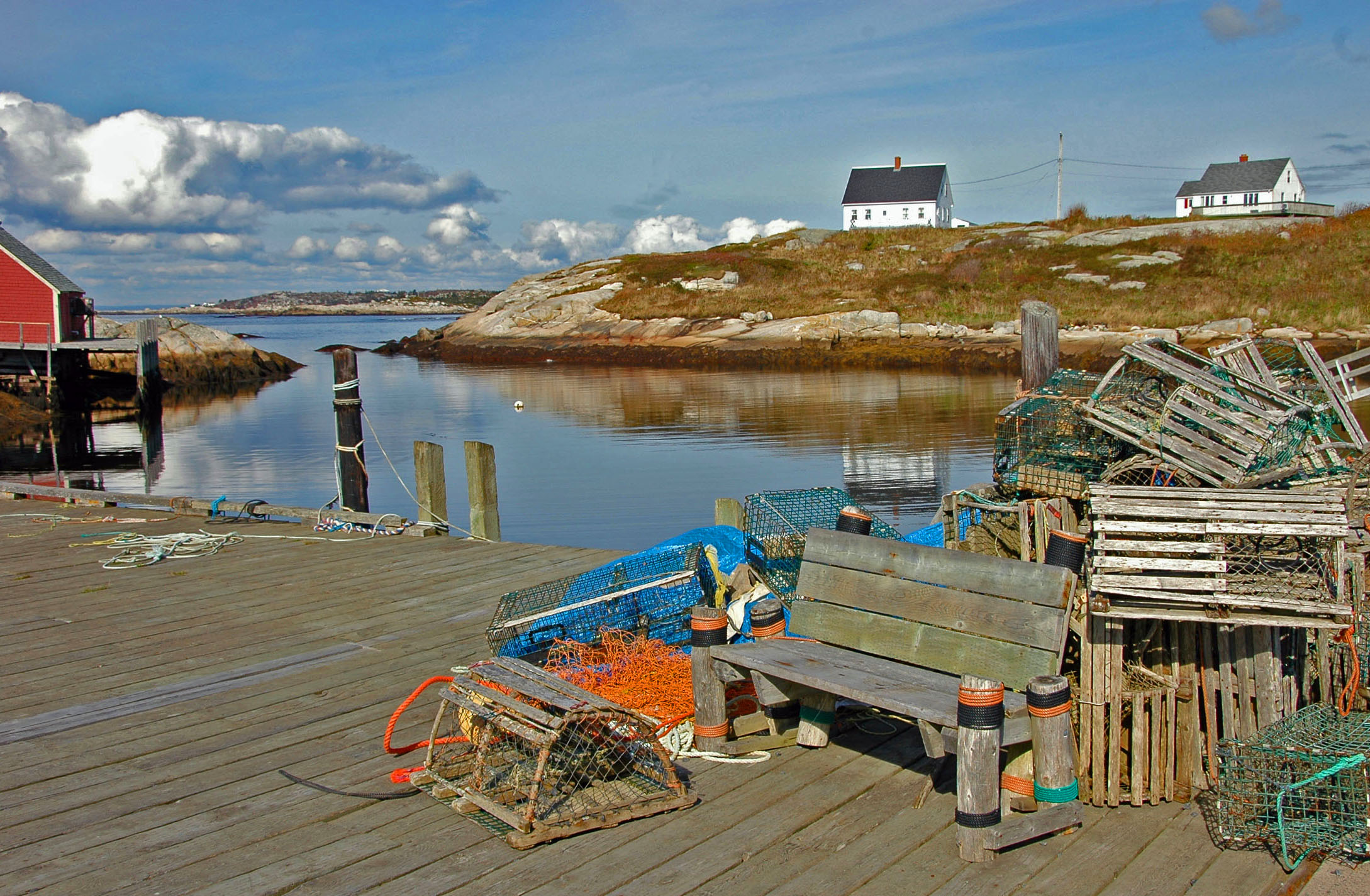
Lobster Crates, Peggy’s Cove, Nova Scotia
_


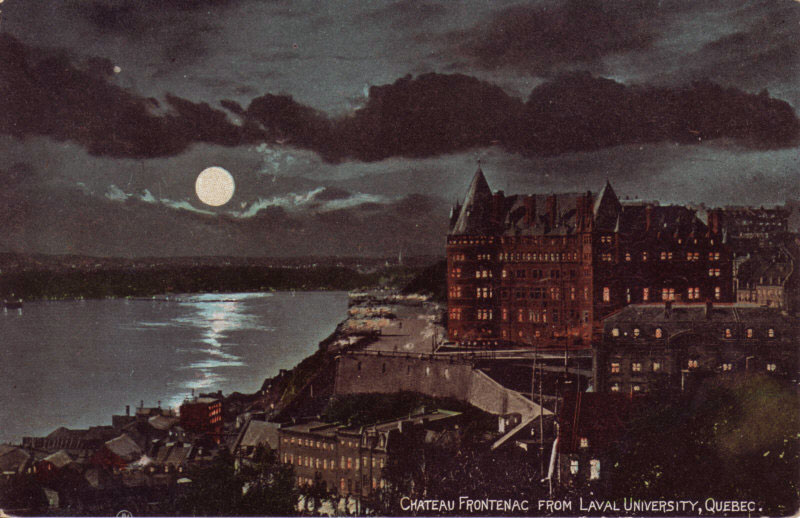
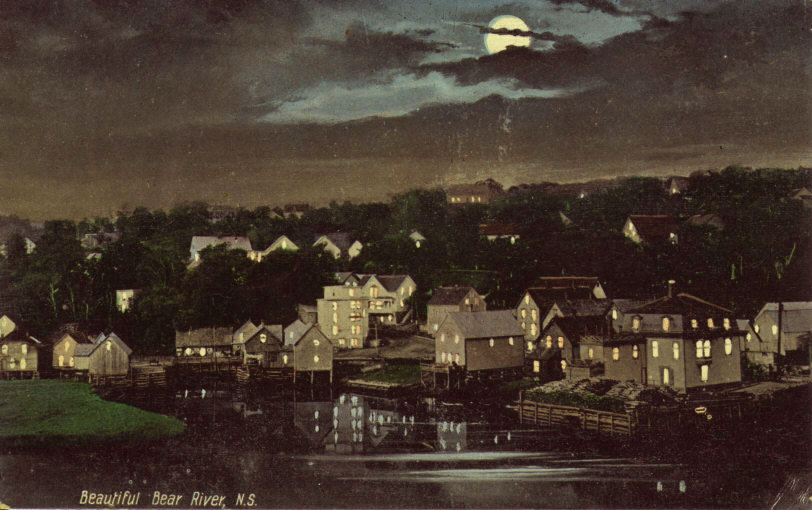
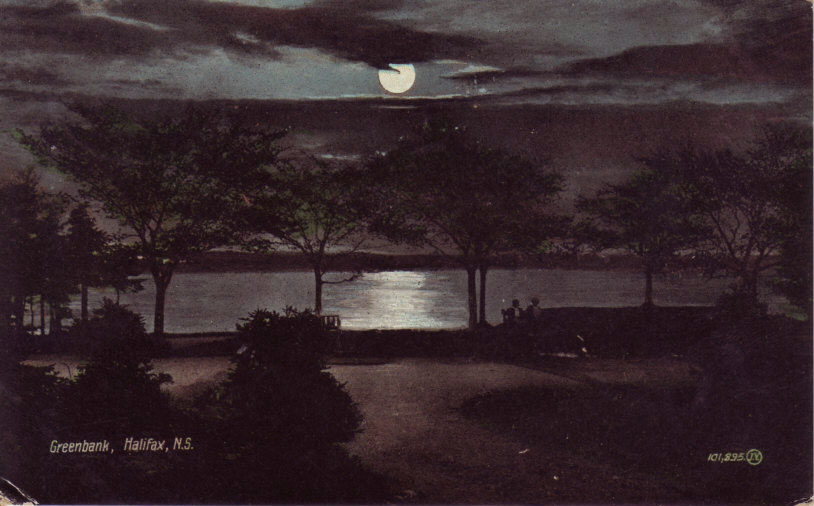
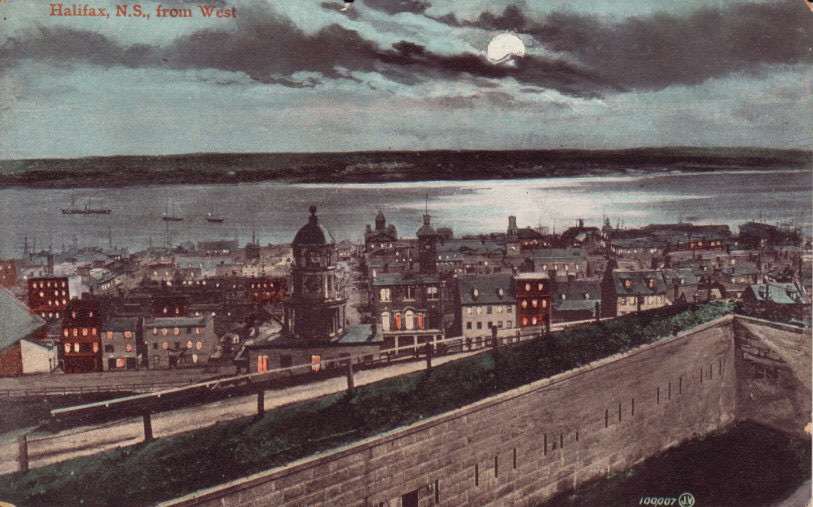
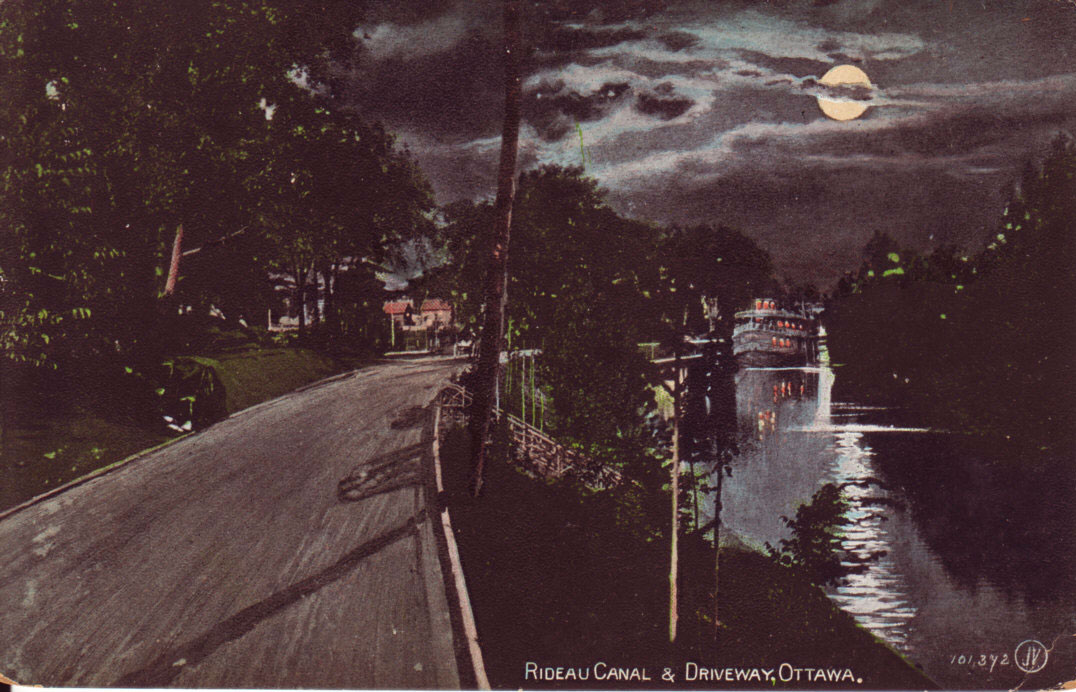
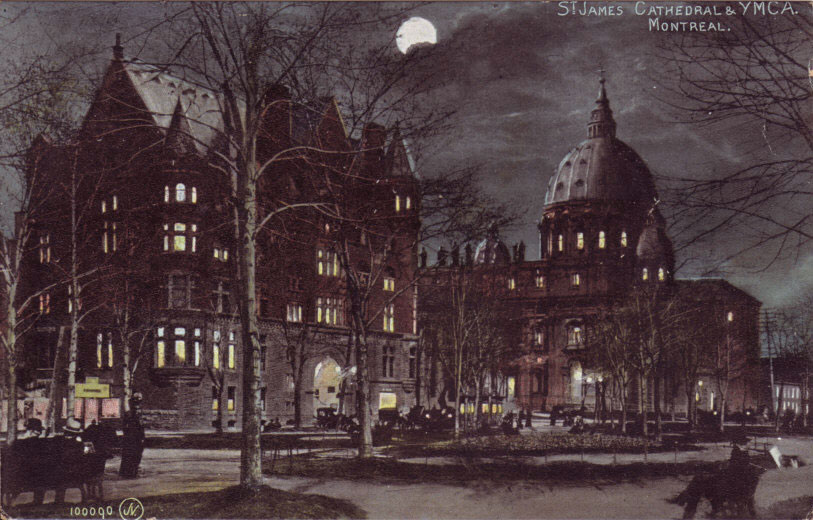
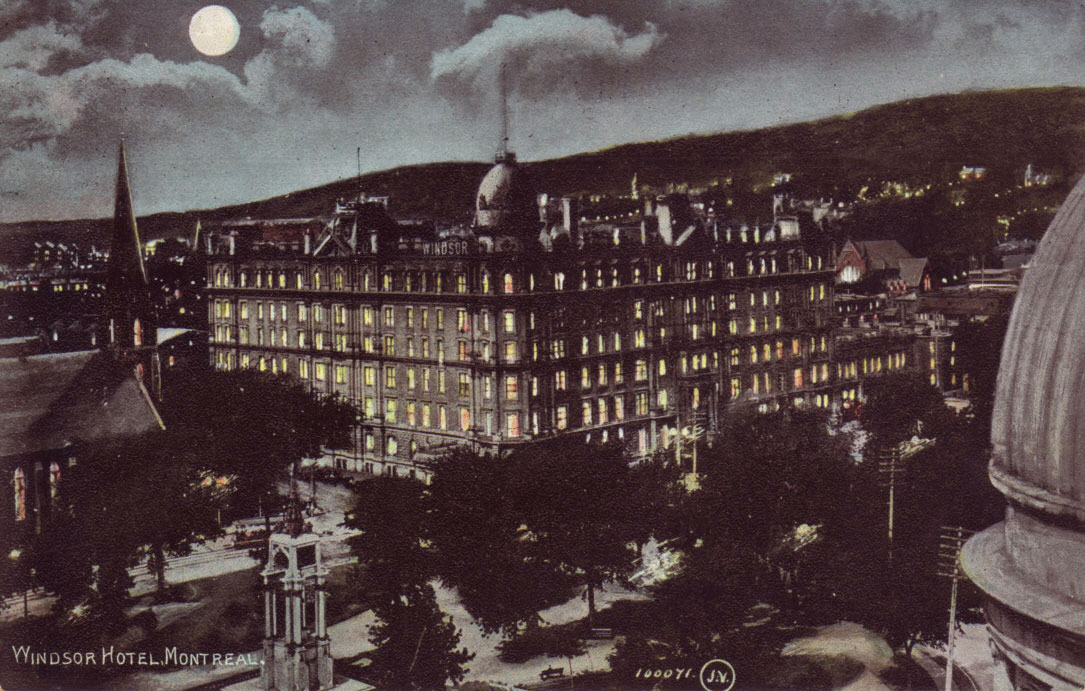
While thumbing through a large group of vintage Canadian postcards at a local antique shop a half-dozen or so among the thousand-plus cards stood out because each featured a highly stylized moonlight view of their subjects, giving each card a dark and moody feel. Most were from about 1906 to 1908, with one as late as 1919, and all but one were marked as being printed by Valentine & Sons, a noted Scottish postcard publisher of the time with offices in Toronto and Montreal. A little online research revealed that the cards were collotype photographs taken in daylight with a full moon, clouds and lighting effects layered on top, after which the images were hand-tinted.
_
_
_

_
_
_
Similar posts on O’Canada:
• Vintage Postcards: Canadian Churches

Christopher Pratt, Placentia Bay Boat in Winter (1995)
___
Christopher Pratt is justly considered one of Canada’s most significant living artists. His realistic art focuses on Atlantic Canada, particularly his home province of Newfoundland and Labrador. Pratt’s compositions are usually quite spare and many convey a notable sense of melancholy and reflective quietude, whether of outport cottages and other simple structures with strong architectural lines or his sweeping coastal landscapes. While his style is distinctively his own, the subdued moodiness of Pratt’s work brings to mind that of Edward Hopper and the realist paintings of Alex Colville, another Canadian master who taught at New Brunswick’s Mount Allison University at a time when Pratt was a student there. Mount Allison is also where Pratt met his now former wife, Mary West Pratt, an equally noteworthy Canadian painter in her own right.
In 2013, the always brilliant Canadian publisher, Firefly Books, released Christopher Pratt: Six Decades, which provides a comprehensive overview of this artist’s work. (Coincidentally, in 2013 another excellent Canadian publisher, Goose Lane Editions, went to press with Mary Pratt, a beautiful retrospective of Mary Pratt’s amazing artistry.)
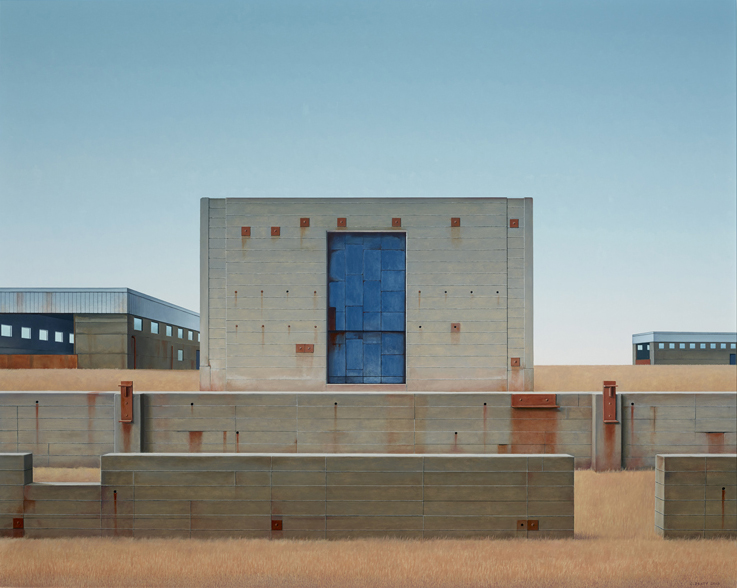
Christopher Pratt, Blue Iron Door (2013)
___

Christopher Pratt, Woman at Dresser (1964)
___
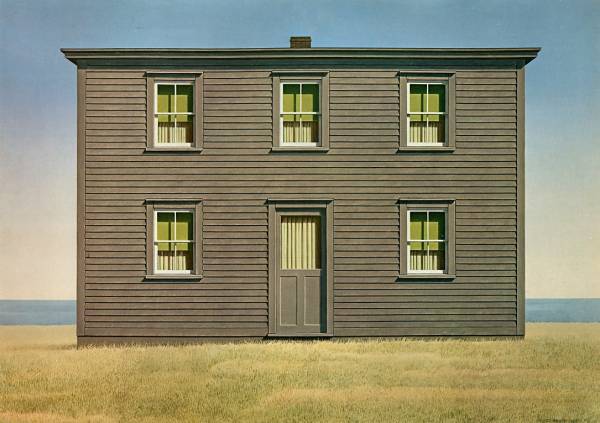
Christopher Pratt, House in August (1968)
___
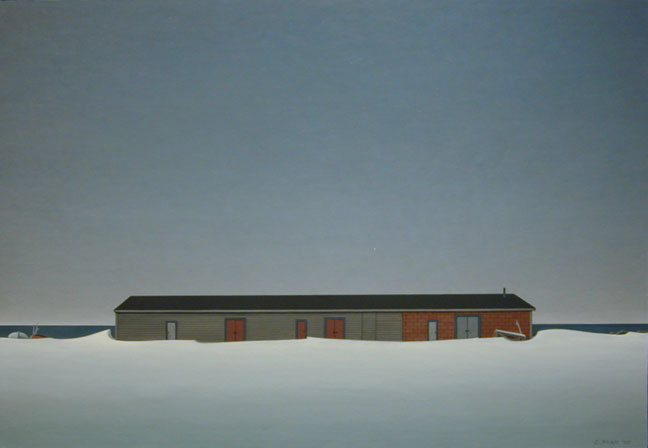
Christopher Pratt, Ingornachoix Bay — Long Shed (2007)
___

Christopher Pratt, Spring Coming Over Trout River (2009)
___
Similar posts on O’Canada:
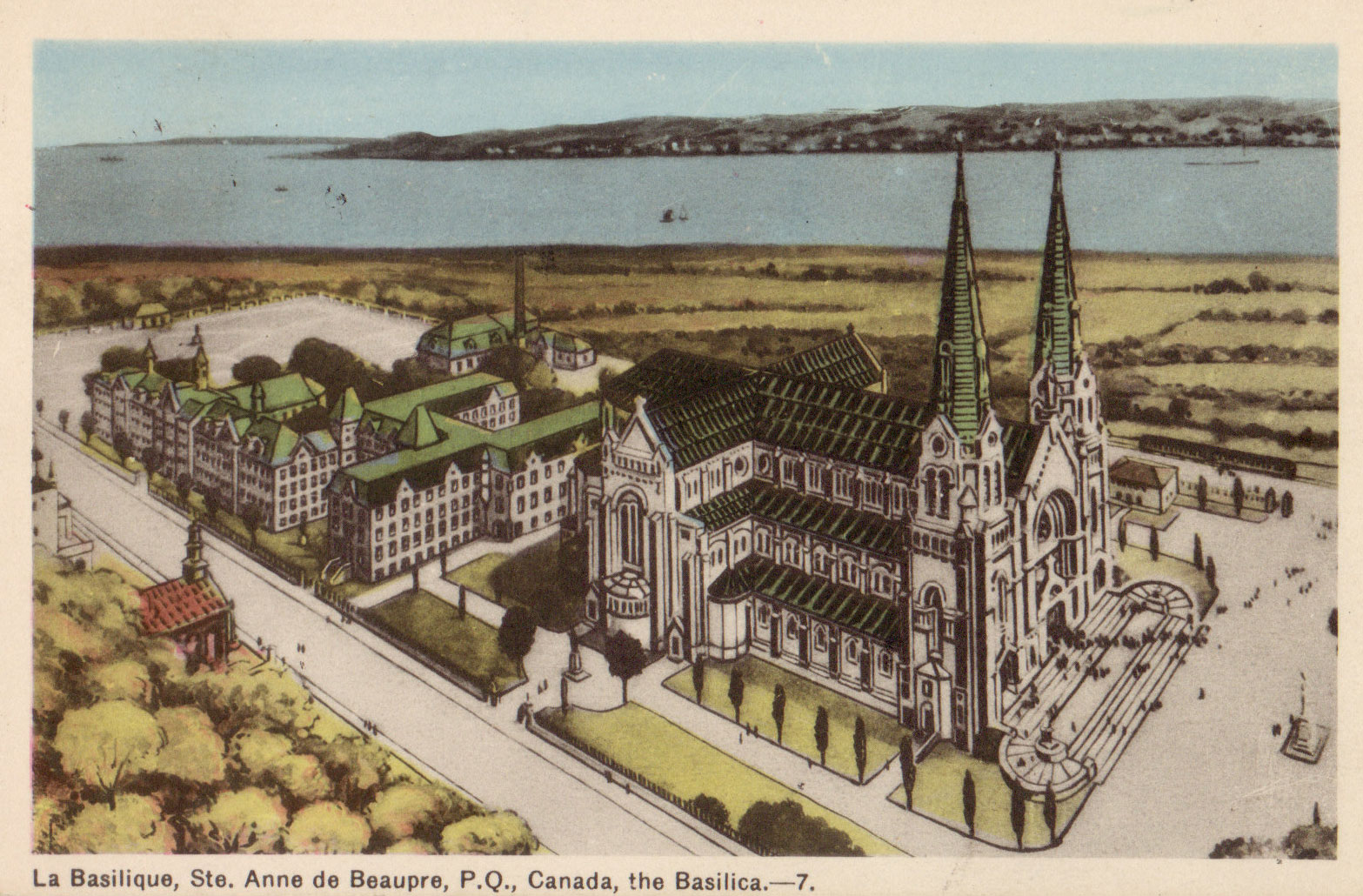
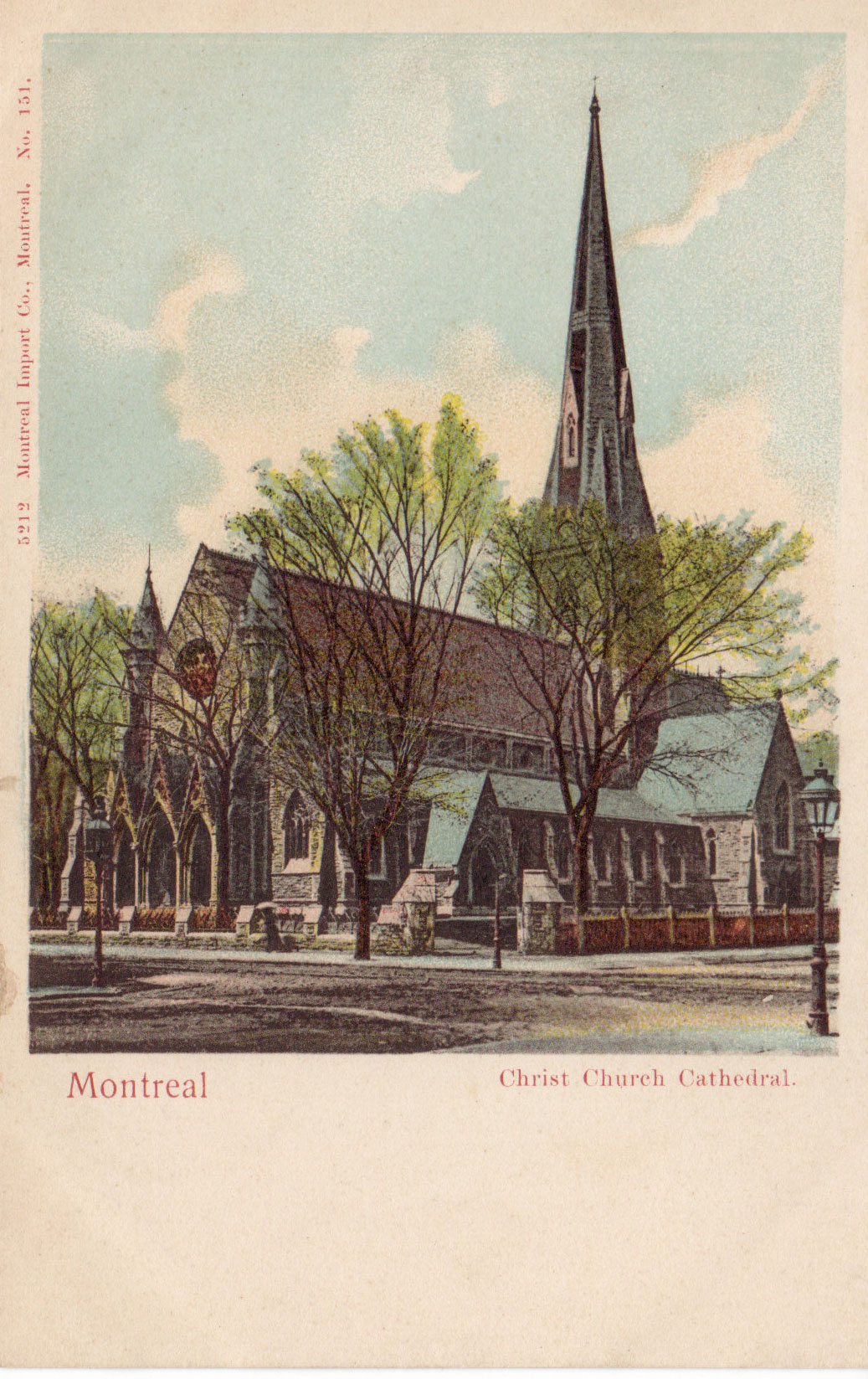
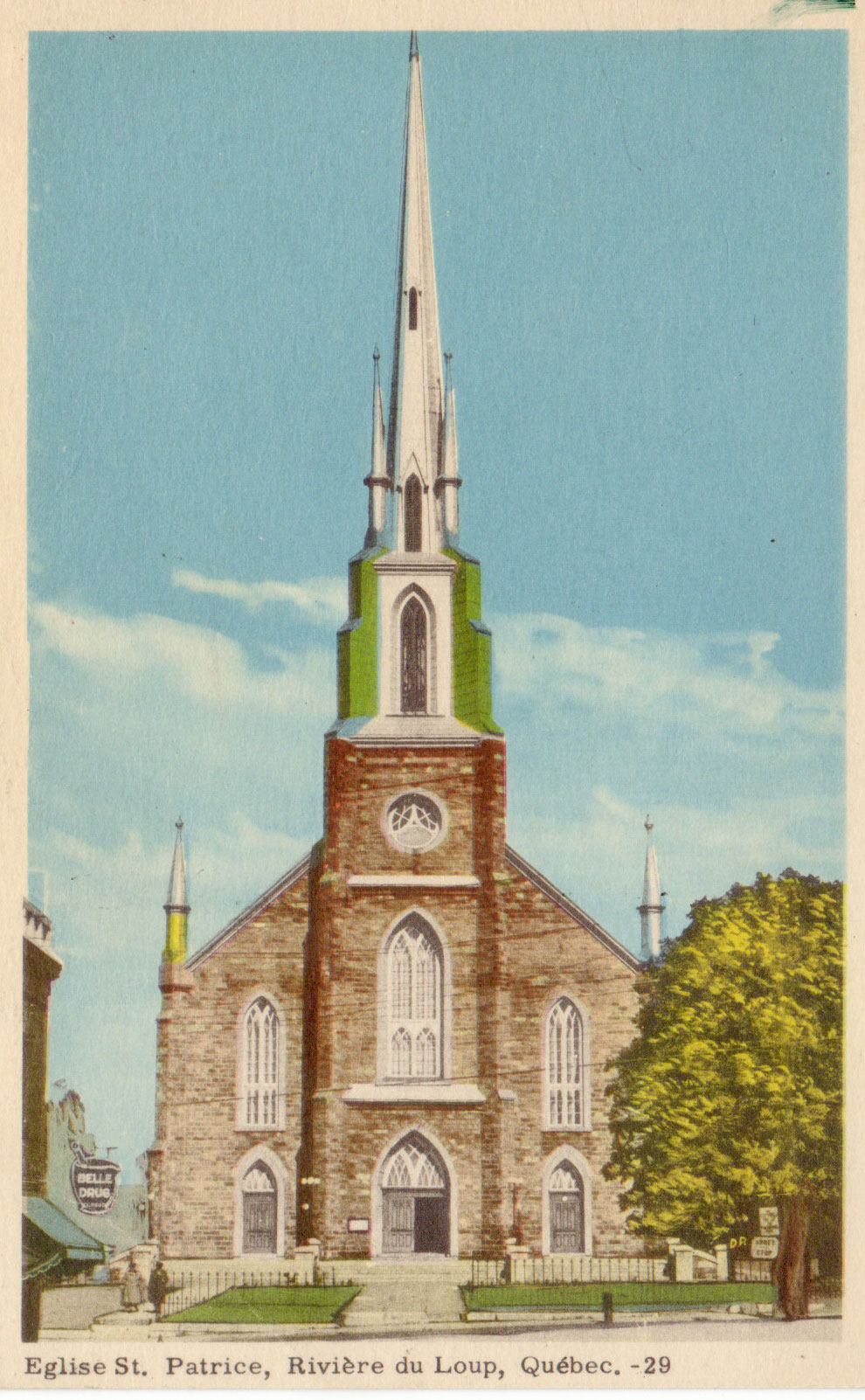
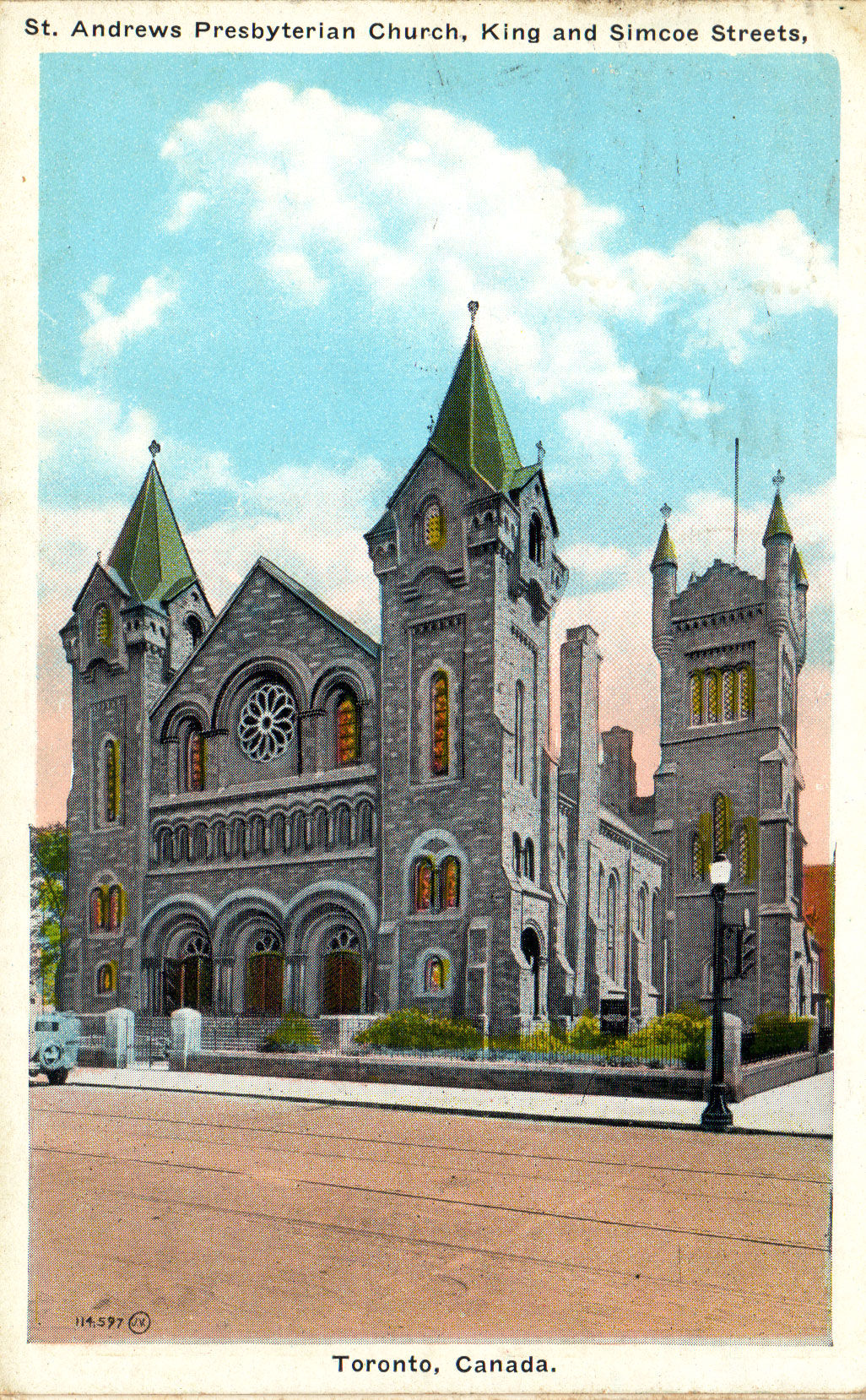
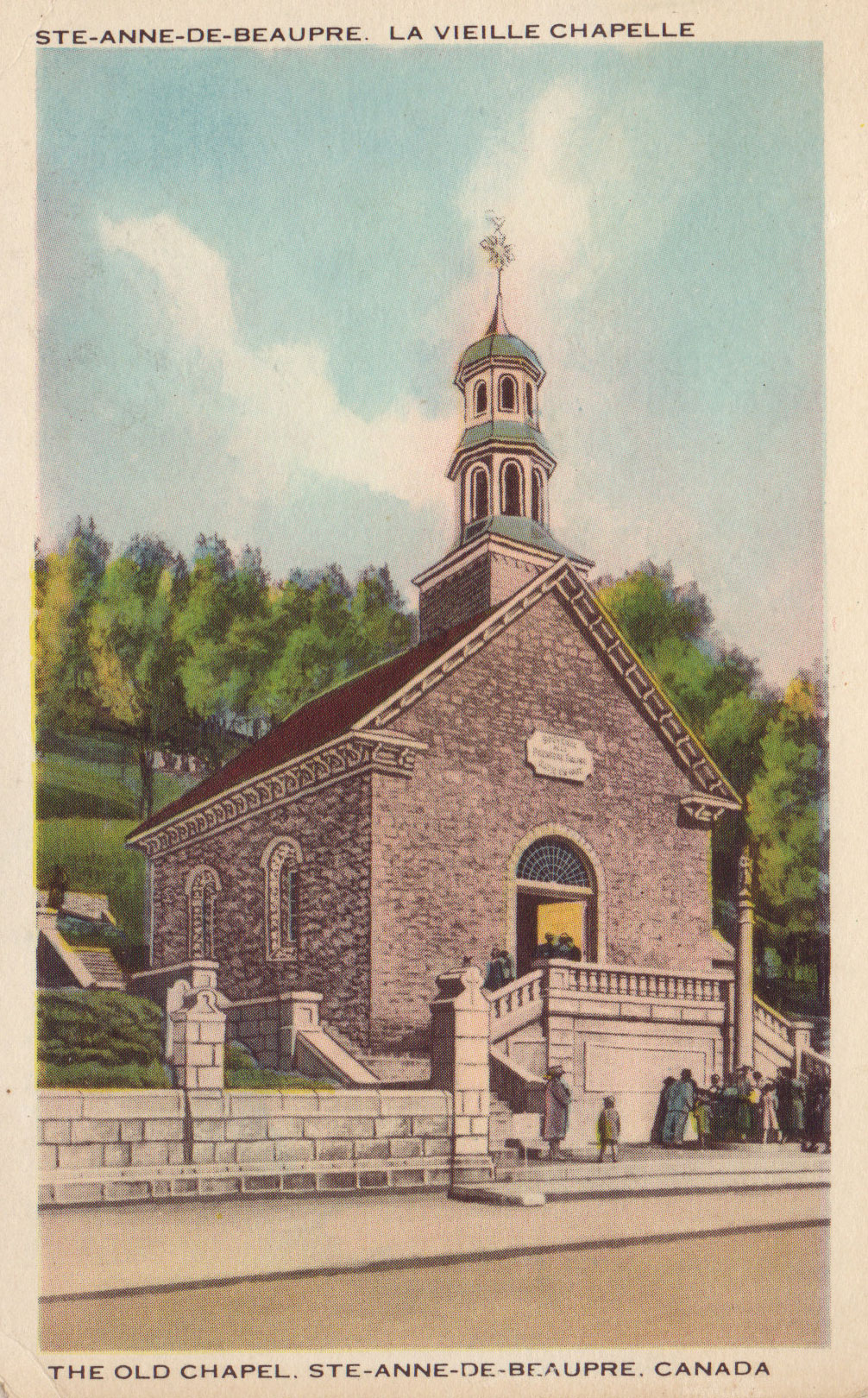
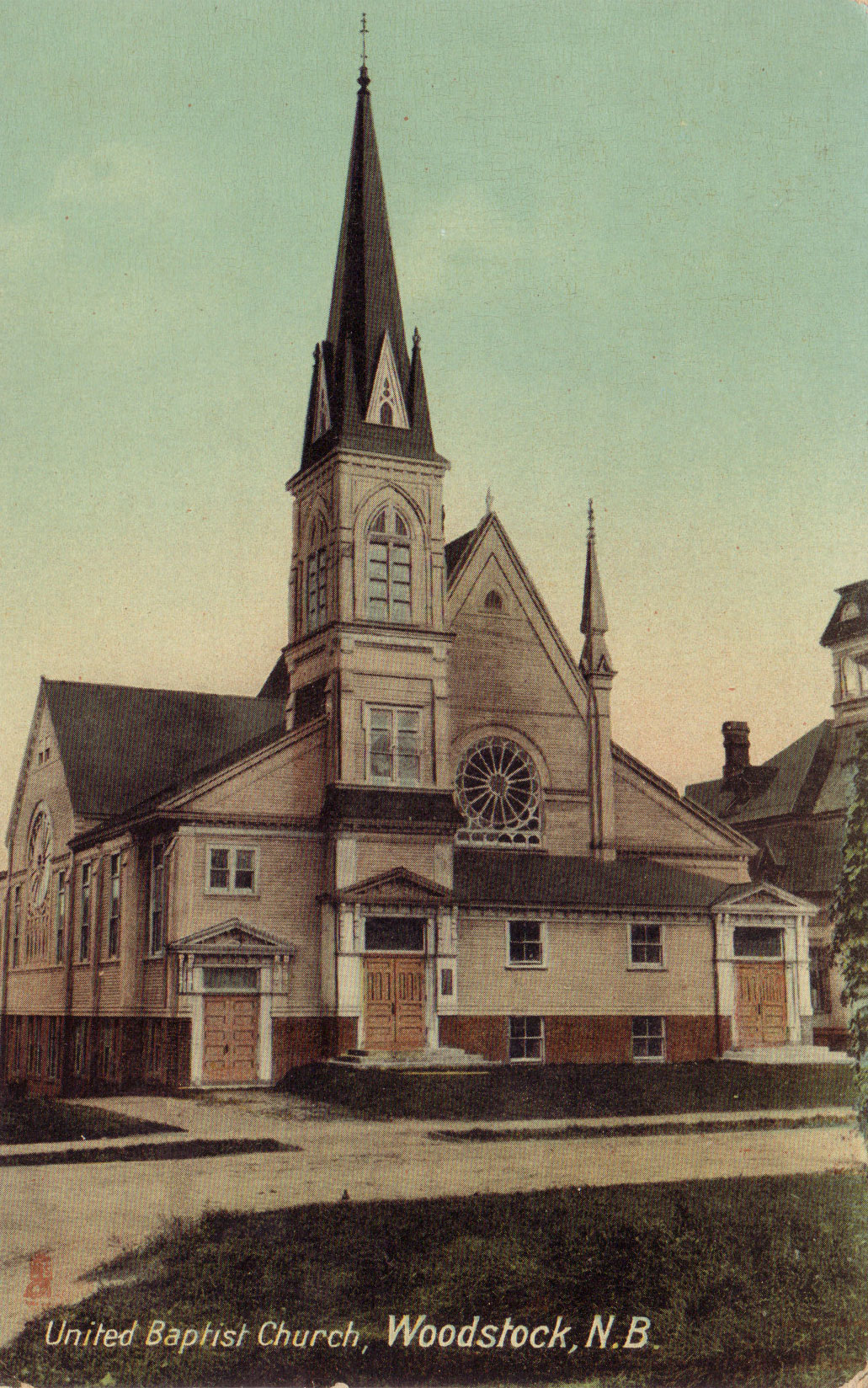
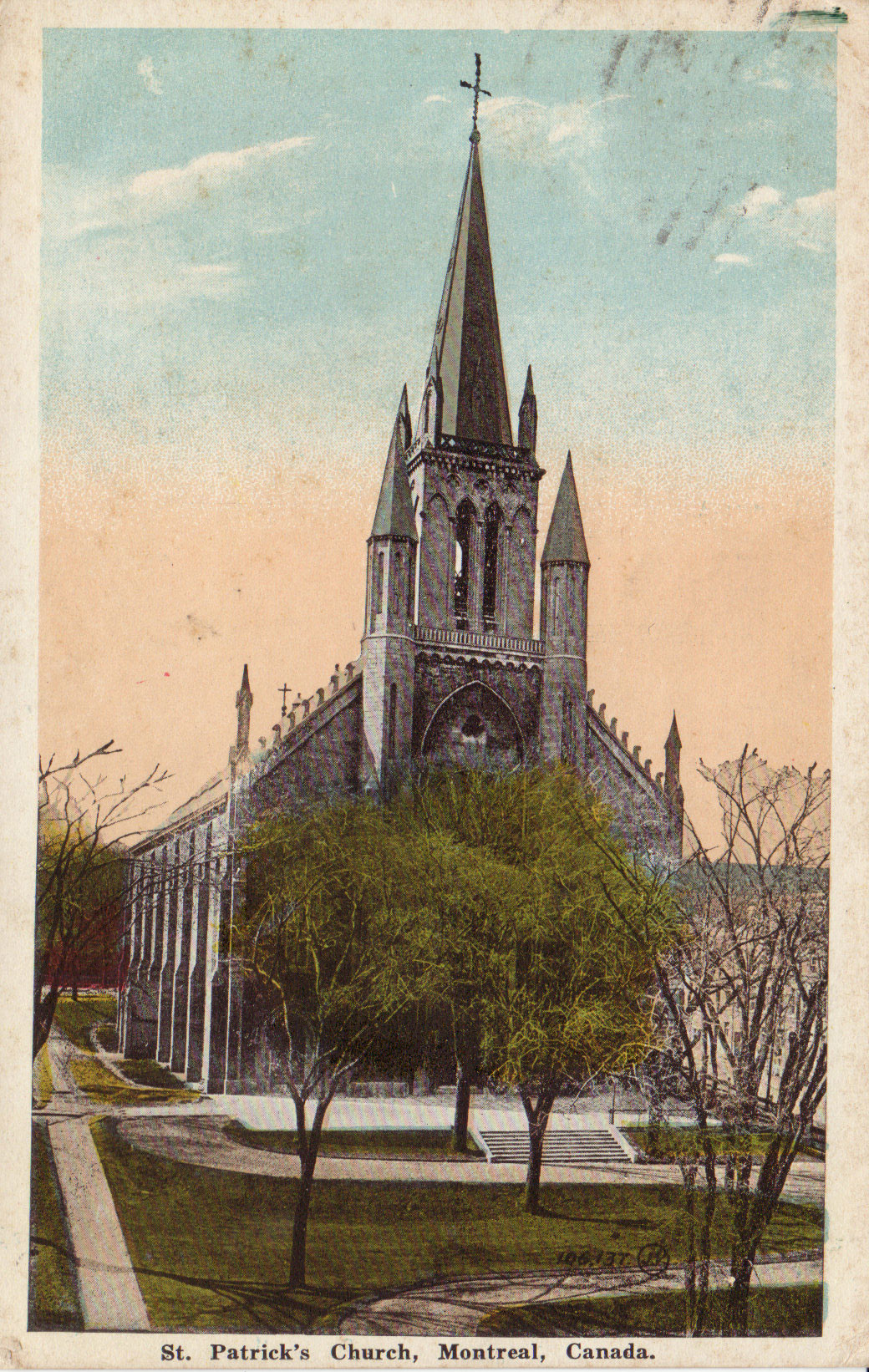
I came across these old postcards in a local antique shop, most of which are watercolors or hand-tinted photos. They range from the early 1900s through about 1950.

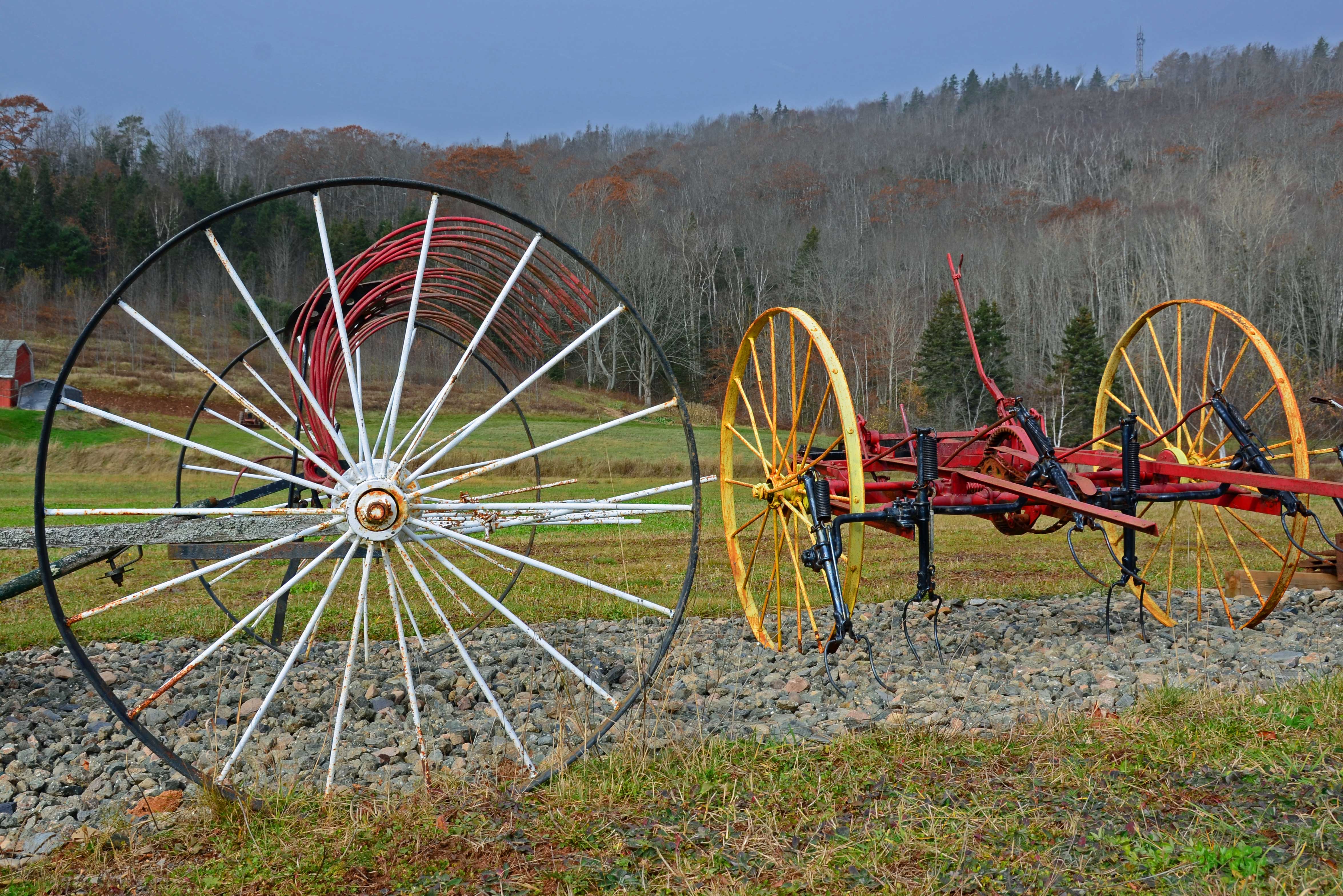
Tiller Wheels, Northville Farm Heritage Center, Northville, N.S.
___
With its fertile plain shielded from the Bay of Fundy by a low-lying but extensive mountain range, the Annapolis Valley has long been the farming center of Nova Scotia. Because of this, there are several places devoted to preserving and sharing that heritage. Although the Ross Farm Museum in New Ross, N.S., probably gets more attention (and about which I’ll post at another time), the Northville Farm Heritage Center in Northville, N.S. (close to Centreville, N.S.), which we came across while on a meandering late Fall drive through the Valley, has a wonderful display of old farm tractors, machinery and other implements situated in an especially scenic area of the Valley. It’s worth making the effort to find!
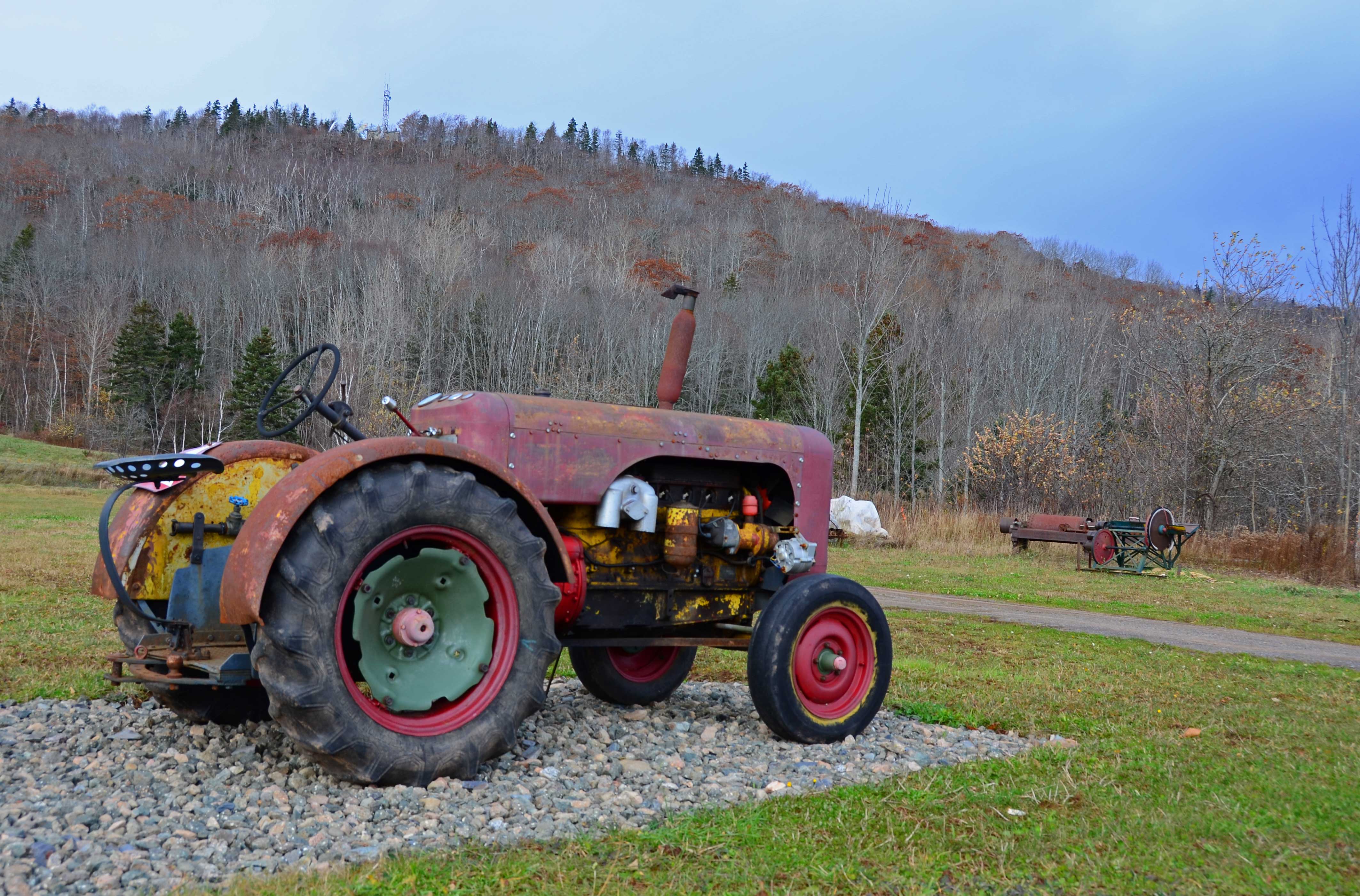
Trusty Rusty Tractor, Northville Farm Heritage Center, N.S.
___
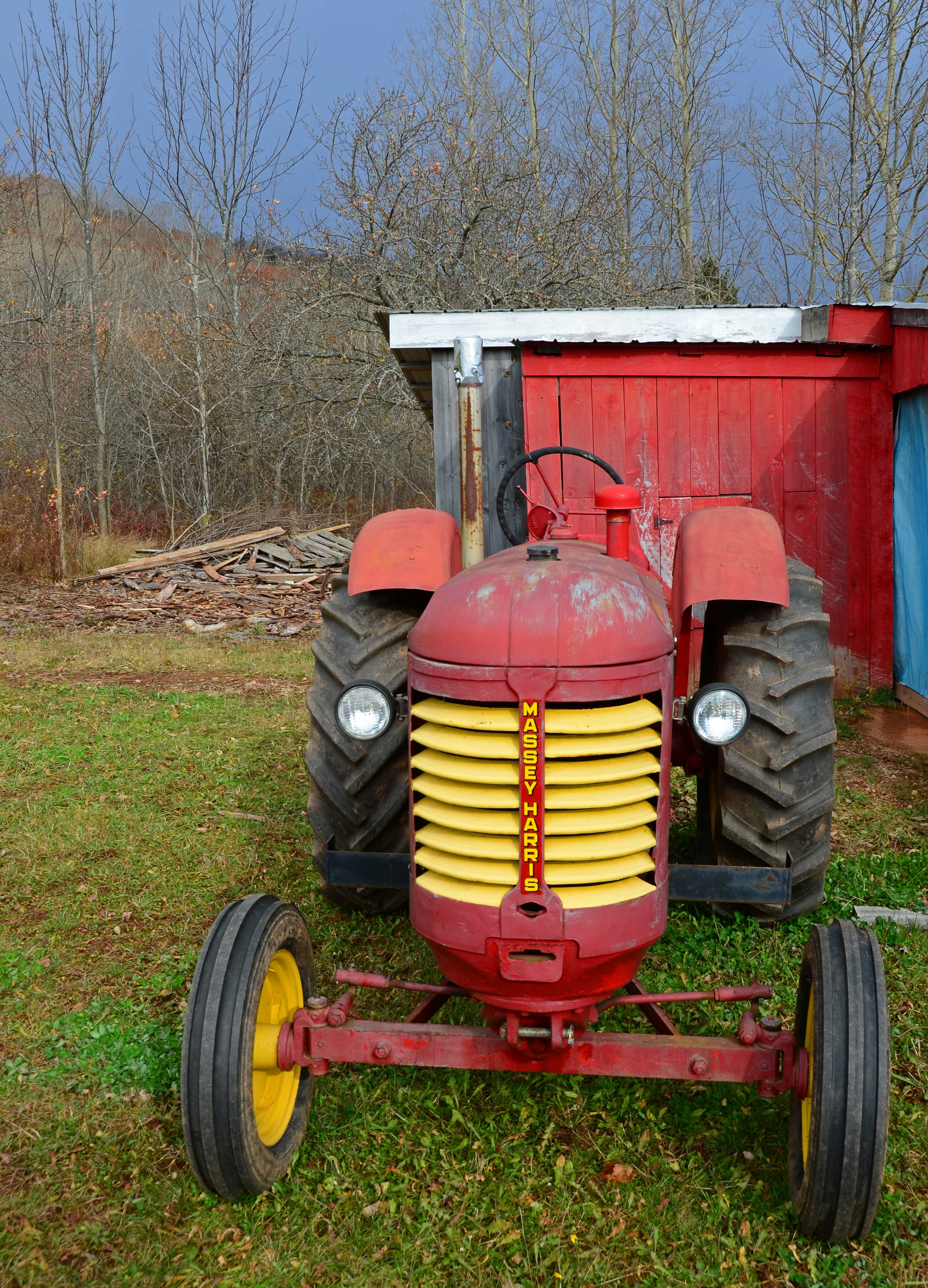
Massey Harris Tractor, Northville Farm Heritage Center, N.S.
___


___
Some Other Farm-Related Posts on O’Canada:
• Old Farm Tractor Along Charlevoix / St. Lawrence Shore
• Barns and Cottages of the Maritimes – Part 1
• Barns and Cottages of the Maritimes – Part 2
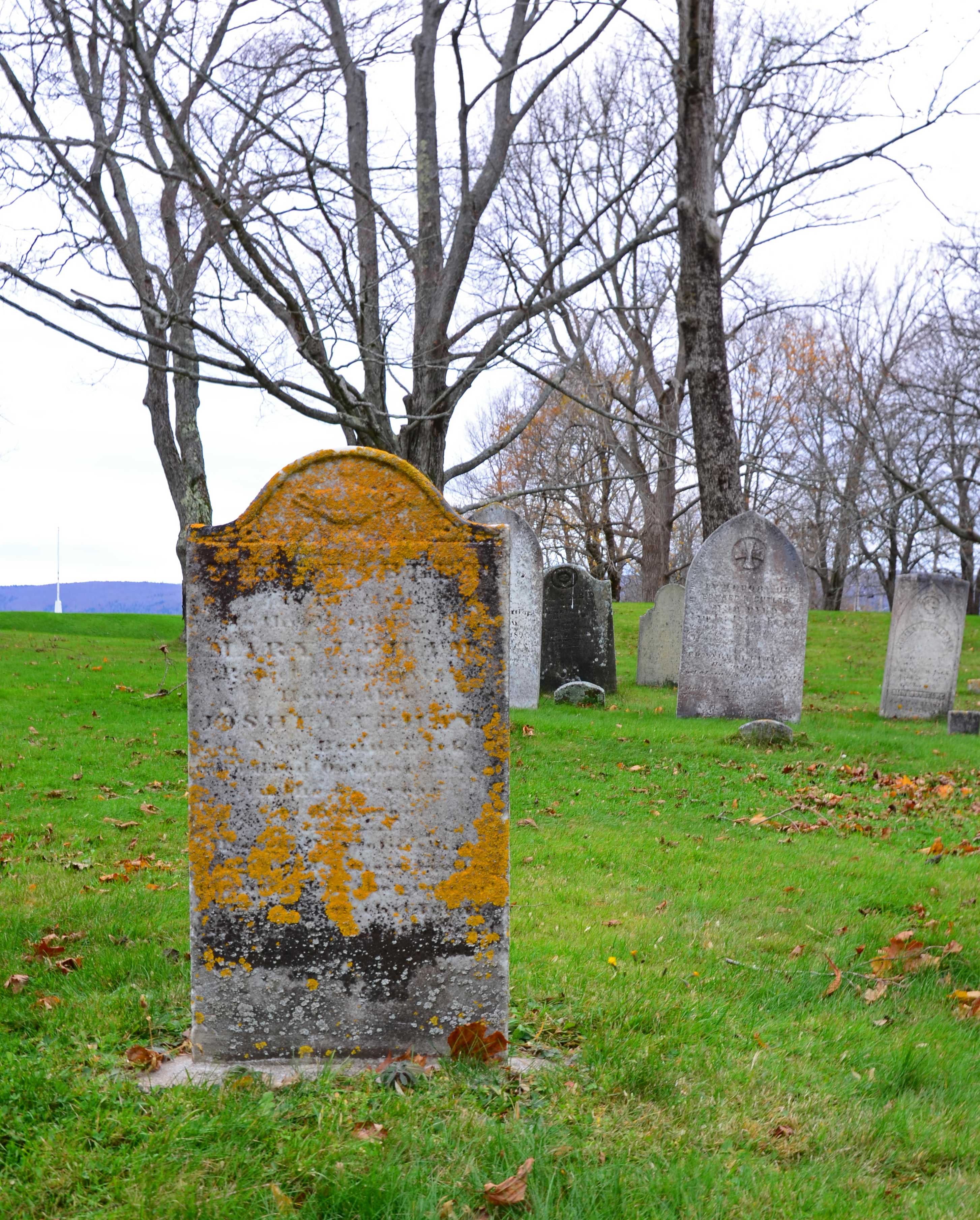
Old Tombstones, Garrison Cemetery, Annapolis Royal, N.S.
___
Canada’s oldest formal cemetery is Garrison Cemetery, which is situated adjacent to historic Fort Anne in Annapolis Royal, Nova Scotia. While Garrison Cemetery is not as large as the nearly-as-old eighteenth-century burial grounds in Halifax, the setting — amidst the rolling hills of the Fort’s grounds and the sweeping Annapolis River close by — is especially picturesque. Given that Annapolis Royal served as both the capital of Acadia and later as the first capital of Nova Scotia, the well-worn tombstones on the cemetery grounds are quite old indeed, as attested by the protective marker frames in several of the pictures below from a trip last Fall. (Click any image to enlarge)
___


Similar Posts:
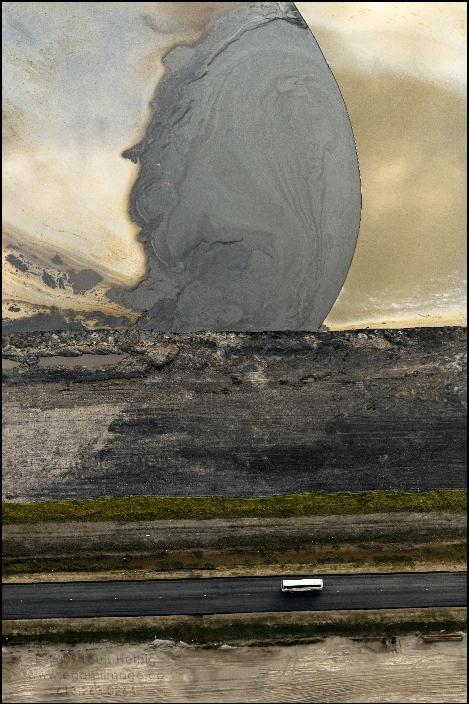
Louis Helbig, Highway 53 Bitumen Slick, Alberta (2009)
___
The aerial photography of Ottawa’s Louis Helbig provides a reflective pause for the disquieting natural and industrial vistas that are this artist’s principal subject matter. Many of his images possess an abstract quality and bring to mind the similarly striking industrial landscapes of fellow Canadian photographer Edward Burtynsky.
Below are a few of Helbig’s stunning images. More of his impressive photography can be found at his homepage here.
___
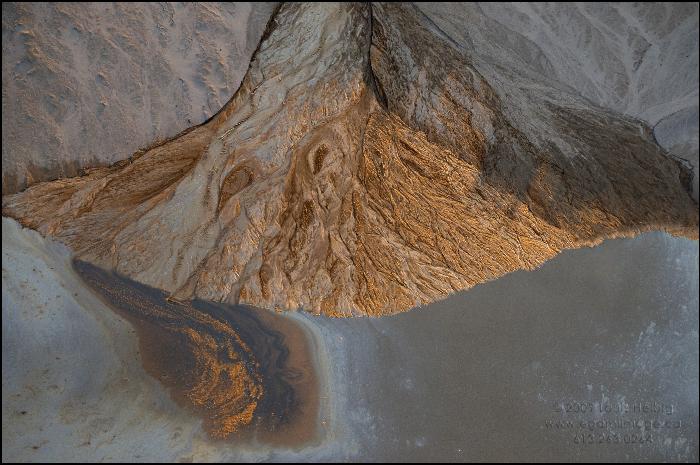
Louis Helbig, Alluvial Fan, Alberta (2009)
___
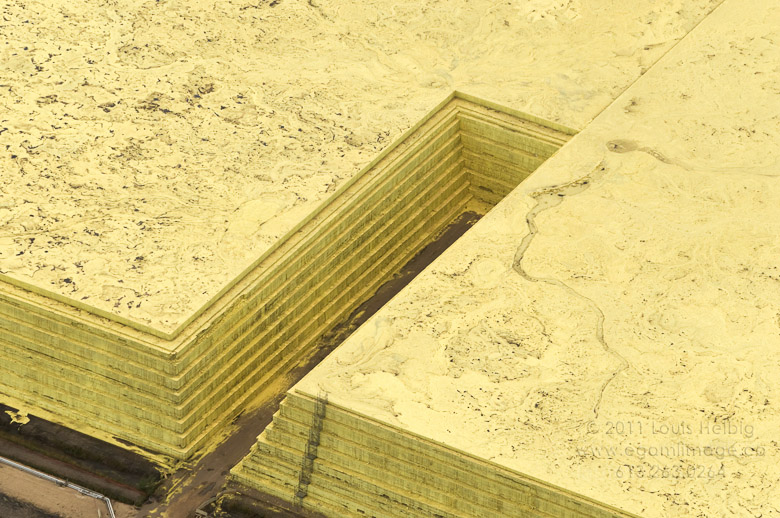 Louis Helbig, Sulfur Pile, Alberta (2011)
___

Louis Helbig, ATV Tracks in Frozen Snow, Quebec (2011)
___
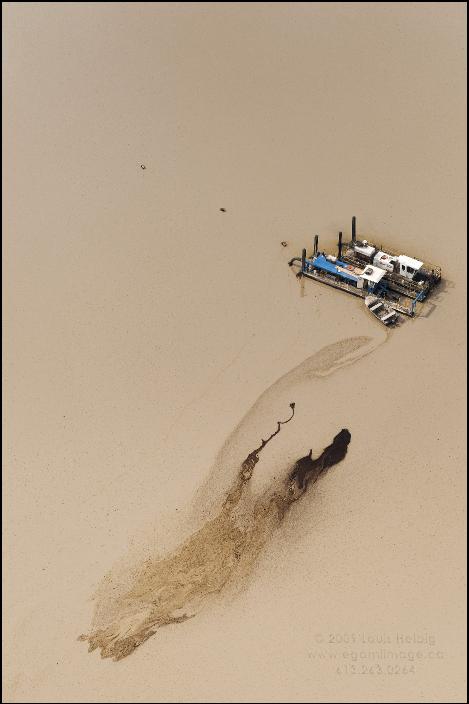
Louis Helbig, Pumping Vessel, Alberta (2009)
Image Credits: Louis Helbig
Other Posts About Notable Canadian Photographers:
• Edward Burtysnky and Industrial Landscapes
• Todd McLellan: Taking Things Apart
• Manu Keggenhoff’s Photography of the North
I enjoy the diversion of witty cartoons (especially those in The New Yorker magazine), and I’ve posted previously about funny cartoons that comment on American perceptions and stereotypes about Canada (for example, here and here). Below are a few others that may provide for some amusement.
___
This one deals with the general lack of knowledge about Canada by many Americans:

___
Americans know they share many similarities with Canadians and might be happy to think that’s true in all respects but every now and then something will remind otherwise — such as the finishing of a sentence with an “eh?” or a different pronunciation of a common word (like “about” pronounced as “aboot”) — even if they can’t put their finger on it:

___
Of course, there’s the widely held perception of Canadians as being polite to a fault:

___
This one, while showing two Canadian politicians, plays on the notion held by many Americans of U.S. “exceptionalism” and the idea that Canada doesn’t often register with many Americans:

___
And . . . there’s the word “about” again:
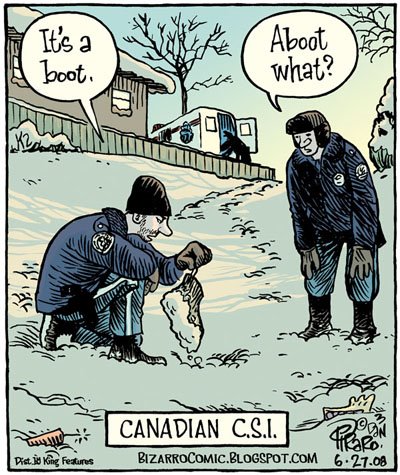
(Image credits to the various cartoonists: Liam Walsh, D. Reilly, P.C. Vey, Paul Noth, Dan Piraro)

A porch-side collection of decorative bird houses spotted on a visit to Shelburne, N.S.

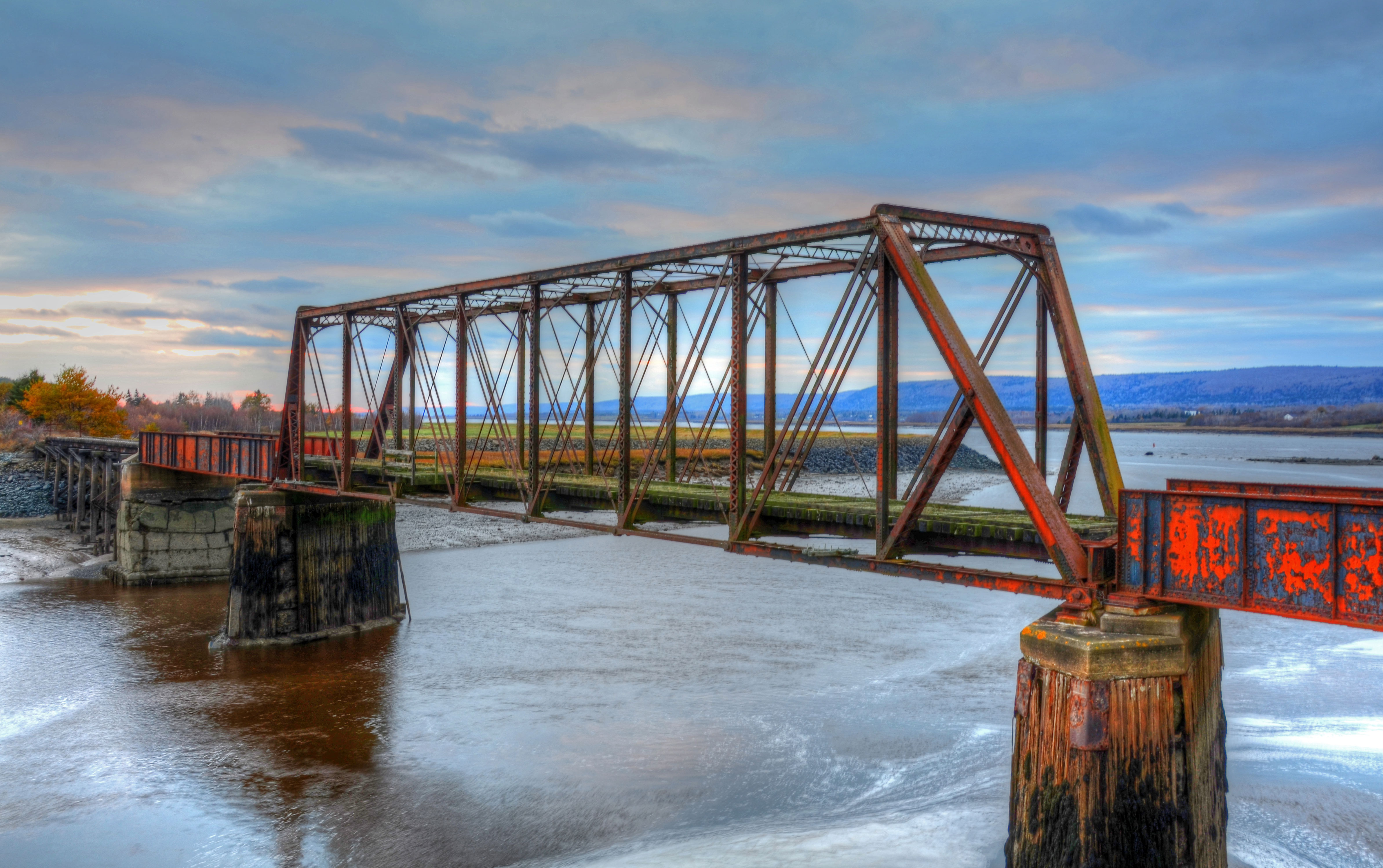
Near Sunset and Low Tide, Old Railway Bridge, Clementsport, N.S.
__
This rusted old iron railway bridge near Clementsport / Upper Clements in the Annapolis Valley area of Nova Scotia held my fascination one late Fall afternoon as the sunset slowly crept in. The point at which the forlorn bridge and its ancient wood trestle crosses the tidal river bend is both scenic and serene. On this occasion, the deep chipping orange-brown rust and the weathered blue-greens of the bridge’s structure harmonized perfectly with the complementary tones in the cloudy sky, the cool water and the distant hills.
___
___

___



Whimsical Tractor Seat Display (along the road to New Brunswick)
___
Brightly colored fishing buoys and other items with vivid hues dot the coastal landscape. These photos highlight a few collections of such items spied not long ago around Canada’s Atlantic coast.

Buoy-Adorned Cottage, Campobello Island, N.B.
___

Pink and Orange Floats, Delaps Cove, N.S.
___
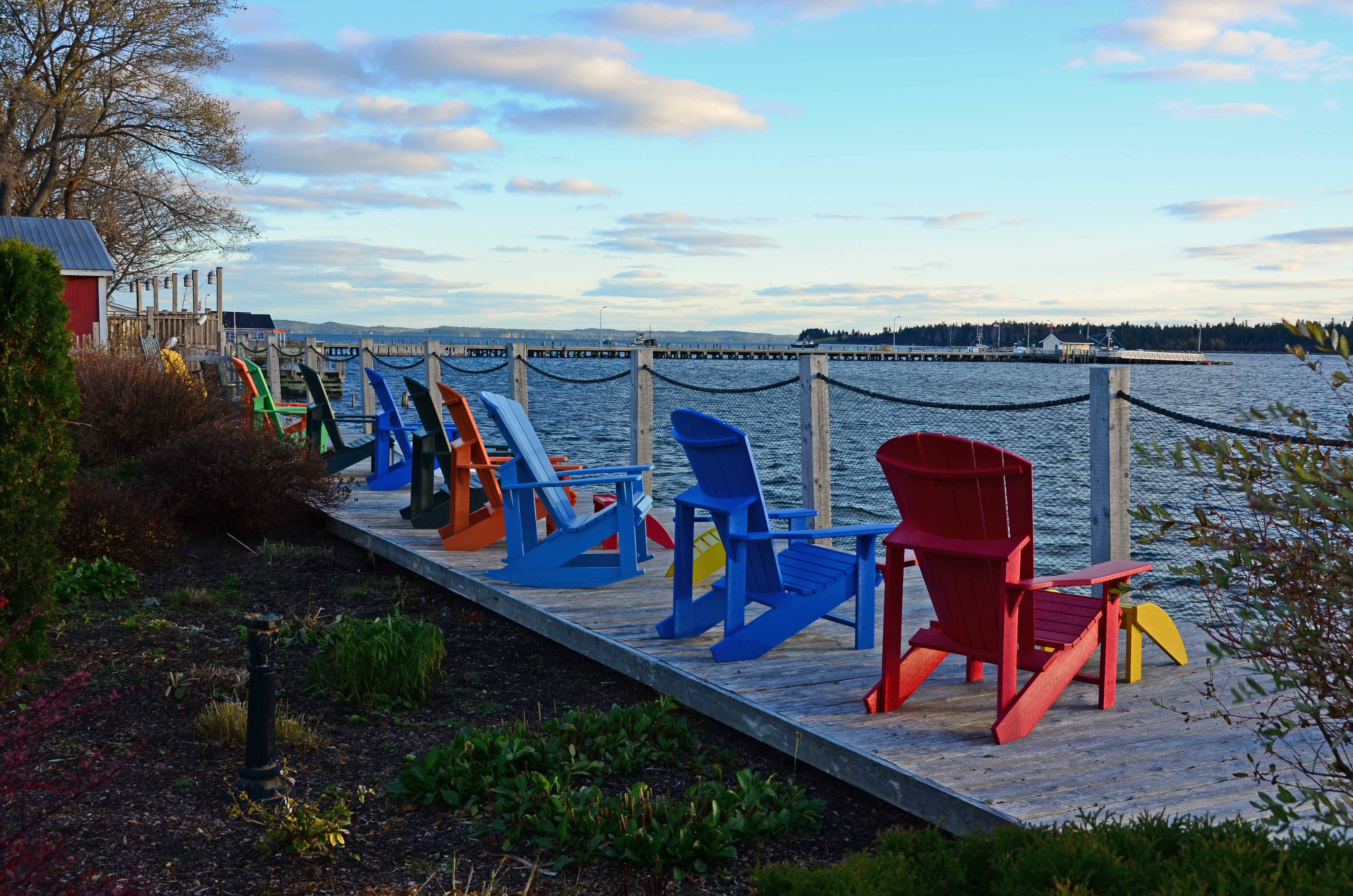
Cozy Lounging Chairs, St. Andrew’s By the Sea, N.B.
___
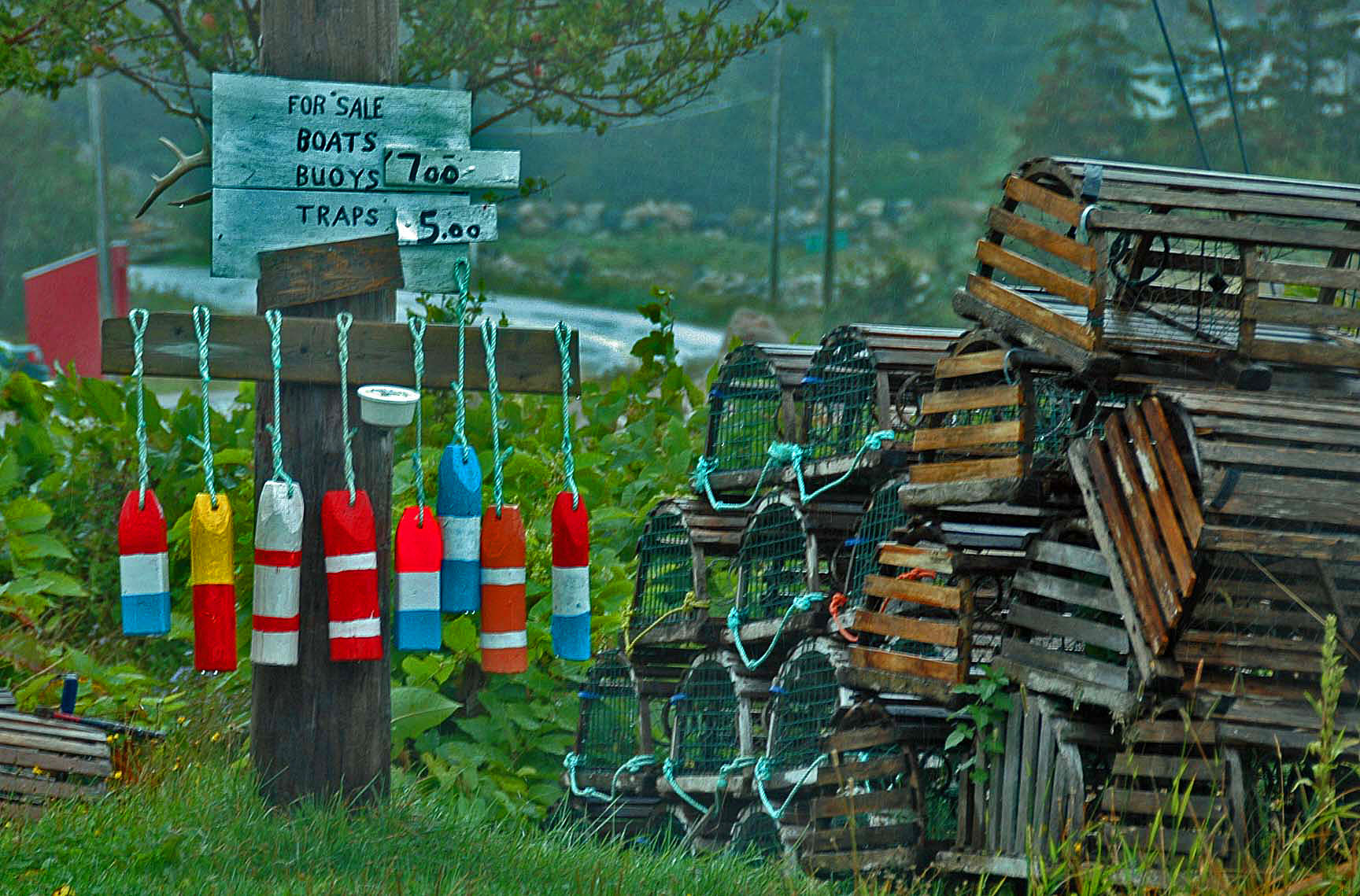
Buoy Signpost, Neils Harbor, Cape Breton, N.S.
___

Buoy Wall Display, Shelburne, N.S.

Mel’s Tea Room, Sackville, New Brunswick
___
These classic old signs and doorway tiles stood out on a recent stop in the historic town of Sackville, New Brunswick. The neon and styling of the sign for Mel’s Tea Room — a local diner that is authentically vintage — in particular harkens back to an earlier era.
___
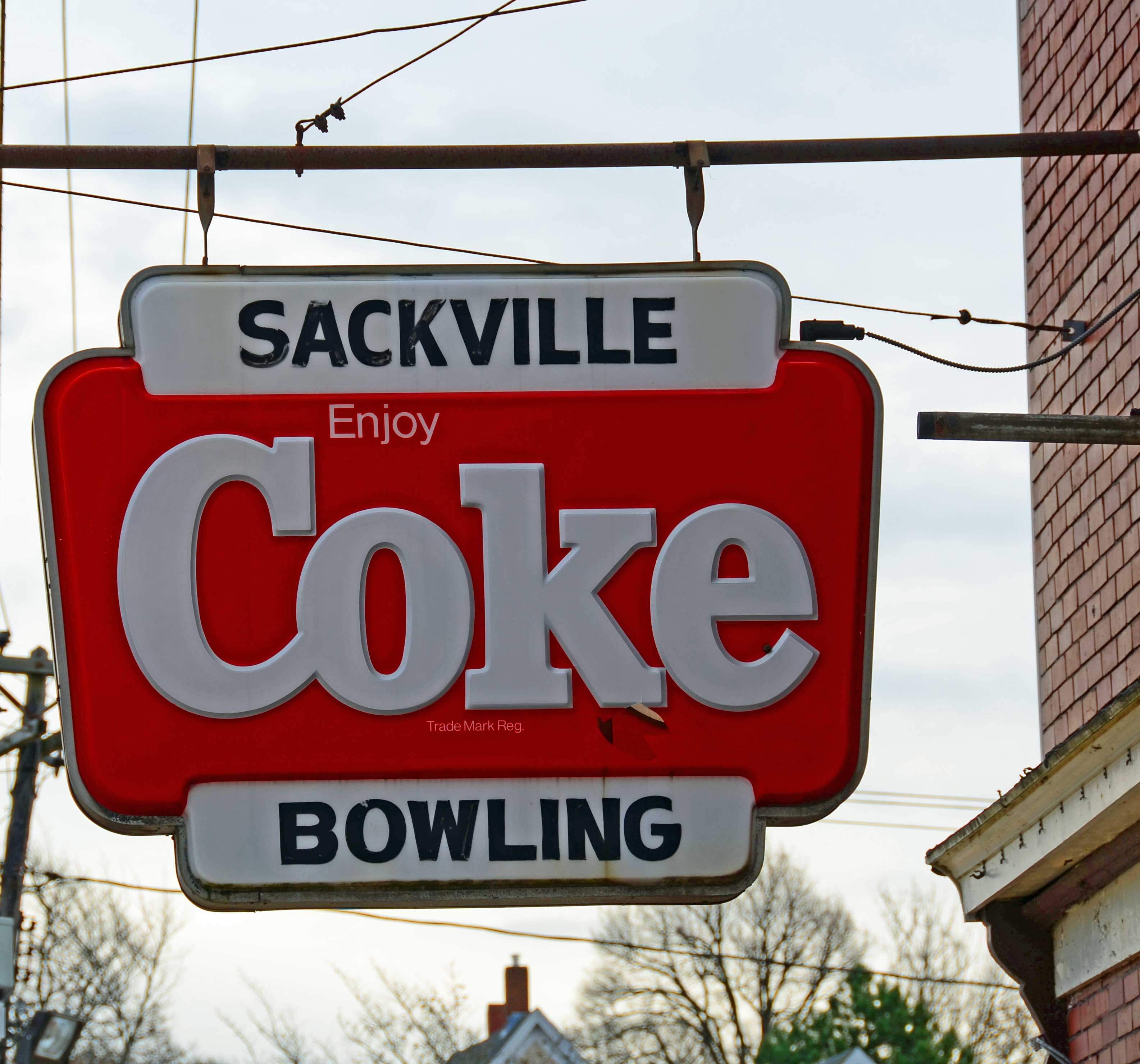 Sackville Bowling, Sackville, New Brunswick
___
 Tiled Store Entryway, Sackville, New Brunswick


View Across the Bay, Celtic Cross Park, St. Andrews By the Sea, N.B.
___
St. Andrews By the Sea is a historic town located in the southwestern corner of New Brunswick (about an hour west of Saint John) across the Passamaquoddy Bay from Maine. Established as a Loyalist bastion in the late eighteenth century, it is now a resort town featuring magnificent bay views and many well-preserved buildings showcasing early architectural styles. These photos are from a late Fall visit.


Mary Pratt, Cold Cream (1983)
___
Born in Fredericton, New Brunswick and living in St. John’s, Newfoundland for most of her life and career, Mary Pratt is one of Canada’s realist painters of the highest order. Her subject matter ranges from luminescent jelly jars and other domestic still lifes to pensive nudes and fleeting dramatic moments (such as a fire blazing in a steel barrel). Pratt’s artwork is as much about the intricate interplay of light and color on her subjects as anything else.
In conjunction with a traveling exhibition of Pratt’s paintings organized by the The Rooms of Newfoundland and Labrador (May – Sept. 2013) and the Art Gallery of Nova Scotia (starting Oct. 2014), Goose Lane Editions recently published a beautiful new book, Mary Pratt (2013), which showcases much of her work. The book features a wide selection of her paintings as well as remarks by Pratt herself and thoughtfully written essays by several leading Canadian art writers.



___
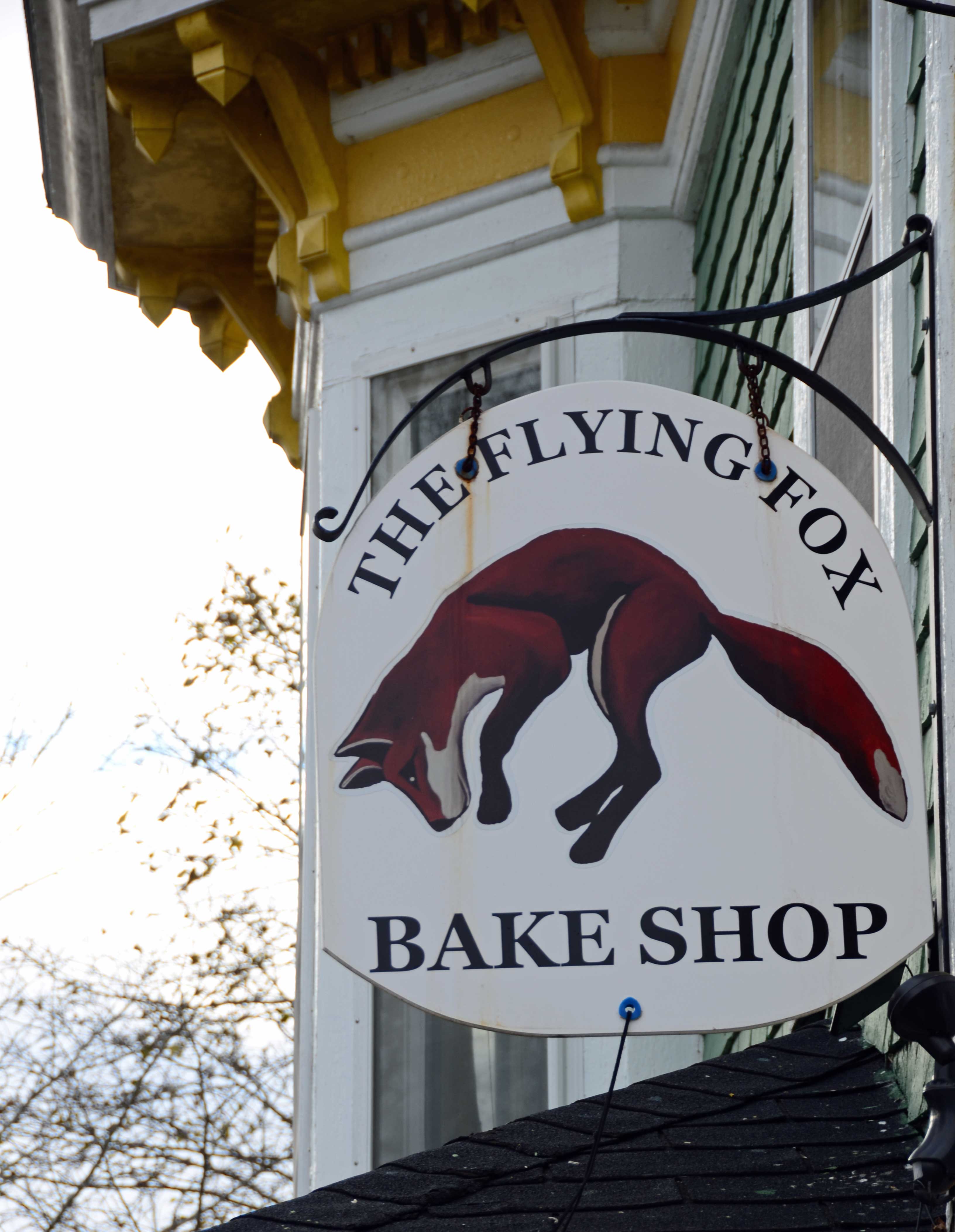
These bright little espresso cups caught my eye at the very cozy The Flying Fox Bake Shop in historic Shelburne, Nova Scotia. The shop’s tasty fresh-baked treats and piping hot coffee brightened the cold November day considerably, as did the ready conversation of the shop’s cheerful owner, Julie Shand. Julie shared with me that in light of her having lived way up near Yellowknife, Yukon Territory, shortly before opening the Flying Fox, Shelburne’s windy temperatures of 33°F / 0°C on that day seemed nearly tropical to her! For my part, I kept my gloves near at hand.
___
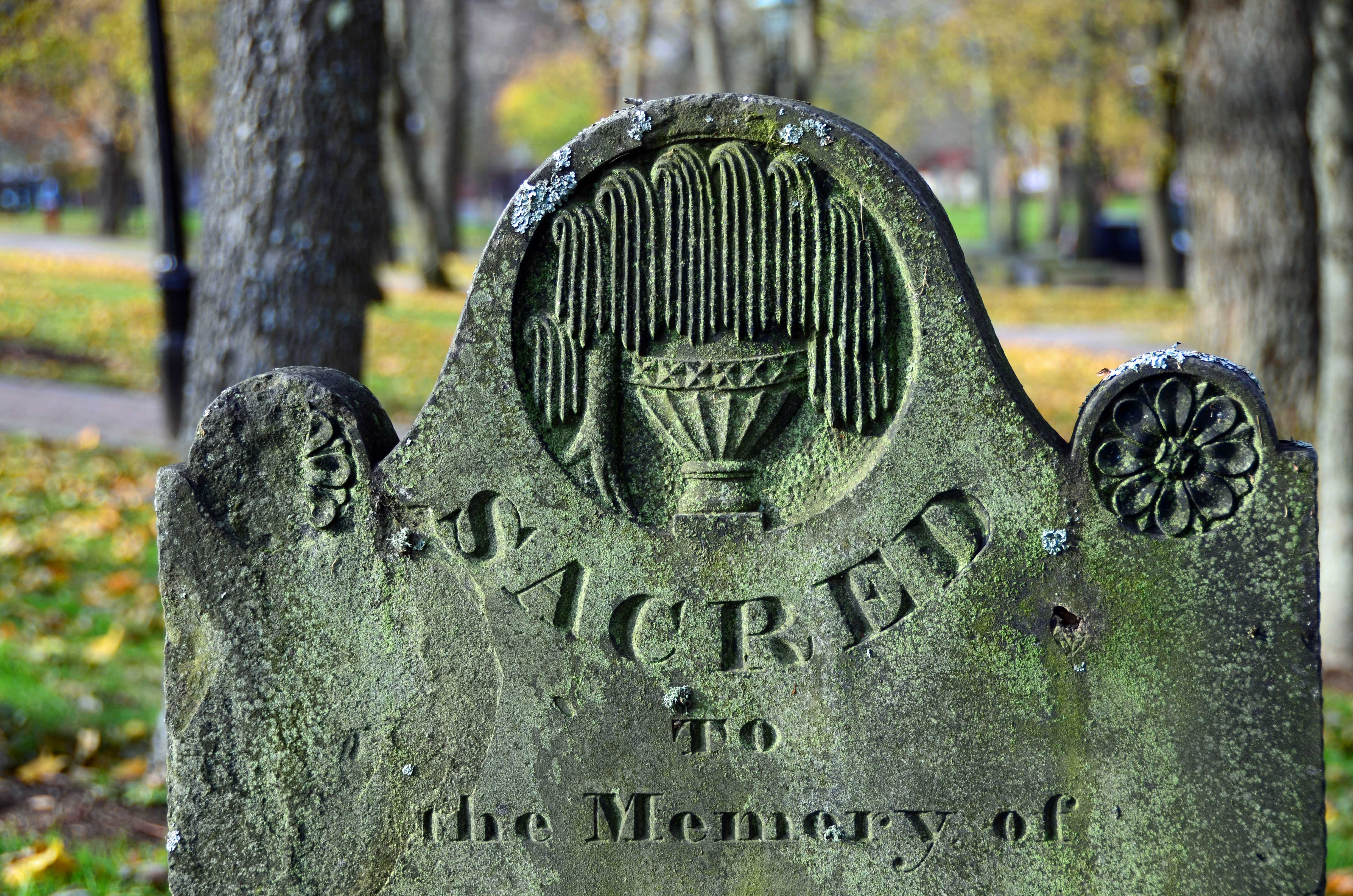
Weathered Tombstone, Old Loyalist Burial Grounds, Saint John, N.B.
___
Cemeteries are places of transcendent reverence, contemplation and connectedness. I’m particularly moved by final resting grounds that are situated in locations that cause them to be part of a people’s day-to-day lives. One of the best and most visually gorgeous of these is the very old Loyalist Burial Grounds in Saint John, New Brunswick, which, like Halifax’s Old Burying Ground, is in the heart of the city’s downtown core. These pictures from a recent trip on a brisk November morning makes clear that the majestic tombstones dating to as early as 1783 are very much a part of the urban environment built up around them. With its winding walkways, inviting benches and vast shade trees, the Loyalist Burial Grounds is as much a frequented park space as it is a place for memory and serves as a peaceful oasis amidst the surrounding hustle and bustle.


Rusted Roof Barn, Evangeline Beach, N.S.
___
Following Part 1 on this subject, here are some more scenic views of barns, cottages and sheds of the Maritimes. (Click image to enlarge.)


___
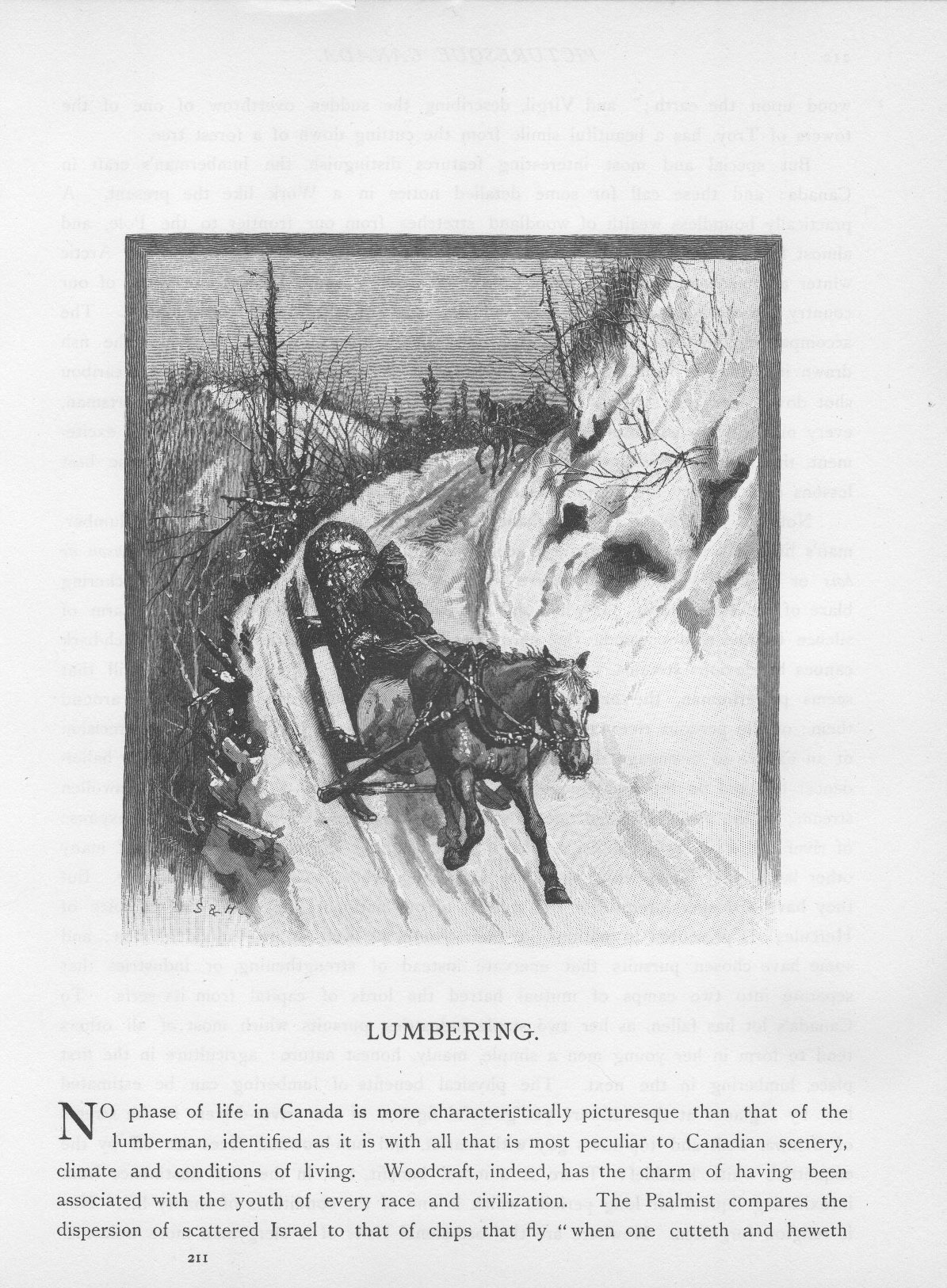
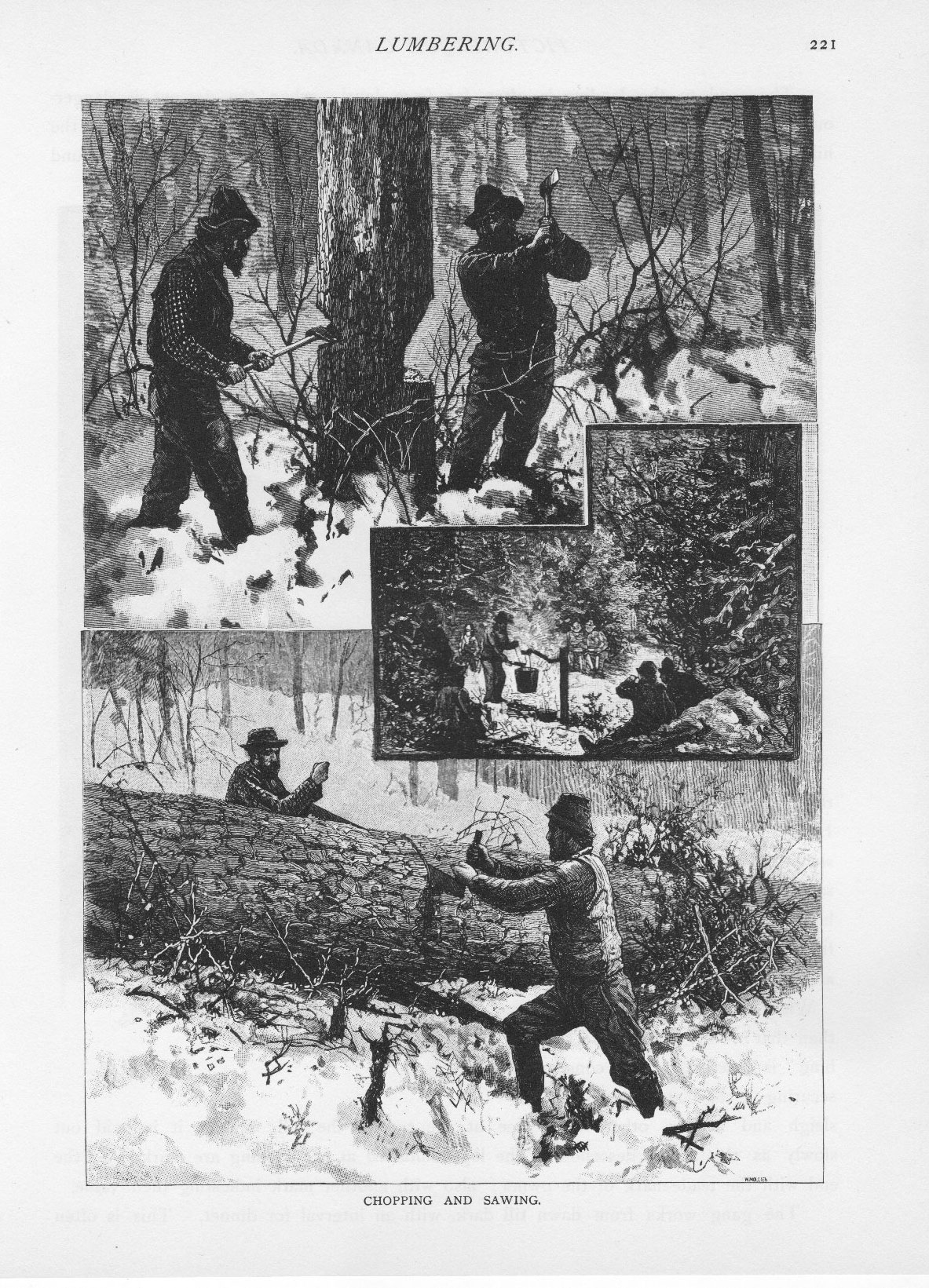
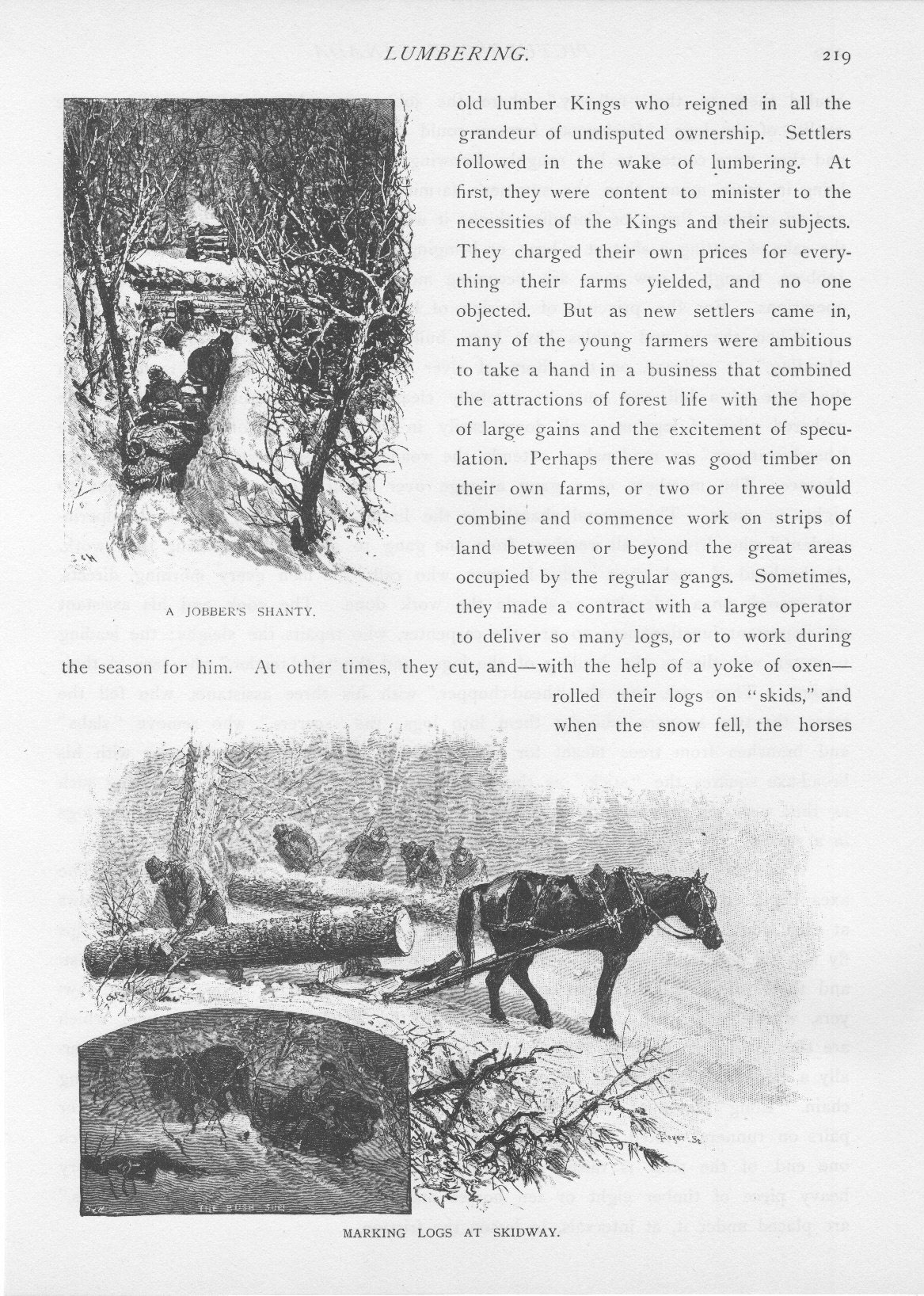
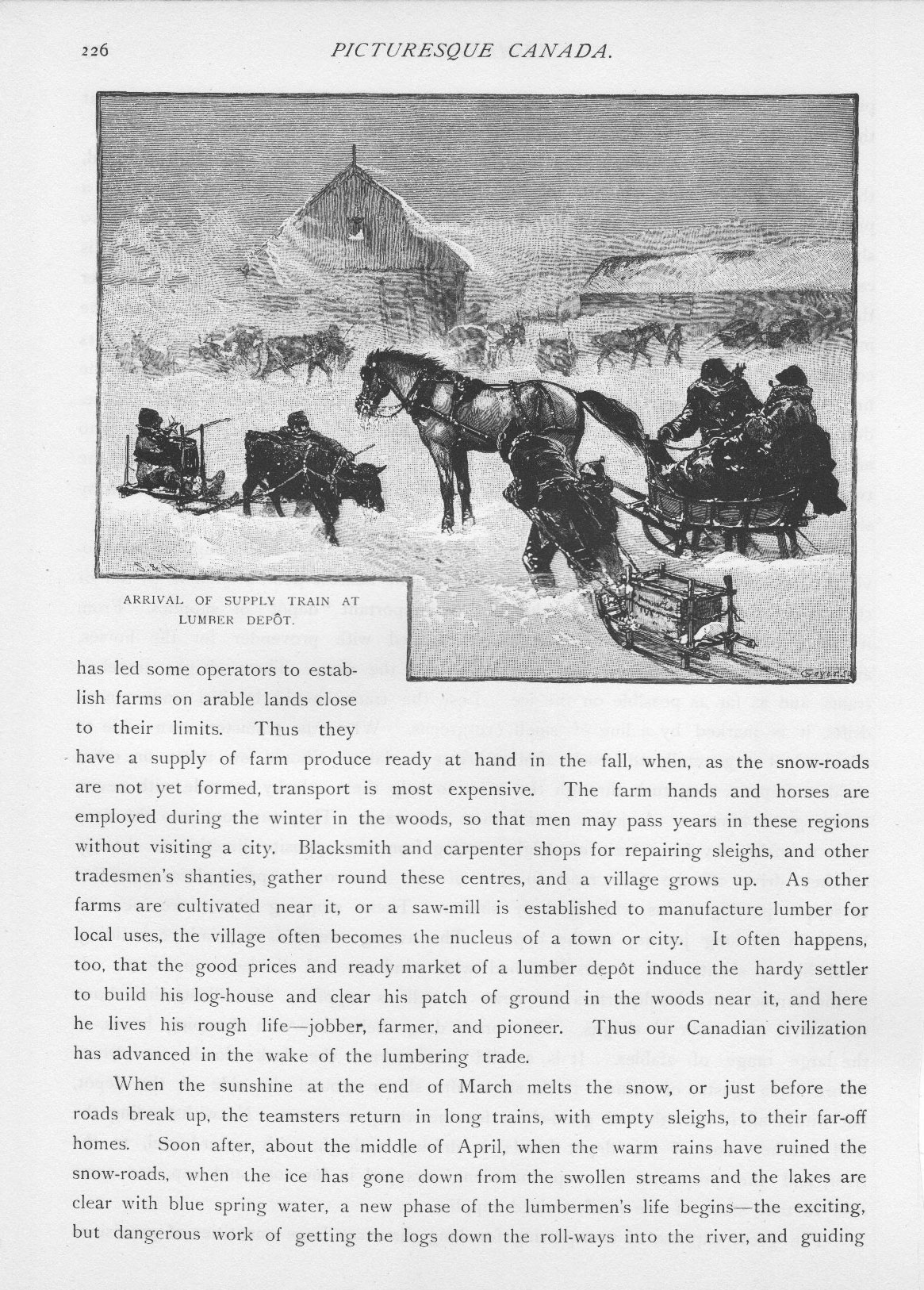
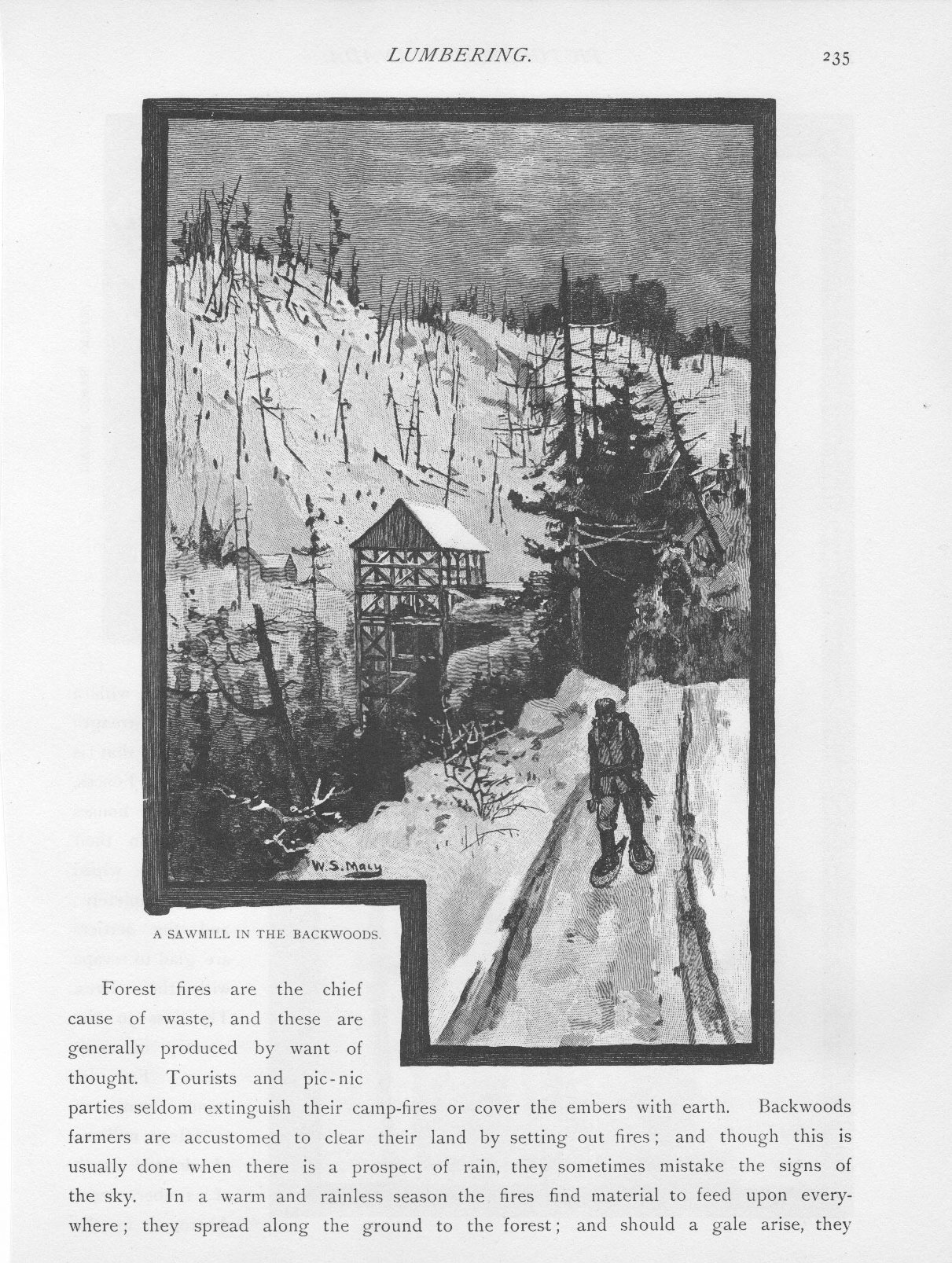
I recently came across a reprint of Picturesque Canada (ed. by George M. Grant), a two-volume compendium originally published in 1882 of Canada’s history, people and places. These marvelous books feature hundreds of intricate wood engravings that bring to life with vivid imagery the then still new and developing confederation. These illustrations of the lumber trade depict the hardships of that way of life, with most of these also seeming to associate that occupation with the extra harsh conditions of winter, which is fitting for the cold weather that is now creeping in up north. (Click images to enlarge.)
___
___
 ___
___
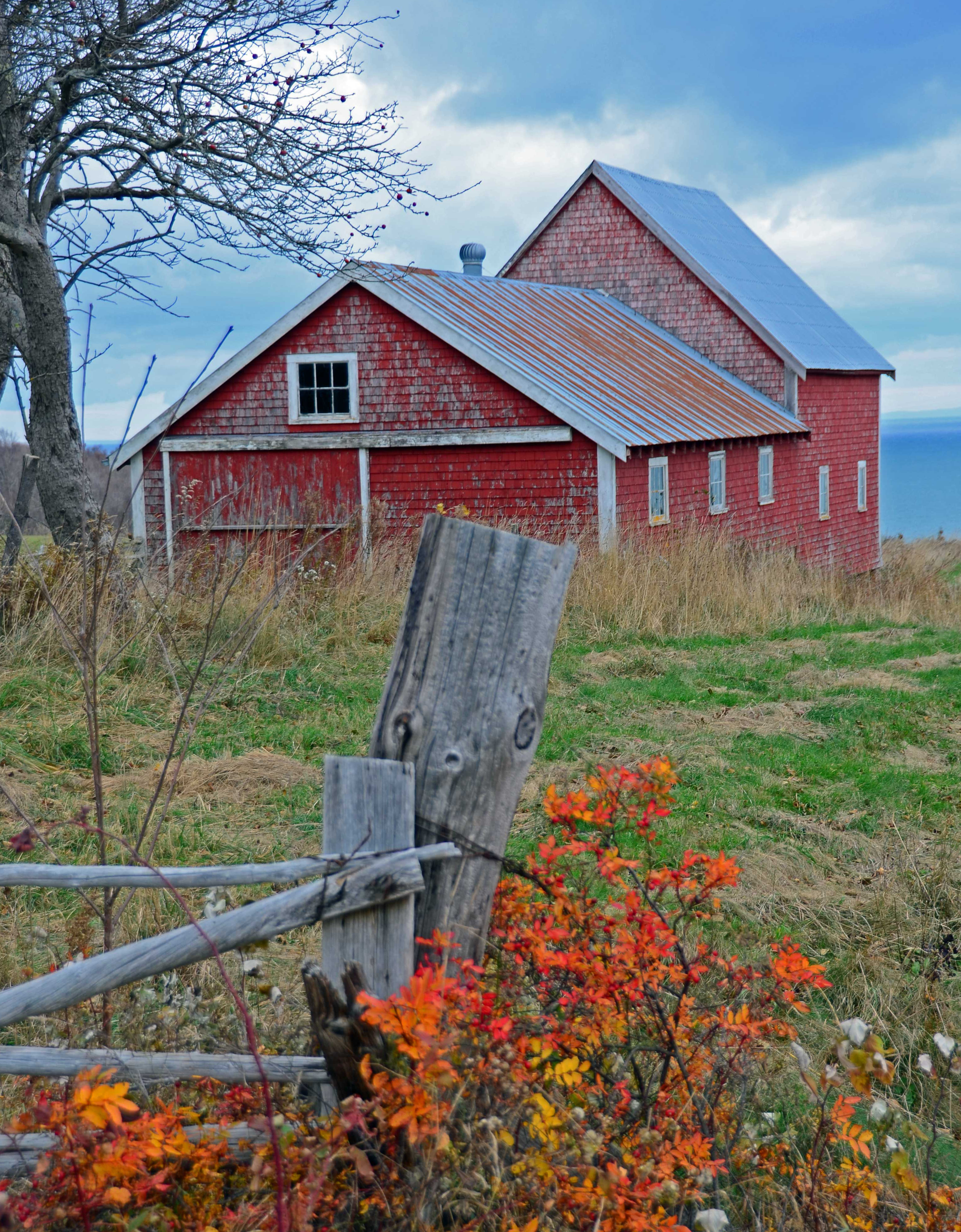
Rustic Red Barn, Near St. Croix Cove, Nova Scotia
___
Scenery does not get more picturesque than a rustic barn or cozy cottage situated against a body of moving water or a lush green field. While hues of red seem to be the color of choice for barns and barn doors along the maritime coast and nearby farm fields, shades of grey, blue, yellow and a few other colors sometimes sneak in. These barns, sheds and cottages from around Nova Scotia and New Brunswick are typical of the serene coastal and rural scenery throughout the region. (Click on image to enlarge.)



Vintage Rotary Phone at Bistro 138, Shelburne, Nova Scotia
___
Adorning a post near the counter of Bistro 138, a cozy restaurant and coffee shop in historic Shelburne, Nova Scotia, this very funky old rotary phone demands attention among a sea of people surfing their mobile devices. I’ve not seen a phone like this one before — its design and color make for an unusual piece of nostalgia. Located on Water Street in the heart of town, the food and other fare at Bistro 138 is also quite good and its staff is super friendly.
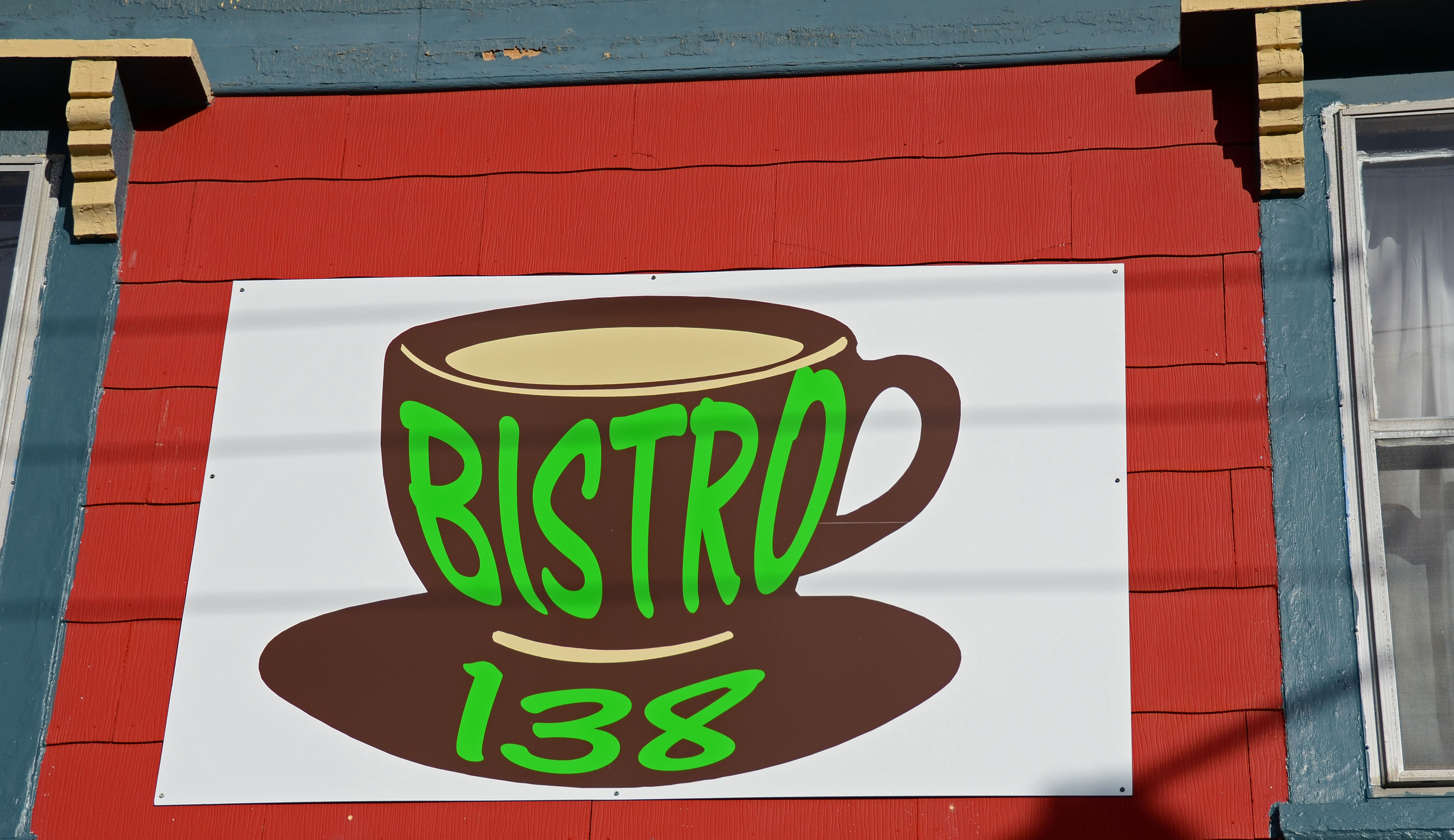 Bistro 138, Shelburne, Nova Scotia
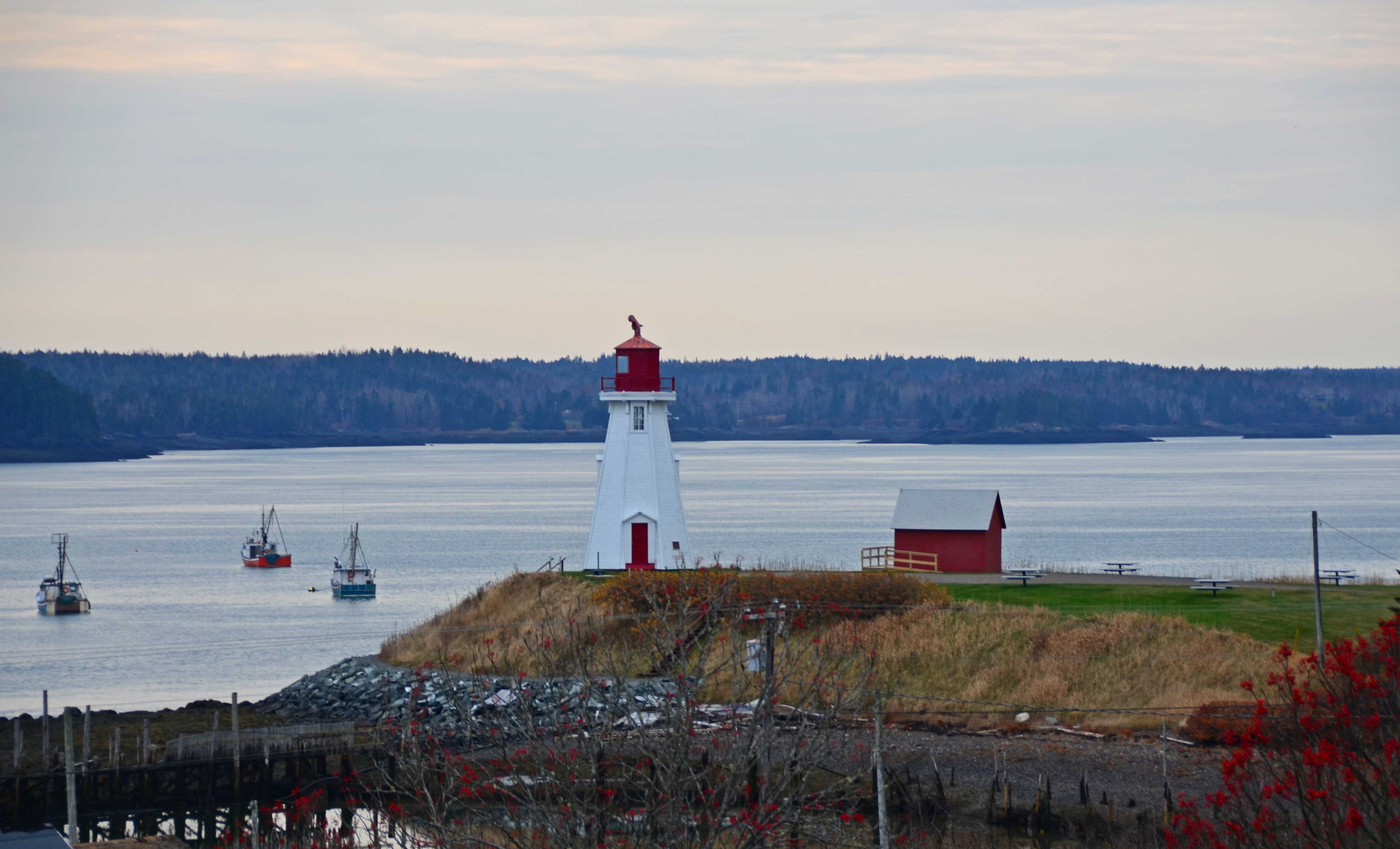
Toward Sundown, Campobello Island Lighthouse, New Brunswick
___
Campobello Island is nestled in a scenic pocket of southeastern New Brunswick and is accessible on the U.S. side from the charming village of Lubec, Maine. The island’s Roosevelt Campobello International Park is jointly administered by both American and Canadian authorities, making it unusual for that reason among parks on either side of the shared border. It’s quite a trek to get there but its tranquil scenery is well worth the effort. These are from a recent brief visit.
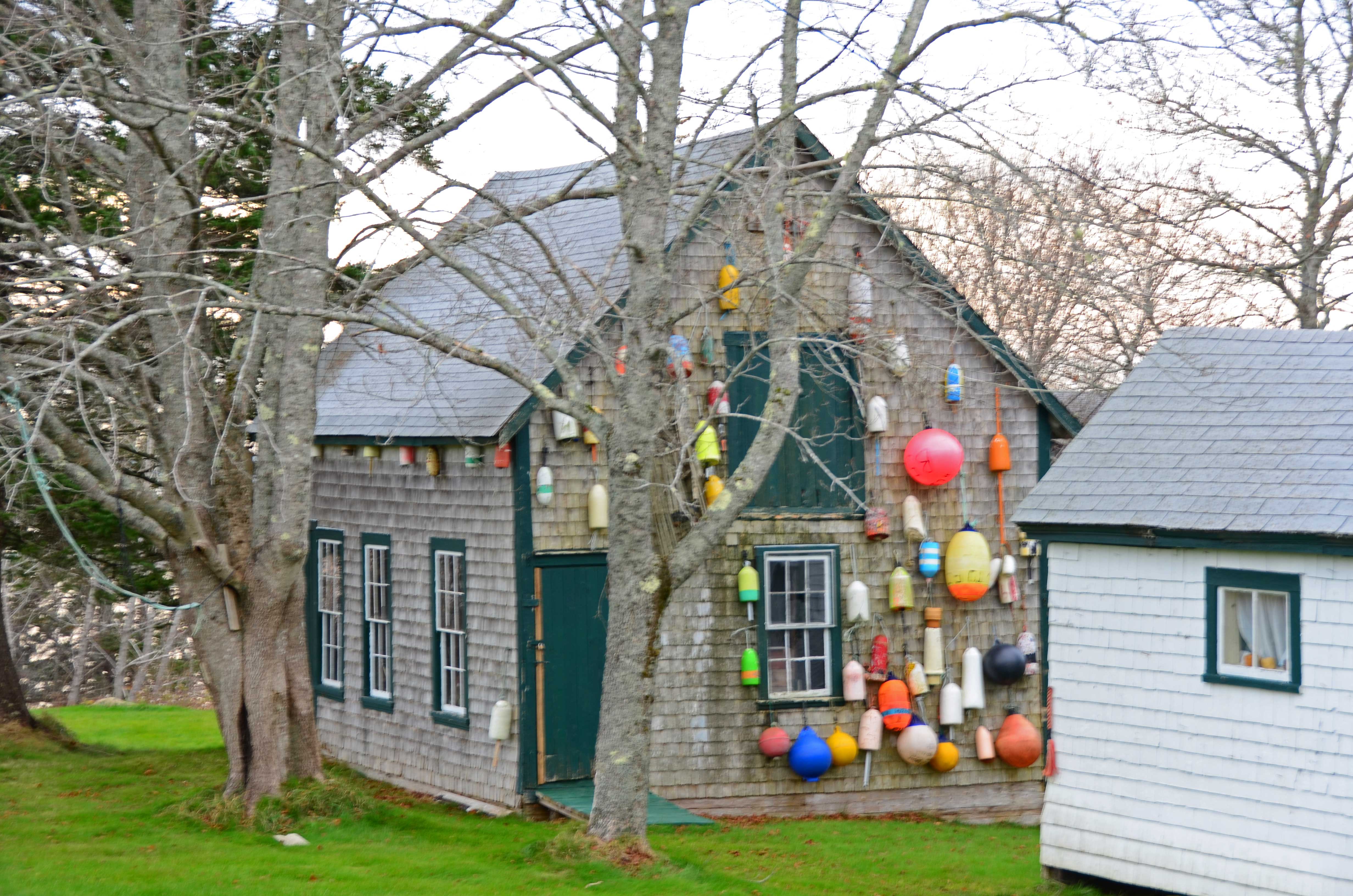
Colorful Cottage, Campobello Island, N.B.
___

Fall Sunset, Campobello Island, N.B.
___
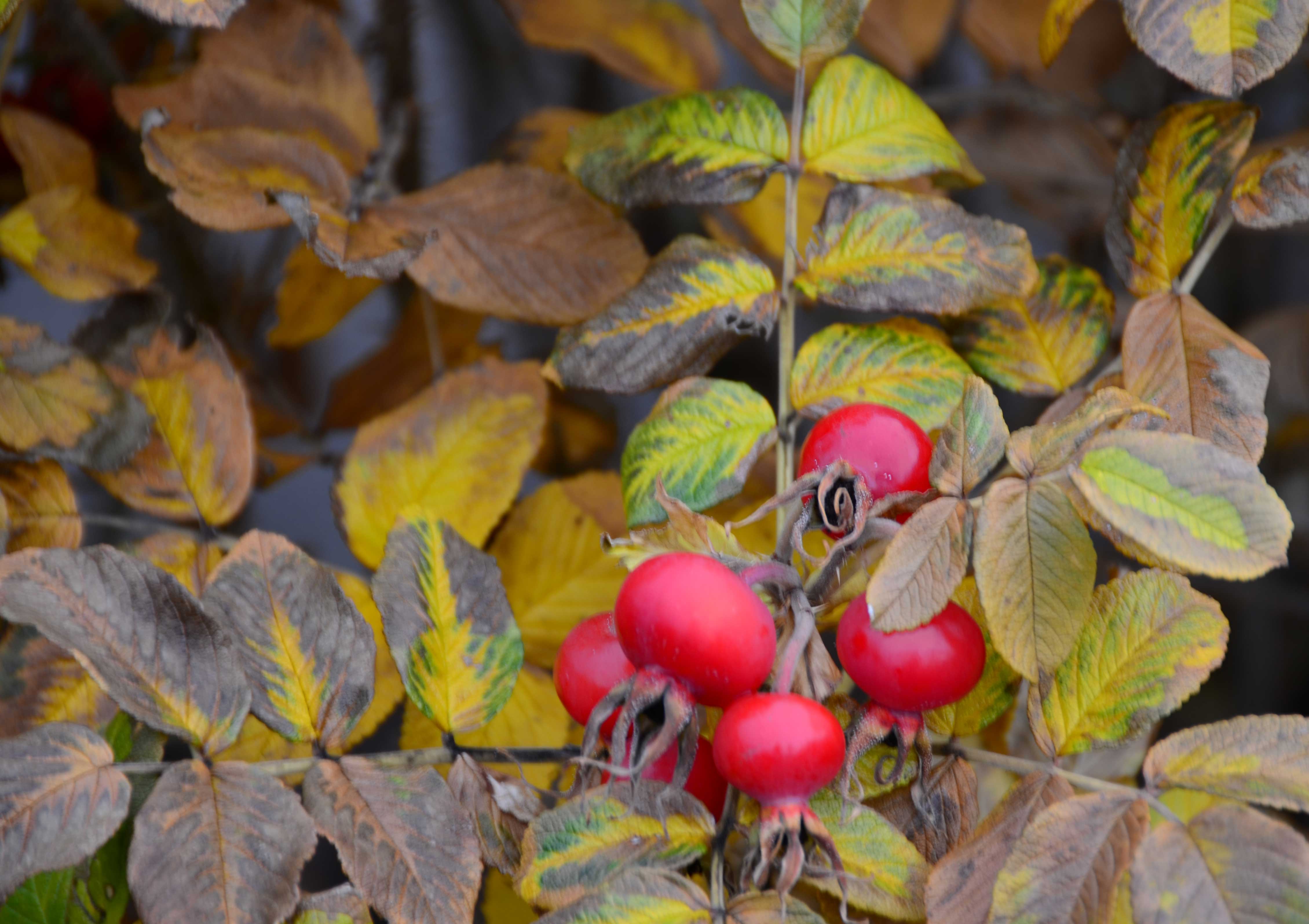
Rose Hips, Campobello Island, N.B.
___

Floating Cottages, Campobello Island, N.B.
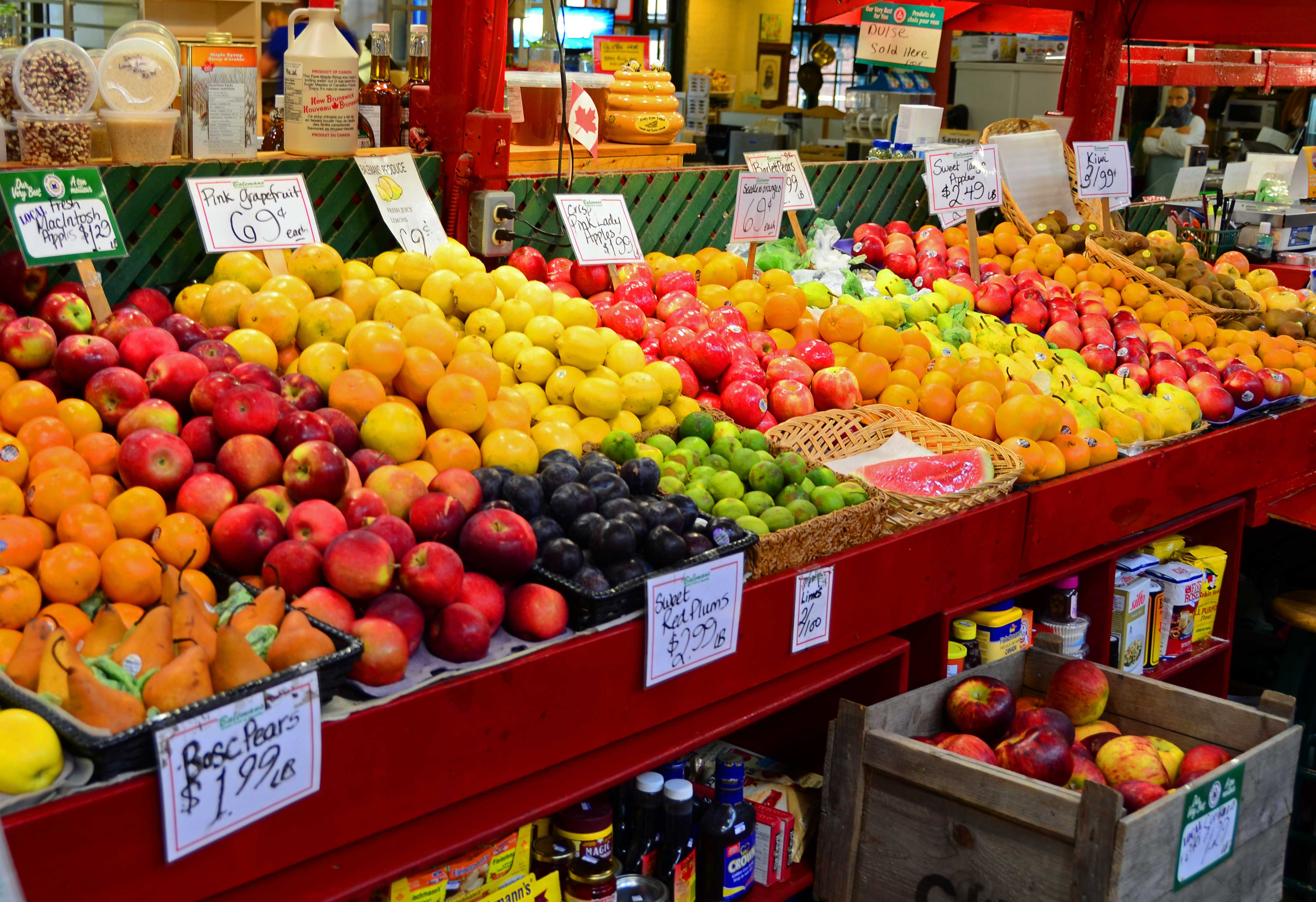
St. John, N.B. City Market
___
Americans celebrate Thanksgiving later this week, about a month and a half after Canadians mark their own similar holiday. A trip last week to the picturesque City Market in the heart of downtown Saint John, New Brunswick — filled as it is with vibrant colors, numerous tastes and smells, all manner of local and regional food offerings and friendly vendors — brought to mind both country’s annual Fall celebrations. These images taken during that trip provide a small sampling of this wonderful local marketplace.



Humorous 1940s vintage postcard found in antique shop in Annapolis Royal, Nova Scotia

Last month, when I heard that Alice Munro had been awarded the Nobel Prize for Literature I was somewhat embarrassed to realize that while I had heard of her I could not recall reading any of her work despite my having diligently mined many of the best writers of the short story form. So I was pleasantly surprised the very next day to have stumbled upon her autobiographical essay “Night” among the selections in The Best American Essays 2013, a volume that I had bought only a few days before (and which I highly recommend, by the way).

In this at times humorous essay originally published in the literary journal Granta, Munro reflects upon a particular period as a teenager when her sleep was fitful and how she dealt with that by sneaking out at night. Her nocturnal meanderings ultimately led to a memorable and poignant encounter with her plain-spoken father, which is hinted at in the following excerpt:
One night – I can’t say whether it was the twentieth or the twelfth or only the eighth or the ninth that I had got up and walked – I got a sense, too late for me to change my pace, that there was somebody around the corner. There was somebody waiting there and I could do nothing but walk right on. I would be caught if I turned back.
Who was it? Nobody but my father. He too was looking toward town and that improbably faint light. . . .
He said good morning, in what might have seemed a natural way except that there was nothing natural about it. We weren’t accustomed to giving such greetings in our family. There was nothing hostile about this – it was just thought unnecessary, I suppose, to give a greeting to somebody you would be seeing off and on all day long.
I said good morning back. . . .
“Having trouble sleeping?” he said.
My impulse was to say no, but then I thought of the difficulties of explaining that I was just walking around, so I said yes.
He said that was often the case on summer nights.
“You go to bed tired out and then just as you think you’re falling asleep you’re wide awake. Isn’t that the way?”
I said yes.
I knew now that he had not heard me getting up and walking around on just this one night. The person whose livestock was on the premises, whose earnings such as they were lay all close by, who kept a handgun in his desk drawer, was certainly going to stir at the slightest creeping on the stairs and the easiest turning of a knob.
* * *
(Photo credit: Derek Shapton)
_ __
__
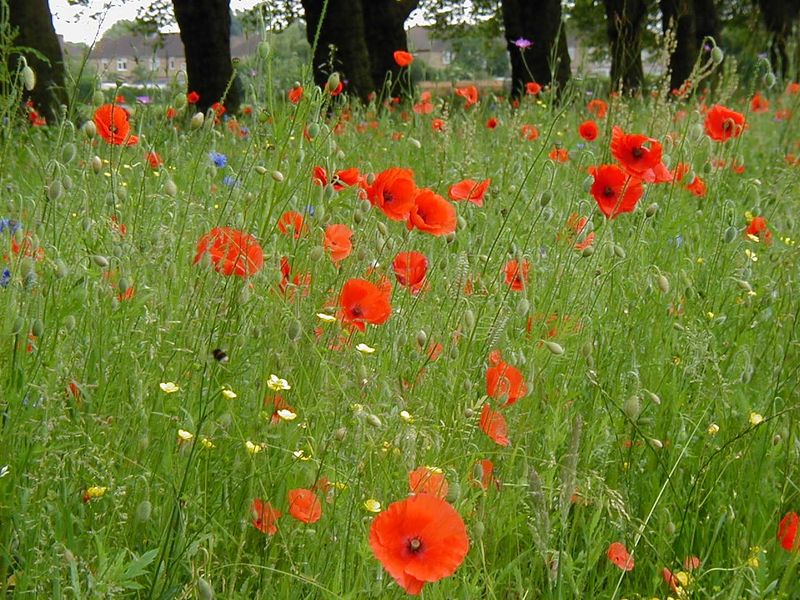
Red poppies already adorn many a chest and collar on each side of the border as a lead up to Monday when the U.S. marks Veteran’s Day and Canada observes Remembrance Day. Both occasions mark and honor the difficult sacrifices made by our respective veterans in service to their country. These vintage wartime posters from World War I remind us that the reach and privations of the war that prompted the first Remembrance Day extended, as most wars do, to the home front as well.


(Poppy Image Credit: Wikimedia Commons)
 O' Canada