Intricate Pebble Paintings by Kristina Boardman

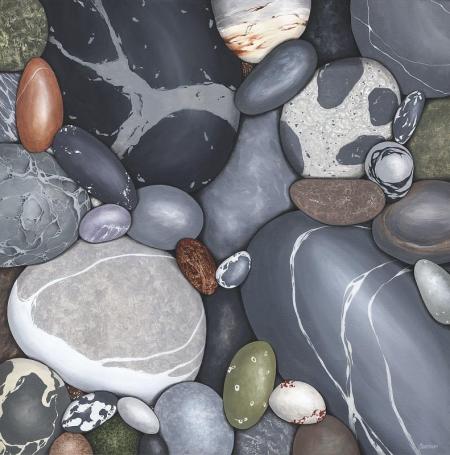
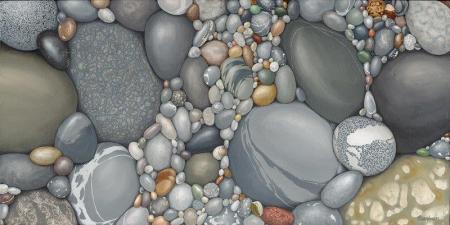
K. Boardman, Caras Pebbles

Kristina Boardman, “Cara’s Pebbles”

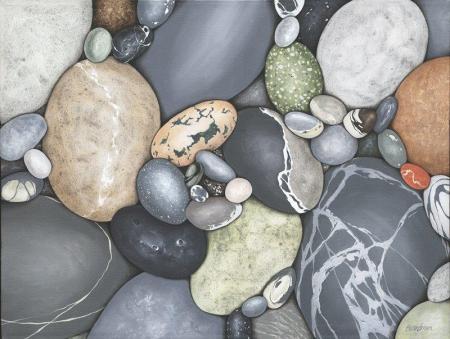
Photo-realistic paintings, such as these by BC-based artist Kristina Boardman, easily fool the casual observer as well as the more-studied eye.  That’s amazing enough!  But in addition, these works of pain-staking exactitude nicely capture the whimsy and pleasure of surveying a shoreline adorned with swaths of smooth-faced multi-colored stones and pebbles that have been thrown together randomly over long periods.

Although the realism of these paintings dictate a dominant blue-gray hue, Boardman wonderfully conveys nuance within that muted palette and complements this with perfect pops of other earth tones and pleasing juxtapositions of size and shape.  The compositions of some of these images, such as “Cara’s Pebbles” (above), suggest small jewels just underfoot.

Among other venues, her work is available at the Ian Tan Gallery in Vancouver and can also be viewed on Boardman’s website here.

K. Boardman, Communication

Kristina Boardman, “Communication”


K. Boardman, Saltspring Sunday

Kristina Boardman, “Saltspring Sunday”


“Leave a Trail . . .”

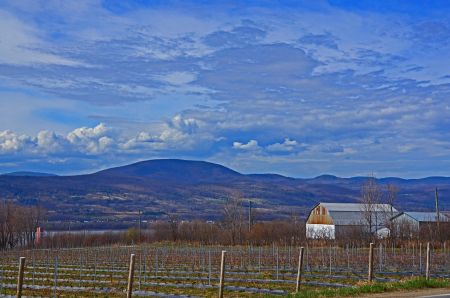
Farm Outside Quebec City

Farm Overlooking the St. Lawrence River and the Laurentians, Ile d’Orleans, Quebec

~

“Do not go where the path may lead, go instead where there is no path and leave a trail.”

                                          ~ Ralph Waldo Emerson

“You Haven’t Changed A Bit”: Astrid Blodgett’s Superlative Meditation on Relationships


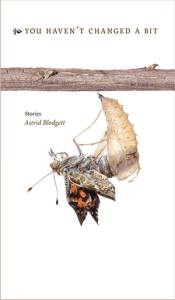
Cover -- You Haven't Changed v.2

Astrid Blodgett’s recently published first collection of short stories, You Haven’t Changed A Bit  (Univ. of Alberta Press 2013), is stunningly well written.  As I finished the book for the second time, I reflected how these stories brought to mind Rainer Maria Rilke’s observation about how each of us cannot help but be a mysterious solitude in relation to one another and, most especially and paradoxically, to our closest loved ones.

Almost all the thirteen stories in this wonderful volume explore fissures in relationships — whether between spouses, partners, siblings, parent-child or friends — and the unspoken mental landscape that inexorably shapes those relationships.  Notably, most of these tales are told from the perspective of a female character, who mainly endure the emotional pain that accompanies varying degrees of psychic distance from a loved one.

A small sampling:  In “Don’t Do a Headstand” a visit by her husband’s pregnant teen niece highlights the growing and likely irreparable gap between the spouses.  “Zero Recall” explores the toxicity of a husband’s mistrust and the wife’s ensuing bitterness at being treated unfairly, both of which threaten the couple’s bond following an unfortunate mix-up at a blood donation center.  The realization by young adult friends that divergent life paths will impact their ties in “Let’s Go Straight to the Lake” is skillfully elicited by the piece’s authentic, slightly awkward dialogue and scene-setting. Several of Blodgett’s stories are especially poignant, particularly “Ice Break,” about fragile parent-child relationships and the weight of guilt from choices that can’t be undone.  This latter story is one that I’ve written about previously and compelled me to seek out more of Blodgett’s captivating writing.

In an effort to stick with my preference for conciseness, I’ll conclude by simply noting that each of the stories in You Haven’t Changed A Bit is a pitch-perfect gem, characterized by truly graceful and insightful writing by a talented writer who is worth every bit of your attention.

Astrid Blodgett

Astrid Blodgett

More information about Astrid Blodgett and her writings can be found at the author’s website here.

Artist to Appreciate: Walter J. Phillips

Walter J. Philips -- York Boat on Lake Winnipeg (1930) v2

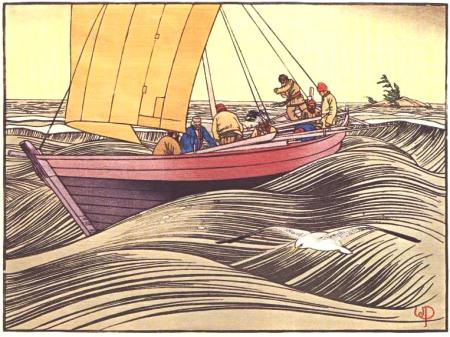
Walter J. Phillips, York Boat on Lake Winnipeg (1930)

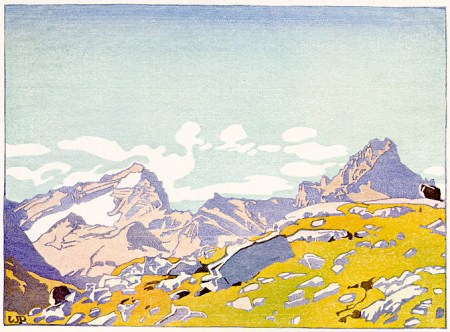
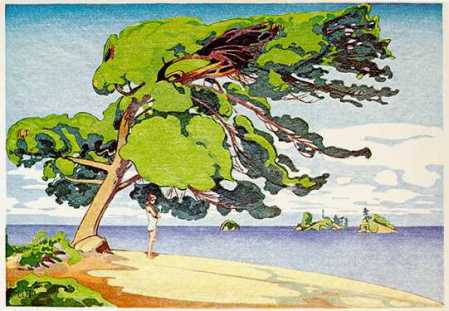
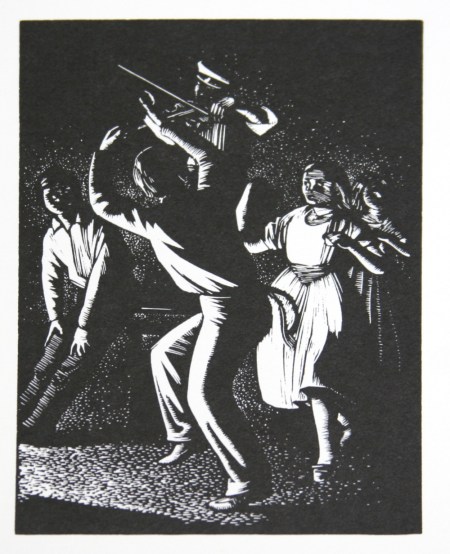
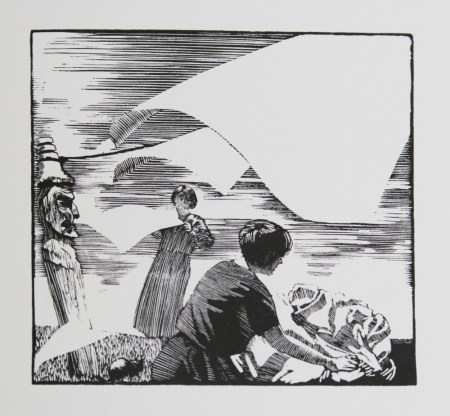
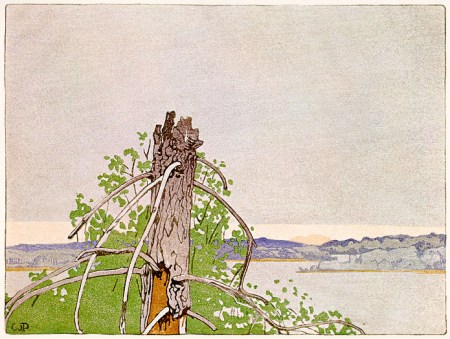
Walter Joseph Phillips is yet another unquestioned master of magnificent woodcut images of the Canadian landscape.  He often printed his artwork in color inks rather than just black ink as used by many of his contemporaries working in the same medium.  Although born in England, he settled in Canada as a youth and resided in Winnipeg, Manitoba for much of his life (the same place, coincidentally, chosen as a newfound home by another exceptional Canadian woodcut artist and fellow European immigrant, Eric Bregman).  Phillips produced the bulk of his work from the late 1910s through the 1940s.  In many of his images of the Canadian west he situated people within the scene, providing both a sense of scale and nice human emotional element.

Walter J. Philips -- Mount Cathedral & Mount Stephan (1928)

Walter J. Phillips, Mount Cathedral & Mount Stephan (1928)

Walter J. Philips -- Lake of the Woods (1931)

Walter J. Phillips, Lake of the Woods (1931)

Walter J. Philips -- Red River Jig (1931)

Walter J. Phillips, Red River Jig (1931)

Walter J. Philips -- The Clothes Line - Mamalilicoola (1930)

Walter J. Phillips, The Clothesline –Mamalilicoola (B.C.) (1930)

Walter J. Philips -- The Stump (1928) v2

Walter J. Phillips, The Stump (1928)

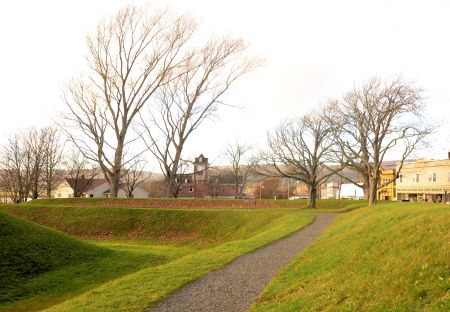
A Quiet Morning Walk at Fort Anne

aDSC_2102

Pathway Near the Earthworks, Fort Anne, Annapolis Royal, N.S.

“The present moment is the only moment available to us, and it is the door to all moments.”

~ Thich Nhat Hanh aDSC_2104

Hillside Cannon, Fort Anne, Annapolis Royal, N.S.

Eric Bergman: Master Wood Engraver

H. Eric Bergman, "White Morning" (1932)

H. Eric Bergman, “White Morning” (1932)

The intricate artistry of wood engravings amazes me and Canada has its fair share of accomplished artists in this medium. Chief among them is H. Eric Bergman, who emigrated from Germany in 1913 and made Winnipeg, Manitoba his home throughout a highly productive career until his passing in 1958.  Images from the Canadian wilderness figure prominently in many of his very stylized and moody works.

Similar posts on O’Canada: 

Lisa Brawn’s Vibrant Woodcuts

Laurence Hyde’s Southern Cross

Wintery Inspiration

A. Philbert -- The Dream Country

“The Dream Country” by Andre Philbert

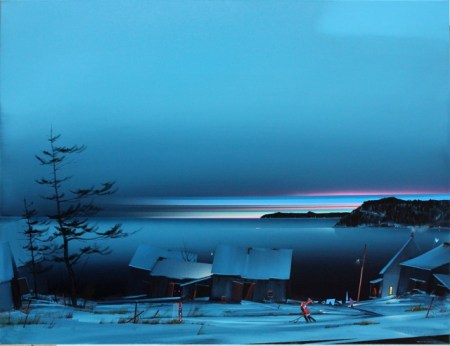
It’s definitely heavy coat and neck scarf weather around here, as it is in many places this time of year, so thoughts of winter cold are unavoidable.  This painting, “The Dream Country,” by Montreal artist, Andre Philbert, with its overwhelming shades of blue and houses set with jaunty rooflines perfectly captures the quiet chill of this time of year. More of Philbert’s deep-blue winter landscapes can be seen at the site for Toronto’s Liss Gallery.

Peaceful Kejimkujik Seaside

aDSC_1769

Kejimkujik Seaside, near Liverpool, N.S., is wonderfully peaceful along the north Atlantic coast, a perfect place for quiet reflection and a sun-soaked nap upon its massive granite rocks.

aDSC_1828

aDSC_1752

aDSC_1748  aDSC_1780

Artist to Appreciate: Richard Ahnert

R. Ahnert -- Messenger (2012)

Richard Ahnert, Messenger (2012)

~

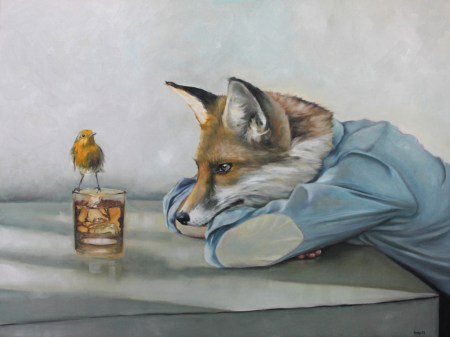
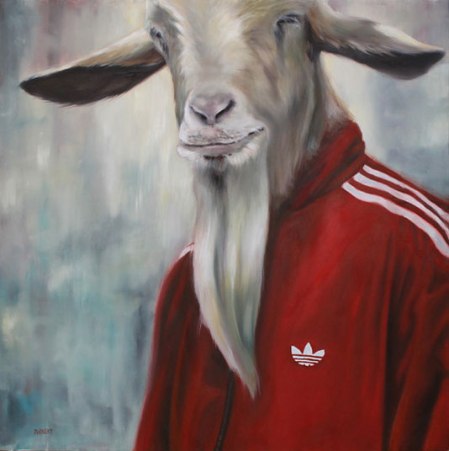
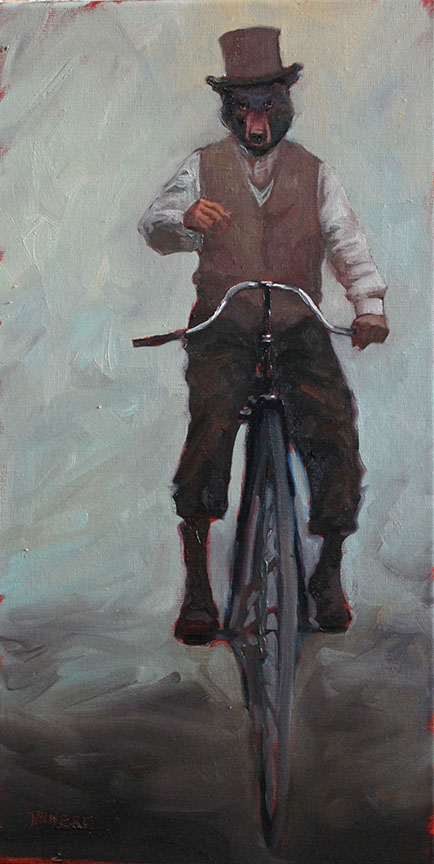
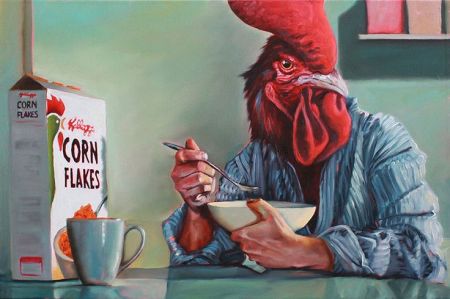
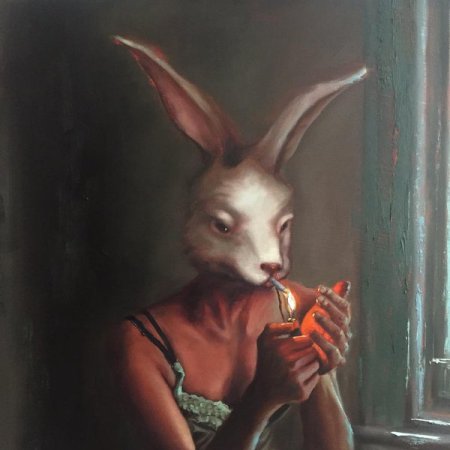
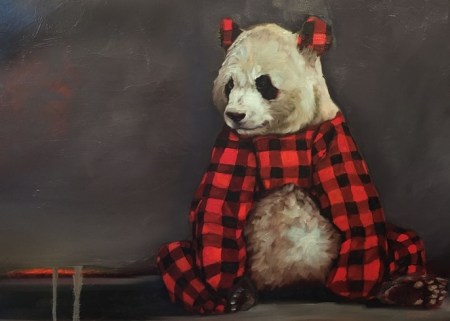
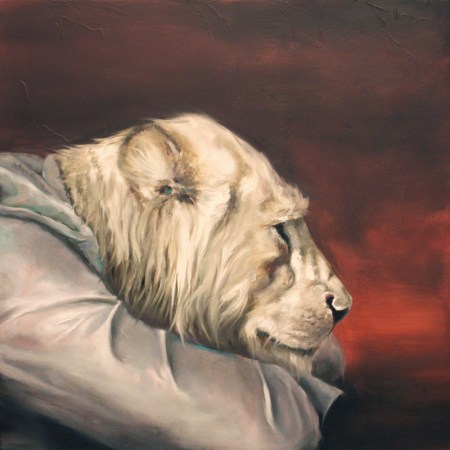
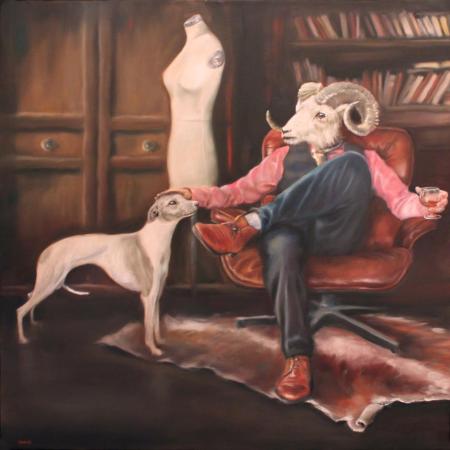
Richard Ahnert’s anthropomorphic art is both whimsical and brilliantly provocative. This Toronto-based artist paints intriguing images of animals engaged in activities one might expect of weary modern-day city dwellers. While his work harkens back to the playful (and disturbing) posed taxidermy of the Victorian era, Ahnert’s paintings engage the viewer with considerable satire and reflection.  The images here provide only a small glimpse of his range and more of Ahnert’s fascinating paintings can be seen at his website, MyCanvas.ca: Paintings by Richard Ahnert.

R. Ahnert -- Billy Brooklyn (2011)

Richard Ahnert, Billy Brooklyn (2011)

~

R. Ahnert -- Commute (2014)

Richard Ahnert, Commute (2014)

~

R. Ahnert -- Feed (2014)

Richard Ahnert, Feed (2014)

~

R. Ahnert -- First Light (2015)

Richard Ahnert, First Light (2015)

~

R. Ahnert -- Panda Wear (2014)

Richard Ahnert, Panda Wear (2014)

~

R. Ahnert -- Pride & Ponder (2013)

Richard Ahnert, Pride & Ponder (2013)

~

R. Ahnert -- The Hemingway (2013)

Richard Ahnert, The Hemingway (2013)

Come On In!: Doors of Annapolis Royal

aDSC_1882

~

Annapolis Royal occupies a special place in both the far western part of Nova Scotia’s Annapolis Valley and the province’s history.  Situated on the sweeping Annapolis River, the site was originally called Habitation at Port-Royal by French settlers around 1605 and was the capital of French Acadia.  In 1710, the settlement became the first capital of Nova Scotia during British rule. The charm of this small town is typified by its wide variety of doors and entryways, many of which hint at the town’s early history and its seaside heritage.  Here’s a sampling from a recent stroll on a brisk fall day.

~

Giving Thanks on Thanksgiving Monday

Monday is Canada’s Thanksgiving Day . . .

ajDSC_5932

“If the only prayer you said in your whole life was, “Thank you,” that would suffice.”

                                                                       ~Meister Eckhart

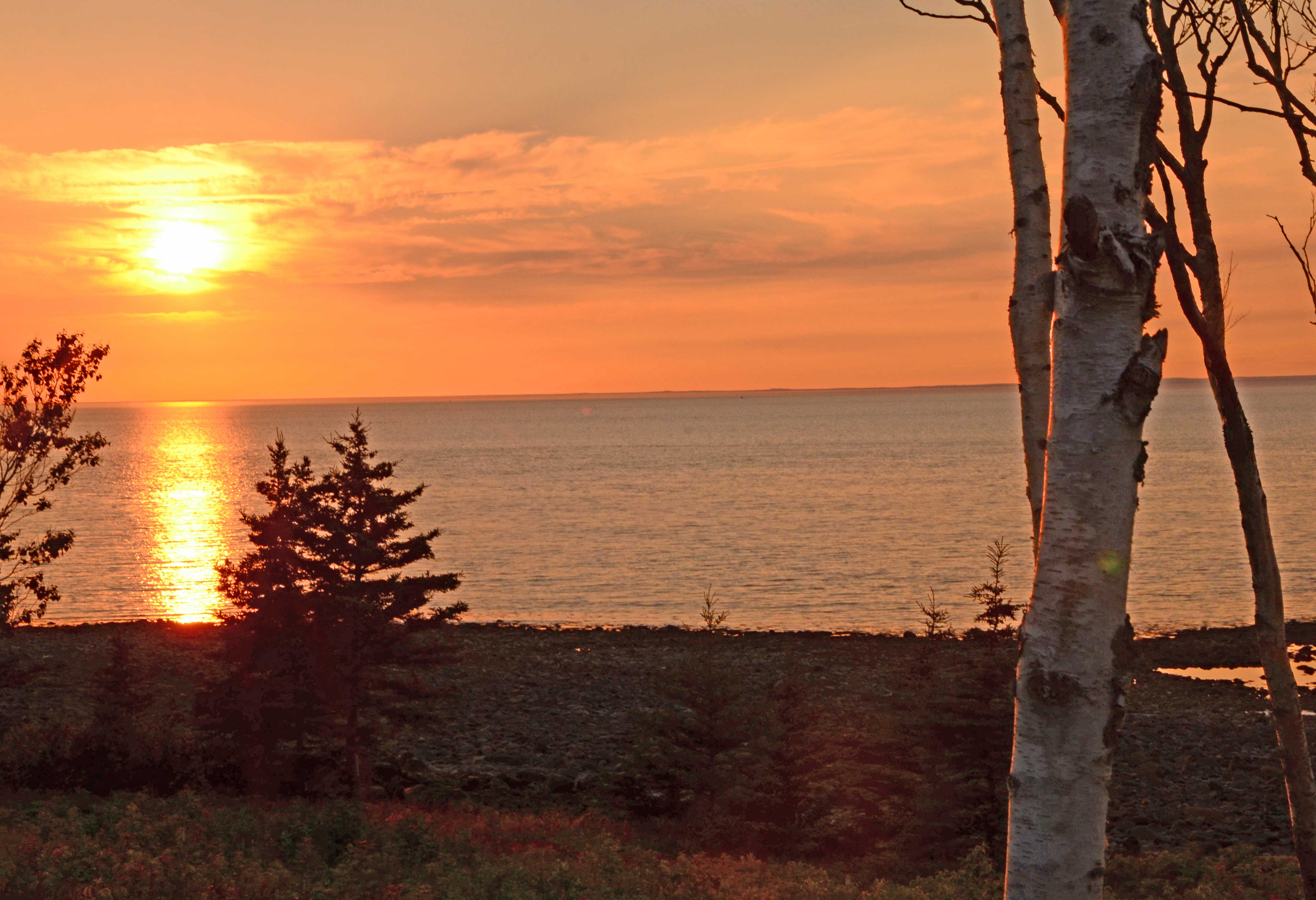
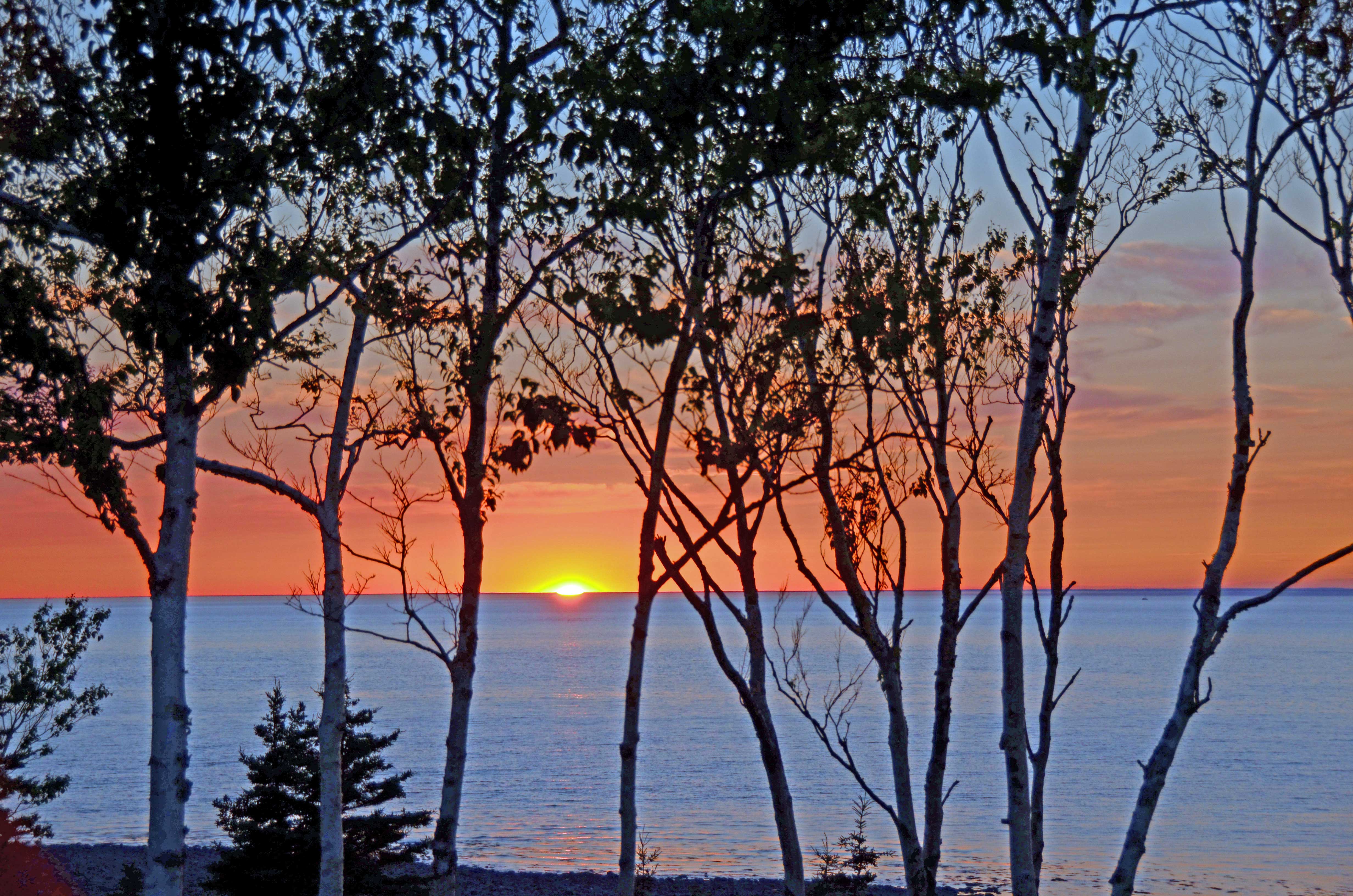
Late-Summer Sunsets on the Bay of Fundy

sunDSC_1634

“Clouds come floating into my life, no longer to carry rain or usher storm, but to add color to my sunset sky.”

                                                                      ~ Rabindranath Tagore

sunDSC_1666

On the Street Toronto: Fun & Unusual Signs

aDSC_1010

Some snaps of mostly fun and amusing shop signs and some others that caught my eye while out and about on the streets of Toronto.

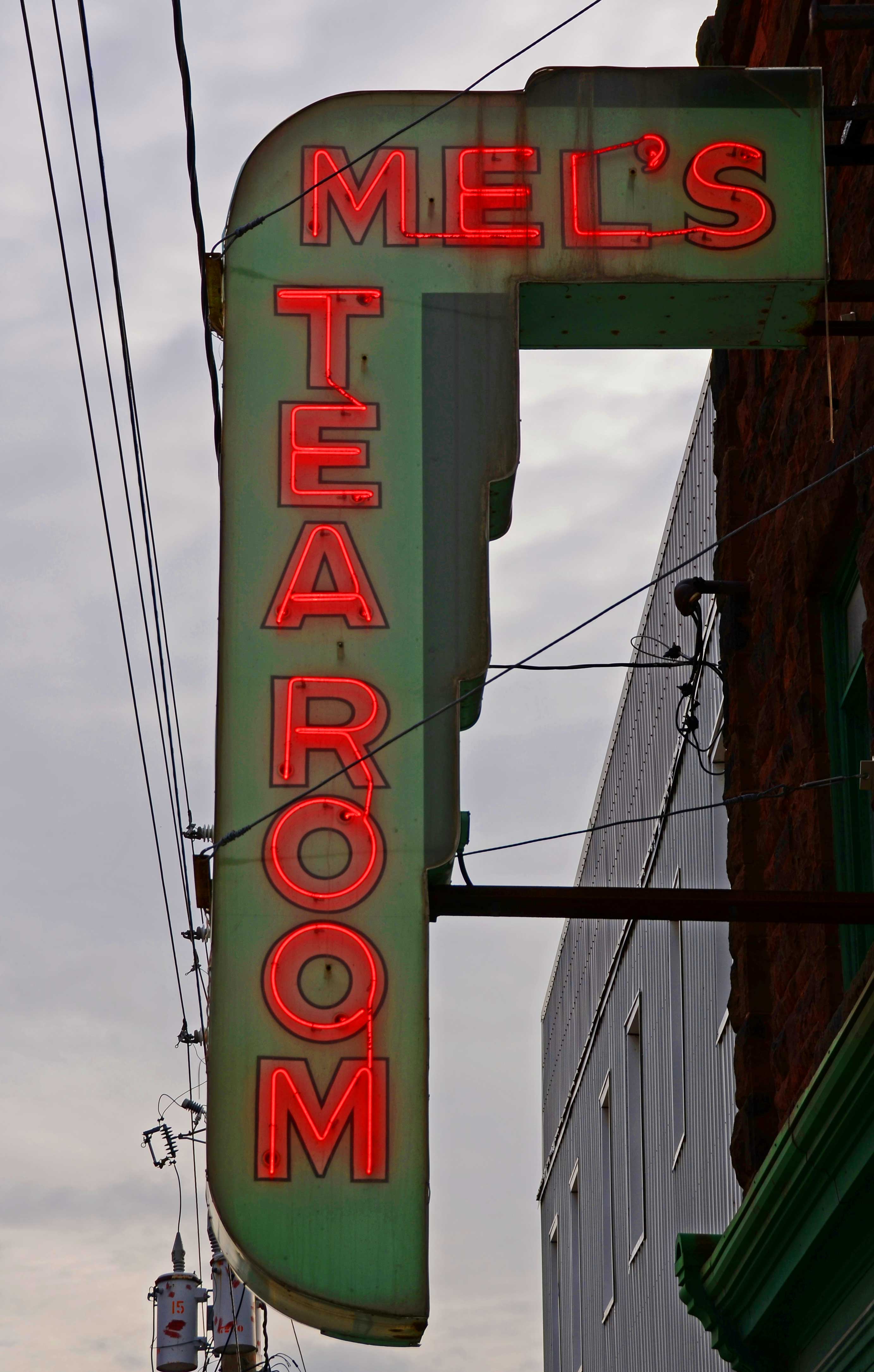
“Mel’s Tearoom” — Finished

aDSC_1351----Mel's-Tearoom

Brett Lockwood, “Mel’s Tearoom, Sackville, N.B. (2015)

(Acrylic on Board, 32″x 48″)

In the recent past I’ve not picked up my paintbrushes as often as I’ve used my ever-dependable Nikon.  But something about the vintage neon sign hanging outside the Mel’s Tearoom diner in  Sackville, New Brunswick and the photo (below) that I snapped of it a while back (earlier post here) inspired me to translate that image onto canvas — with some usual artistic license along the way. Perhaps seeing Toronto artist Andrew Horne’s marvelous takes on classic signage from bygone eras both online and at his Flying Pony gallery in Toronto contributed as well.  In any event, the result is above (photo is a bit crooked), which I’ve happily finished and wrapped with a handmade floating frame.  Efforts at painting like this are good meditative exercises and always enhance my appreciation for the skill and creative expressions of professional artists.

wwwDSC_9390

Inspiration Photo for Painting

Stewart Jones’s Vivid Cityscapes

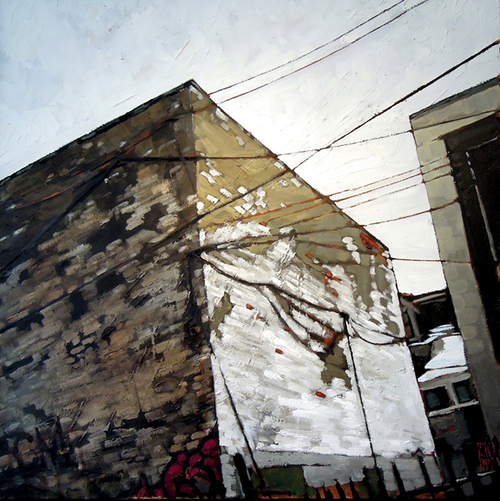
Wellington Composition

Stewart Jones, Wellington Composition (2013)

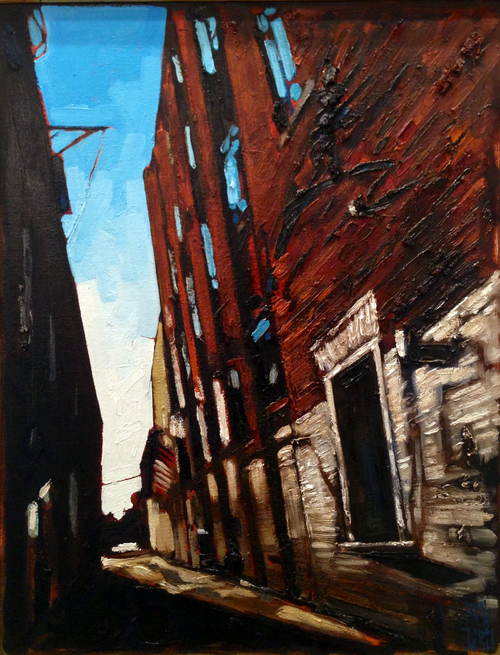
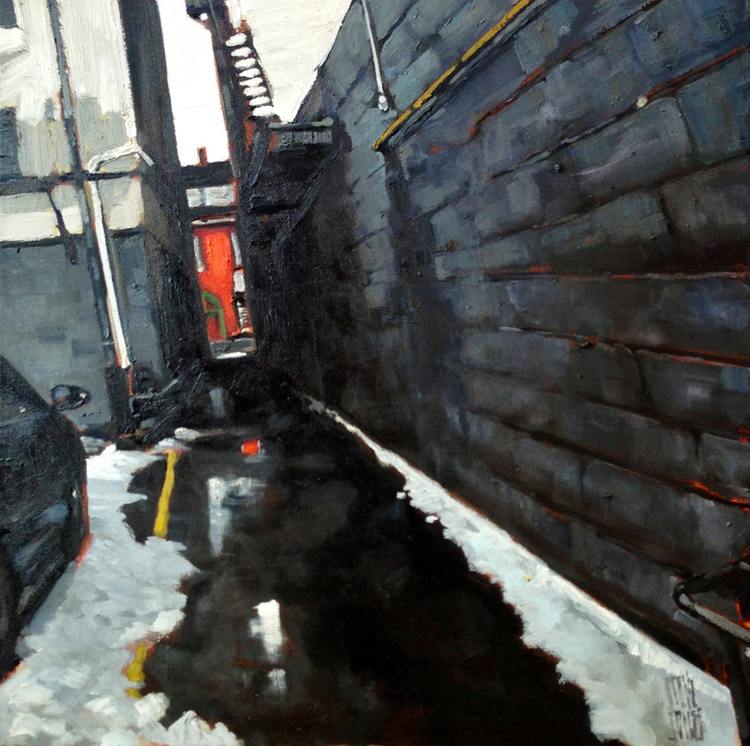
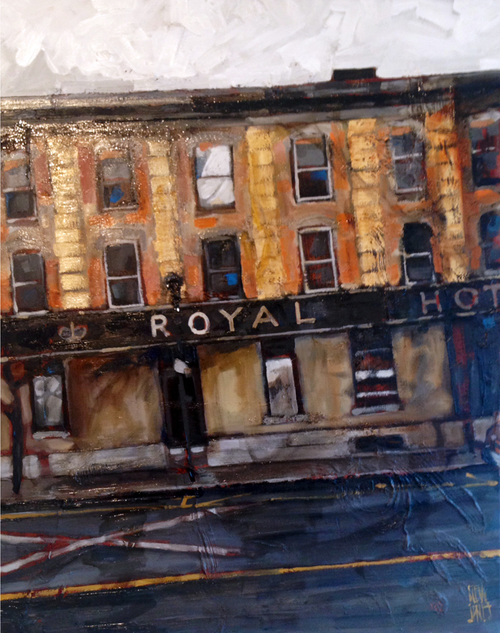
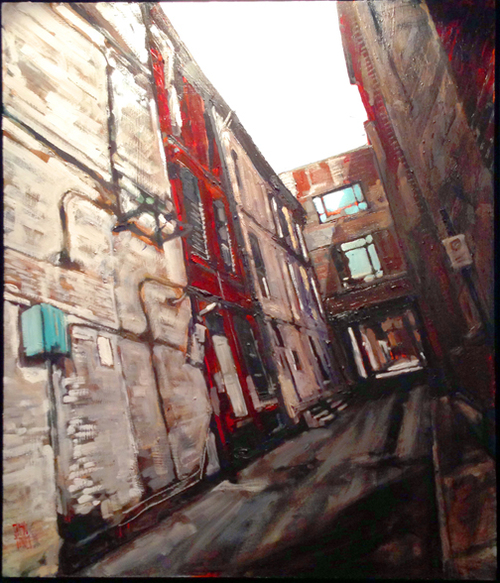
Stewart Jones is an immensely talented Canadian artist with a passion for painting vivid cityscapes — many set in Ontario — that are simply wonderful.   He refers to his paintings as “love letters to the forgotten corners and alleyways” of our cities. Jones’s images often depict buildings at irregular angles or vantage points and feature lush brushstrokes that together energize his work and provide a fresh perspective on the often-overlooked, uncelebrated urban structures and byways that constantly surround us.  More of Jones’s beautiful art can be seen at his painting website here and on his Facebook page.

CM COMPOSITION #1

Stewart Jones, CM Composition #1 (2013)

~

Urban Alley (2014)

Stewart Jones, Urban Alley (2014)

~

KINGSTON WALK WAY

Stewart Jones, Kingston Walkway (Year Unknown)

~

@ THE ROYAL HOTEL PICTON

Stewart Jones, Royal Hotel Picton (2014)

~

HAMILTON

Stewart Jones, Hamilton (2014)

Image Credits: Stewart Jones

Seeing Red

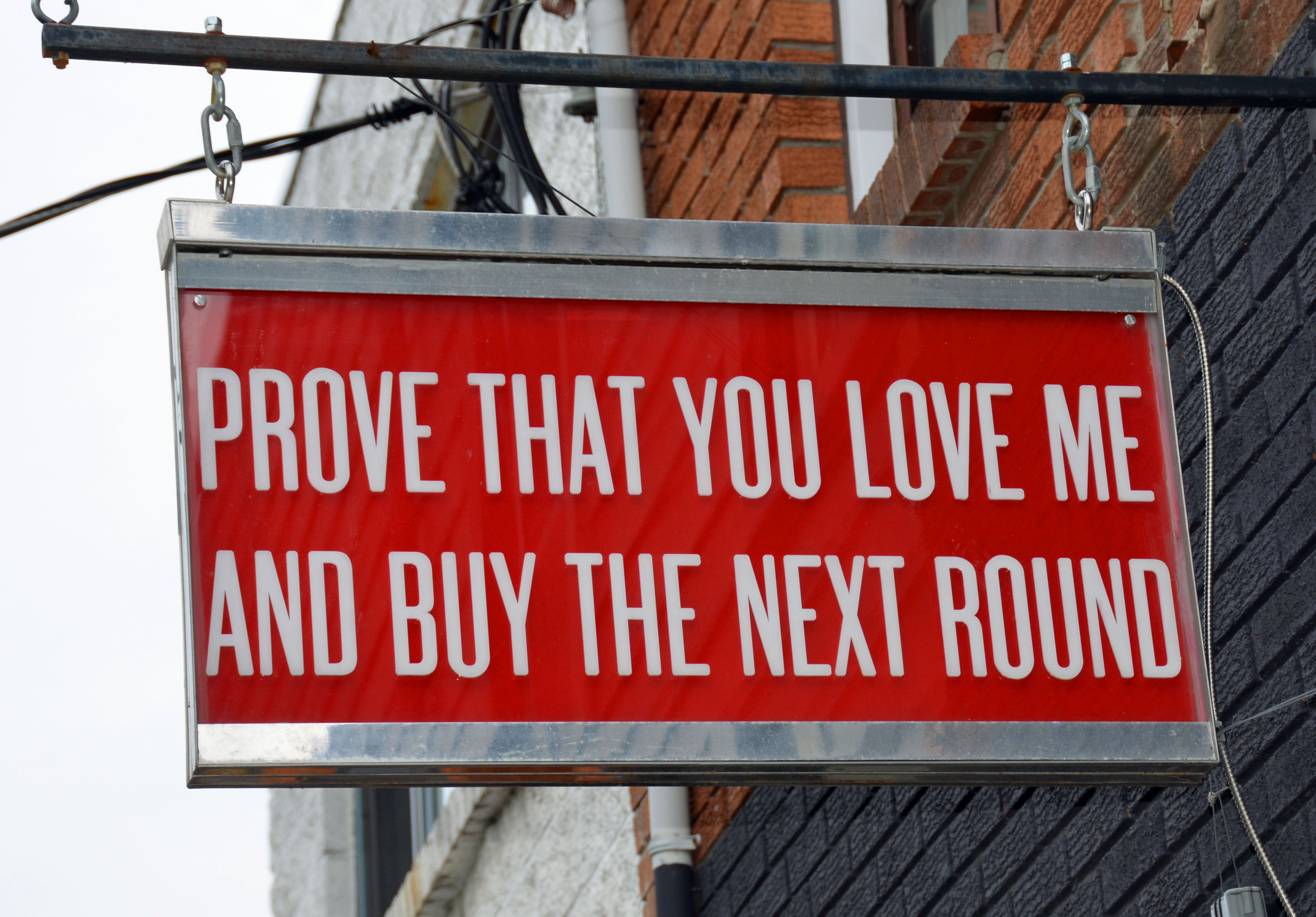
While recently browsing through some of my Canada photos I was struck by how often the color red made an appearance.  In our visual vocabulary red adds drama and impact in many ways, as this sampling across different regions of Canada highlights.

Brian Deignan: Memory, Imagination and Wonder

Barn, Nova Scotia

Brian Deignan, “House with View, Nova Scotia”

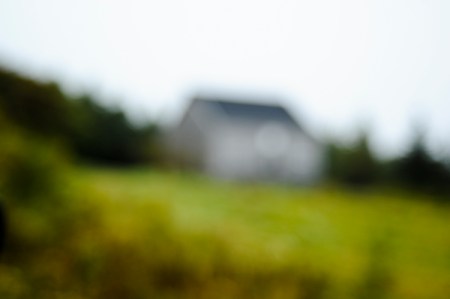
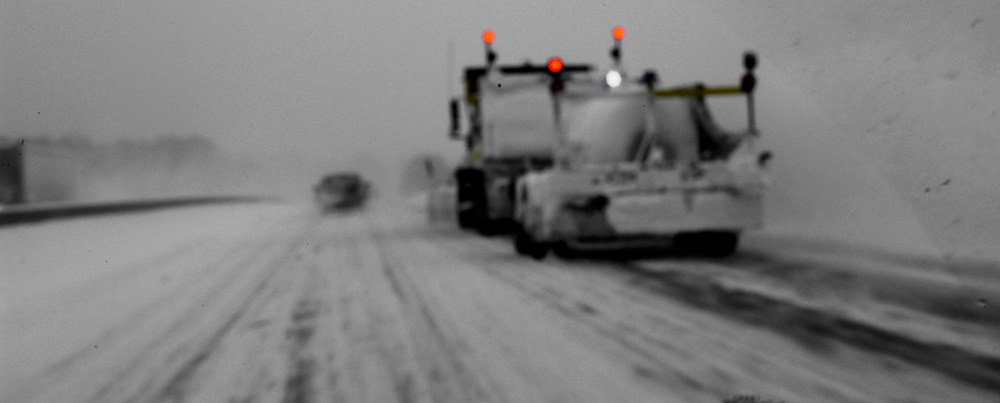
Because it is so unusual, the work of a highly-skilled photographic artist who intentionally seeks to blur his images stands out to me.  Such are the mysterious images produced by Brian Deignan, a Toronto-area fine art photographer originally from Montreal and who also has lived in several parts of the U.S.  Unlike typical bokeh photographs — where the subject is in focus against a blurred background — Deignan’s entire subject is out of focus.  The resulting impressionistic images resemble paintings and conjure up deeper thoughts that often elude sharply focused photographs.   Deignan hints at this with the following observation from his portfolio website:  “People, places, things are what I photograph; memory, imagination, wonder are how.” Very nicely stated!

See more of Deignan’s images at his site here.

CROSSWALK#28

 Brian Deignan, “Crosswalk #28” (High Noon in Mississauga)

Winter Wonderland #10

Brian Deignan, “Winter Wonderland #10”

School Bus, Route 332

Brian Deignan, “School Bus, Route 332 — Nova Scotia”

SUNDAY DRIVE 25

Brian Deignan, “Sunday Drive #25”

Sunday Drive

Brian Deignan, “Sunday Drive #20”

Friday Night, Queen Near Spadina

 Brian Deignan, “Friday Night — Queen Near Spadina”

(Image Credits:  Brian Deignan)

Lisa Brawn’s Vibrant Woodcuts

Bluebird

 Lisa Brawn, “Bluebird”

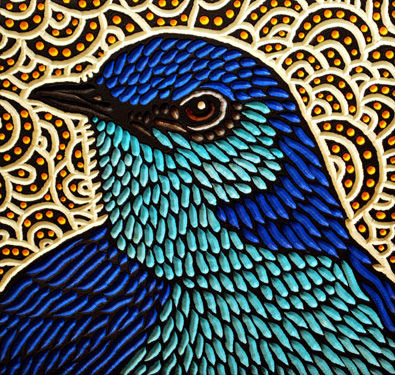
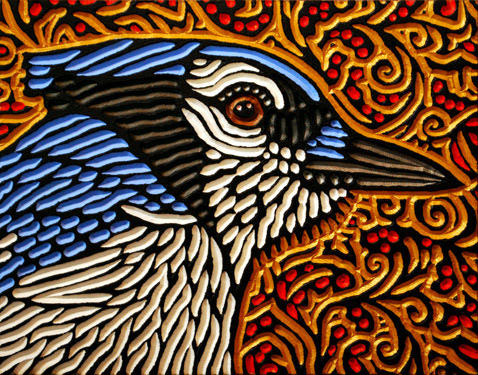
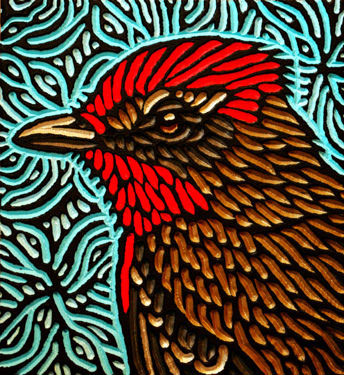
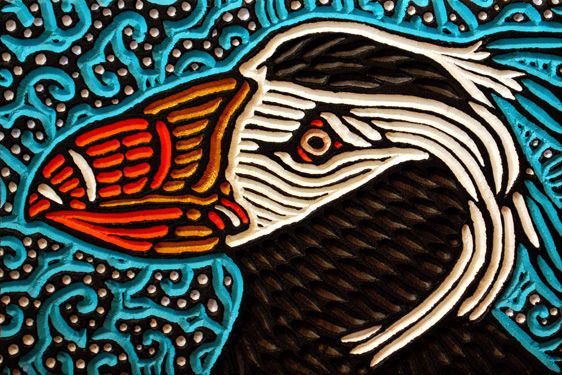
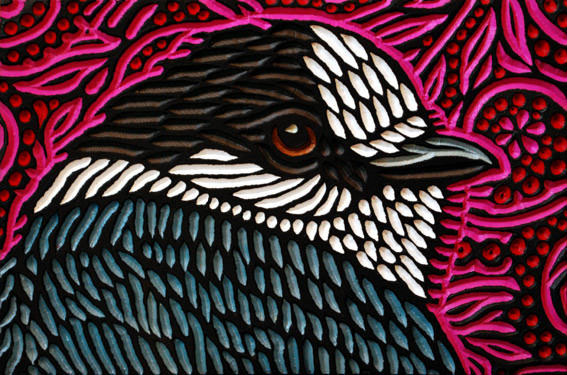
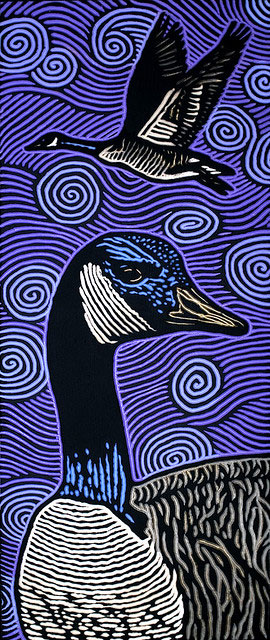
Lisa Brawn is a Calgary-based artist who painstakingly creates exquisitely vibrant woodcuts.  Her subject matter ranges from wild animals to celebrities to pop culture icons.  Shown here are some of her amazing images of wild birds, each with an abstract background carving that nicely complements the main subject.  Brawn’s annual “Wild Bird Woodcuts” wall calendar is gorgeous and is a hot collector’s item, having quickly sold out its 2014 and 2015 print runs.  More of her fabulous art can be seen at her website here.

Blue-Jay

Lisa Brawn, “Blue Jay”

Vermillion-Flycatcher

Lisa Brawn, “Vermillion Flycatcher”

Puffin

Lisa Brawn, “Puffin”

Gray-Jay

Lisa Brawn, “Gray Jay”

Geese

Lisa Brawn, “Geese”

Image Credits: Lisa Brawn

Related Posts on O’Canada Blog:

Laurence Hyde’s Southern Cross

Backwoods Lumbering During the 1880s

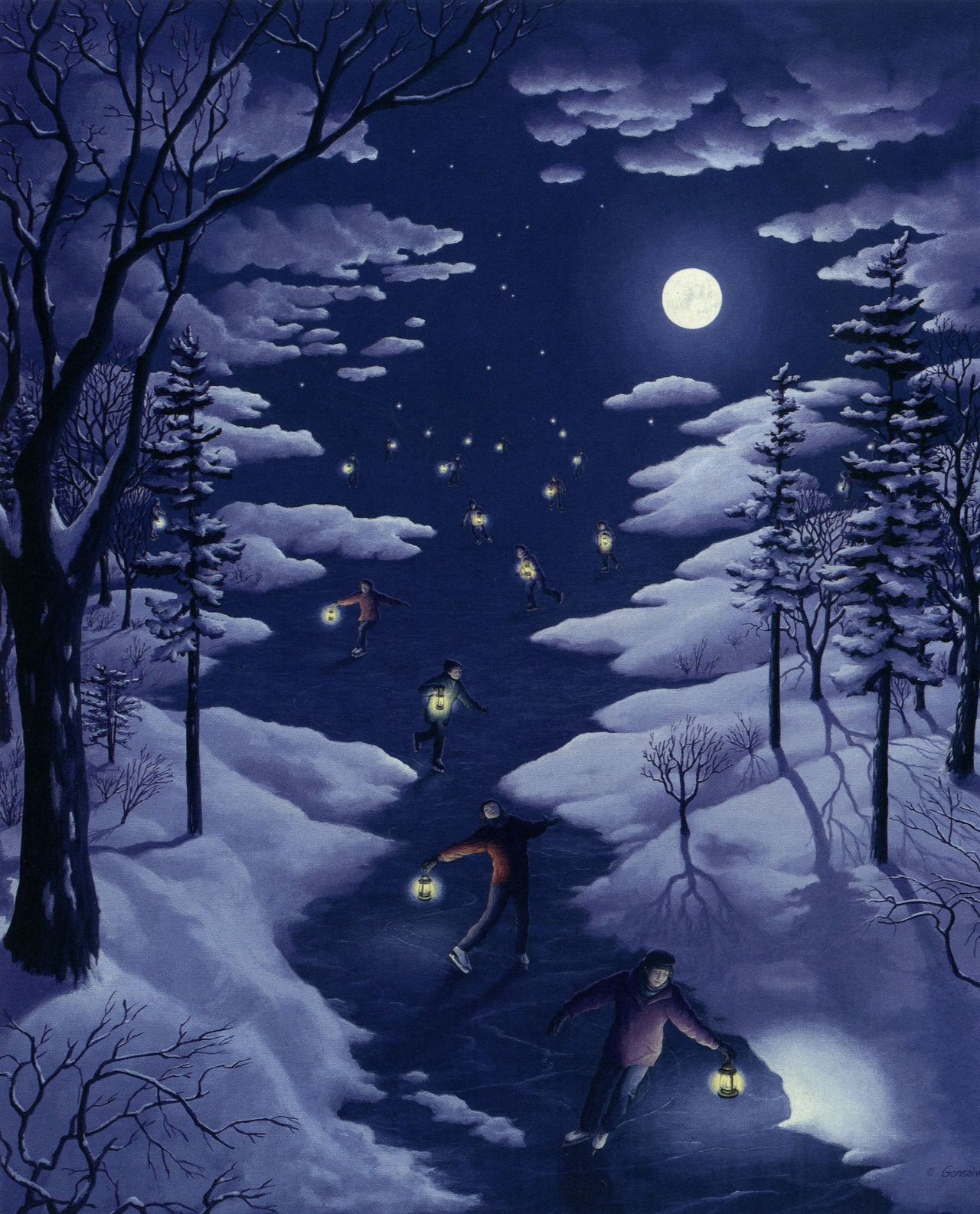
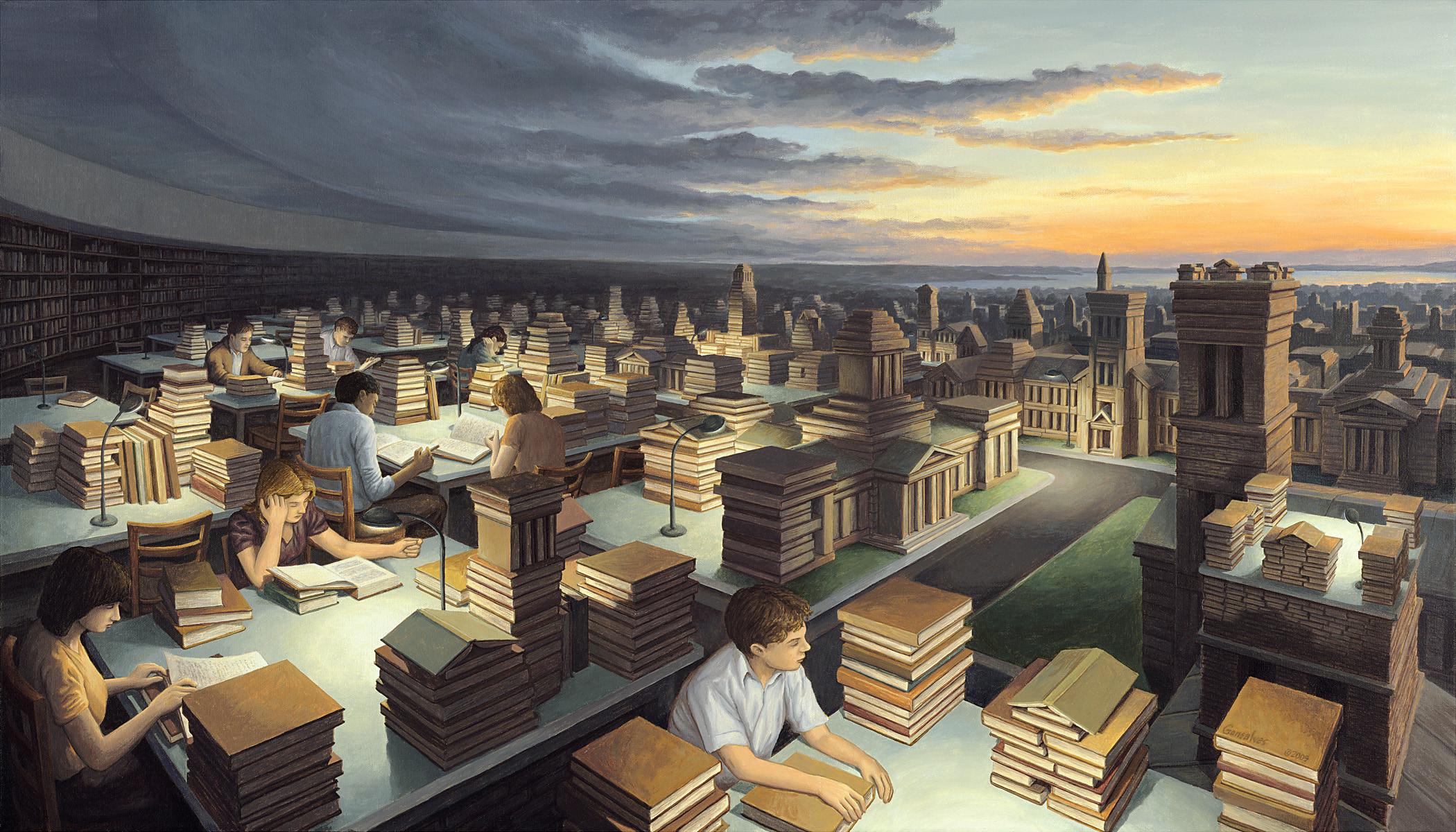
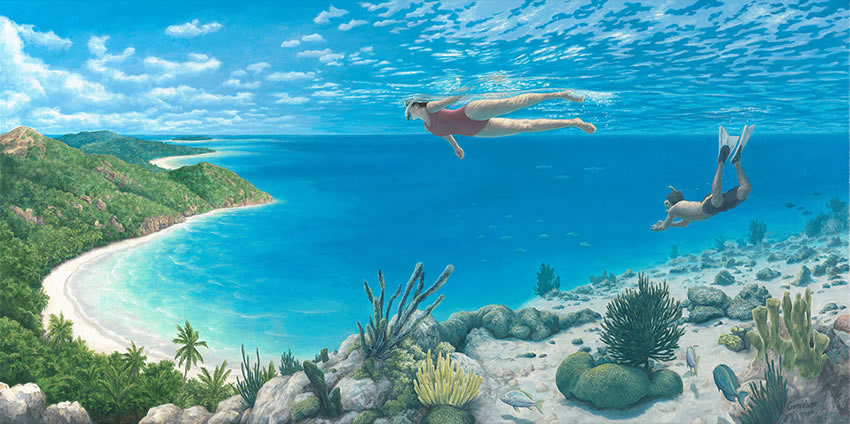
Dreamy Illusions: The Surreal Art of Rob Gonsalves

R. Gonsalves 2

“The Phenomenon of Floating”

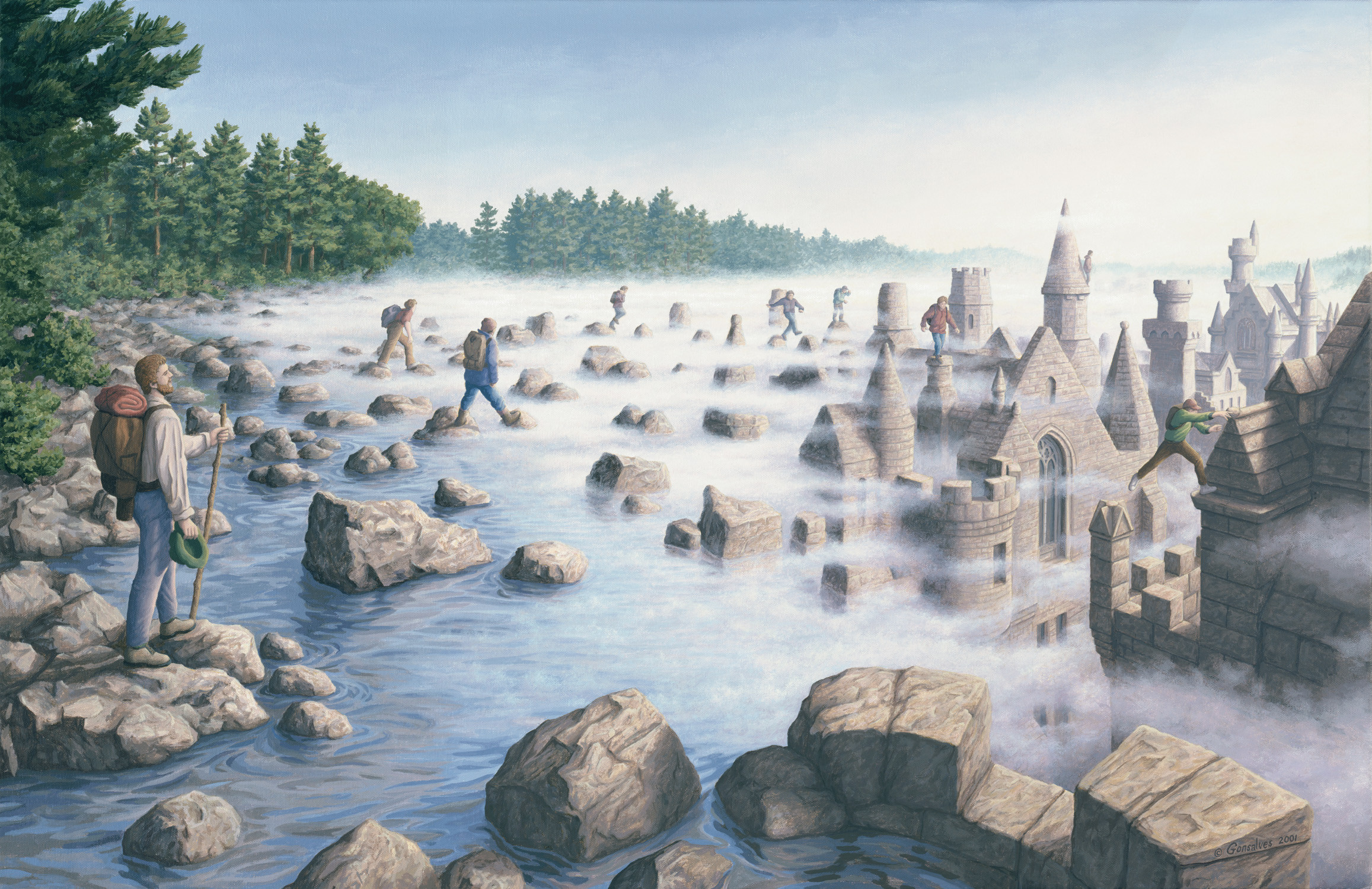
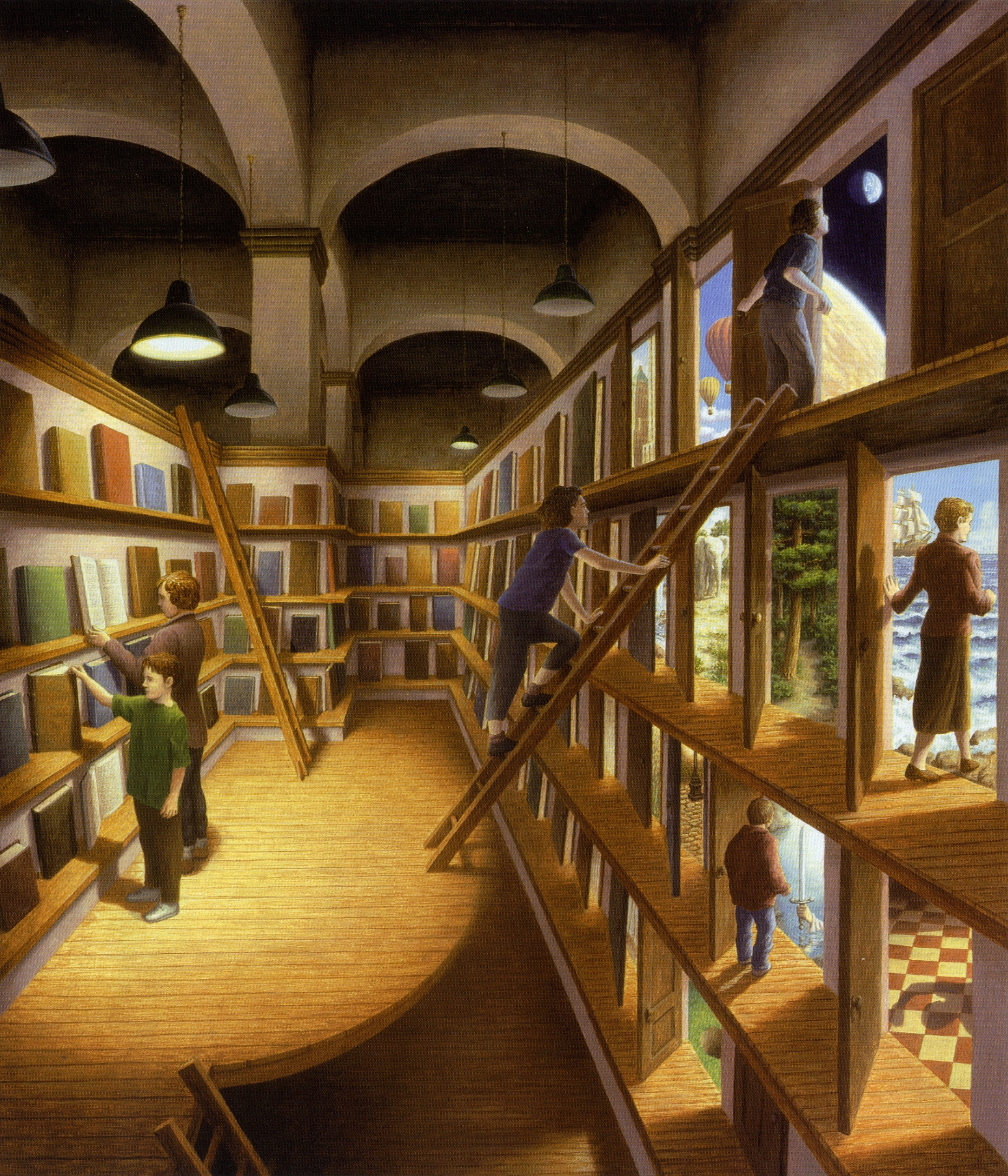
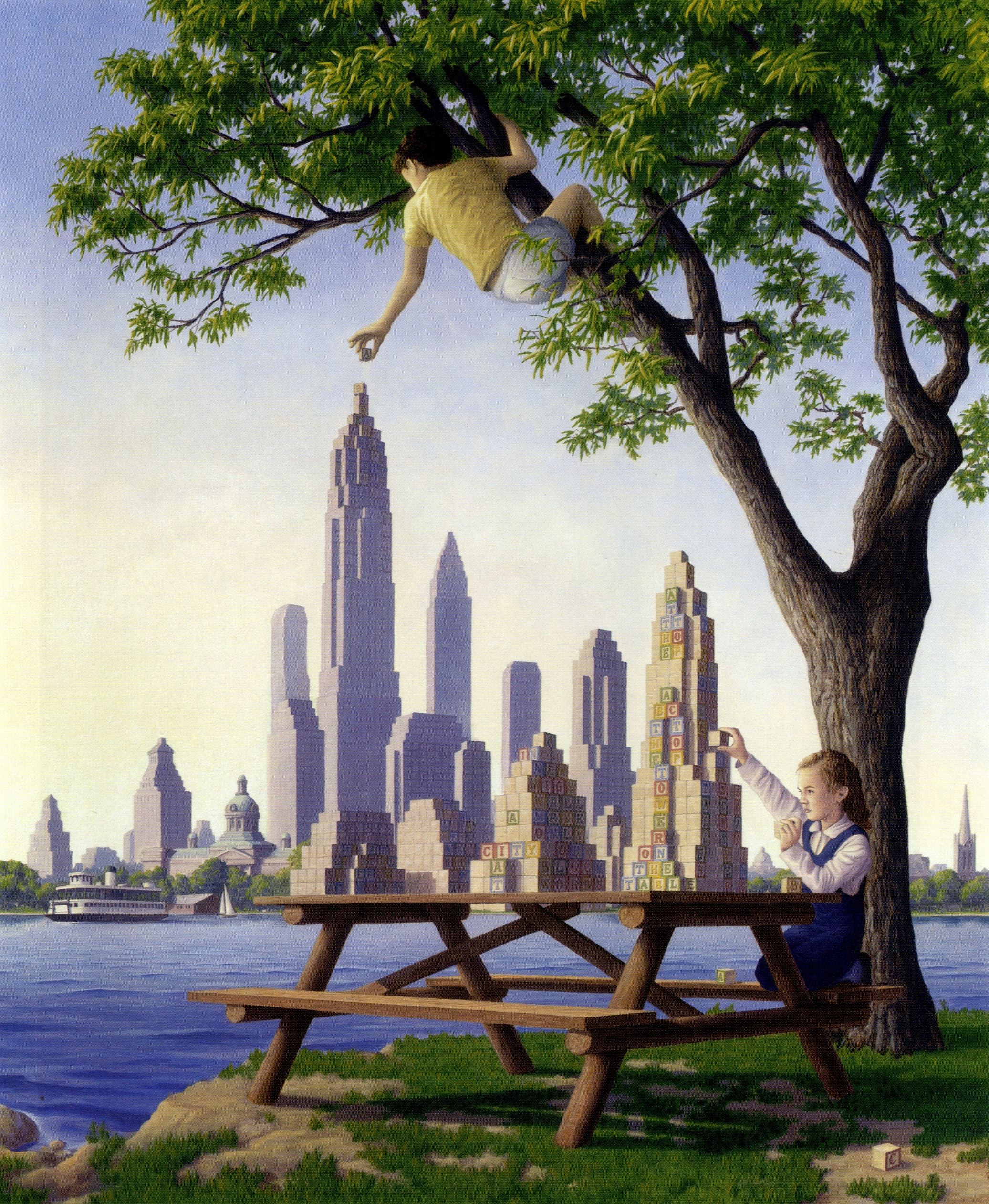
Toronto-born Rob Gonsalves is a surrealist master whose marvelous paintings depict dreamlike illusions. It’s almost like a mashup of M.C. Escher and Rene Magritte.  But, of course, Gonsalves’ style is the result of his own creative synthesis of many artistic strands.  Many of his paintings feature wide landscapes and young children — which seems appropriate for both the whimsical joy and philosophical reflection conjured by this painstaking artwork.  More of Gonsalves’ art can be seen on his official site here and at the site for Huckleberry Fine Art.

R. Gonsalves 4

  “Stepping Stones”

~

R. Gonsalves 5

“Written Worlds”

~

R. Gonsalves 3

“Tabletop Towers”

~

R. Gonsalves 6

“Nocturnal Skating”

~

R. Gonsalves 7

“Towers of Knowledge”

~

R. Gonsalves -- Beyond the Reef

“Beyond the Reef”

Image Credits: Rob Gonsalves and Huckleberry Fine Art.

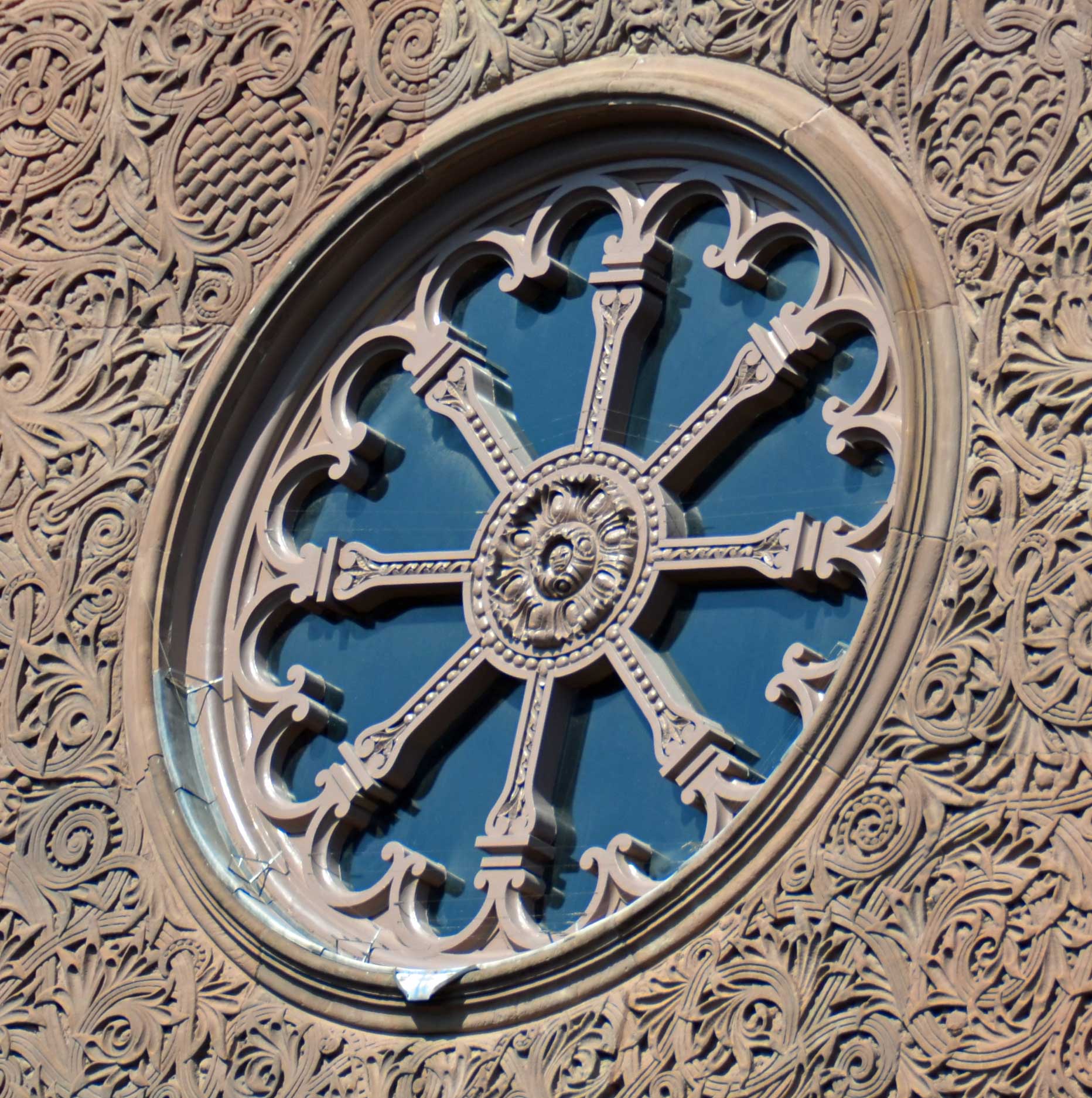
Toronto Architectural Snapshot

detailDSC_0758

 Intricate Detail Adorning a Decorative Window, University of Toronto Campus

__

“Your body is away from me, but there is a window open from my heart to yours.”  ~~ Rumi

Toronto Public Art: Barbara Hepworth’s “Parent 1”

Parent-1----BHepworth

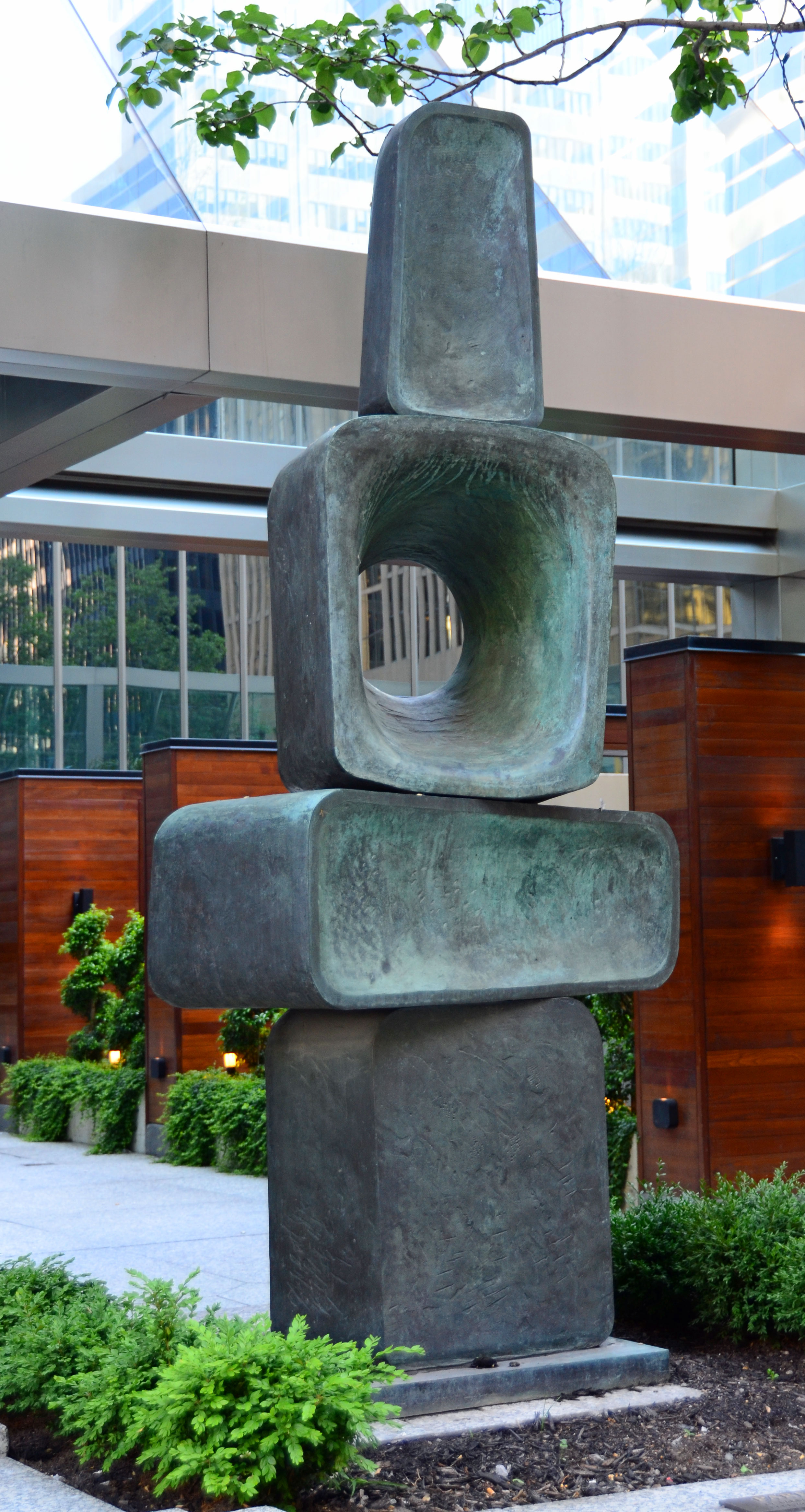
“Parent 1” (1984), by Barbara Hepworth — Her modern work calls to mind Inuit forms.

“Art enables us to find ourselves and lose ourselves at the same time.”

                                                                                     ~~ Thomas Merton

Artist Appreciation: Richard Thomas Davis

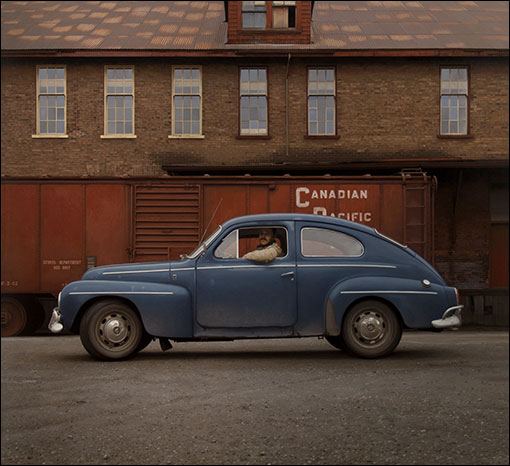
Richard Thomas Davis -- 65 Volvo

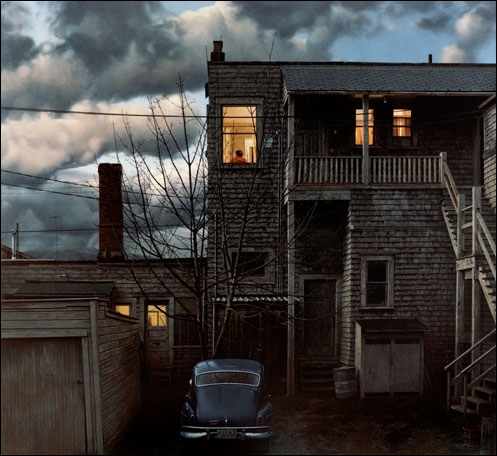
Richard Thomas Davis, “65 Volvo” (2012-13)

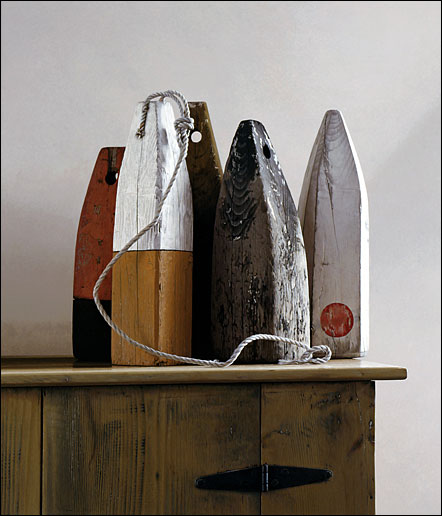
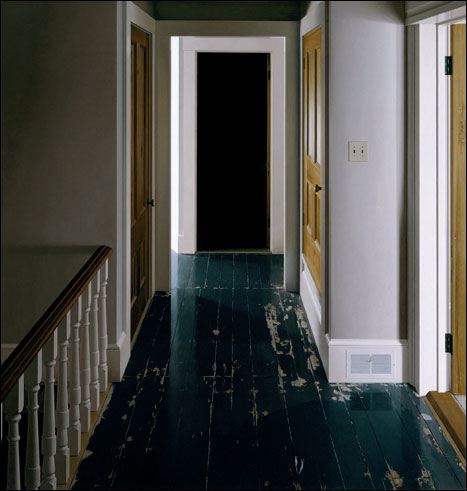
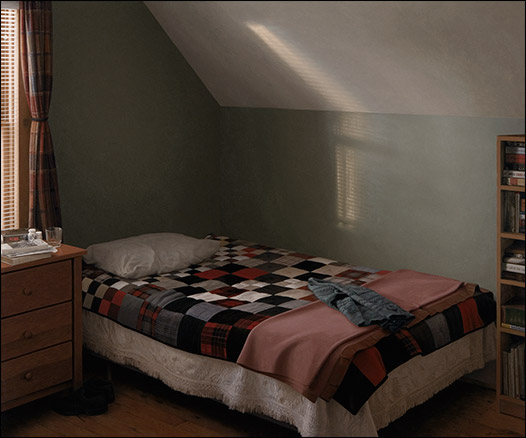
I truly love so many styles of art, but photo-like realism in painting is a style that often leaves me speechless by the skill and patience required of the artist to achieve such exceptional detail and still add that extra emotional touch to a scene that painting brings to the table.   I recently came upon the work of Richard Thomas Davis, an American born artist who is now a Canadian citizen living in Nova Scotia.  Davis’s choice of subject matter is terrific and captures bits and pieces of life in small town Canada.  I particularly like that while his images are nicely composed and perfectly rendered many of them incorporate elements of wear and tear and slight decay, each suggesting the passage and ravages of time and the living of life.

More of his works can be seen at Davis’s website here and at Toronto’s Odon Wagner Gallery and Halifax’s Studio 21 Gallery.

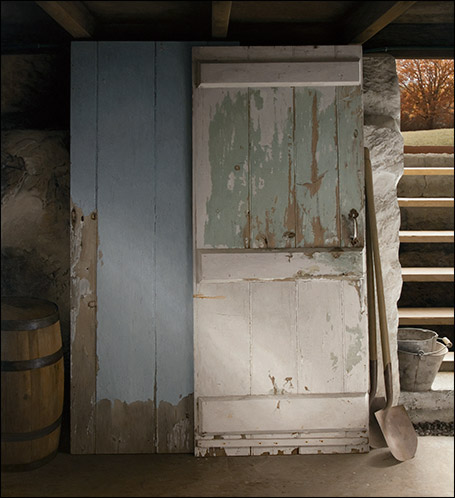
Richard Thomas Davis -- Storm Doors

“Storm Doors” (2010-11)

 ~

Richard Thomas Davis -- Red Dot

“Red Dot” (1995)

 ~

Richard Thomas Davis -- Hallway

“Hallway” (1994-96)

~

Richard Thomas Davis -- Cold Front

“Cold Front” (1974-76)

~

Richard Thomas Davis -- 4.30

“4:30” (2010-11)

~

 Similar posts on O’Canada:

—  Artist Appreciation:  Andrew Horne

—  Sean Yelland’s “Distant” and “Stop Everything”

—  Artist to Appreciate:  Christopher Walker

Welcoming Another Year of Wonder

aw2Nova-Scotia-2011102

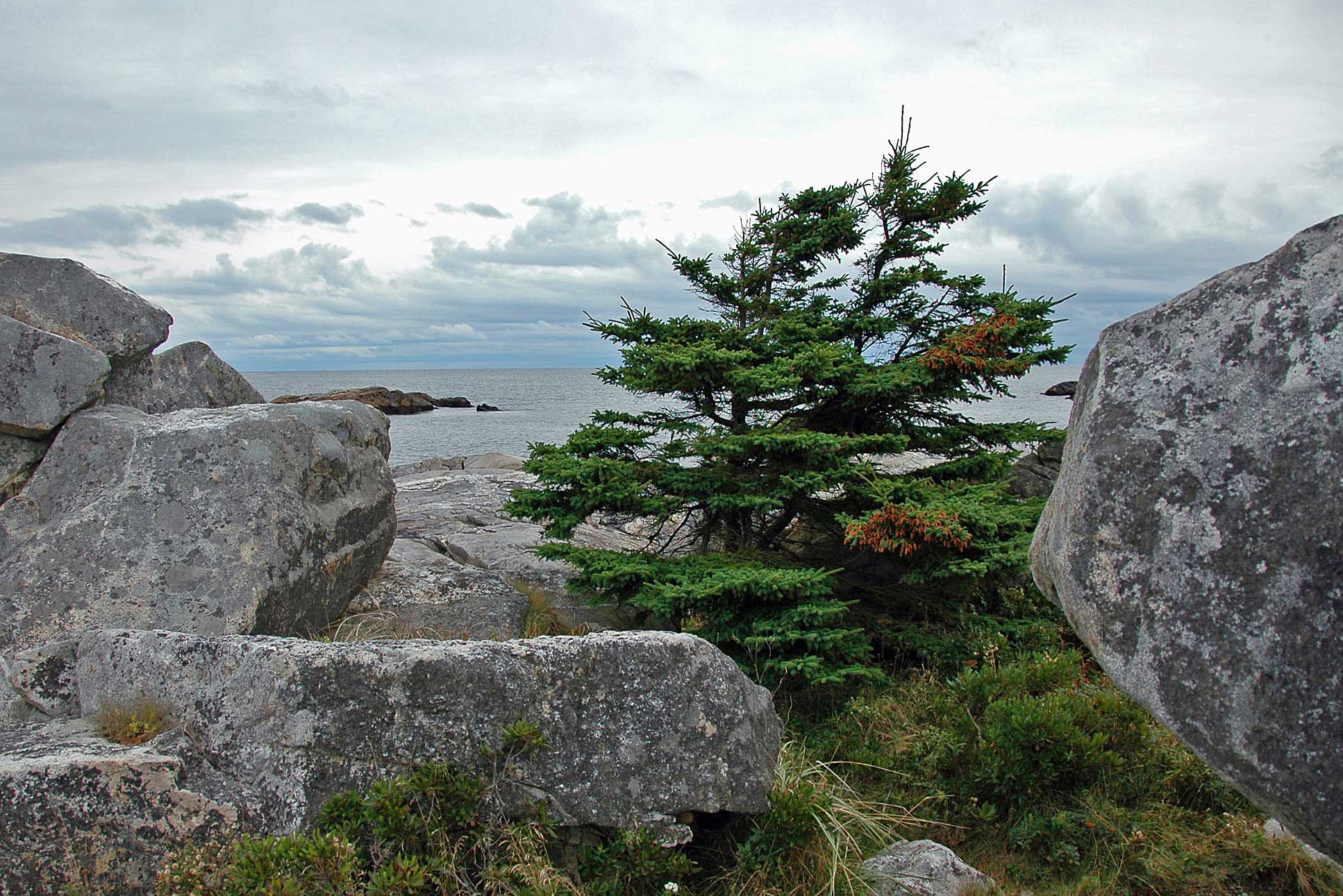
Lichen-Covered Rocks and Windblown Pine, Kejimkujik Seaside, Nova Scotia

“And now we welcome the new year, full of things that have never been.”

                                                                                                   ~ Rainer Maria Rilke

Quiet Autumn Sunset, New Brunswick

aaDSC_0272

Near Sunset, Looking Across the Lubec Narrows, Campobello Island, New Brunswick

“The future enters into us, in order to transform itself in us, long before it happens.”

                                                                                              ~Rainer Maria Rilke

Crisp Maritimes Morning

aaaDSC_9903

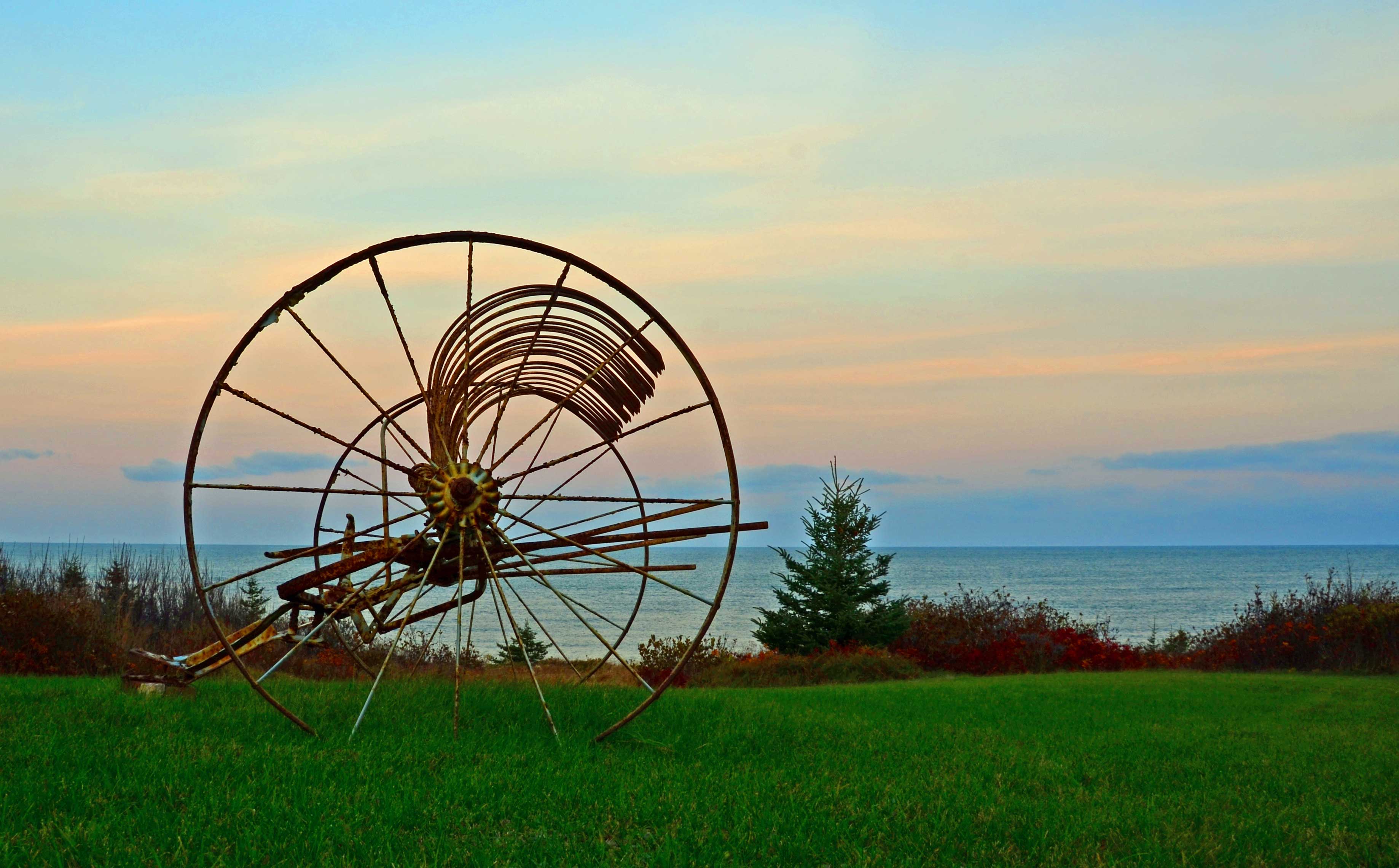
Rusted Tiller Wheel, Annapolis Valley, N.S., Along the Bay of Fundy Coast

“I awoke this morning with devout thanksgiving for my friends, the old and the new.”

                                                                                       ~ Ralph Waldo Emerson

Appreciating Each Precious Moment

Butchart Gardens -- Water Leaves

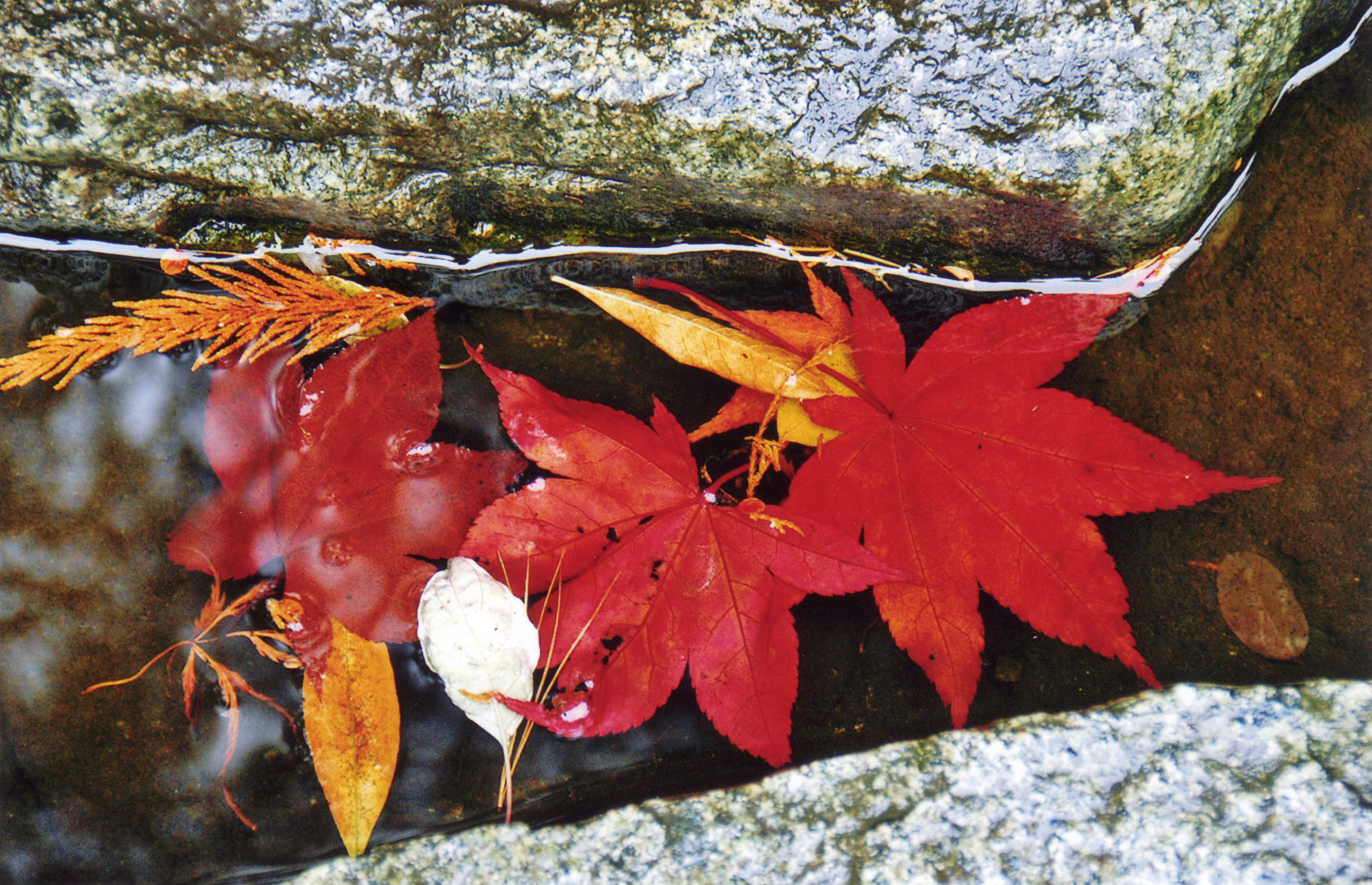
Floating Fall Leaves, Butchart Gardens, Victoria, B.C.

“You must live in the present, launch yourself on every wave, find your eternity in each moment.”

                                                                      ~ Henry David Thoreau

Early Fall, Kejimkujik Seaside, Nova Scotia

aNova-Scotia-2011083

“Make each step with intention and surrender and you will move forward on your path. Be kind to others.  Honor the mystery and wonder that surrounds us at every moment.”                                                                                                                                              ~ Nicola Barsaleau*

(*Nicola Barsaleau is a talented artist I recently met at an art fair who makes exquisite linocut prints, several of which incorporate wonderfully inspiring words of wisdom such as the above and can be seen on her site here.)

Robert McAffee — Artist to Appreciate

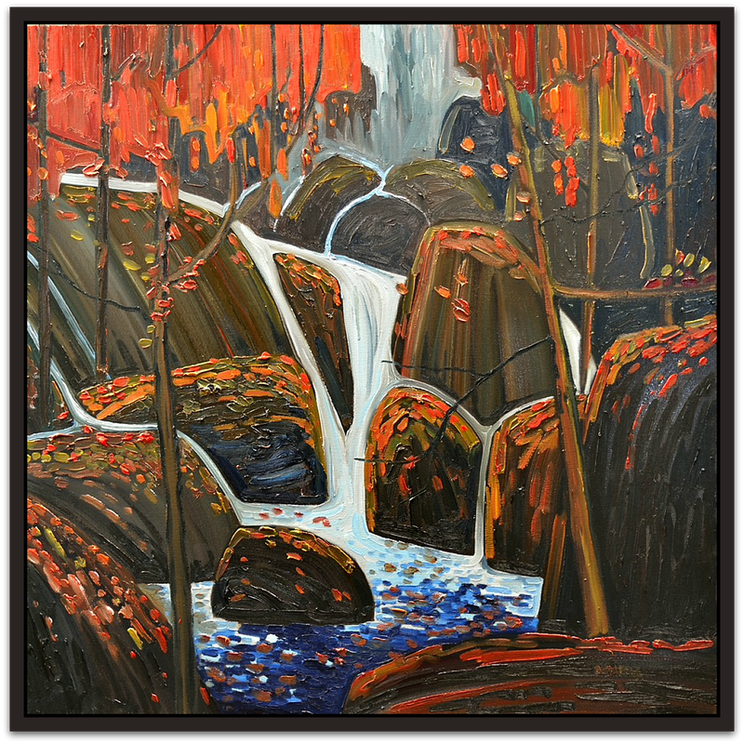
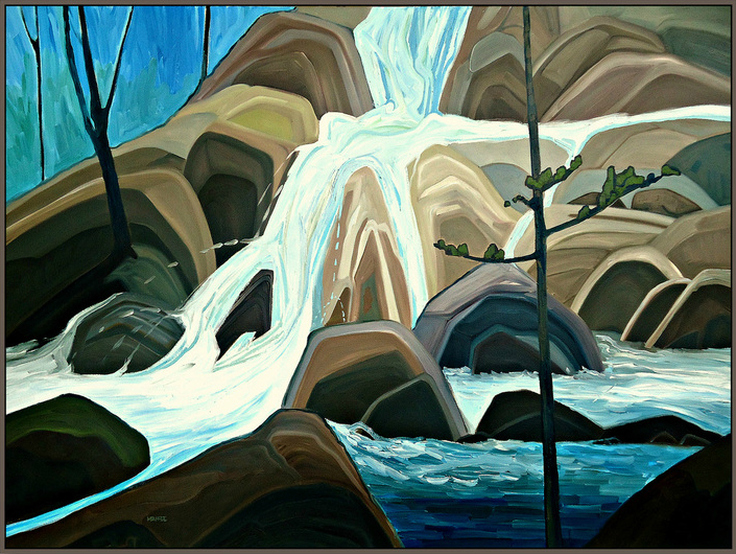
R. McAffee -- The Foot of the Falls

Robert McAffee, The Foot of the Falls

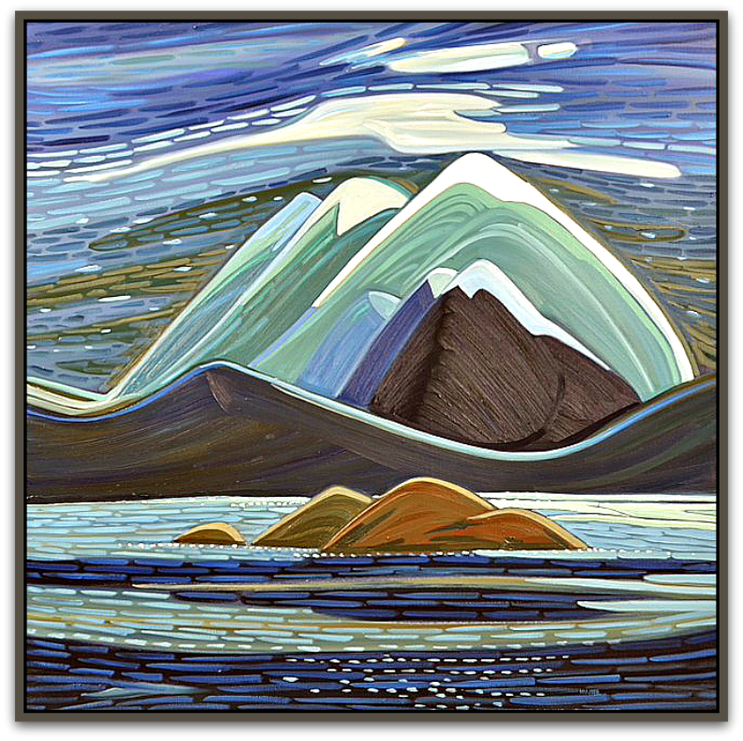
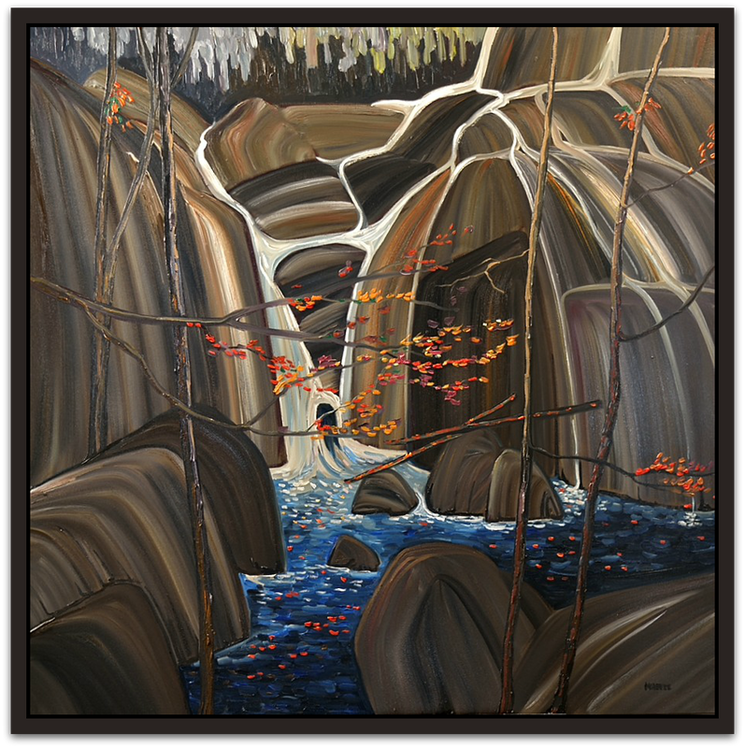
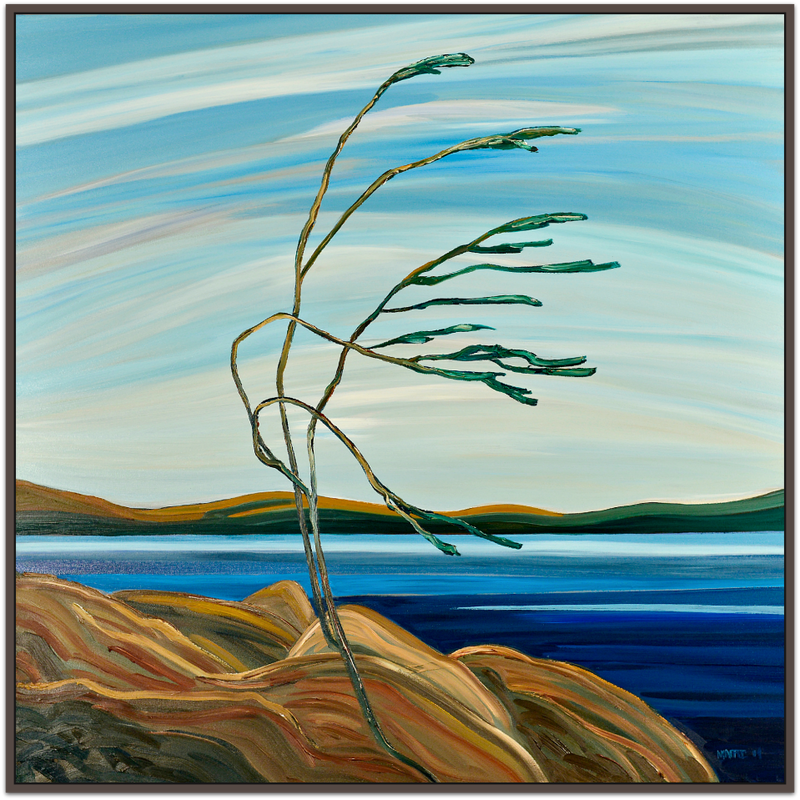
Toronto-based Robert McAffee’s contemporary landscape art is striking in many ways.  His lush scenes of the Canadian wilderness pay homage to the influences of several Group of Seven artists — notably Lawren Harris, Tom Thomson, A.J. Casson and Arthur Lismer.   McAffee seems to have internalized aspects of each with a resulting style that is wonderfully distinct from any one of them.  More about McAffee’s beautiful artwork and links to galleries that carry his pieces can be found at his website here.

R. McAffee -- The Three Sisters

Robert McAffee, The Three Sisters

~

R.McAffee

R. McAffee, Fishing By the Rocks

~

R. McAffee -- North Shore Twisty

Robert McAffee, North Shore Twisty

~

R. McAffee -- Waterfall

Robert McAffee, Waterfall

(Image credits:  Artist’s website)

Similar Posts on O’Canada:

> David Silcox’s Exquisite Book on The Group of Seven

> The Group of Seven’s Landscape Explosion

> Amazing Landscape Artistry of Philip Buytendorp, Jennifer Woodburn and Steve Coffey


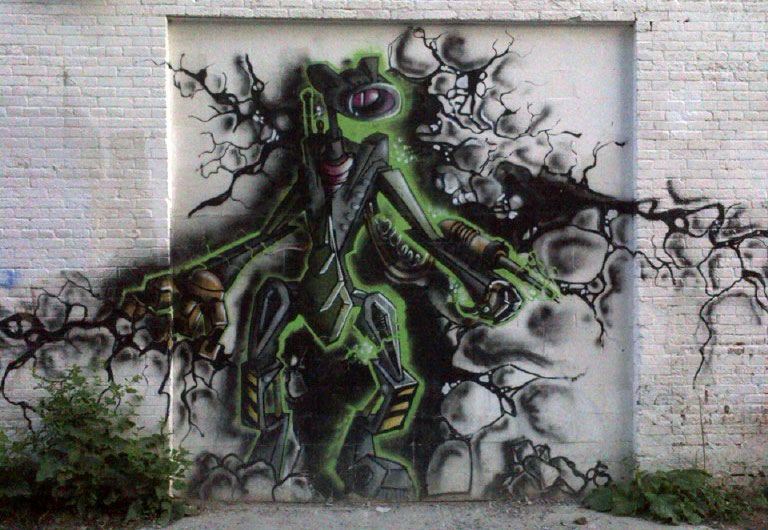
Ossington Avenue Graffiti

Toronto-20140714-00189

Crisscrossing the streets of Toronto, it struck me that I had to look harder there than in Montreal to find graffiti or street art.  But what’s to be found in Toronto is every bit as varied and creatively expressed, as shown by these two examples, both in the Ossington Avenue area.  I’ll post more later.

Toronto-20140714-00196


The Orenda and the Constant of Change


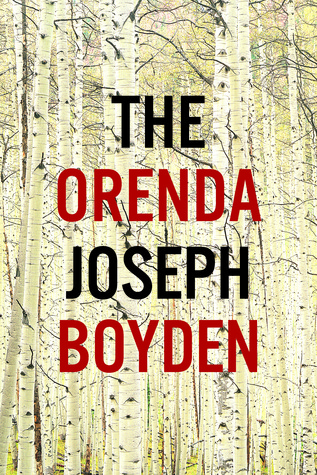
The Orenda

Oh, that bittersweet feeling of finishing a good book that not long before was a welcome and constant companion!   So it is with my having just finished Joseph Boyden’s The Orenda, a gripping epic set around the mid-1600s during the time of first contact between First Nations people and Europeans in what would become Canada.   The Wendat, or Huron, people, who are one of the principal subjects of this book, believed that each of us and every thing is endowed with an “orenda” or life force, and, so it is, more broadly, with cultures.

Not surprisingly, The Orenda was the top choice in the 2014 Canada Reads competition and good reviews abound for this riveting novel (for instance here on GoodReads).  So, rather than pen another, below is a brief excerpt that encapsulates one of the deep philosophical themes underlying the drama that unfolds within its pages. Throughout my reading of Boyden’s poetic work my thoughts continually dwelled on how this snapshot of a not-too-distant earlier time aptly reflects the concepts found in Buddhism, Hinduism and some other spiritual traditions  of samsara (the cycle of birth, death and re-creation), change and suffering, each of which are constants in our world and in the clash of civilizations throughout history.

“Success is measured in different ways.  The success of the hunt.  The success of the harvest.  For some, the success of harvesting souls.  We watched all of this, fascinated and frightened.  Yes, we saw all that happeed and, yes, we sometimes smiled, but more often we filled with fret.  The world must change, though.  This is no secret.  Things cannot stay the same for long.  With each baby girl born into her longhouse and her clan, with each old man’s death feast and burial in the ossuary, new worlds are built as old ones fall apart.  And sometimes, this change we speak of happens right under our noses, in tiny increments, without our noticing.  By then, though, oh, by then it’s simply too late.

“Yes, the crows continued to caw as crows are prone to do, and after a while we got used to their voices even when they berated us for how we chose to live.  Some of us allowed them their cackling because we found it entertaining, others because we believed our only choice was to learn how to caw ourselves.  And still others kept them close for the worldly treasures their masters promised.

“It’s unfair, though, to blame only the crows, yes?  It’s our obligation to accept our responsibility in the whole affair.  And so we watched as the adventure unfolded, and we prayed to Aataentsic, Sky Woman, who sits by the fire right beside us, to intervene if what we believed was coming indeed coalesced.  But Aataentsic only need remind us that humans, in all their many forms, are an unruly bunch, prone to fits of great generosity and even greater meting out of pain.”

 ~~~
Simple Beauty in Stanley Park

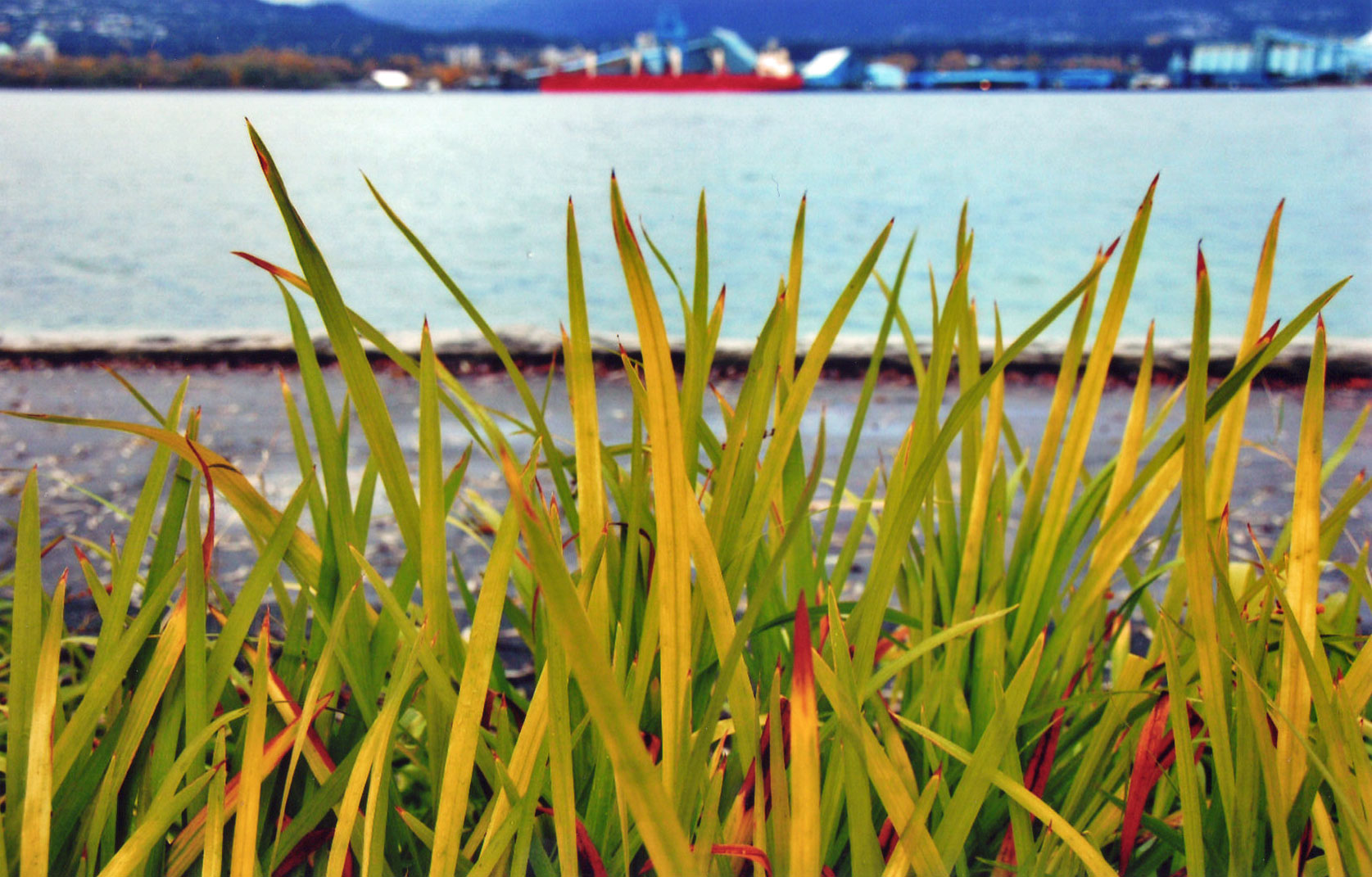
Blades of Grass, Stanley Park

Along the Seawall, Stanley Park, Vancouver, B.C.

~

“I believe a leaf of grass is no less than the journey-work of the stars.”
                                                                                  ~ Walt Whitman